Orest Kiprensky
Orest Adamovich Kiprensky · 1782, Nezhnovo (Nezhinskaya manor) — 1836, Rome
Biography
In Naples, members of the local Academy of Arts mistook a portrait by the young Russian for the work of an old master, and Kiprensky had to obtain letters from St Petersburg confirming that he had painted it. The 1804 canvas showed Adam Schwalbe, the serf officially registered as the boy's father. His real father is believed to have been the landowner Alexei Dyakonov. Orest was born on March 24, 1782 (March 13, Old Style), at Nezhnovo near St Petersburg and was granted his freedom at birth. According to one version, his surname was derived from Kypris, a Greek name for the goddess of love.
In 1788, at the age of six, the boy was sent to the boarding school attached to the Academy of Arts. He studied there until 1803, in Grigory Ugryumov's class, and stayed on at the Academy for three more years as a scholarship student. In 1805 the large gold medal for his painting Dmitry Donskoy on the Kulikovo Field earned him the right to travel abroad, but he was able to leave only eleven years later.
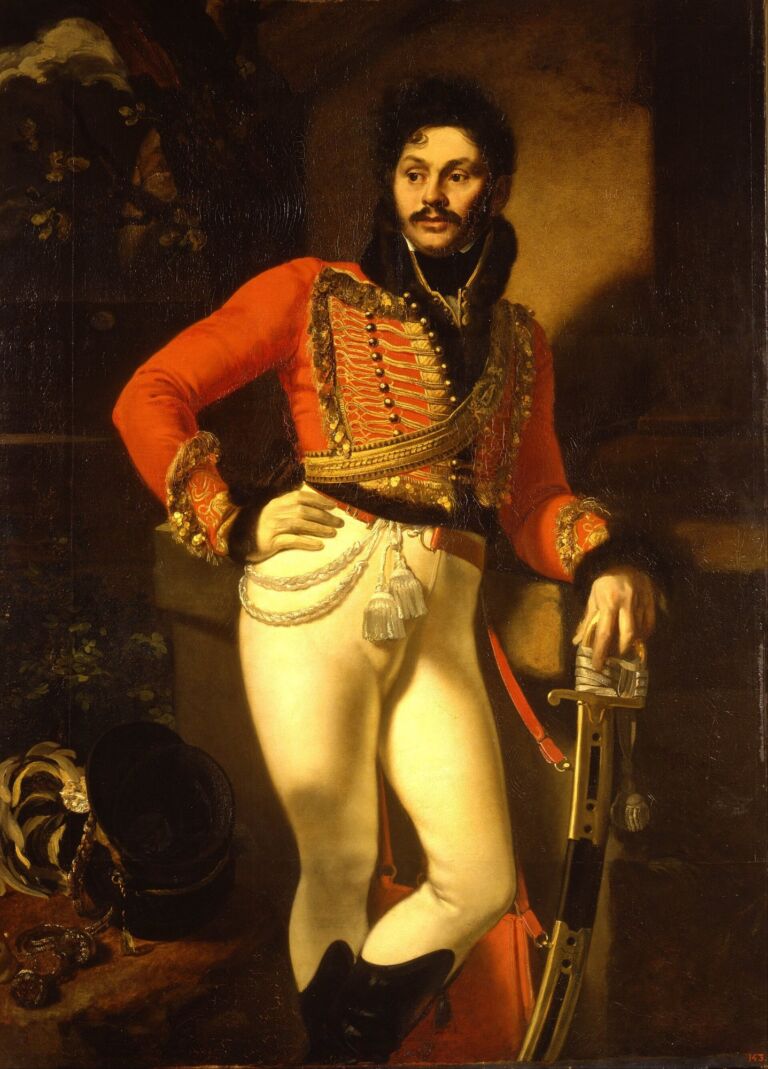
He spent those years in Russia and became the leading portraitist of his generation. In 1809, in Moscow, came his portraits of Count Fyodor Rostopchin and of the hussar officer Yevgraf Davydov, the Portrait of Life Guard Colonel Yevgraf Davydov. Then came Tver (1811) and St Petersburg, and in 1812 the Academy elected him an academician. In 1813–1815 he made pencil portraits of his contemporaries, among them Pyotr Olenin and the poet Konstantin Batyushkov; in 1815 he painted Vasily Zhukovsky and Sergei Uvarov in oils.
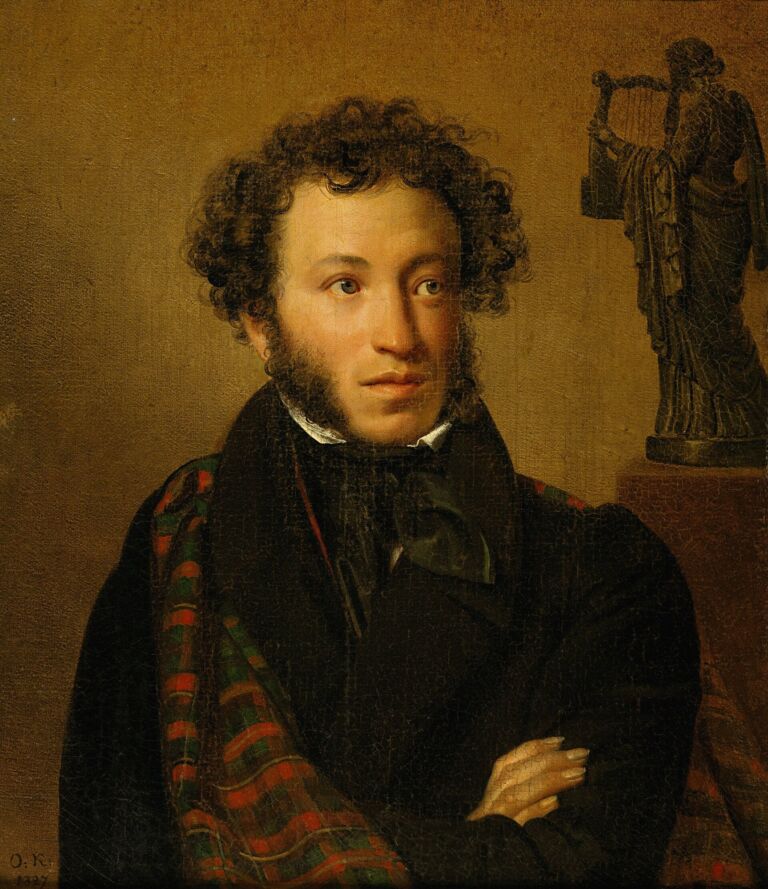
In 1816 the artist finally left for Italy, where he lived in Rome and Naples until 1822. There he met a little girl, Anna Maria Falcucci, known as Mariuccia; in 1819 he painted her as Girl in a Poppy Wreath, and later, so the story goes, he bought her from her family and placed her in a convent. Back in Russia, in 1827 Kiprensky painted his Portrait of Alexander Pushkin. The poet responded with the poem “To Kiprensky”: “I see myself as in a mirror, / But this mirror flatters me.” It remains one of the best-known images of Pushkin.
Kiprensky relied on lighting and on the living gaze of the sitter. His portraits are not ceremonial: the background is often darker and plainer than custom required, and the face is picked out by light. This made his sitters look like heroes of Romantic poetry rather than officials in full regalia.
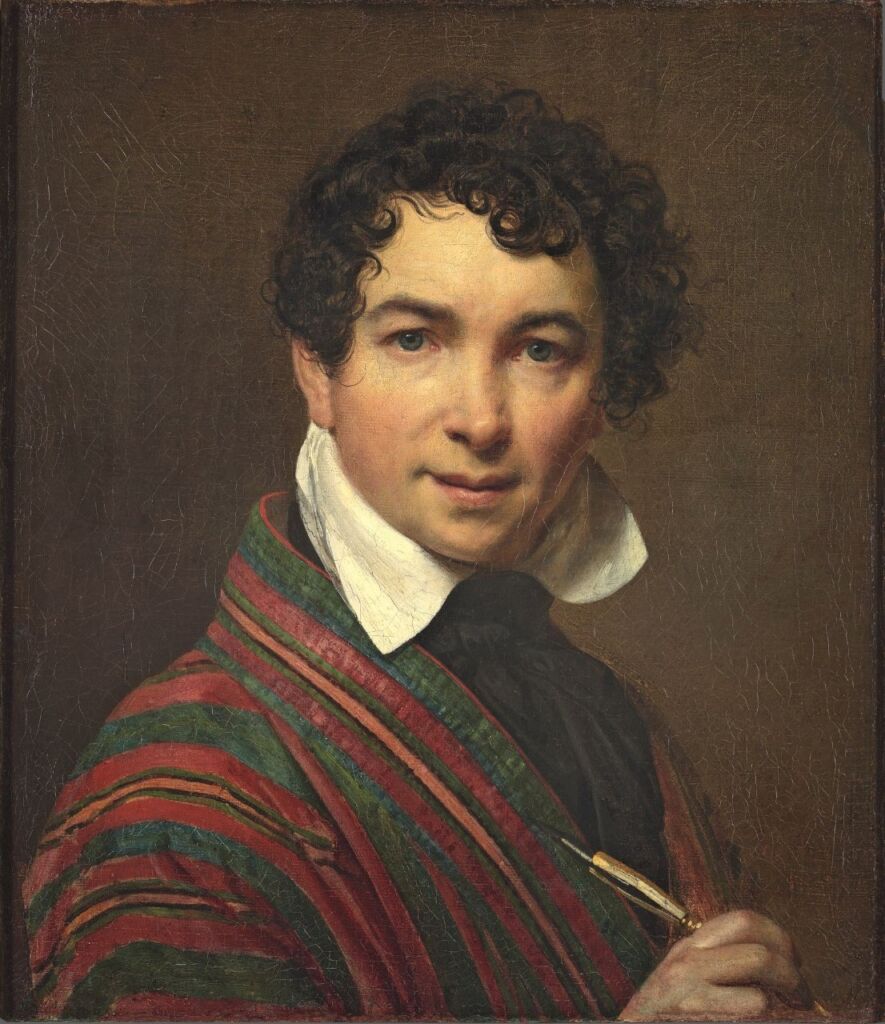
In 1828, after learning from the sculptor Samuel Galberg that Mariuccia's trail had gone cold, Kiprensky left for Italy again. That same year he painted Self-Portrait in a Striped Robe; in 1831, in Naples, came Newspaper Readers in Naples, and in 1833 a portrait of the sculptor Bertel Thorvaldsen.
To marry Mariuccia he converted to Catholicism; the wedding took place in 1836. That same year, on October 17 (October 5, Old Style), the artist died of pneumonia in Rome. He was buried in the church of Sant'Andrea delle Fratte.
The main collections of Kiprensky's work are in the State Russian Museum and the State Tretyakov Gallery; the Tretyakov holds, among other works, his Self-Portrait in a Striped Robe. For Russian painting he remains the first master of the Romantic portrait, and the Portrait of Alexander Pushkin and the Portrait of Life Guard Colonel Yevgraf Davydov still open any conversation about him.
Major works
Click a painting to see the details.
-
 01
Portrait of Alexander Pushkin
1827 · State Tretyakov Gallery, Moscow -
 02
Portrait of Life Guard Colonel Yevgraf Davydov
1809 · State Russian Museum, St Petersburg