Art movement
17th-century Flemish painting
1609–1660s · Southern Netherlands (Antwerp)
About the movement
Late in 1608 Peter Paul Rubens came home to Antwerp after eight years in Italy. He meant to go back, but he stayed: in 1609 the Archdukes Albert and Isabella, who governed the Southern Netherlands on behalf of Spain, made him their court painter, and Spain and the rebel Dutch Republic signed the Twelve Years' Truce. A country split by war into a Protestant north and a Catholic south was given a breathing space. Antwerp, which had lost its commercial supremacy, found a new kind of preeminence, in art.
Catholic Flanders needed new images. After the iconoclastic riots of the 16th century and the decrees of the Council of Trent, churches were refurnishing their altars, and painting was expected to persuade, to move and to draw the viewer in. The Flemish painters combined Italian grandeur (Michelangelo, Titian, Caravaggio) with a northern love of texture: skin, fur, metal, fruit. The result was a Baroque of a particular kind, fleshy and festive, without the theatrical gloom of the Italians.
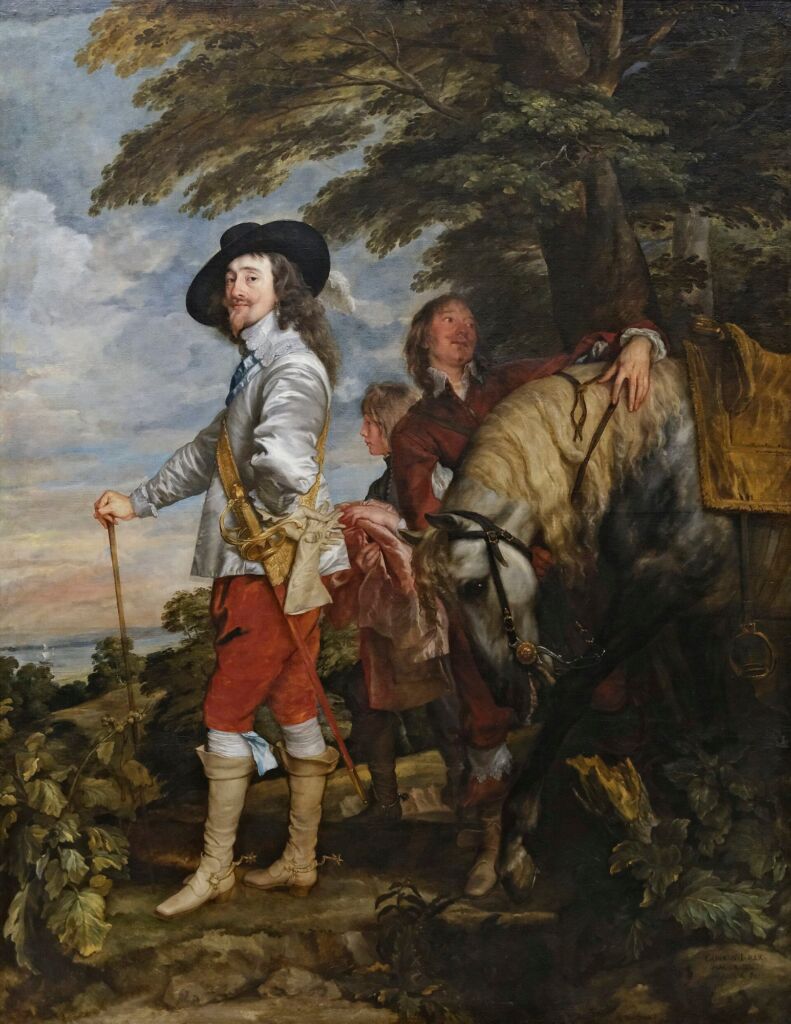
Rubens's first major commission was The Elevation of the Cross (1610–1611) for the altar of the church of St Walburga. Next, the Arquebusiers' guild, headed by the burgomaster Nicolaas Rockox, ordered The Descent from the Cross (1611–1614) for the cathedral. In 1794 the French carried both paintings off to Paris. When they came back in 1815, St Walburga's lay in ruins, so the Elevation went to the cathedral, where it still hangs beside the Descent. Rubens's enormous workshop turned out commissions for the whole of Europe: The Rape of the Daughters of Leucippus (around 1618, Alte Pinakothek, Munich), The Union of Earth and Water (around 1618, State Hermitage Museum) and the Marie de' Medici cycle for the Luxembourg Palace (1622–1625, Louvre). The young Anthony van Dyck worked for him around 1618–1620, then spent several years in Italy, and in 1632 became court painter to Charles I in London. His Charles I at the Hunt (around 1635, Louvre) set the tone for aristocratic portraiture for a century to come.
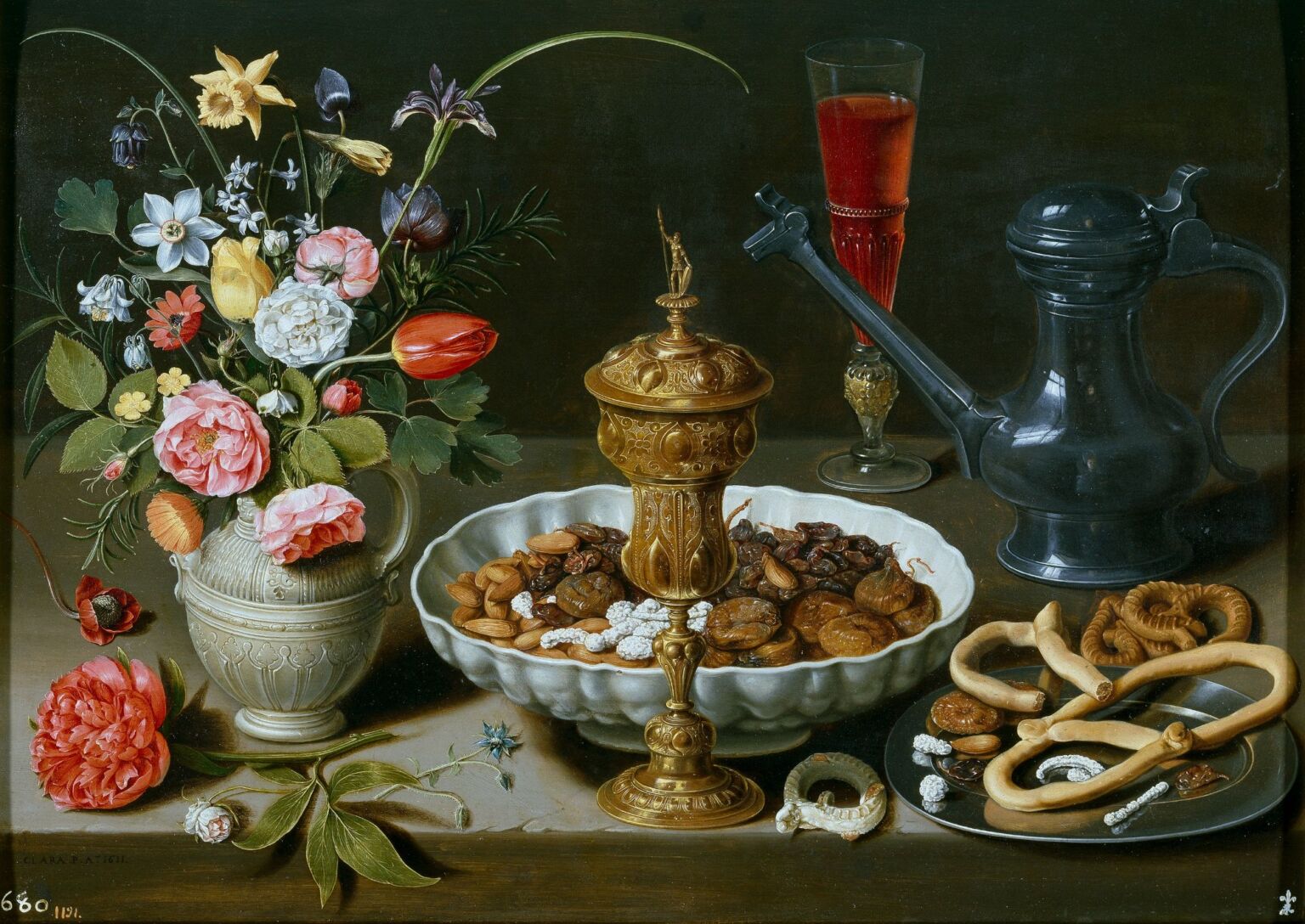
Around the two stars clustered specialists in narrower genres. Jacob Jordaens painted boisterous feasts; his Bean King survives in several versions. Frans Snyders made his name with still lifes and hunting scenes, Adriaen Brouwer and David Teniers the Younger with peasant taverns, Jan Brueghel the Elder with flowers and paradise landscapes. The Flemish liked to work together: in The Garden of Eden with the Fall of Man (around 1615, Mauritshuis), Rubens painted the figures and Brueghel the landscape and animals.
The argument over Rubens went on after his death in 1640. In the late 17th century the French Academy was divided between the "Rubénistes" and the "Poussinistes," the champions of color and of drawing; the theorist Roger de Piles took Rubens's side, and color eventually won. Through this quarrel the Flemish legacy passed to Watteau and later to Delacroix.
Russia assembled one of the world's finest collections of Flemish painting. In 1779 Catherine II bought the picture collection of Sir Robert Walpole from Houghton Hall, bringing to the Hermitage portraits by van Dyck and Snyders's four Stalls (1618–1621): fish, fruit, vegetables and game. The Hermitage also holds Rubens's Perseus and Andromeda, The Union of Earth and Water and Jordaens's Bean King. Its Flemish rooms became a school for generations of Russian painters.
Van Dyck died in London in 1641, a year after Rubens, and the great age quickly faded. Teniers the Younger still managed to secure the founding of the Antwerp Academy in 1663, but it produced no new geniuses. Van Dyck, meanwhile, shaped English portraiture from Gainsborough to Lawrence, and Rubens's lavish painterliness launched a whole tradition of European colorism.
Stories