Art movement
Spanish Golden Age painting
Late 16th to 17th century · Spain
About the movement
In 1649 a hefty treatise, The Art of Painting, was published in Seville. Its author, Francisco Pacheco, was a painter of modest gifts, but he was also the teacher and father-in-law of Diego Velázquez, and the Inquisition's censor of sacred images. That double role sums up the whole Spanish Golden Age: a school of painting to which the Church entrusted its preaching, and which it watched closely. The great flowering of Spanish literature and art ran from the late 16th to the late 17th century, and in painting its beginning is usually dated to El Greco, who settled in Toledo in the 1570s.
The Counter-Reformation demanded clarity and strong feeling from a picture, and the Spanish answered with a surprisingly sober naturalism. Jusepe de Ribera, who worked in Spanish-ruled Naples, took from Caravaggio the harsh light that snatches a figure out of darkness. In Toledo, around 1602, Juan Sánchez Cotán painted Quince, Cabbage, Melon, and Cucumber (now in the San Diego Museum of Art): four pieces of produce in a stone niche, and nothing else. This is how the Spanish bodegón took shape, a still life or kitchen scene in which a humble object carries the weight of an icon.
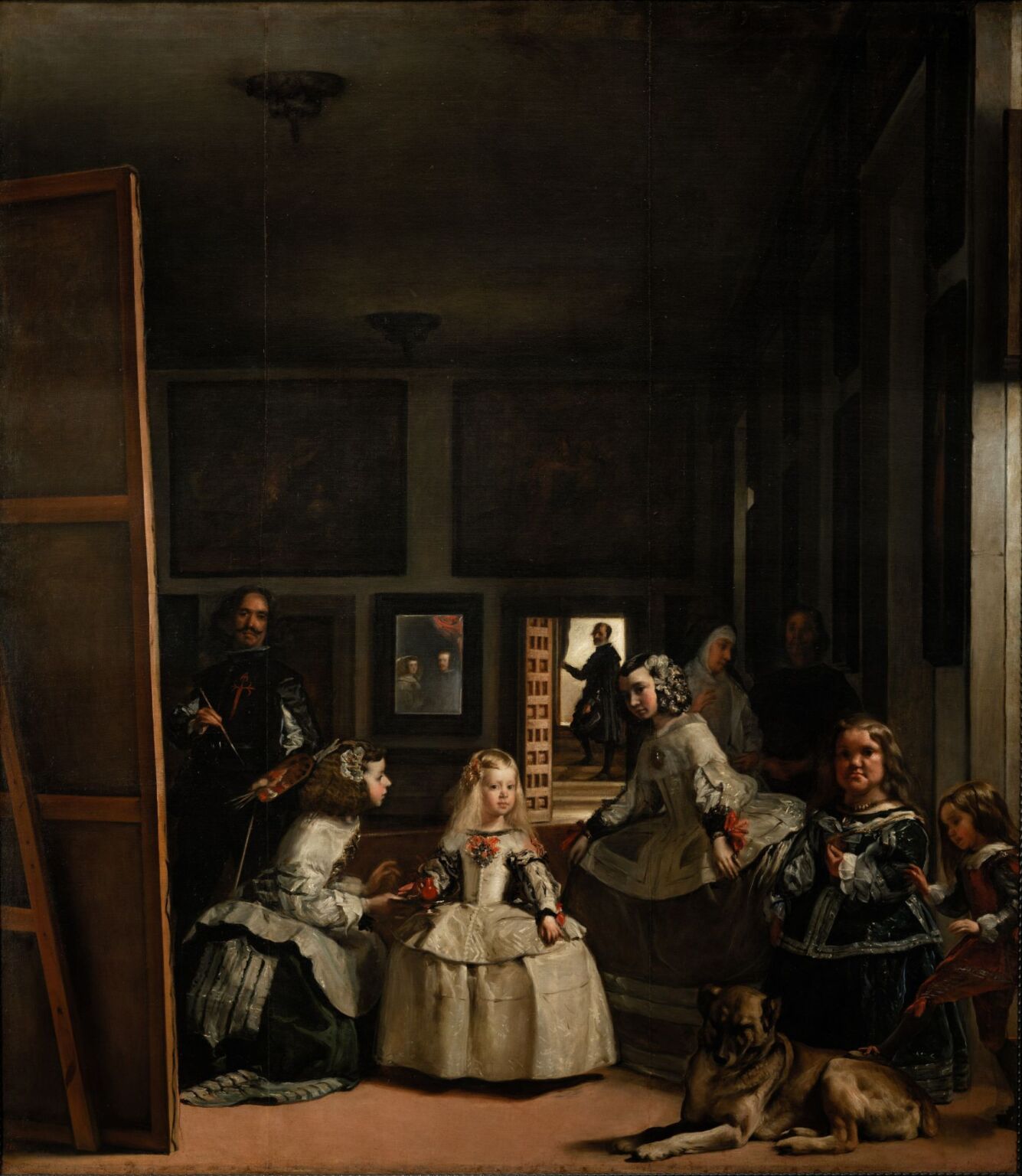
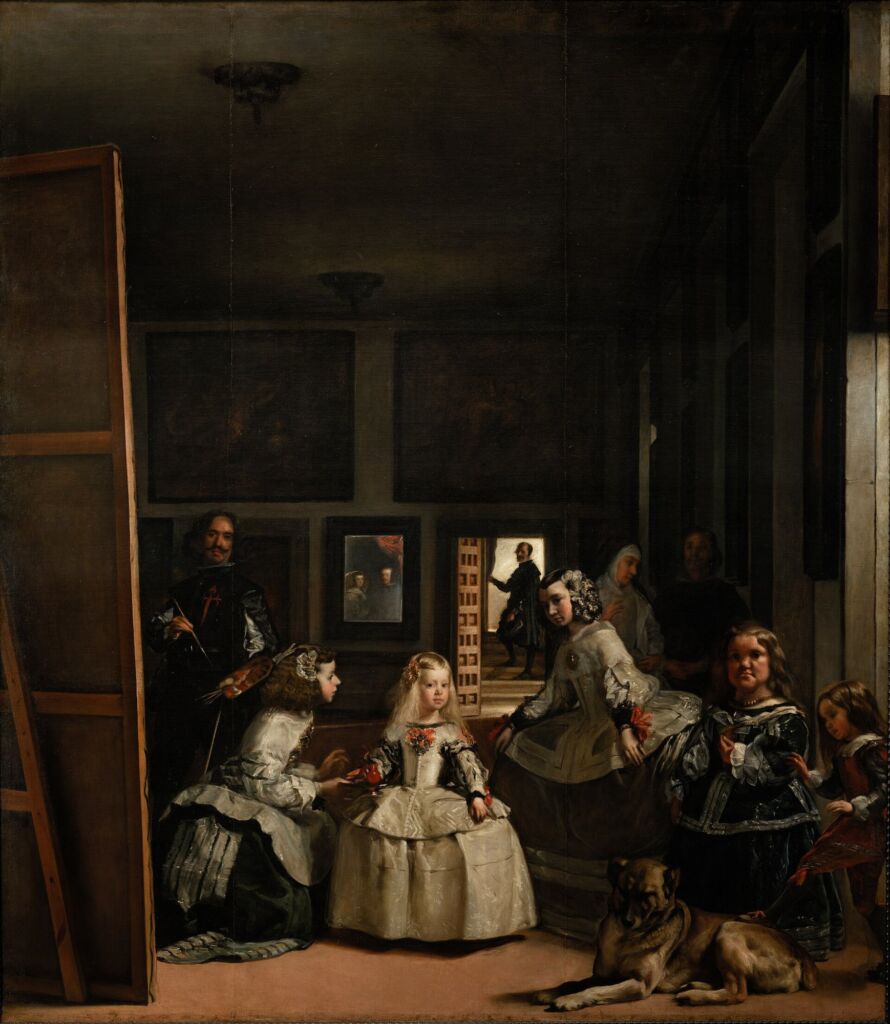
The young Velázquez also started out with bodegones in Seville; his Luncheon (around 1617) is in the State Hermitage Museum. In 1623 he moved to Madrid and became painter to Philip IV. On his second trip to Italy he painted the Portrait of Innocent X (around 1650, Galleria Doria Pamphilj, Rome), and back in Madrid, in 1656, Las Meninas (Prado), a picture in which the viewer cannot at first work out who is looking at whom. He placed himself at the easel beside the Infanta and her attendants, a court painter declaring openly that his craft deserved royal company. In Seville, Francisco de Zurbarán painted monks and a bound lamb, the Agnus Dei (around 1635–1640), while Bartolomé Esteban Murillo painted gentle Madonnas and street children, as in The Young Beggar (around 1645–1650, Louvre). For a long time it was Murillo, not Velázquez, whom Europe regarded as the greatest Spanish painter: 18th-century collectors bought his pictures more eagerly than anyone's.
Their contemporaries valued them differently. By the middle of the century Zurbarán had lost his Seville patrons to Murillo and his softer manner. At court Velázquez was first and foremost a courtier rather than a painter, burdened with official posts and the business of running the palace. There is a story that when Innocent X saw his portrait he exclaimed, "Troppo vero!" ("Too true!"). It is a later anecdote, not a documented fact, but it captures how unsettling this painting could be.
Russia's ties to the period go back a long way. The Hermitage holds about 150 Spanish paintings, a collection begun under Catherine the Great. Between 1768 and 1772 Murillo's Rest on the Flight into Egypt and his Boy with a Dog were bought in France; its companion piece, a girl with a basket of fruit, can now be seen at the Pushkin State Museum of Fine Arts in Moscow. In 1779 three more Murillos arrived with the collection of Robert Walpole, and under Alexander I eighty Spanish canvases came from the Coesvelt collection. The Hermitage also has Velázquez's Portrait of the Count-Duke of Olivares (around 1638) and Zurbarán's Saint Lawrence (around 1636–1639).
By the end of the 17th century the Golden Age had faded along with the declining Habsburg monarchy. It was born again in the 19th century: in 1865 Édouard Manet came to the Prado to see Velázquez and called him "the painter of painters." From that visit on, Spanish realism became one of the sources of modern French painting.
Stories