Art movement
Caravaggism
Around 1600 to the 1630s · Italy, the Netherlands, France, Spain
About the movement
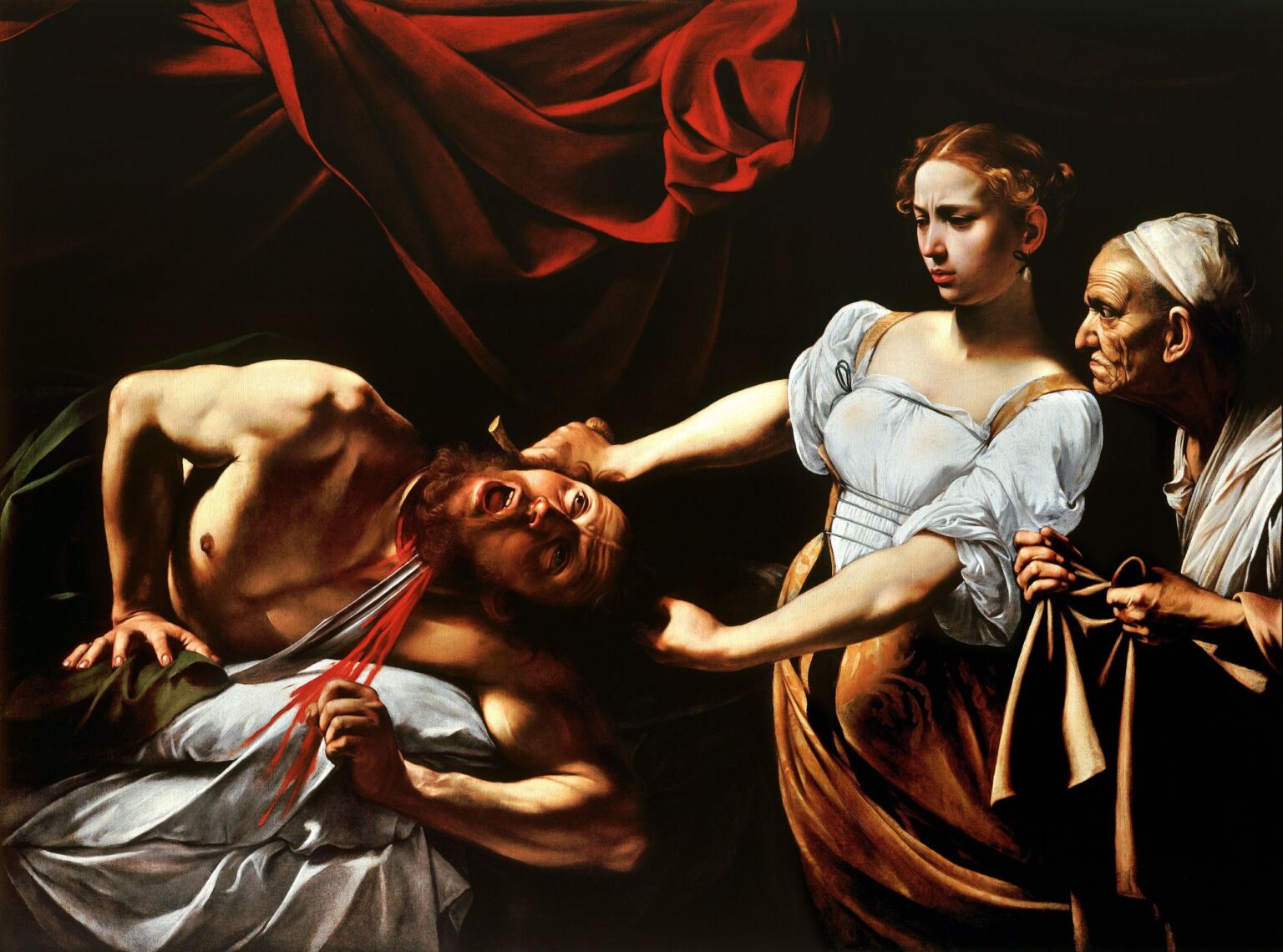
In the summer of 1600 the Contarelli Chapel in the Roman church of San Luigi dei Francesi was unveiled with two canvases by Michelangelo Merisi da Caravaggio. In The Calling of Saint Matthew (1599–1600) a shaft of light enters a dim room where tax collectors are counting coins, and that was enough to make the young Lombard the most talked-about painter in the city. Within a few years a whole movement had formed around him, although Caravaggio had no pupils in the usual sense. His followers learned not in a workshop but in front of his paintings, in churches and in collectors' homes.
The method came down to a few decisions. A figure is snatched from an almost black background by a harsh light from the side, with hardly any middle tones. The model is someone off the street, and an apostle may well have dirty feet. The painter works straight from life: not a single drawing securely attributed to Caravaggio survives. All of this went against the refinement of Mannerism and against the ideal championed in the same years by the Bolognese Carracci. Later in the century critics put the charge bluntly. In his Lives (1672) Giovanni Pietro Bellori reproached Caravaggio for stripping painting of selection and dignity, and Nicolas Poussin, as reported by André Félibien, supposedly said that Caravaggio had come into the world to destroy painting.
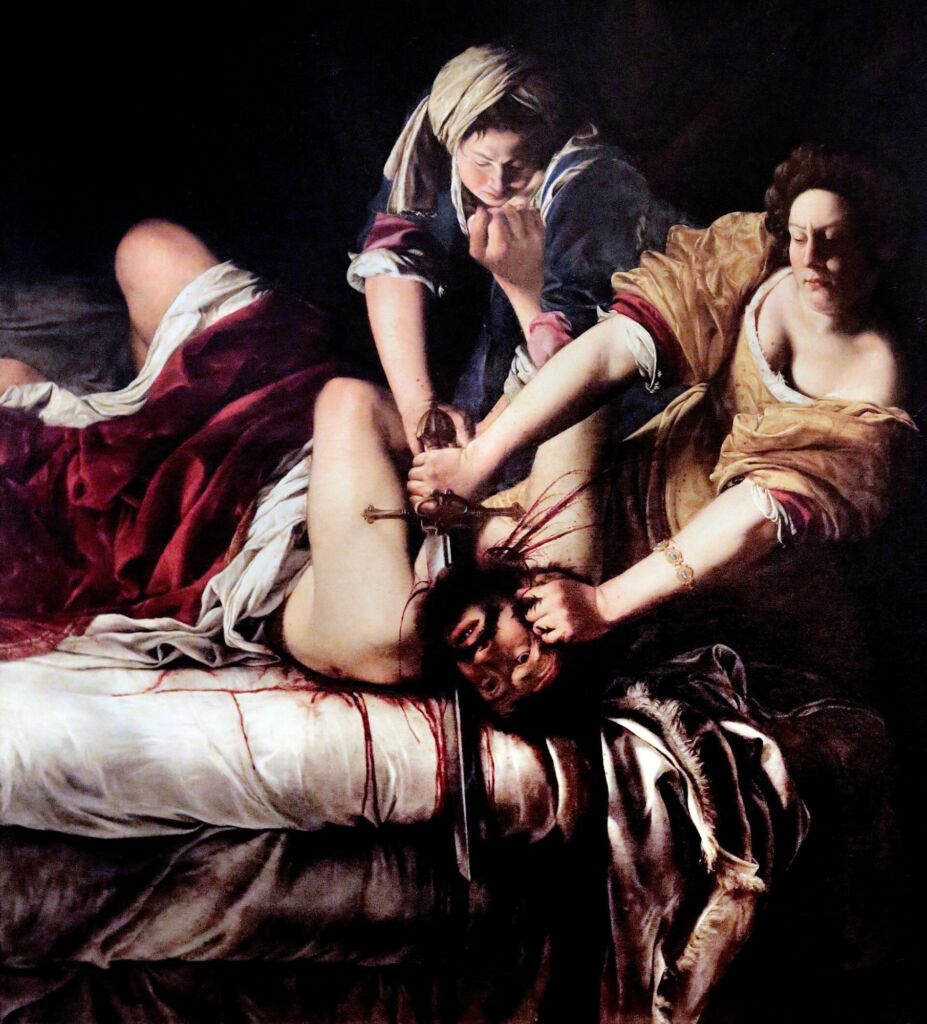
The early Lute Player (around 1595), from the collection of the Marchese Giustiniani, was bought for the Hermitage in 1808 and remains Caravaggio's principal work in Russia. After the master fled Rome in 1606 and died in 1610, others took up his manner. Bartolomeo Manfredi, another Lombard, carried the light of the Gospel scenes over into genre painting: taverns, gamblers, fortune-tellers, soldiers. In 1675 the German painter and historian Joachim von Sandrart called this the "manfrediana methodus," the Manfredi method. Orazio Gentileschi, a friend of Caravaggio's, softened his harshness, while his daughter Artemisia pushed it to the limit in Judith Beheading Holofernes (around 1620, Uffizi).
Rome in the 1610s was an international school, and Caravaggism traveled across Europe in the luggage of visiting artists. The Frenchman Valentin de Boulogne stayed in Rome for good; his Cardsharps (around 1615–1618) is in Dresden and his Expulsion of the Money-Changers from the Temple in the Hermitage. The Dutch painters Hendrick ter Brugghen, Gerrit van Honthorst and Dirck van Baburen returned to Utrecht, where they formed the densest circle of followers outside Italy. The Italians called Honthorst Gherardo delle Notti, "Gerard of the Nights," for candlelit scenes such as Christ before the High Priest (around 1617, National Gallery, London). In Naples, where Caravaggio worked in his last years, the line was carried on by the Spaniard Jusepe de Ribera, who settled there in 1616.
The fashion was short-lived. By the 1630s Rome had turned to a brighter classicism and Baroque splendor, the Utrecht painters had moved to a lighter palette, and Valentin died in 1632. Caravaggio's light lasted longest in the provinces. Georges de La Tour in Lorraine, who may never have been to Italy, painted The Cheat with the Ace of Diamonds (1630s, Louvre) and night scenes lit by a single candle, in which the harshness of the method turned into stillness. Scholars still argue over whether he had any direct link with the Caravaggisti.
For a long time "Caravaggism" was a term of reproach, and until the 20th century Caravaggio himself was regarded as a gifted roughneck. The turning point came with the Italian art historian Roberto Longhi, whose 1951 exhibition in Milan put the painter and his circle back at the center of the history of the Baroque. Today Caravaggism is used to explain much in Rembrandt, Velázquez and Zurbarán. None of them belonged to the movement, but each passed through its light.
Stories