Art movement
Expressionism
1905–1920s · Germany, Austria, Northern Europe
About the movement
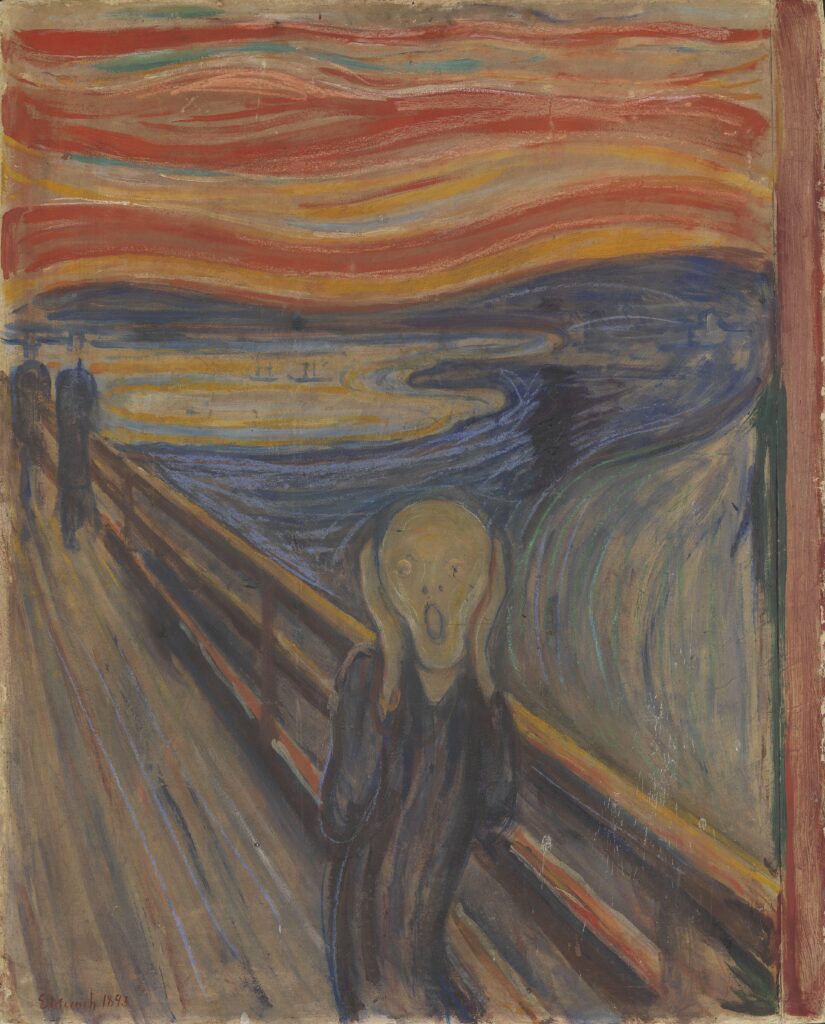
In November 1892 the Association of Berlin Artists opened an exhibition by a young Norwegian, Edvard Munch, and closed it a week later under pressure from outraged members. The scandal split the Berlin art world and became one of the preconditions for the founding of the Berlin Secession. A year later Munch painted The Scream (1893), and two years later Madonna (1894). The word Expressionism did not yet exist: German critics began applying it around 1911 to the new painting that had broken with Naturalism, and in 1912 the Sonderbund exhibition in Cologne made it a program, showing French, Norwegian, Russian and German artists side by side.
The Impressionists captured an impression of the world; the Expressionists brought out what was happening inside. Color stopped being a property of the object: a face could be green, a street pink, if the feeling demanded it. Line breaks, space tilts. Their models were Van Gogh, Gauguin and Munch, along with African and Oceanic sculpture from ethnographic museums. What they were against is clear: academic polish and smug bourgeois taste.
The first group was Die Brücke ("The Bridge"), founded in Dresden on June 7, 1905, by the architecture students Ernst Ludwig Kirchner and Fritz Bleyl together with Erich Heckel and Karl Schmidt-Rottluff. The name promised a bridge from the painting of the present to that of the future. In 1906 Emil Nolde and Max Pechstein joined; in 1911 the core of the group moved to Berlin, and in 1913 it broke up in a dispute over a chronicle of the group written by Kirchner. In Munich, Wassily Kandinsky and Franz Marc published an almanac and in December 1911 staged the first exhibition of Der Blaue Reiter ("The Blue Rider"). Marc sought purity in animals: Blue Horse I (1911), The Fate of the Animals (1913). In Vienna, Oskar Kokoschka and Egon Schiele offered their own, more nervous version, as in Schiele's Death and the Maiden (1915) and The Family (1918).
The public and the press long treated the new art as a sickness or a joke. The war struck the movement quite literally: August Macke was killed in 1914, Franz Marc at Verdun in 1916, and Schiele died of Spanish flu in the autumn of 1918. The final verdict came from the Nazis. On July 19, 1937, the "Degenerate Art" exhibition opened in the arcades of the Hofgarten in Munich: more than 650 works confiscated from 32 German museums were seen by over two million people. Among the artists were Kirchner, Nolde (despite his Nazi Party membership), Marc and Kokoschka.
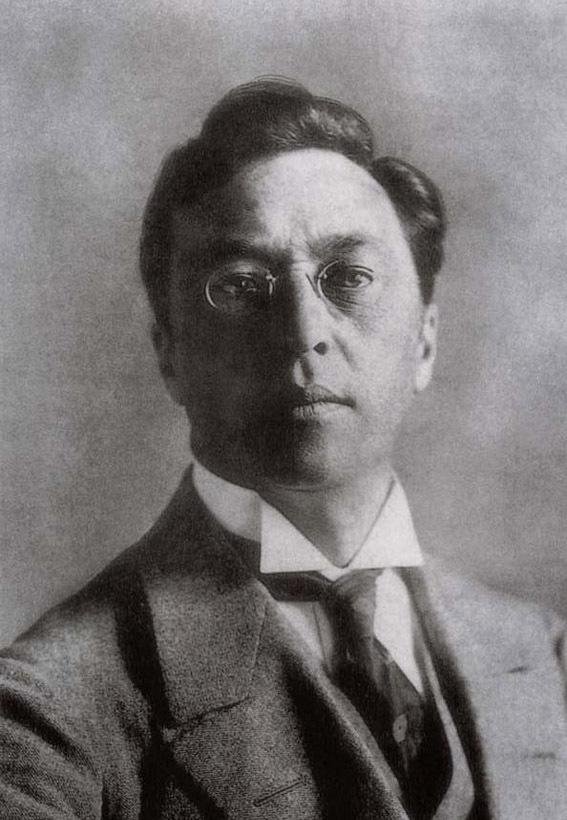
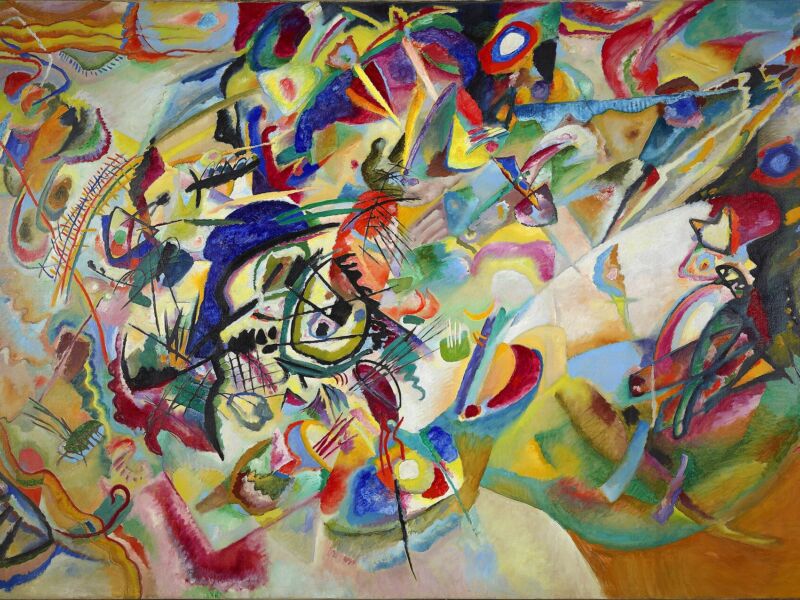
The Russian thread here is not a side story but a central one. Kandinsky moved to Munich in 1896; Alexej von Jawlensky and Marianne von Werefkin lived there too, and in 1909 they founded with him the New Artists' Association of Munich, out of which the Blue Rider grew. The brothers David and Vladimir Burliuk took part in its first exhibition. Kandinsky's book Concerning the Spiritual in Art became the movement's theoretical manifesto, and Composition VII (1913), one of the high points of his Munich years, is now in the State Tretyakov Gallery.
After 1918 Expressionism moved into film and theater: The Cabinet of Dr. Caligari (1920) put its crooked streets on screen. In Paris, Chaim Soutine, born in Smilovichi near Minsk, painted his Carcass of Beef series (1925–1926), carrying the tradition into new material. In Germany it was succeeded by the cool New Objectivity, and after the Second World War the American Abstract Expressionists and the German Neo-Expressionists of the 1980s saw themselves as its direct heirs. Kirchner, whose works had been confiscated from museums, took his own life in Davos in 1938.
Artists
Major works
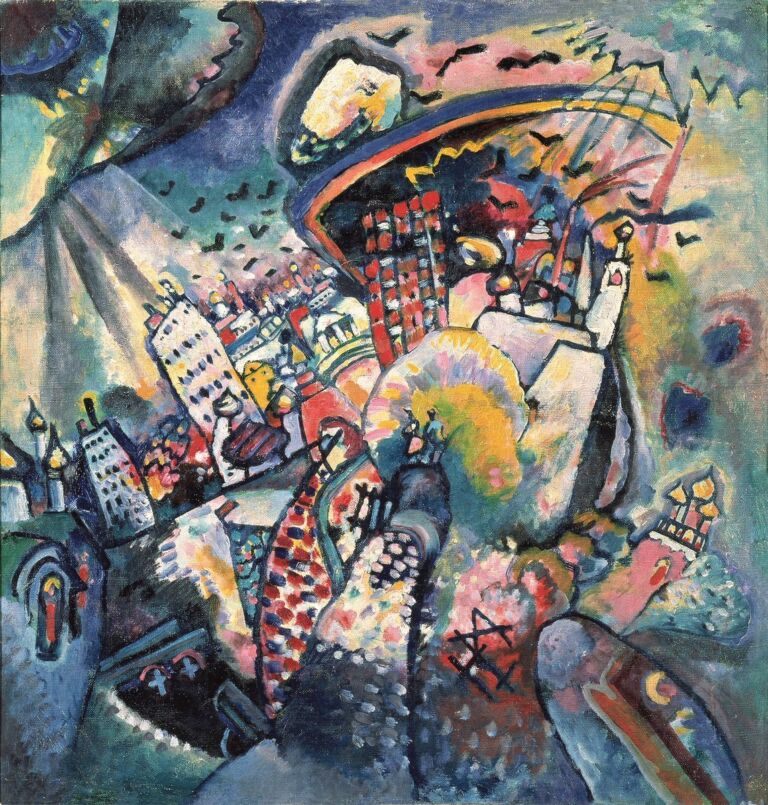 Moscow IWassily Kandinsky · 1916
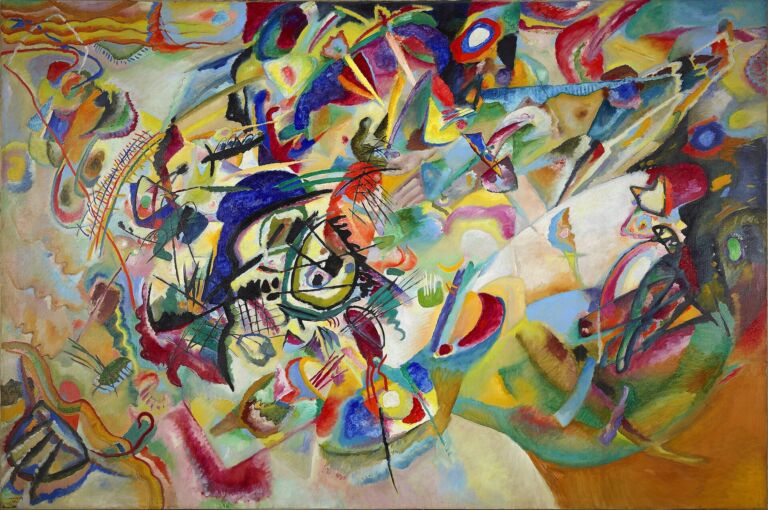 Composition VIIWassily Kandinsky · 1913
Stories