Orientalism
Late 18th to early 20th century · Europe and Russia
About the movement
European Orientalism has a convenient starting date, and an army as its sponsor. In 1798 Napoleon landed in Egypt, bringing scholars and draftsmen with him, and six years later Antoine-Jean Gros showed Bonaparte Visiting the Plague Victims of Jaffa (1804, Louvre) at the Salon. The East entered art as a stage for a French hero. The conquest of Algeria in 1830 opened North Africa to painters, and a journey south or east became as obligatory for them as the trip to Rome had once been.
Orientalism was not a style: Romantics, academic painters and Realists all went east. What united them was subject matter (harems, bazaars, bathhouses, the desert) and the promise of a new truth about light and color. That truth was half invented. The pictures combined precise ethnographic detail with European fantasies about the sensuality, cruelty and changelessness of the East, and Salon visitors savored both with equal pleasure.
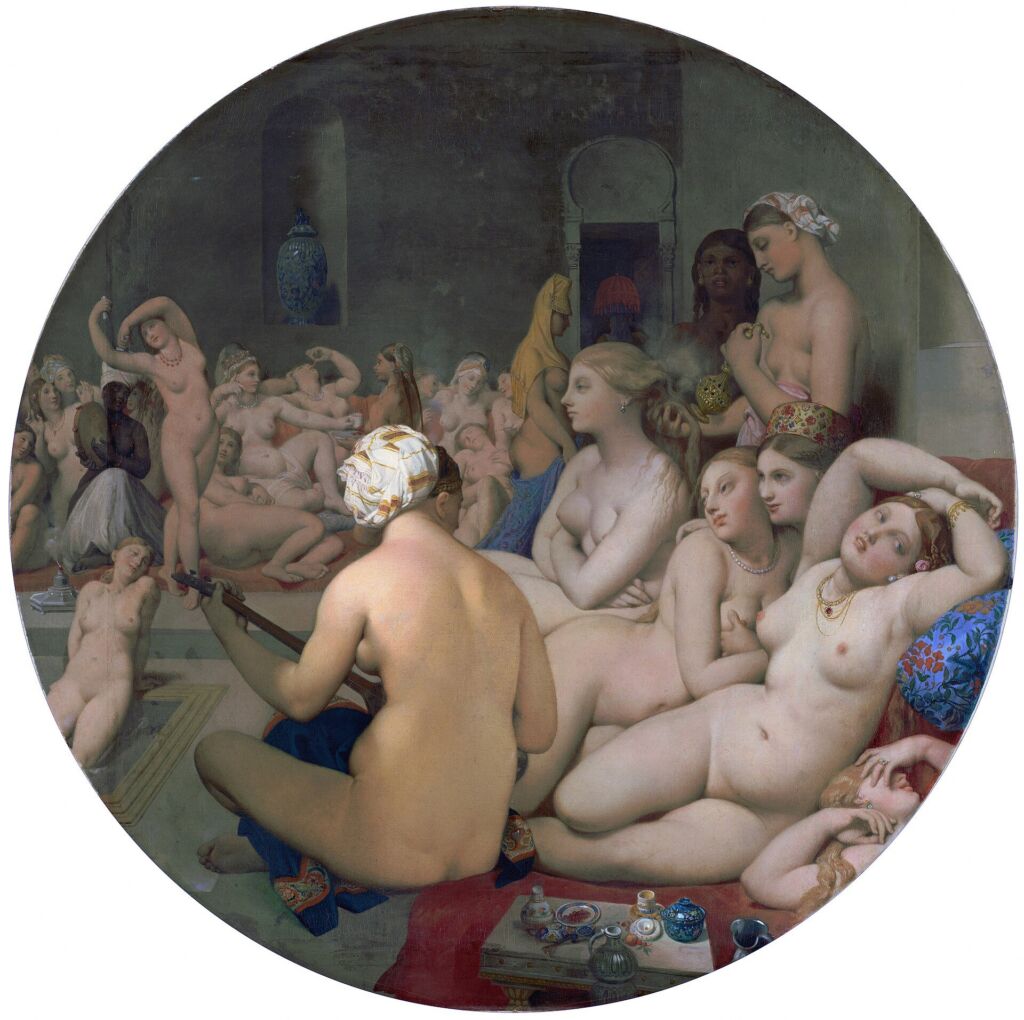
Eugène Delacroix painted The Massacre at Chios (1824, Louvre) before he ever traveled there, and in 1832 he went to Morocco with the diplomatic mission of the Count de Mornay. The sketchbooks he brought back nourished him for the rest of his life; the first fruit was Women of Algiers in Their Apartment (1834, Louvre). Jean-Auguste-Dominique Ingres never set foot in the East, yet he created two of its defining images, the Grande Odalisque (1814) and The Turkish Bath (1862), both in the Louvre. Alexandre-Gabriel Decamps, Théodore Chassériau, who visited Algeria in 1846, and Eugène Fromentin, author of A Summer in the Sahara (1857), went looking for the real East. Jean-Léon Gérôme, who traveled to Egypt many times, turned it into meticulous, almost photographic Salon pictures that sold well, not least as reproductions published by the firm of his father-in-law, Adolphe Goupil.
Nineteenth-century audiences received Orientalism with delight. Eastern subjects were a sure route to success at the Salon, and in 1893 Paris even acquired a Society of French Orientalist Painters. The arguments were not about the gaze itself but about how much truth and taste a picture showed. Critics in 1819 attacked the Grande Odalisque for the extra vertebrae in her back, not for the invented harem.
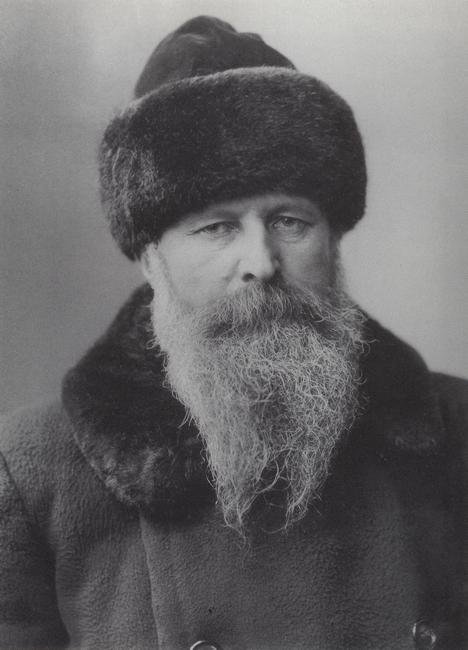
In Russia, Orientalism took a distinctive, sober form. Vasily Vereshchagin took part in the Russian campaigns in Turkestan, in Central Asia, and in 1871–1873 painted a series that shows the East without languor, as a place of war, cruelty and death. On the frame of The Apotheosis of War (1871), first conceived as The Triumph of Tamerlane, he placed the inscription "Dedicated to all great conquerors, past, present and future." The series was shown at the Crystal Palace in London in 1873 and in St Petersburg in 1874, where 30,000 copies of the catalog were sold. Military circles accused the artist of slandering the army, while the collector Pavel Tretyakov bought the entire Turkestan series for 92,000 rubles; it is now in the State Tretyakov Gallery.
Once the colonial empires had collapsed, Orientalism was reassessed. The literary scholar Edward Said's book Orientalism (1978) described it as the way the West invented the East in order to rule it, and Linda Nochlin's essay "The Imaginary Orient" (1983) carried that analysis over to painting. Today these pictures are seen in two ways: as documents of the colonial gaze, and as painting without which there would be neither the color of late Delacroix nor Matisse's Moroccan canvases.