Art movement
Pre-Raphaelites
1848 to the late 19th century · Britain
About the movement
In the autumn of 1848 a few students of the Royal Academy met at the house of John Everett Millais's parents on Gower Street in London and decided that English painting had taken a wrong turn, immediately after Raphael. So the secret Pre-Raphaelite Brotherhood was born. There were three founders, William Holman Hunt, Millais and Dante Gabriel Rossetti, and seven members in all: they were joined by Rossetti's brother William Michael, the sculptor Thomas Woolner, James Collinson and Frederic George Stephens. The mysterious initials PRB first appeared in 1849, on Millais's Isabella and Hunt's Rienzi at the Academy and on Rossetti's The Girlhood of Mary Virgin, shown at the Free Exhibition.
What they were rebelling against is clear from the name. The Academy, run by the heirs of Sir Joshua Reynolds, taught painting by recipe: dark underpainting, soft chiaroscuro, generalized forms, poses borrowed from Raphael and the Bolognese painters. The Pre-Raphaelites demanded truth: painting from nature, on a white ground, in pure bright color, every blade of grass and every wrinkle. Their models were the masters of the Early Renaissance, and their moral compass was the early writing of the critic John Ruskin, with his call to "go to Nature."
In 1850 the Brotherhood launched a journal, The Germ, which lasted four issues; among its contributors was Rossetti's sister, the poet Christina Rossetti. The same year brought the great scandal: Millais showed Christ in the House of His Parents (1849–1850, Tate) at the Academy. Writing in Household Words, Charles Dickens called the young Christ a "wry-necked, blubbering, red-headed boy, in a bed-gown"; a Holy Family in a real carpenter's shop struck him as blasphemous. Ruskin came to the rescue: in May 1851 he defended the young painters in two letters to The Times.
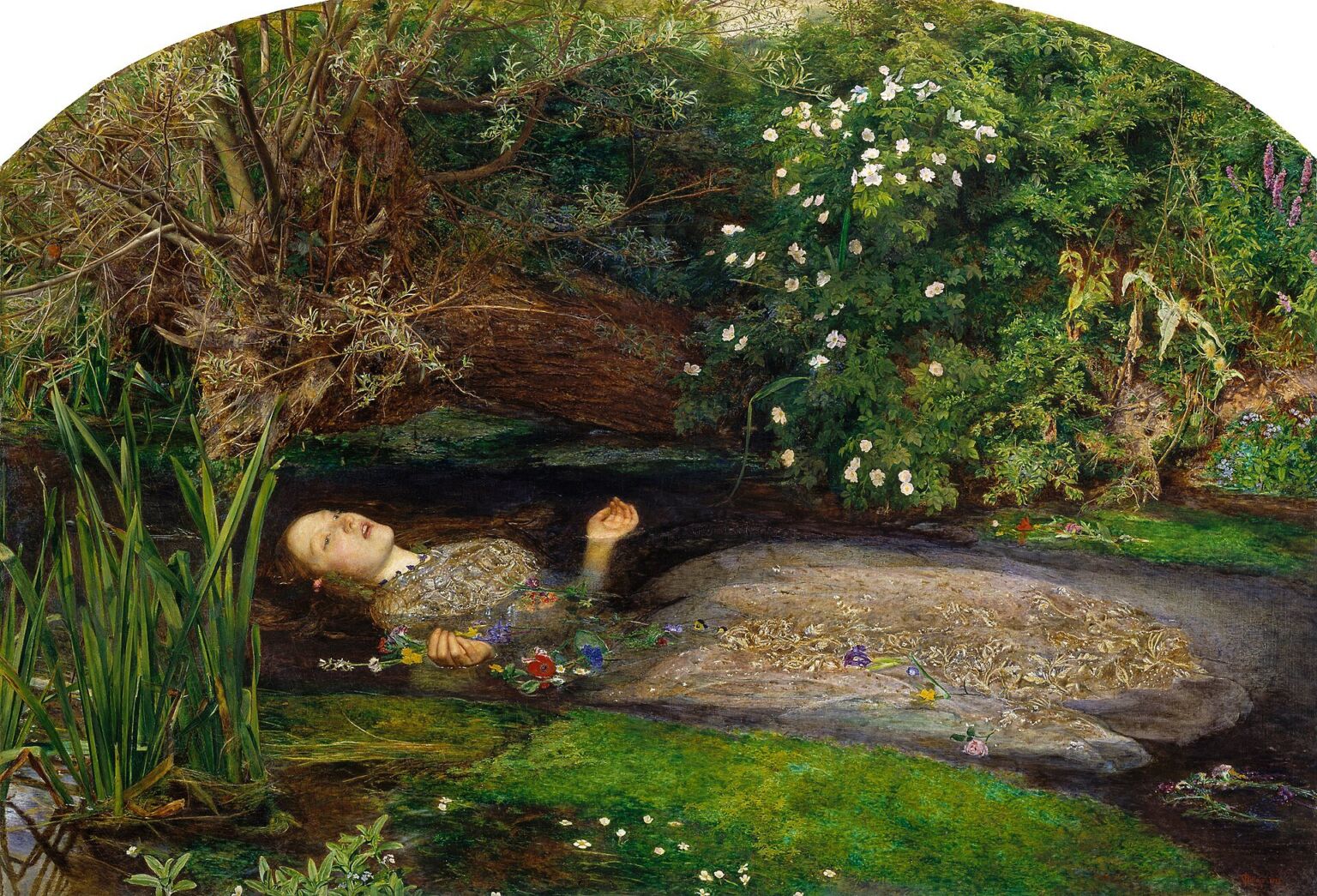
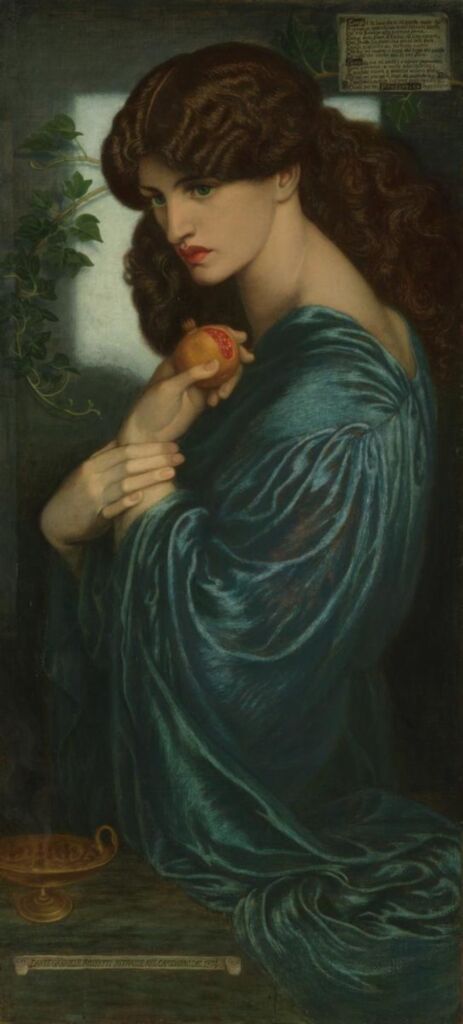
The movement's best-known pictures followed straight after. Millais spent months painting Ophelia (1851–1852, Tate) on the banks of the Hogsmill River in Surrey; his model was Elizabeth Siddal, Rossetti's future wife, who lay in a bath of water warmed by lamps. Hunt painted The Light of the World (1851–1853, Keble College, Oxford), one of the most widely reproduced religious pictures of the century. Rossetti soon moved away from fidelity to nature toward poetry and the Middle Ages; his late Proserpine (1874, Tate) was painted from Jane Morris, the wife of his friend William Morris.
As a brotherhood, the PRB had effectively fallen apart by 1853. Millais's career is the most telling: in 1853 he became an associate of the very Academy they had rebelled against, in 1863 a full Academician, and in 1896 its president, a few months before his death. Hunt stayed true to the principles all his life; in 1854 he went to Palestine, where he painted The Scapegoat on the shores of the Dead Sea.
Rossetti gave the movement a second life. Two Oxford students, Edward Burne-Jones and William Morris, gathered around him; in 1857 they painted Arthurian scenes together in the hall of the Oxford Union, and in 1861 Morris founded the firm from which the Arts and Crafts movement grew. This second wave moved away from exact observation toward dreamy female figures, legend and decoration. From the 1860s Pre-Raphaelitism was one of the most influential currents in Britain and paved the way directly for Aestheticism, Symbolism and European Art Nouveau, while the narrative clarity of its pictures later echoed in book illustration and even in film.
Stories