Art movement
Renaissance
Late 13th to 16th century · Italy, then Europe
About the movement
In 1401 the Florentine guild of cloth merchants announced a competition for the second set of bronze doors for the Baptistery. Seven masters completed the trial piece, a Sacrifice of Isaac in a quatrefoil frame, and the finalists were Lorenzo Ghiberti and Filippo Brunelleschi. Ghiberti won, and Brunelleschi, so the story goes, took offense and went off to Rome to study the ruins. He came back with perspective and with a dome for the cathedral. If the Renaissance has a birthday, many historians point to this very competition.
The word, too, was coined within the period. In 1550, in his Lives, Giorgio Vasari called art's return to nature and antiquity a "rinascita," a rebirth. "Renaissance" as the name of a whole era came later: in 1855 Jules Michelet gave that title to a volume of his History of France, and in 1860 Jacob Burckhardt published The Civilization of the Renaissance in Italy. Twentieth-century medievalists pointed out that there had been several "renaissances," and that the boundary with the Middle Ages was far softer than Vasari made it.
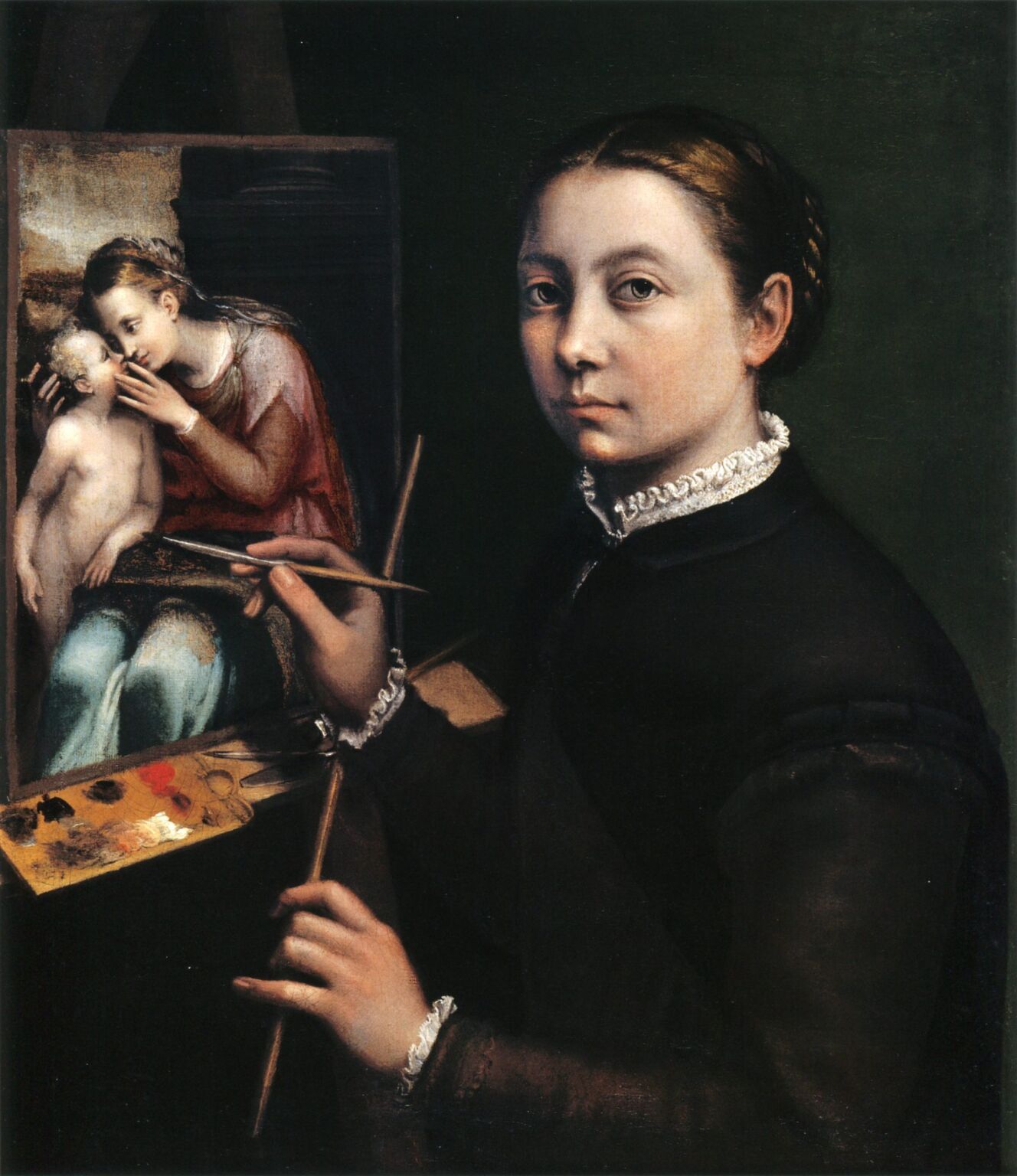
At its core was a new attitude to the visible world. The humanists read Cicero and Plato, and the artists measured space. Brunelleschi worked out the laws of linear perspective, and Leon Battista Alberti, in his treatise On Painting (1435), described a picture as an open window. Anatomy, proportion and light became subjects of research. The artist was turning from a guild craftsman into a scholar and a companion of princes. The printing press helped: after Gutenberg, from the 1460s onward, books and prints carried ancient texts and new models faster than any pilgrim.
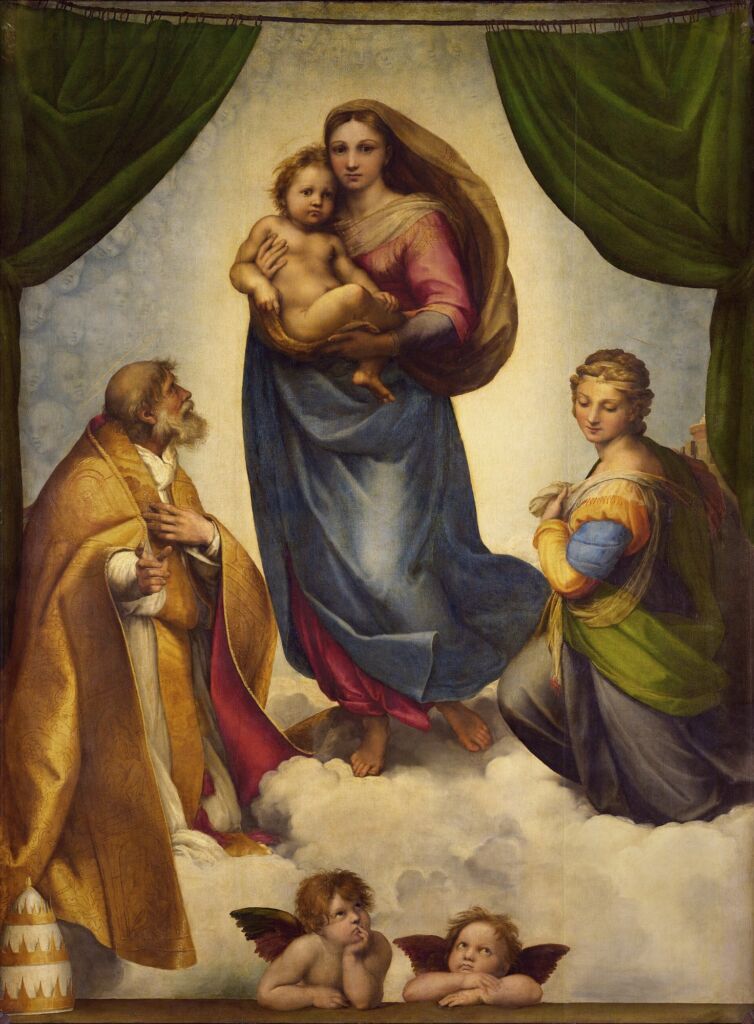
The Hroniki encyclopedia divides the Renaissance into several entries, and this one is the general map. The Proto-Renaissance spans the turn of the 13th and 14th centuries: Giotto and his frescoes in the Scrovegni Chapel in Padua (around 1305). The Early Renaissance is 15th-century Florence: Masaccio, Donatello, Fra Angelico, and Sandro Botticelli with Primavera and The Birth of Venus (1480s, Uffizi Gallery). The High Renaissance covers a few decades around 1500: Leonardo da Vinci's Last Supper (1495–1498), Michelangelo's Sistine Chapel ceiling (1508–1512) and Raphael's School of Athens (1509–1511). Alongside ran the separate path of the Venetian school, Bellini, Giorgione and Titian, for whom color mattered more than drawing. Mannerism, from the 1520s, stretched proportions and complicated poses, while north of the Alps the Northern Renaissance of van Eyck, Dürer and Bruegel joined the new observation to the Gothic tradition.
Contemporaries knew they were living in a special time. Alberti dedicated the Italian version of his treatise to Brunelleschi, in admiration of masters who were the equals of the ancients. Vasari built his book as an ascent to Michelangelo, hailed as "divine" in his own lifetime. The old manner he called "Greek," meaning Byzantine, and considered it crude. But there were other voices too: in 1497 in Florence, stirred by the sermons of Savonarola, crowds burned "vanities": mirrors, books, paintings.
In Russia the Renaissance is known above all through the State Hermitage Museum. It has two paintings by Leonardo, a great rarity for any museum: the Litta Madonna, bought in 1865, and the Benois Madonna, acquired in 1914 from the family of the architect Leonty Benois. It also holds Raphael's Conestabile Madonna, Giorgione's Judith, Titian's Danaë and Penitent Magdalene, and Michelangelo's Crouching Boy. In Moscow, in 1912, Ivan Tsvetaev opened a museum of plaster casts, today's Pushkin State Museum of Fine Arts, so that students could see Renaissance sculpture at full size.
After the Sack of Rome in 1527 and the Reformation, the center of gravity shifted, but the language found in Florence became a school for Europe for three centuries. The academies, the Baroque, Classicism: all are variations on the themes of the Renaissance or arguments with it.
Stories