Sofonisba Anguissola: the Spanish court, dozens of self-portraits and advice to the young van Dyck
In 1624 in Palermo the young van Dyck sketched the nearly blind Sofonisba Anguissola and wrote down her advice on lighting. From that visit the story runs back to Cremona, Michelangelo and the Spanish court.
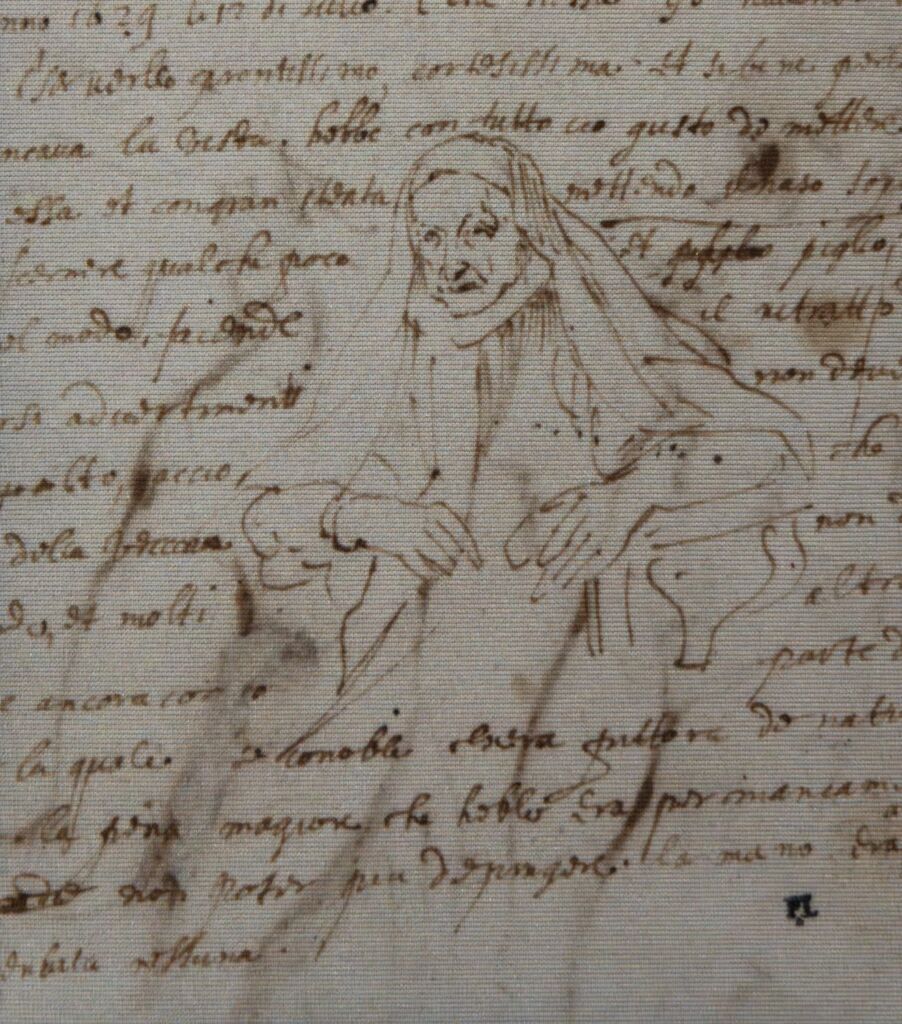
On July 12, 1624, in Palermo, the young Anthony van Dyck sat down opposite a very old woman and opened his traveling sketchbook. Beneath a quick pen sketch he wrote a long note in Italian. The woman was Sofonisba Anguissola, the painter Philip II had once summoned to the Spanish court.
Van Dyck had come to Sicily to paint the viceroy, Emanuele Filiberto of Savoy, and was kept there by an outbreak of plague. The visit to Sofonisba was a minor episode of the journey, yet the 25-year-old Fleming recorded it in detail.
“Not to take the light from too high”
Van Dyck’s Italian Sketchbook is now in the British Museum. The sketch is in pen and brown ink, and in the inscription van Dyck states the sitter’s age plainly: 96.
The number is probably too high. If Sofonisba was born around 1532, she was about 92. The rest of the note reads like close observation. Her memory and mind, van Dyck writes, were still sharp, but her sight was nearly gone: she still loved pictures but could make them out only by holding them almost to her nose.
While he was drawing her, she gave him several pieces of advice. One concerned the lighting of this very portrait: he should not take the light from too high, “lest the shadows in the wrinkles of old age should become too strong,” van Dyck wrote.
She also told him episodes from her life. Listening to her, van Dyck saw that she was “a painter by nature,” and he set down her greatest sorrow: because of her blindness, she could no longer paint. Her hand, he noted, was still firm, without any tremor.
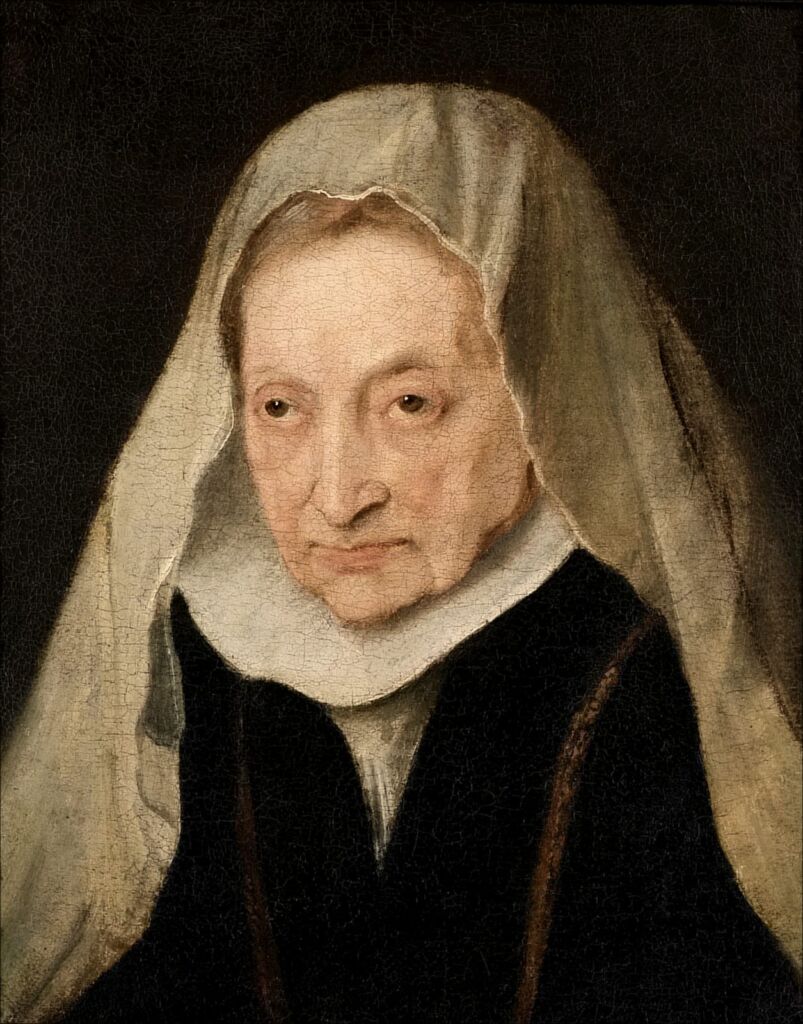
Working from this sketch, or at about the same time, van Dyck painted a small portrait of her in oil on panel. Its sitter was once thought to be the Countess of Desmond. The picture now hangs at Knole, a country house in Kent; it has belonged to the National Trust since 2013.
A crying boy for Michelangelo
Sofonisba’s own story began in Cremona. Her father, Amilcare, a nobleman who did not paint, placed her and her sister Elena in the household of the painter Bernardino Campi in 1546. When Campi left for Milan three years later, Bernardino Gatti took over her training.
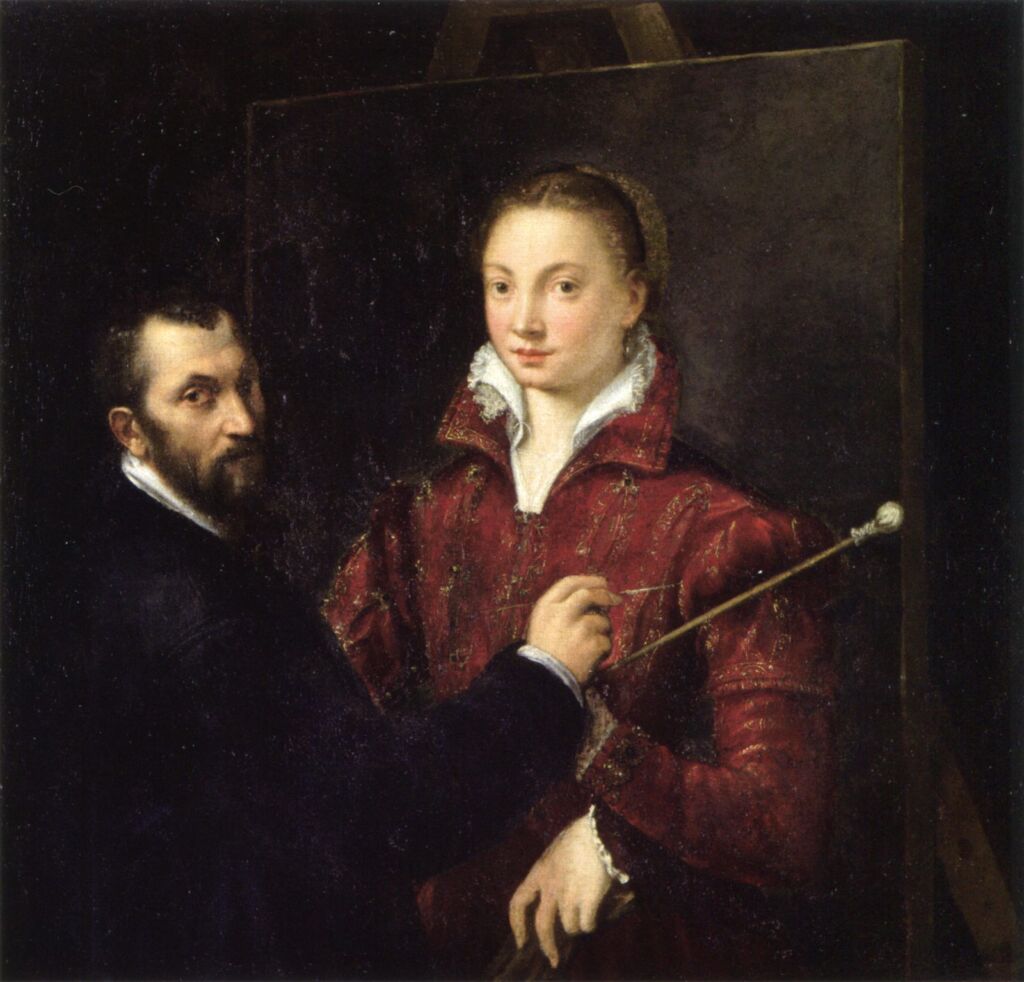
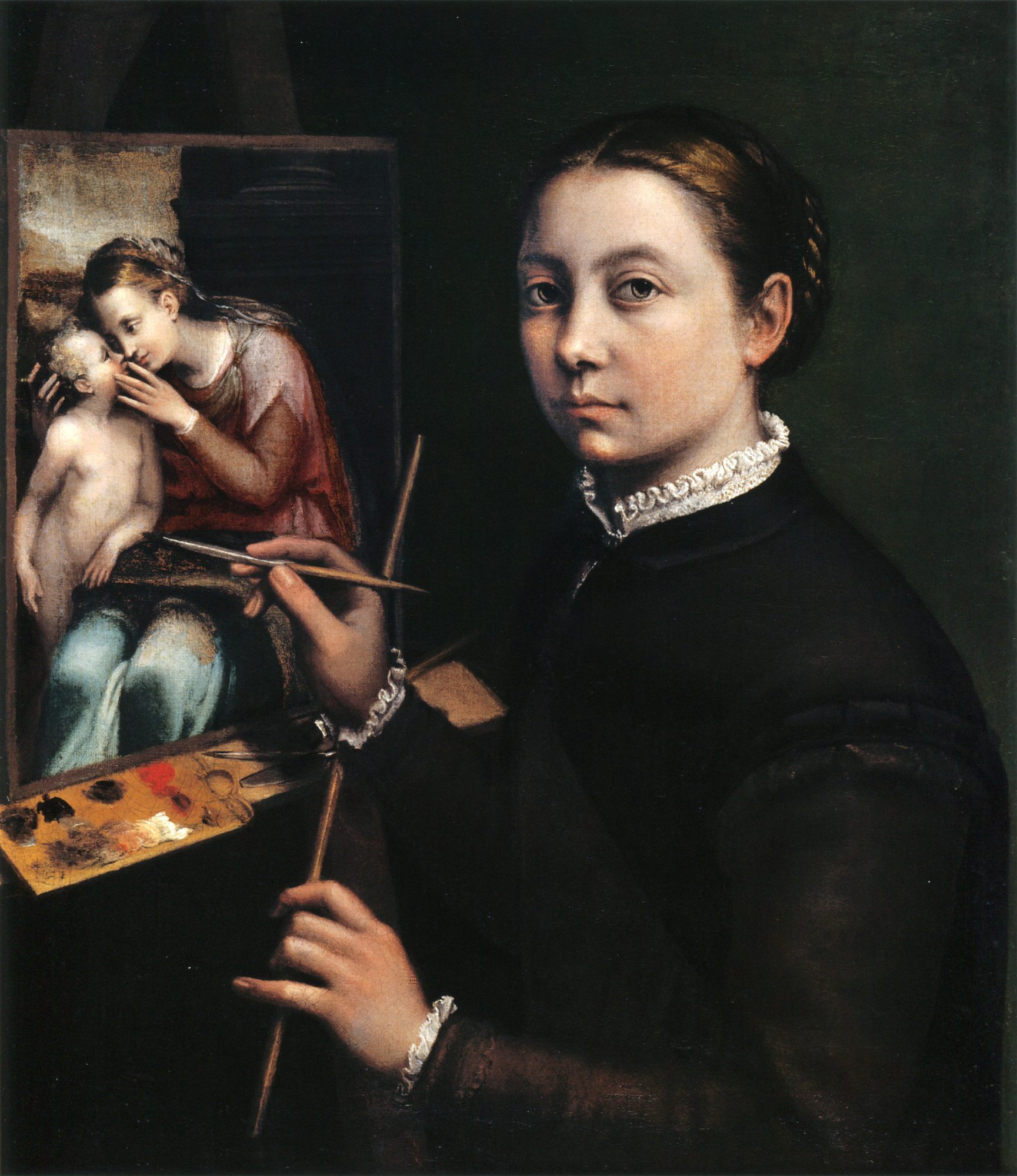
Later the pupil painted her teacher at work: Campi at the easel, portraying Sofonisba herself. Most scholars accept the Siena canvas as hers, though the art historian Michael Cole has his doubts.
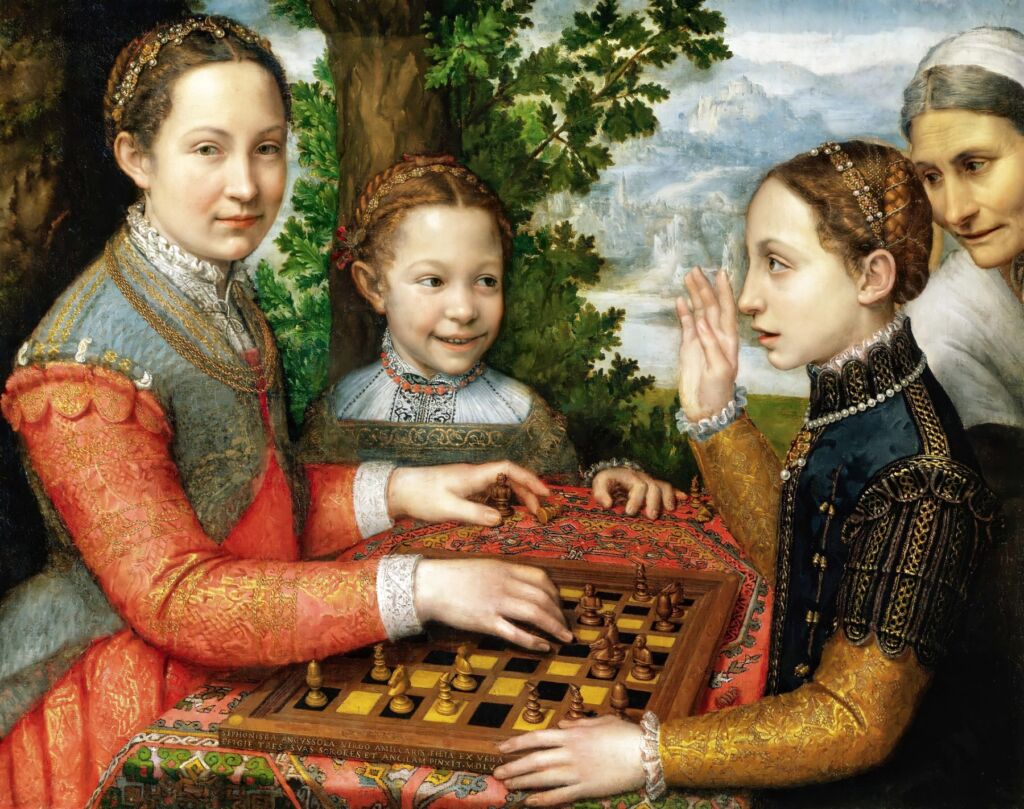
Around the same time she painted Lucia, Minerva, and Europa Anguissola Playing Chess (1555): three of her younger sisters at the board. It is now in the National Museum in Poznań. Sofonisba herself taught Lucia and Europa to paint, as well as the youngest sister, Anna Maria.
An episode from around 1554 is known from a letter that Tommaso de’ Cavalieri wrote to Duke Cosimo I de’ Medici on January 20, 1562. Michelangelo had seen Sofonisba’s drawing of a laughing girl and said he would like to see a crying boy. The usual telling adds that tears were thought harder to draw than a smile.
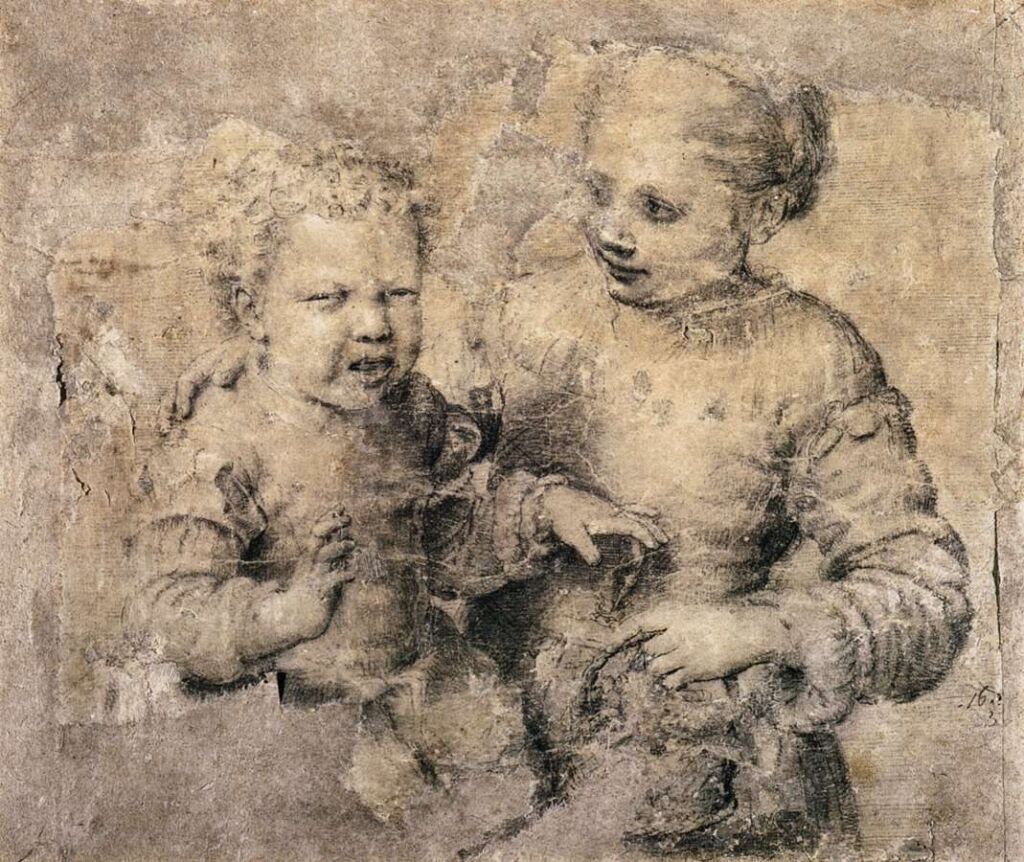
Sofonisba’s reply is the drawing now in the Museo di Capodimonte, Naples; the boy is traditionally identified as her younger brother Asdrubale. Years later Cavalieri sent the sheet to Cosimo with Michelangelo’s own Cleopatra: her drawing and his went to the duke in a single parcel.
Her father, meanwhile, kept up a correspondence with Michelangelo. In a letter of May 7, 1557, Amilcare thanks him for his interest in Sofonisba and asks for a drawing that she could color in oils.
Giorgio Vasari saw Sofonisba’s work in 1566 and wrote that she “has laboured at the difficulties of design with greater study and better grace than any other woman of our time.”
Portraits under other painters’ names
In 1559 Philip II invited Sofonisba to Madrid, to the household of his new wife, Isabel de Valois. Sofonisba arrived for the wedding at Guadalajara in January 1560 and became a lady-in-waiting to the queen.
It was the Spanish years that made Sofonisba nearly invisible. In 1606 the court painter Bartolomé Carducho credited Isabel de Valois holding a portrait of Philip II to Alonso Sánchez Coello. As the Prado notes, that attribution stood until quite recently. Technical analysis, in particular of its lead white ground, changed scholars’ minds.
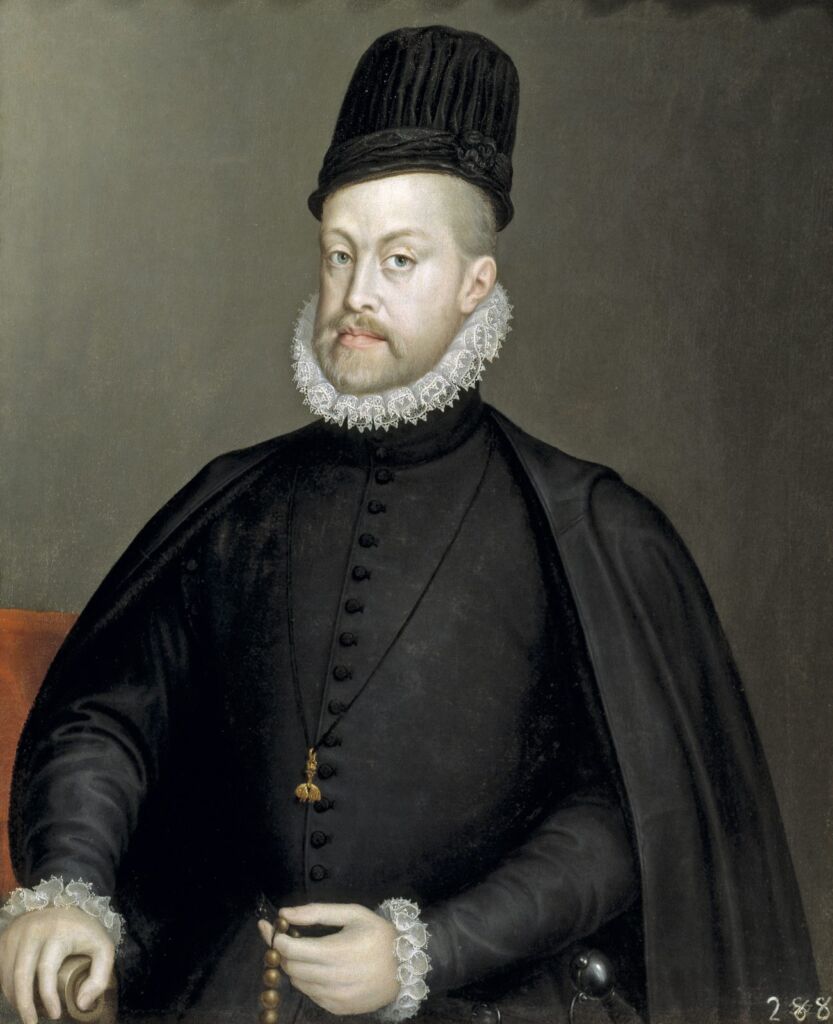
The portrait of Philip II himself, now in the Prado, met a similar fate: it too was long attributed to Sánchez Coello or Juan Pantoja de la Cruz. Britannica lists other names her pictures have hung under: Titian, Leonardo, Moroni and Zurbarán.
Around 1571, still in Madrid, Sofonisba married a Sicilian nobleman, Fabrizio de Moncada; the king provided her dowry. After his death she married Orazio Lomellino of Genoa, lived there for many years and late in life moved to Palermo. That is where van Dyck found her. Sofonisba died in November 1625.
Van Dyck began his note with the words “Portrait of the Lady Sofonisba, painter.” For a long time to come, her canvases would bear other painters’ names; here her name and her profession stand side by side, set down in her lifetime.
Comments
For Hroniki readers
Comments are open to readers with an account. Signing up is free and takes a few seconds.
No comments yet. Start the conversation.