What the little star in a “Frans Hals” signature gave away
For nearly 150 years, Judith Leyster's The Happy Couple was taken for a Frans Hals, until two London dealers took their quarrel to court. Today the corner of the panel reads J. Ly, followed by a small star.
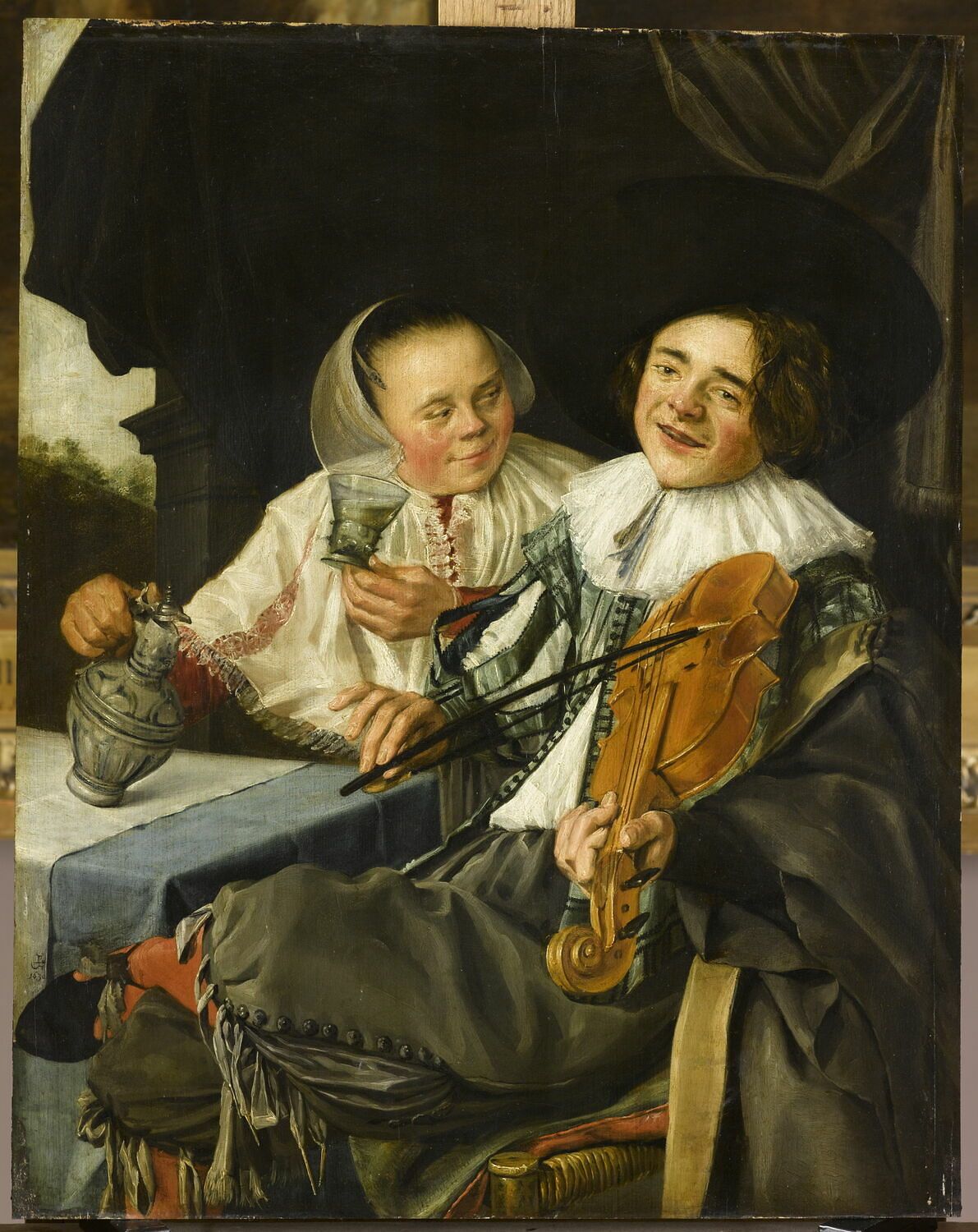
In 1892 the London picture dealer Asher Wertheimer sold a colleague named Lawrie a “Frans Hals”: a couple passing the time over wine and a violin. It had passed as one for nearly 150 years. Lawrie doubted it, the case went to court, and Wertheimer had to lower his price.
Today the lower left corner reads “J. Ly 1630,” with a small star right after the letters Ly. The star completes the name of Judith Leyster, and the signature has nothing to do with Hals.
A star for a syllable
In Dutch, ster means “star,” and the painter’s surname spelled out “guiding star.” Her father’s house in Haarlem was called De Leystar, and the family took its name from it. Contemporaries enjoyed the pun: in 1648 the Haarlem historian Theodorus Schrevelius called her “a true guiding star in art” (our translation).
By the late 19th century, though, her paintings went under other names. The Happy Couple (the Louvre catalogs it as La Joyeuse Compagnie) had been sold in London in 1758, at the posthumous sale of Sir Luke Schaub’s collection, already as a Hals. It then passed to the Barons Braybrooke, still as a Hals. The National Museum of Women in the Arts in Washington says a false Hals signature covered her real monogram. The Louvre’s catalog says nothing about it.
Seven paintings in one article
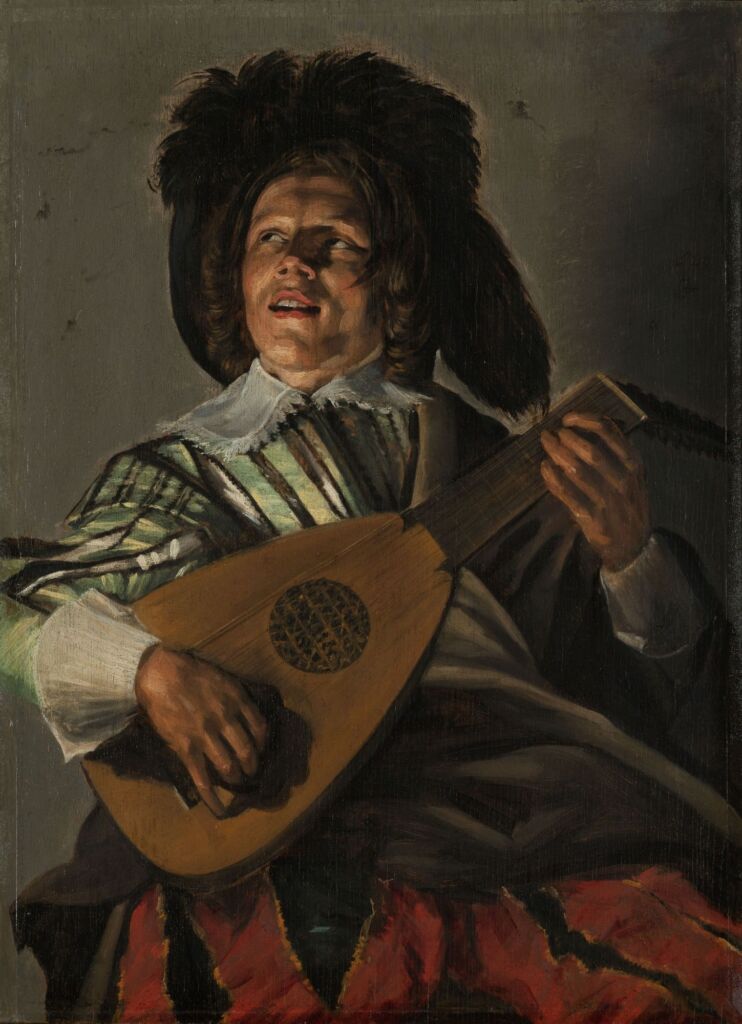
Signatures with a J and a star had been misread before. In 1883 the German connoisseur Wilhelm von Bode took the monogram on The Serenade for the initial of Jan Hals, Frans’s son. Her Jolly Drinker was offered at a Paris sale in 1890, likewise as a Jan Hals.
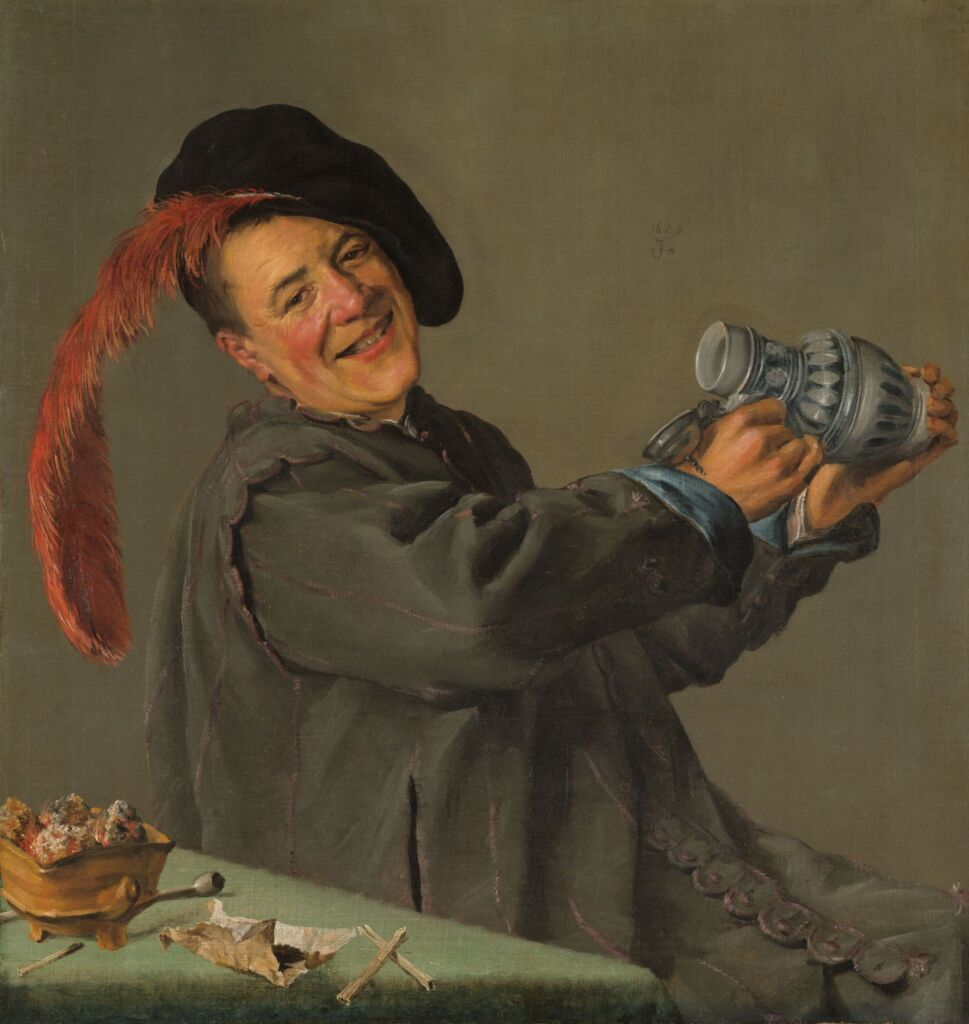
In 1893 the Dutch art historian Cornelis Hofstede de Groot put the letters together. He recognized Leyster’s monogram and published the first article on her, giving her back seven paintings, nearly all signed. Until then she had been remembered, if at all, as an imitator of Hals. In 1897 the Rijksmuseum bought The Jolly Drinker as a Leyster.
A stubborn legend has the Louvre buying The Happy Couple as a Hals and only then finding the signature. It is still repeated, including on the French Ministry of Culture’s website.
The Louvre’s catalog tells it differently. After the London lawsuit the painting went to Count Boniface de Castellane, then to Baron Basile de Schlichting. By 1906 it was listed in Schlichting’s collection, already as a Leyster, and in 1914 he bequeathed it to the museum.
The pupil who left for Hals
In her lifetime she had a name of her own in the trade. In 1633 Leyster joined Haarlem’s Guild of Saint Luke, the painters’ guild, as one of the first women on its rolls, and according to the National Gallery of Art in Washington, possibly the very first. The gallery owns her self-portrait of about 1630. It, too, was long taken for a Hals, until the art historian Abraham Bredius identified it as hers.
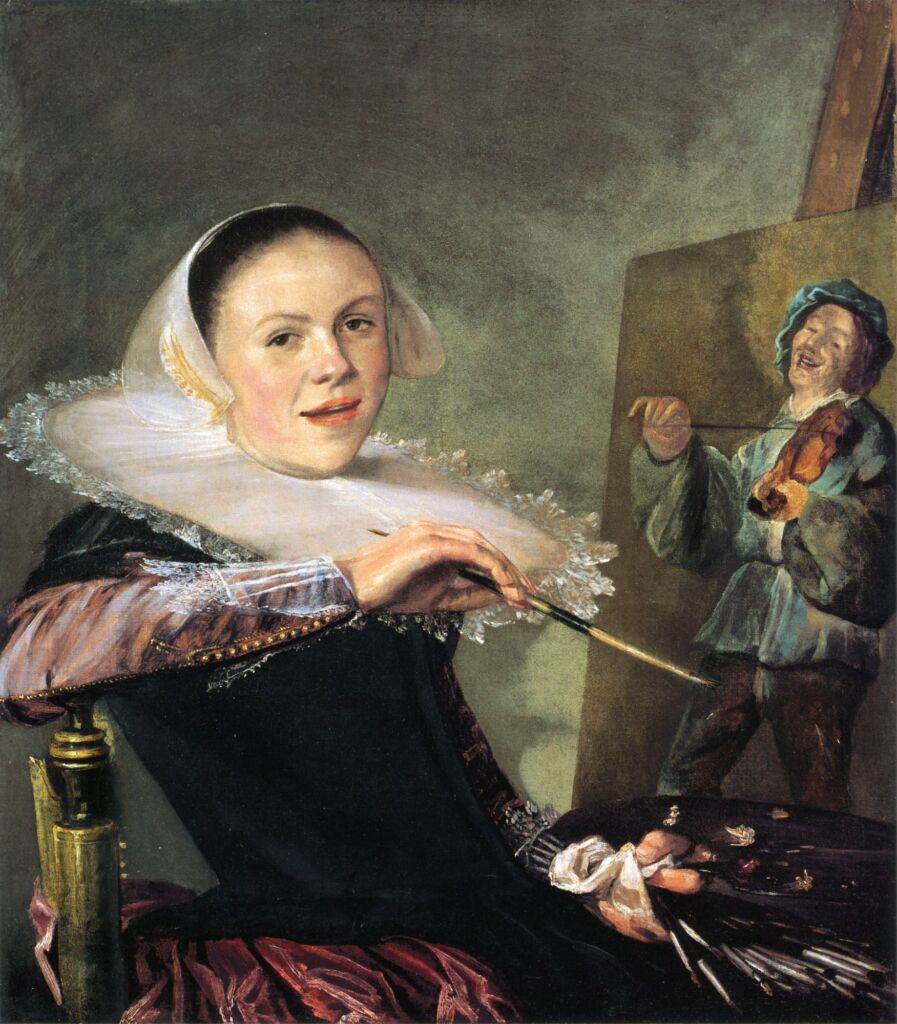
The scholar Burton Fredericksen suggests it was the picture offered at London sales in 1810–12 as “The Portrait of F. Hals’ Daughter by F. Hals.” In 1930 Gerrit David Gratama published an article in the journal Oud-Holland titled “The portrait of Judith Leyster by Frans Hals”: he recognized the sitter but not the hand. Bredius, the editor, appended a note: it was a self-portrait.
The picture hides a substitution too. Infrared imaging shows that the canvas on her easel first held a woman’s head, lips parted, turned slightly to the left. Leyster painted the fiddler over it, taken from another of her genre scenes, Merry Company (about 1629–31, private collection), not the Louvre picture. Arthur K. Wheelock Jr., who wrote the gallery’s scholarly catalog entry, thinks the first sitter was probably Leyster herself. Why she changed it is unknown; Wheelock suggests the Merry Company scene had proved popular, or that she wanted to show both portraiture and genre.
As a master she could take pupils, and did. In 1635 one of them, Willem Woutersz, left her for Hals, and Leyster took the matter to the guild. The guild ordered the pupil’s mother to pay her, though less than the painter had asked. As for Hals, biographers disagree: in one version he paid a fine, in another the young man was barred from studying with him.
A year later Leyster married the painter Jan Miense Molenaer, and her output dropped noticeably. Of 17th-century women painters, the story most often told is Artemisia Gentileschi’s and the trial in Rome. The Haarlem story is quieter: an apprentice who defected to a famous neighbor, and an argument over a few guilders.
Today The Happy Couple hangs in Room 846 of the Louvre’s Richelieu wing, titled “Frans Hals and Painting in Haarlem.” It is beside Hals again, this time under its own name.
Comments
For Hroniki readers
Comments are open to readers with an account. Signing up is free and takes a few seconds.
No comments yet. Start the conversation.