Vermeer’s View of Delft and the yellow wall nobody can find
In 1921 an ailing Proust went to an exhibition to see Vermeer's View of Delft, then lent the visit to Bergotte, a writer in his novel. Readers are still searching the canvas for the patch of yellow wall Bergotte was looking at.
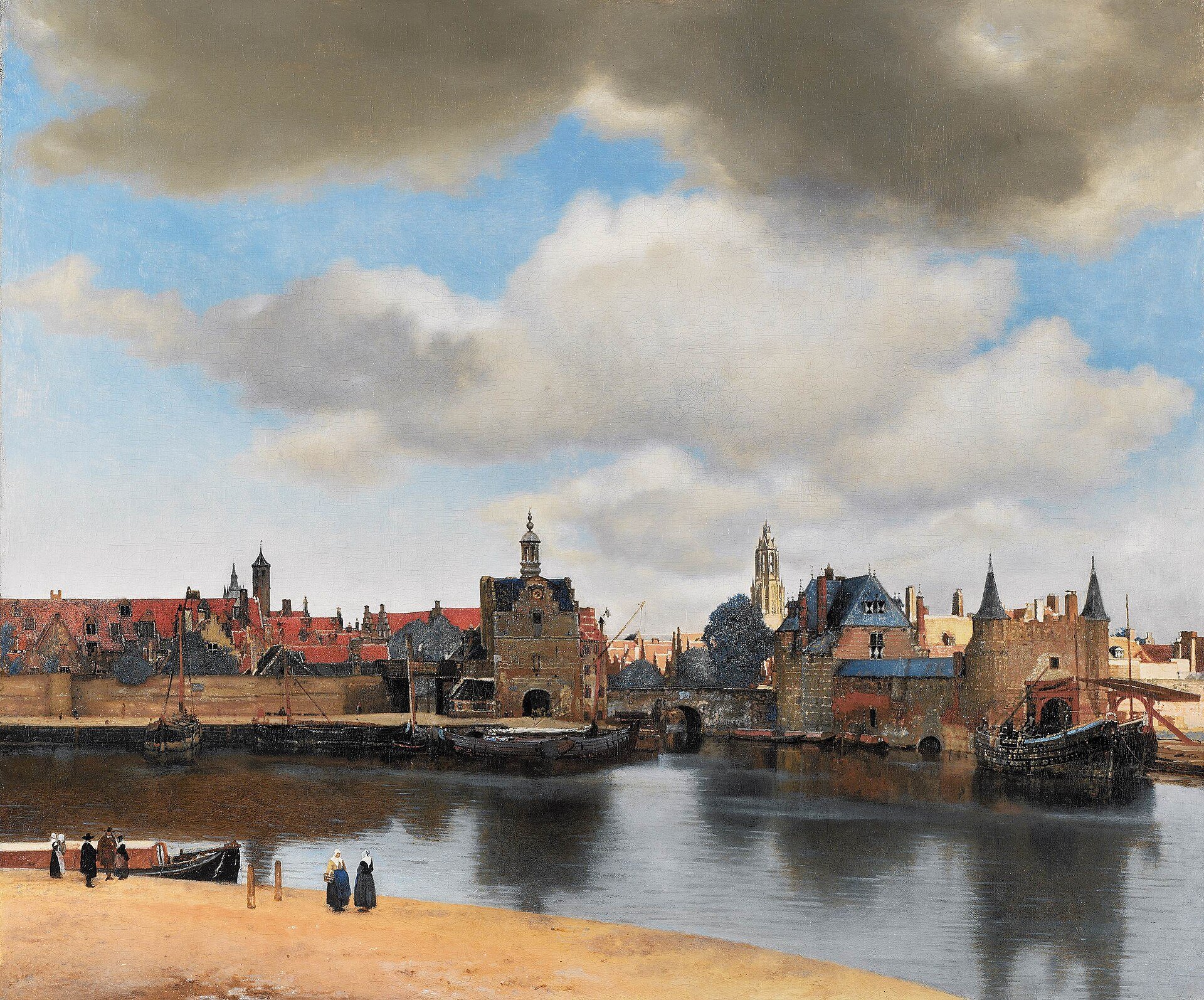
Marcel Proust saw Vermeer’s View of Delft twice: in The Hague in fall 1902 and in Paris in spring 1921, a year and a half before he died. The second time it was in a Dutch show at the Jeu de Paume, with The Milkmaid and Girl with a Pearl Earring.
Proust later wrote that visit into one of the best-known scenes of In Search of Lost Time: Bergotte, a fictional writer, dies in front of the painting. Ever since, readers have hunted the canvas for his “little patch of yellow wall.”
On Vaudoyer’s arm
In The Hague, Proust had seen the painting at the Mauritshuis, which still owns it. Vermeer painted it around 1660–61.
In 1902 Vermeer’s fame was still new. Around 1842 the French critic Théophile Thoré had come across View of Delft in the same gallery in The Hague. Nearly a quarter of a century later he recalled that “a superb and most unusual landscape captures the attention of every visitor,” and that in France nobody knew the man who painted it.
A republican, Thoré fled France in 1849 and spent ten years in exile. Living in Belgium and the Netherlands under the pen name Willem Bürger, he tracked down Vermeer’s paintings across collections. In 1866 he published three articles in the Paris Gazette des Beaux-Arts — in effect the first catalog of his work. His list was far too generous — it included pictures by Jan Vermeer of Haarlem and Jacob Vrel — and later scholars cut it down sharply. Still, Thoré is generally credited with rediscovering Vermeer, and by Proust’s youth the name was known.
In spring 1921 Proust’s friend, the critic Jean-Louis Vaudoyer, wrote on “the mysterious Vermeer” in the weekly L’Opinion. Proust wrote back that in The Hague he had known he was seeing “the most beautiful painting in the world.” In the next letter he admitted Vermeer had been his favorite painter since he was twenty.
Proust asked Vaudoyer to come along. According to biographer George D. Painter, he felt dizzy leaving the house, and in the galleries Vaudoyer held him up. Vaudoyer later described the outing in a January 1923 letter to the editor Jacques Rivière.
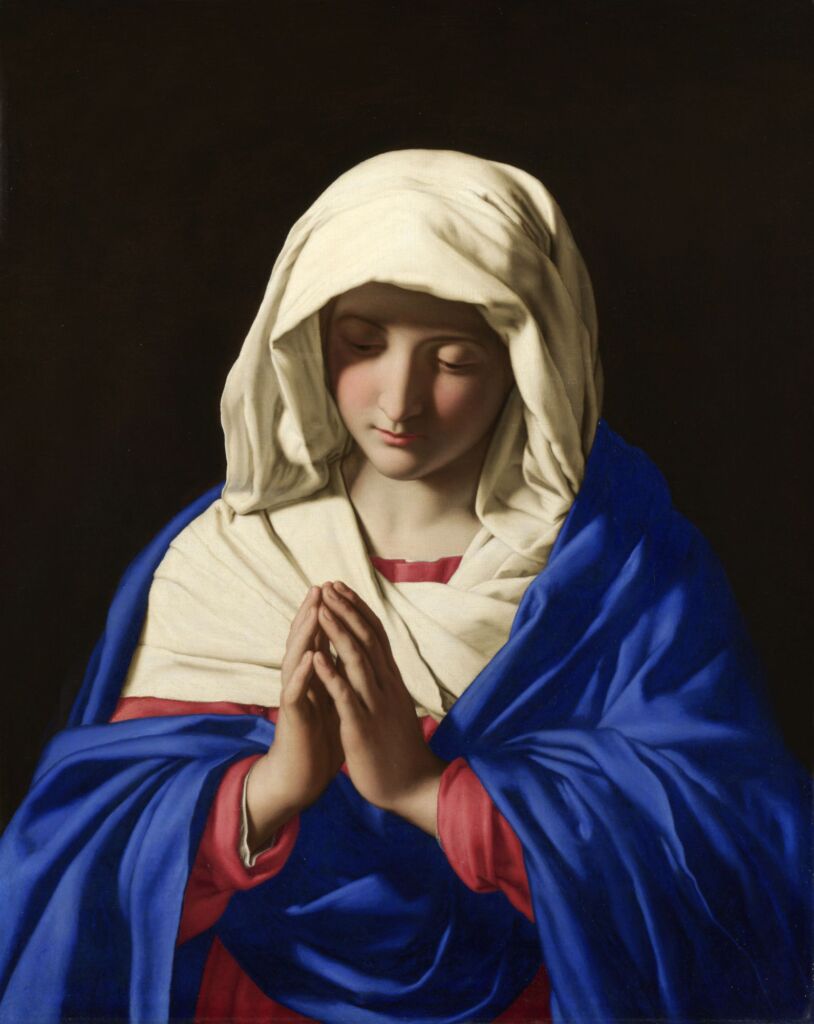
Bergotte’s scales
Proust never saw the scene in print: The Captive, the novel’s fifth volume, came out in 1923, after his death in November 1922. In it the ailing Bergotte reads a critic’s remark that the painting has a little patch of yellow wall like a precious piece of Chinese work. Not remembering the wall, he goes to the exhibition.
Before the painting he notices for the first time some small figures in blue, and that the sand is pink.
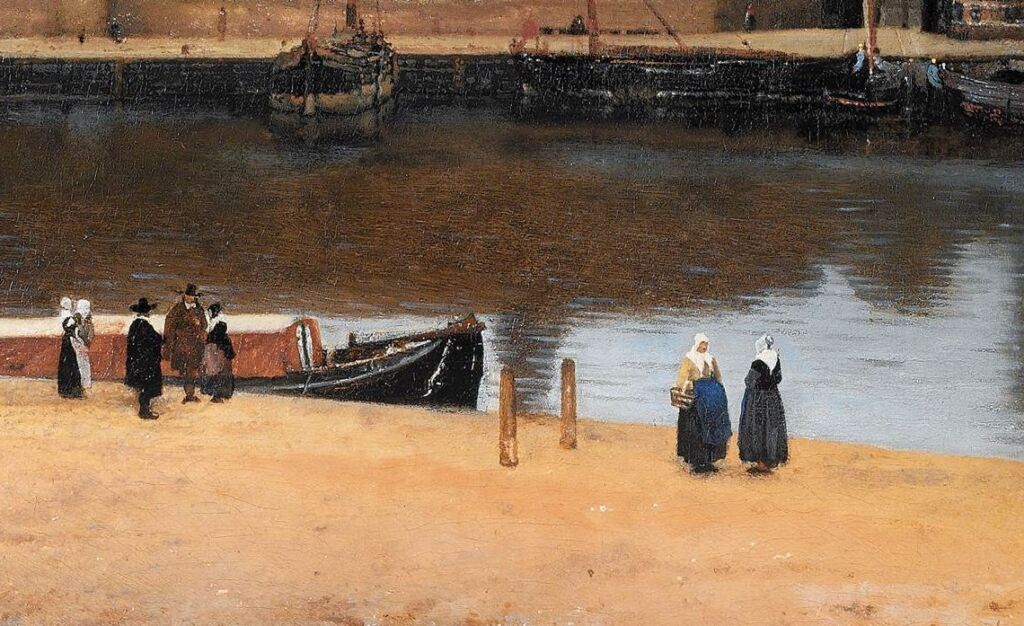
Then he sees the yellow wall. “That’s how I ought to have written,” he says, in C. K. Scott Moncrieff and Terence Kilmartin’s English. “My last books are too dry.” He should have added layers of color, he thinks, to make each sentence precious, like that wall.
Next Proust sets up “a celestial pair of scales”: Bergotte’s life in one pan, the patch of yellow wall in the other. He feels he has rashly traded one for the other. He repeats “petit pan de mur jaune avec un auvent” (“little patch of yellow wall, with a sloping roof”) and collapses. He is dead. Forever? Proust asks at once.
A roof, a bridge, or an invention
As early as 1936 the French journal L’Amour de l’art identified the patch as the yellow roof with a dormer by the Rotterdam Gate, right of center, the yellowest spot in the town.
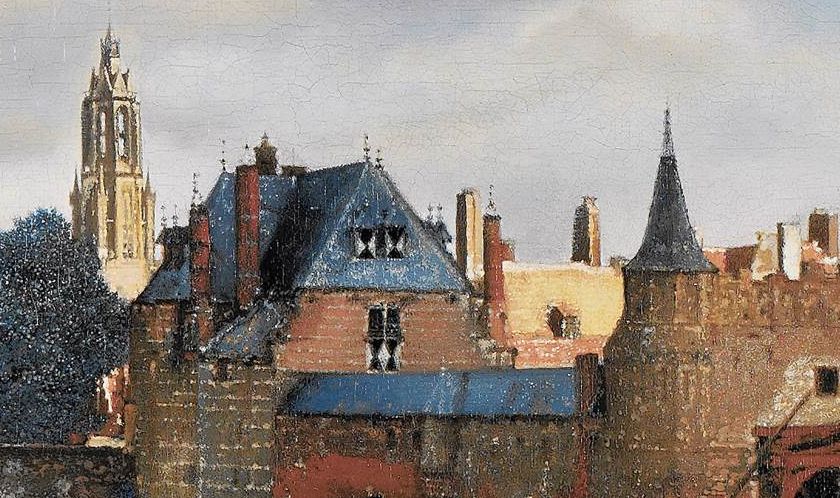
Vermeer did paint that roof in layers. The American scholar Arthur K. Wheelock Jr. writes that it was first salmon pink, like the distant roofs, before the painter covered it in dense yellow. Its rough texture, the museum says, comes from coarse lead white grains in the underpainting, the first layer.
Not everyone agrees. The German journalist Dieter E. Zimmer objected that this is a roof, not a wall, and that the dormer has no awning, no auvent. The editors of the Pléiade, the scholarly French edition of Proust, place the patch at the far right edge, though there is no sloping roof there, only the top of a drawbridge.
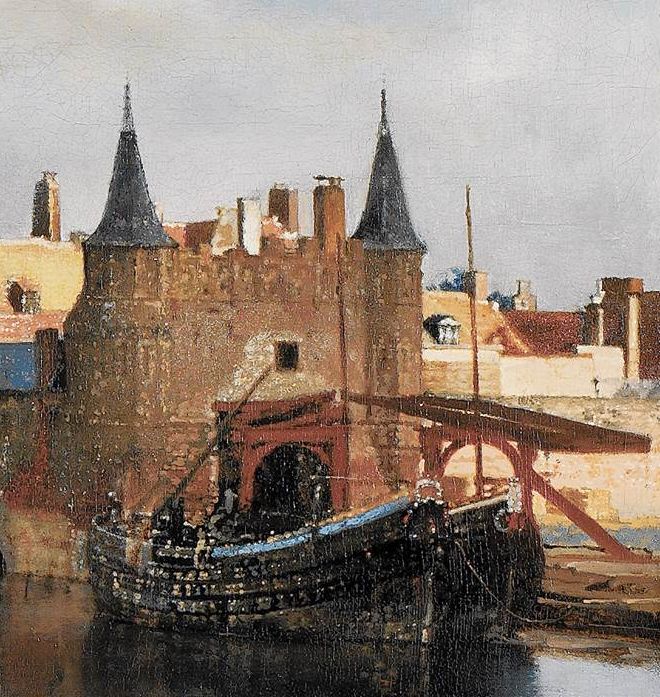
In a 1996 essay Zimmer reached the simplest conclusion: there is no patch of yellow wall in the painting (in German), and Proust most likely made it up.
For now you have to test the theories in Madrid, not The Hague: through January 10, 2027, the painting hangs at the Museo Nacional Thyssen-Bornemisza, which swapped highlights with the Mauritshuis.
Bring The Captive and you’ll find the yellow roof, the pink sand and the figures in blue. The wall, perhaps not. Maybe it was never on the canvas, just in the eyes of a man looking at a painting for the last time.
Comments
For Hroniki readers
Comments are open to readers with an account. Signing up is free and takes a few seconds.
No comments yet. Start the conversation.