Impasto: from Titian’s fingertips to Van Gogh’s clouds
Impasto is paint laid on so thickly it rises off the canvas. How the technique traveled from late Titian's fingers to the sleeve in Rembrandt's Jewish Bride and the clouds of Van Gogh's cypresses.
Impasto is paint laid on so thickly it rises off the canvas. The stroke has a ridge, bristle marks, its own shadow. The word is Italian, from impastare, to knead, as in flour and water.
It is the opposite of sfumato, in which Leonardo hid every trace of the brush. According to Britannica, impasto came into its own in the 17th century, when painters used it for wrinkled skin and the glint of armor, jewelry and rich fabrics. Yet the story begins in Venice.
Perfect from a distance
In his Lives (second edition, 1568), Giorgio Vasari compared early and late Titian. The careful early pictures worked from near or far; the late ones were made of broad strokes and patches, so that, in Vasari’s words, “from near little can be seen, but from a distance they appear perfect.”
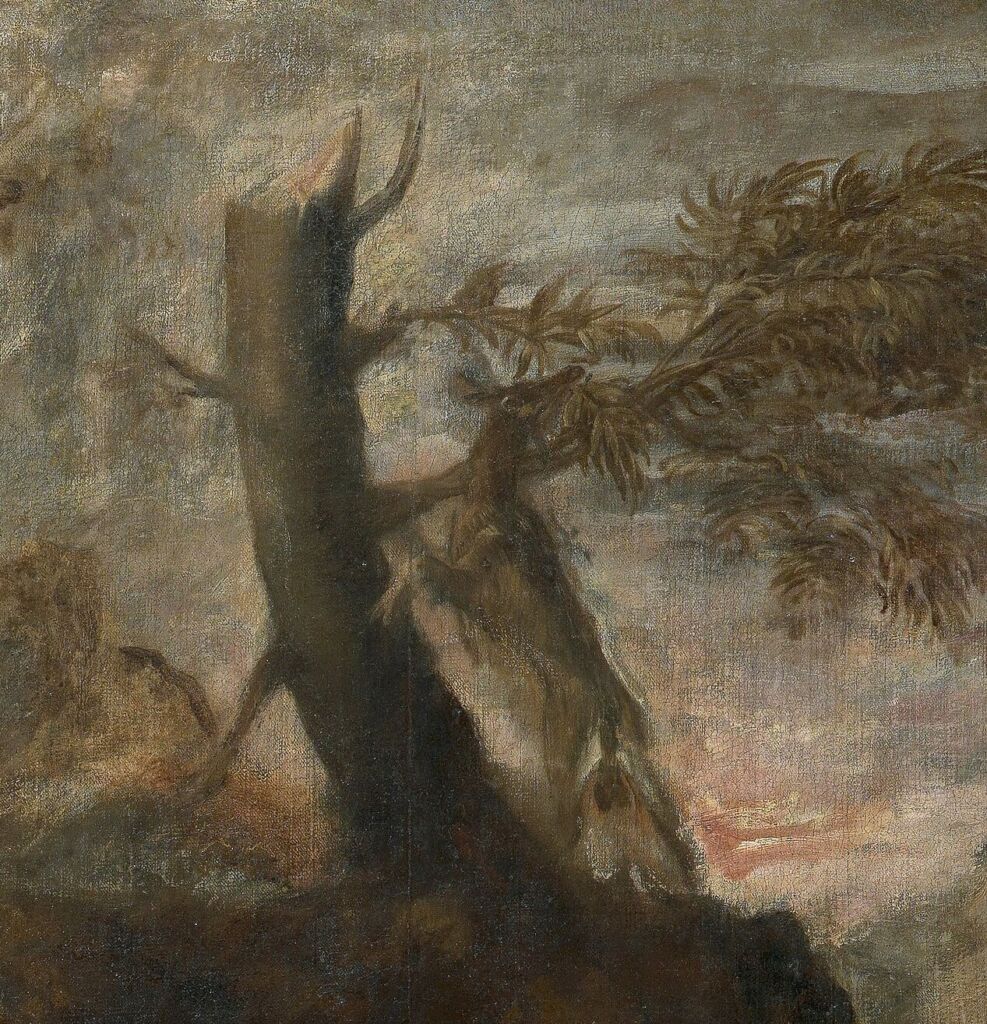
Palma il Giovane, who completed Titian’s last Pietà after his death, described how the old master worked, though the Venetian writer Marco Boschini did not record it until 1674: in the final touches, Titian used his fingers more than his brush.
In Nymph and Shepherd, painted in the early 1570s (Titian died in 1576), the brushwork is open, and the Kunsthistorisches Museum says it “anticipates the insights of the Impressionists.”
A portrait lifted by the nose
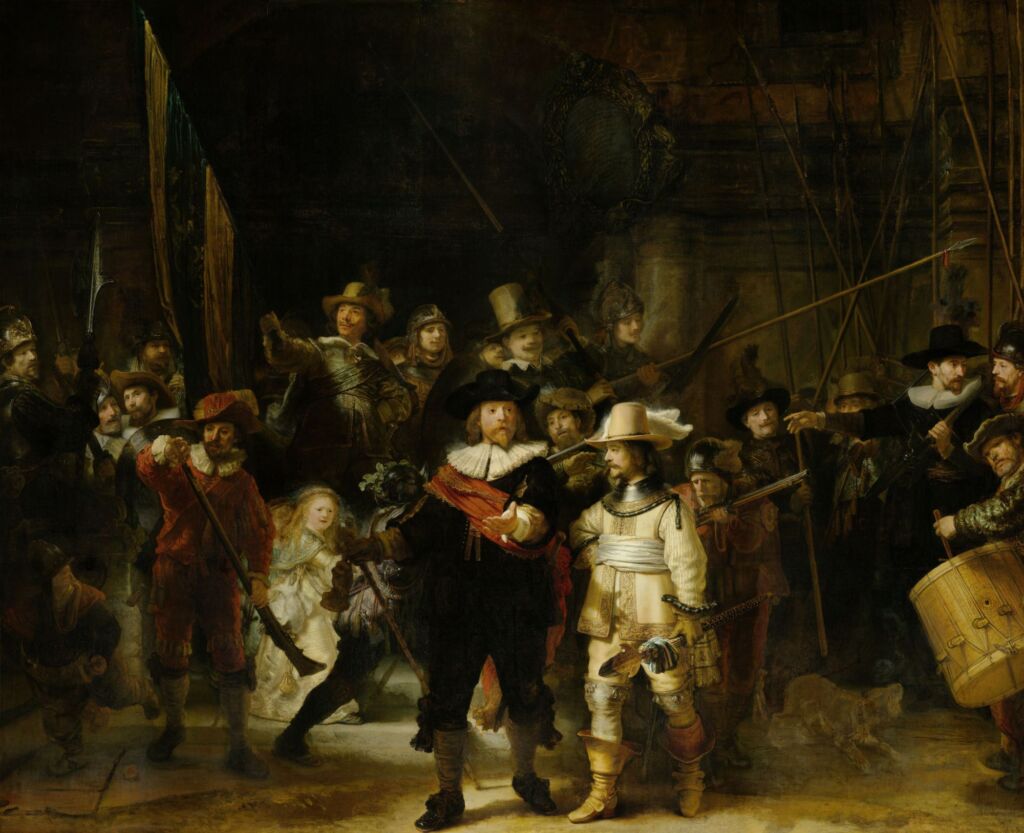
Nearly a century later, Rembrandt pushed thick paint to its limit. Arnold Houbraken, in his 1718 lives of Dutch painters, repeated a story told to him: Rembrandt once painted a portrait so thickly that you could lift it from the floor by its nose. Houbraken also reports that Rembrandt kept visitors away from his canvases, warning that “the smell of colors will bother you.”
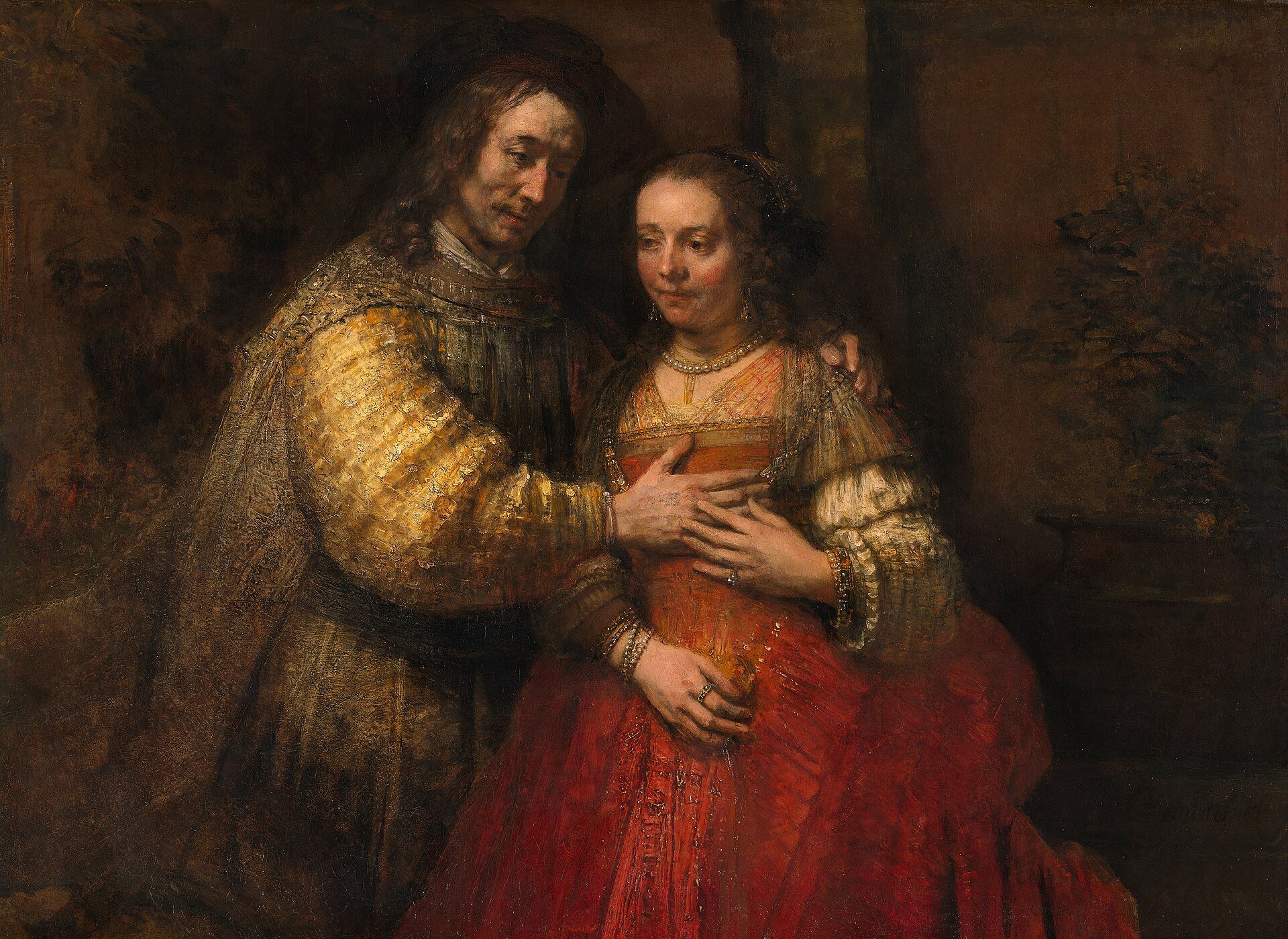
The best-known example is The Jewish Bride, really Isaac and Rebecca: in Genesis, Isaac passes his wife off as his sister, but their tenderness gives them away. As the Rijksmuseum describes it, Rembrandt applies the paint thickly and scratches into it with the butt end of his brush.
The paint on Isaac’s sleeve is so thick that, as the Rembrandt House Museum notes, it looks as if Rembrandt had used a palette knife. From afar it is gold cloth; up close, ridges and scratches.
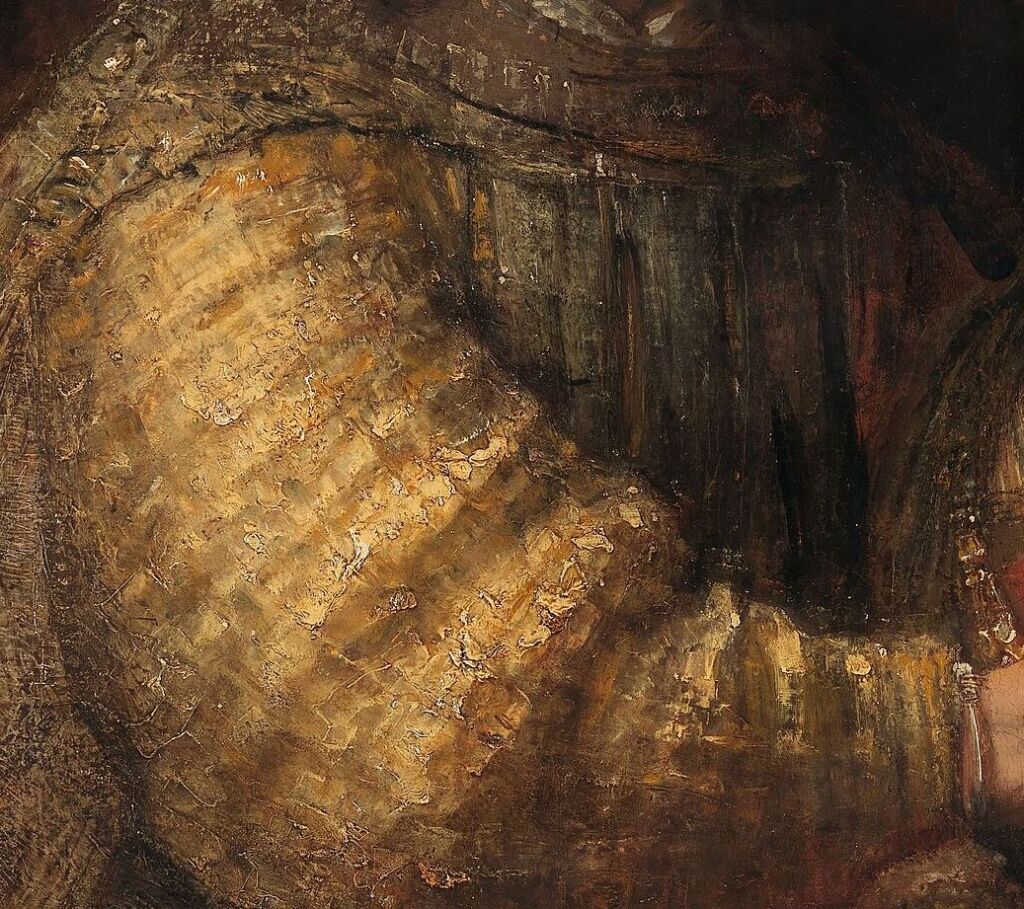
Light catches on the paint itself, each bump with its own highlight and shadow. It is chiaroscuro moved from the image onto the surface of the canvas.
A hand of fire
In October 1885 Vincent van Gogh spent three days in Amsterdam, almost all of them in the Rijksmuseum. He wrote to his brother Theo that The Jewish Bride was painted, in his own French, “d’une main de feu“: with a hand of fire. He also railed against smoothly finished faces, hands and eyes: the great masters had worked differently.
Almost four years later, in early June 1889, from the asylum at Saint-Rémy, he advised Theo to wash the dry canvases with water and a little spirits of wine to draw oil and thinner out of the impasto.
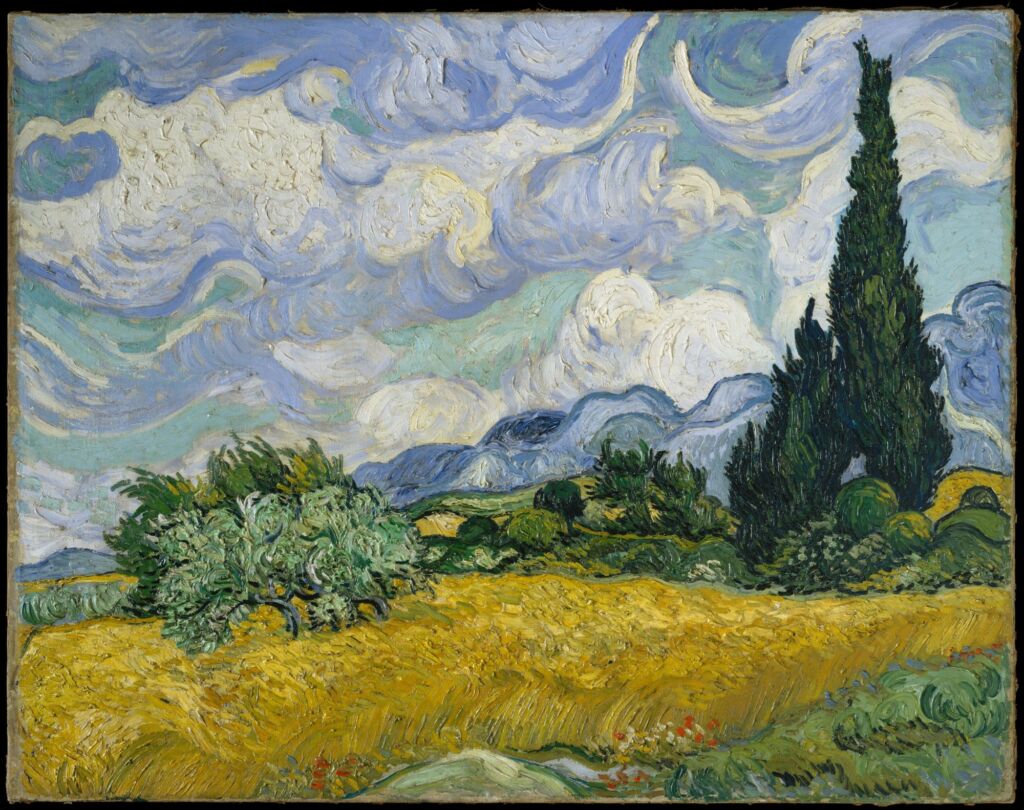
That summer he painted Wheat Field with Cypresses. The Met notes that the cypress paintings are distinctive for their rich impasto, and Van Gogh counted the canvas among his best summer landscapes.
In September he repeated the composition in the studio; that version, in the National Gallery, London, is painted less thickly than the first. For his own impasto, Van Gogh named the thick paint of the Marseille artist Adolphe Monticelli as an influence.
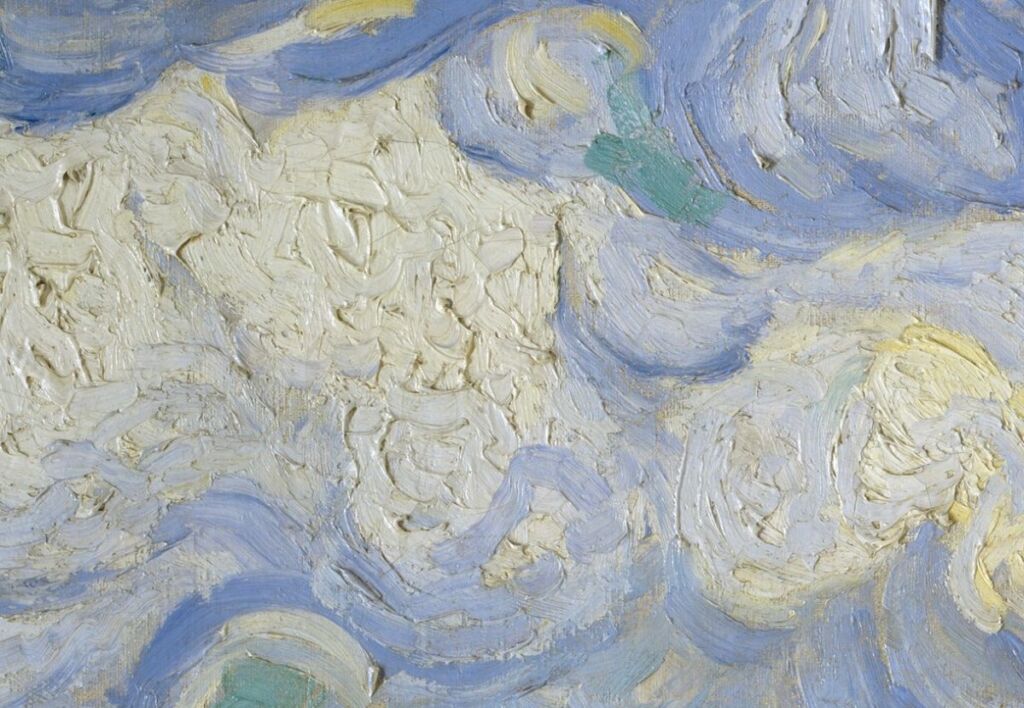
In the first version the clouds are modeled in thick white, each swirl with its own edge and shadow. Vasari advised viewing late Titian from afar. Impasto works the other way around: it reveals itself up close, even if Rembrandt, by Houbraken’s account, shooed viewers off because of the smell.
Comments
For Hroniki readers
Comments are open to readers with an account. Signing up is free and takes a few seconds.
No comments yet. Start the conversation.