The doctor’s sketch that settled the debate over Van Gogh’s ear
For more than a century the story of Van Gogh's ear was told inaccurately. What his doctor's drawing shows, who the young woman at the brothel really was, and why the theory of Gauguin's sword is still disputed.
On the evening of December 23, 1888, Vincent van Gogh walked into a brothel in Arles, handed a young woman a package and asked her to “keep this object carefully” (translations here are Hroniki’s). It held his ear. A week later the local paper, Le Forum Républicain, ran the story.
In the morning the police found him at home in bed, barely alive. Anyone who knows his name knows the story, yet for more than a century it was told wrong. How much he cut off, and whom he gave it to, came to light only in the 21st century. Who held the blade is still disputed.
A sketch on a prescription pad
For years he was thought to have cut off only the lobe or the lower part of the ear. That was how Theo’s widow and Dr. Gachet’s son told it. The newspaper, the police, Gauguin and Félix Rey, the young doctor who treated Vincent at the Arles hospital, said the whole ear was gone.
A prescription-pad page settled it. In 1930 Rey wrote a short note on it for Irving Stone, the future author of Lust for Life, with two sketches of the cut.
Bernadette Murphy, a researcher rebuilding that night from archives, found it mentioned in old papers; then the drawing itself surfaced in Stone’s papers at UC Berkeley’s Bancroft Library. The cut runs right along the base of the ear. Only a narrow strip of lobe remained, the very part he was supposed to have cut off on its own.
In summer 2016 the Van Gogh Museum in Amsterdam showed the drawing in On the Verge of Insanity: Van Gogh and His Illness. Today the museum states plainly that he cut off his left ear.
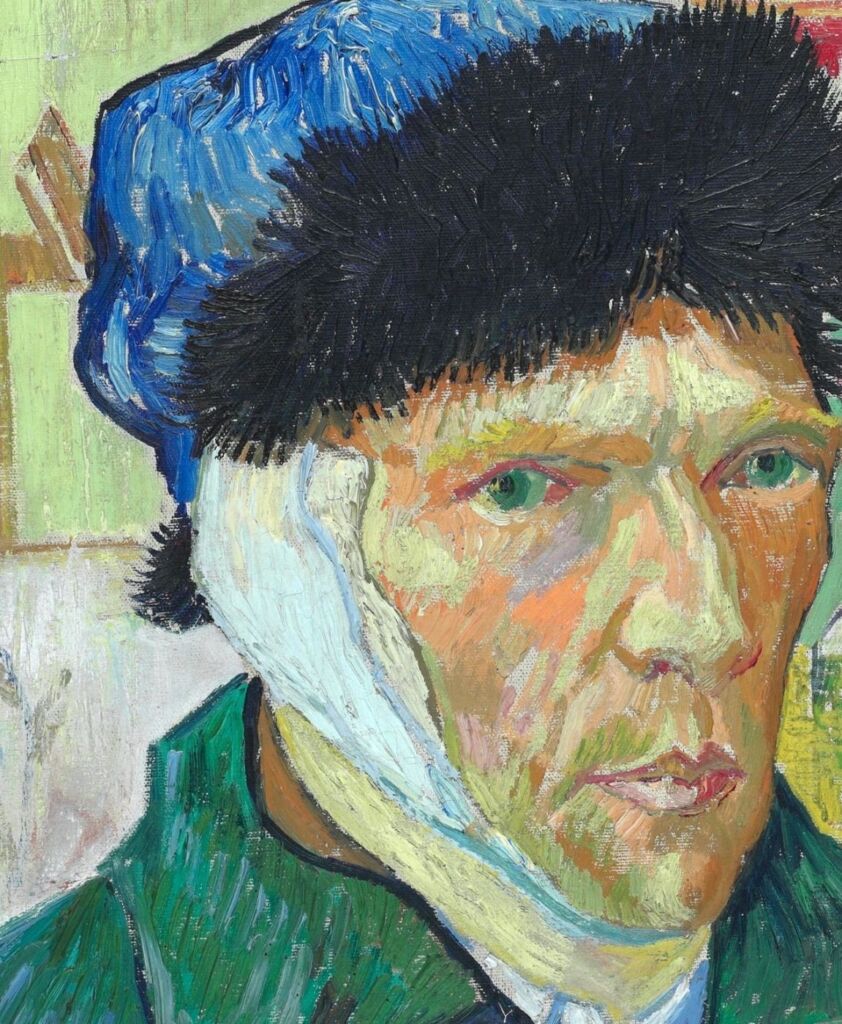
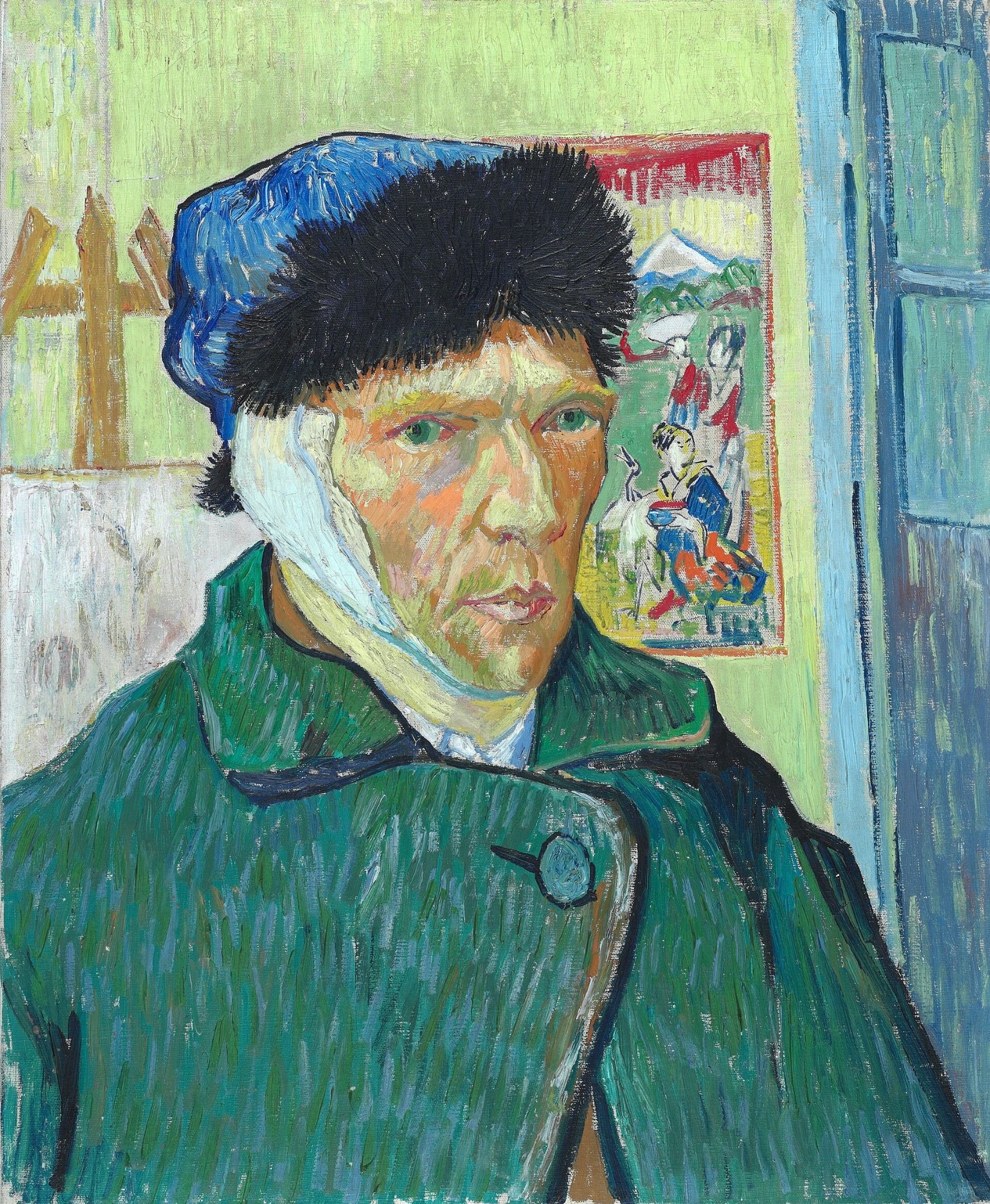
In the self-portrait the bandage is on the right: he painted himself in a mirror; the injured ear was the left.
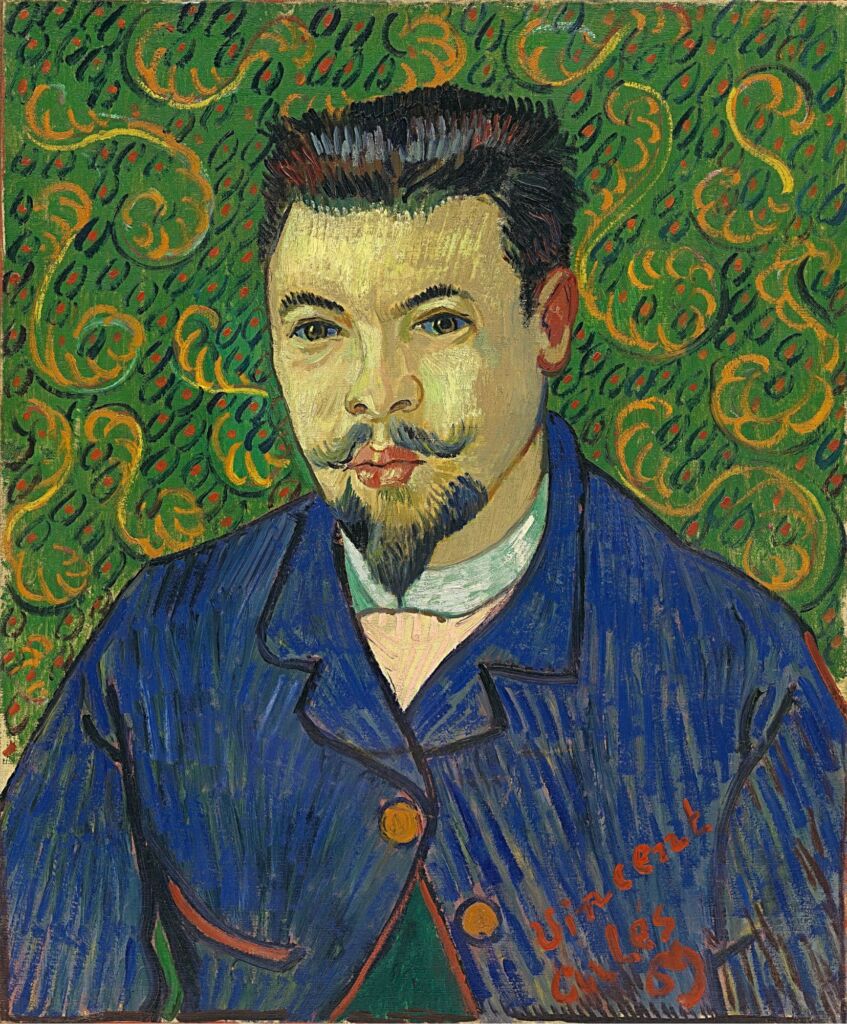
Vincent also painted Rey; the portrait is in Moscow’s Pushkin State Museum of Fine Arts.

Gabrielle, not Rachel
The paper called her Rachel, and as Rachel she appeared in biographies for more than a century. Murphy found that she was Gabrielle, not a prostitute but a maid at the brothel on the rue du Bout d’Arles.
A farmer’s daughter from near Arles, she was bitten by a rabid dog in January 1888. The wound was cauterized with a red-hot iron, and she was sent to the Pasteur Institute in Paris for the newly invented rabies vaccine. She worked at the brothel to pay for it.
Murphy withheld her surname, promising silence until the descendants agreed. Martin Bailey of The Art Newspaper found it in the same Pasteur records: Berlatier.
She may also have cleaned at the station café of Vincent’s friends the Ginoux, which he painted in The Night Café.
A sword no one saw
The main witness, Gauguin, wrote his account fifteen years later. In Avant et après, published after his death, he recalled Vincent coming at him with an open razor. Gauguin left to spend the night at a hotel.
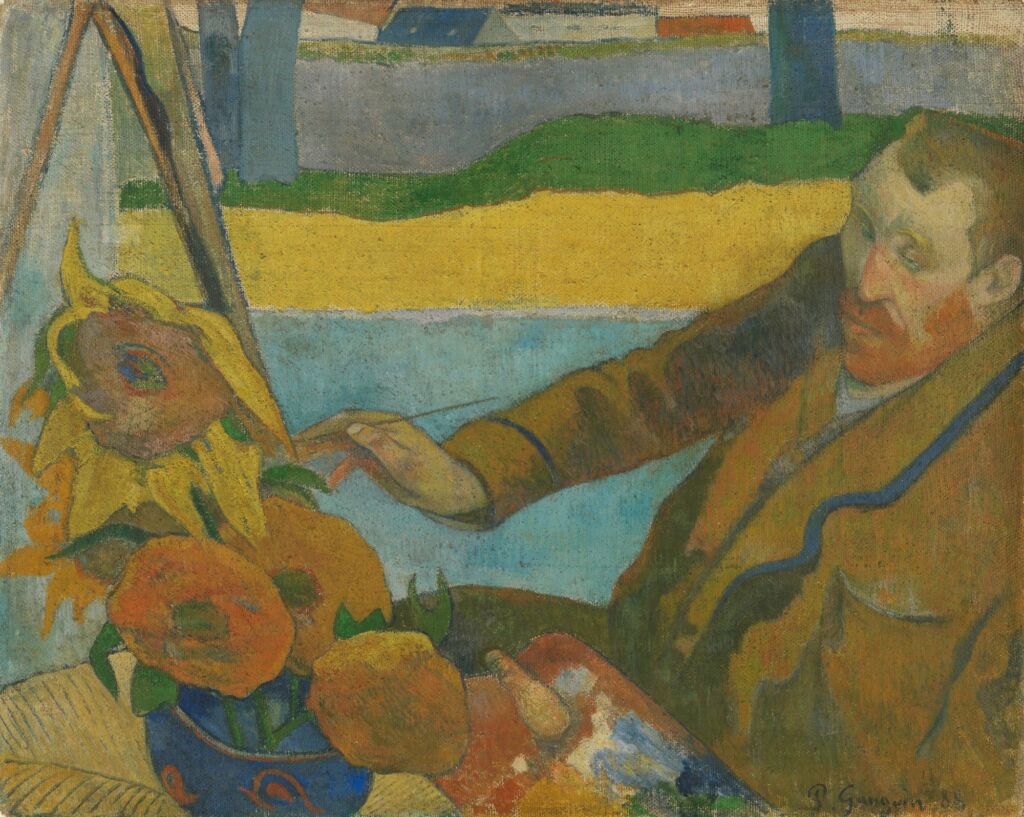
In his two months in Arles, Gauguin painted Vincent at work on sunflowers, a portrait now in the Van Gogh Museum.
On December 24 Gauguin telegraphed Theo, who took the night train down; the next day the two went back to Paris together. The painters never met again.
In 2008 Hamburg art historians Hans Kaufmann and Rita Wildegans published a book with a different account: Gauguin, a skilled fencer, supposedly sliced off the ear with a sword during a quarrel, and both men kept quiet. That “pact of silence” gave their book its title.
Newspapers around the world covered it in spring 2009, but it remains a theory: it rests on inconsistencies in the testimony and hints in the letters, with no direct evidence. The Van Gogh Museum still holds that he cut off the ear himself.
Vincent seems to have had no doubt who held the razor. Ten days later, in a letter to his brother, he asked about Gauguin: “Have I frightened him?” When Rey asked him why, he said only that it was “a purely personal matter.”
In May 1889, from the asylum at Saint-Rémy, where The Starry Night would appear a month later, he wrote to Theo that Rey had seen a man mutilate his own ear “as I did.”
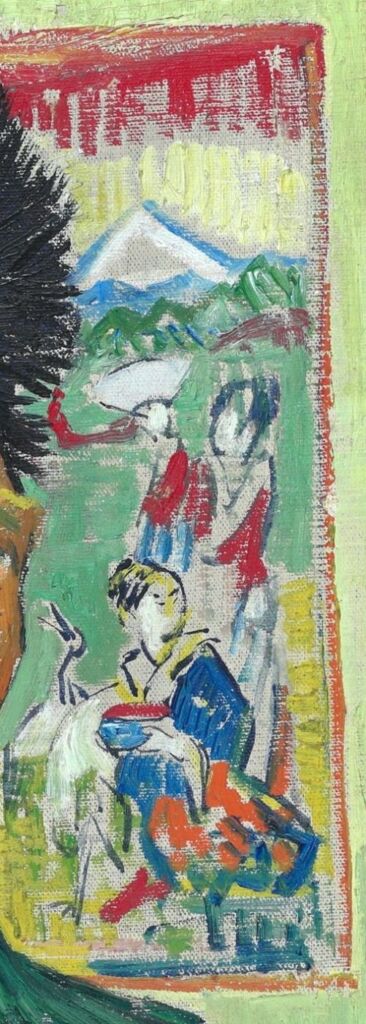
He painted the self-portrait earlier, in January, a week after leaving the hospital. The print behind him copies one from his own Japanese collection.
The painting says nothing about that night. Its subject is different: out of the hospital, Van Gogh went back to his easel.
Comments
For Hroniki readers
Comments are open to readers with an account. Signing up is free and takes a few seconds.
No comments yet. Start the conversation.