Art movement
Vienna Secession
1897–1905 (the association still exists) · Vienna, Austria
About the movement
Above the entrance to a white pavilion crowned with a golden dome of laurel leaves runs the inscription "To every age its art, to art its freedom." The motto was written by the Viennese critic Ludwig Hevesi, and the pavilion was built in 1898 by Joseph Maria Olbrich. A year earlier, in the spring of 1897, a group of young artists and architects had announced their break with the Künstlerhaus, the conservative artists' society that decided what was shown in Vienna and how. Gustav Klimt became president of the new Union of Austrian Artists, and its honorary president was Rudolf von Alt, the grand old man of Viennese watercolor, by then in his eighties. The founders included Josef Hoffmann, Koloman Moser, Carl Moll, Josef Engelhart and Alfred Roller.
The word "secession" was already in the air in Europe: the Munich Secession had been founded in 1892, and the Berlin Secession would follow in 1898. But the Viennese went further than a mere revolt against the academy. They believed that painting, architecture, furniture, posters and lettering should work together, and they turned each exhibition into a unified space in which every room was designed anew. Their journal Ver Sacrum ("Sacred Spring," 1898–1903) was itself such a work. The Secession brought new European art to a Vienna it considered provincial; in 1903, for instance, it held a major exhibition of Impressionism.
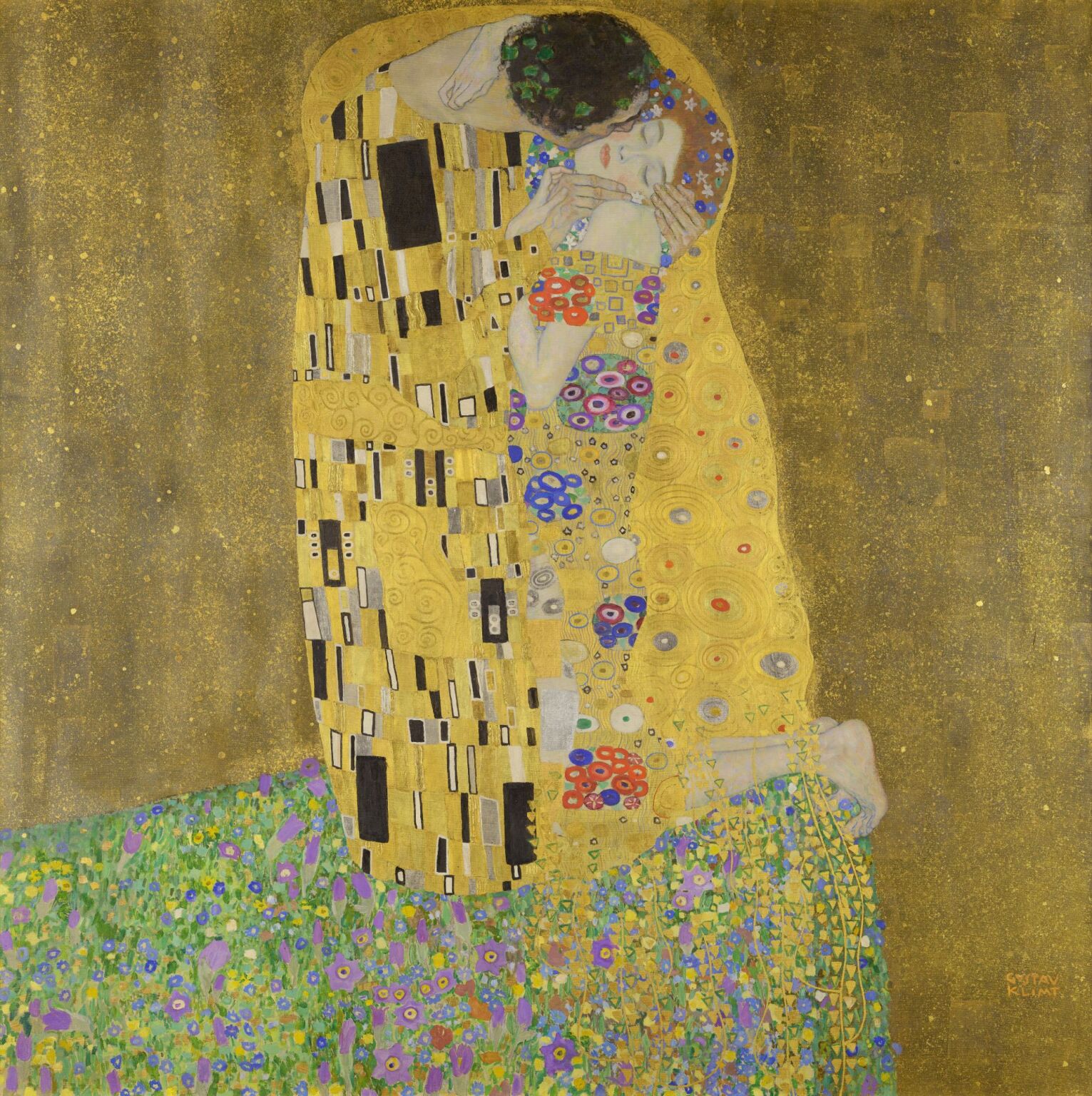
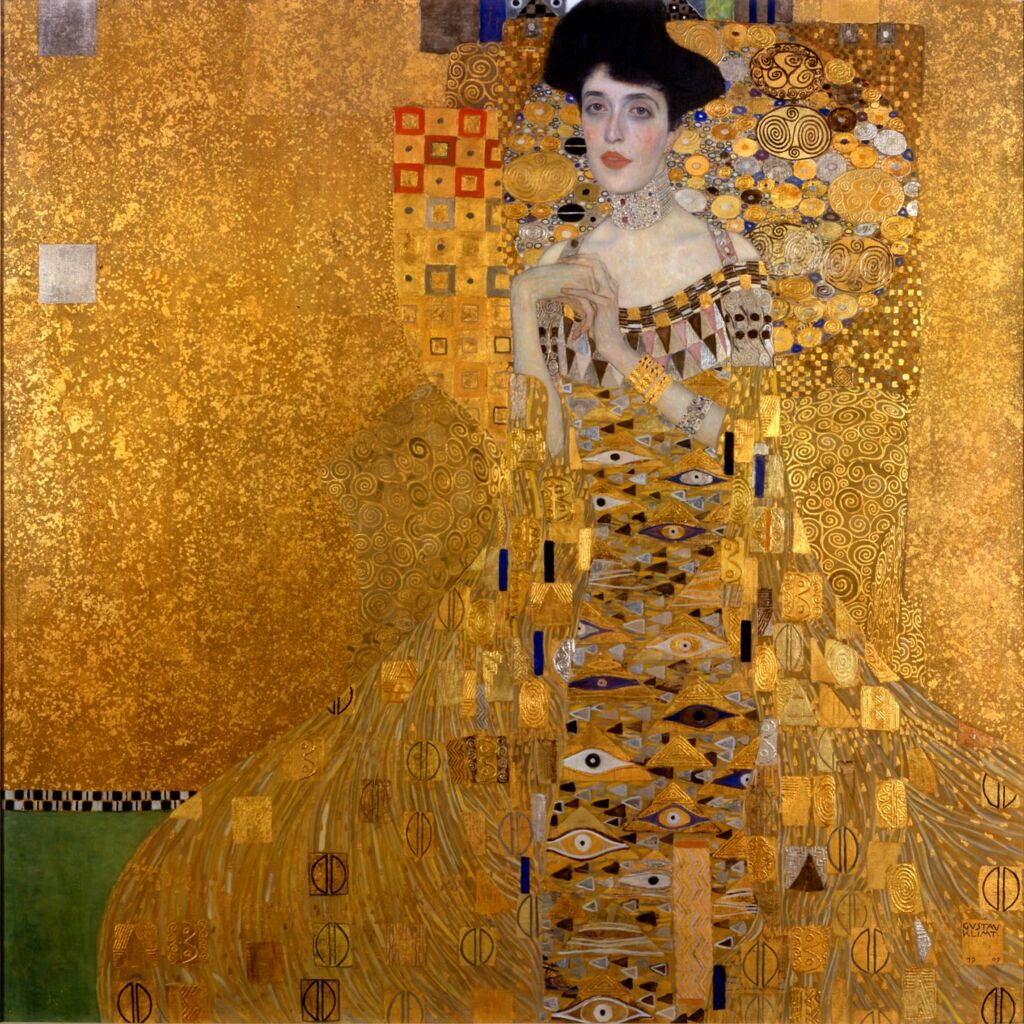
This idea reached its peak in the 14th exhibition, devoted to Beethoven, in 1902. At its center stood Max Klinger's statue of the composer, and for one of the rooms Klimt painted the Beethoven Frieze. In three months the show drew almost 60,000 visitors. Klimt's major paintings of this period, Portrait of Adele Bloch-Bauer I (1907) and The Kiss (1908–1909), both belong to his late, "golden" phase, after he had left the association, but both grew out of the Secession's dream of fusing painting and ornament.
Vienna greeted the Secession with scandal. In 1900 the group's exhibition included Philosophy, the first of the so-called Faculty Paintings commissioned from Klimt for the Great Hall of the University of Vienna. Professors protested and the press was indignant, although that same year the painting won a gold medal at the Exposition Universelle in Paris. In 1905 Klimt withdrew from the commission, returned the advance (the money came from his patrons, the Lederer family) and kept the paintings. The canvases themselves were destroyed on May 8, 1945, in a fire at Schloss Immendorf in Lower Austria, where they had been taken for safekeeping during the war. The Kiss met a different fate: at the 1908 Kunstschau exhibition the Austrian ministry bought it straight off the wall for 25,000 crowns, and today it hangs in the Belvedere.
Disputes soon broke out within the association between the "pure" painters and the champions of the applied arts. In 1903 Hoffmann, Moser and the patron Fritz Waerndorfer founded the Wiener Werkstätte, and in June 1905 the "Klimt group" left the Secession. It showed its strength at the Kunstschau exhibitions of 1908 and 1909, where the young Oskar Kokoschka made his debut. Egon Schiele, whom Klimt had supported since his youth, scored a real triumph at the Secession's 49th exhibition in 1918, a few months before his death from the Spanish flu; Klimt himself had died in February of that year.
The Secession still exists as an association, and Olbrich's pavilion still serves as an exhibition hall; the Beethoven Frieze returned there after restoration in the 1980s. The fate of Adele turned into a detective story: in 1938 the Nazis seized the portrait from the Bloch-Bauer family, after the war it hung in the Belvedere for decades, and only in 2006, after a long legal battle by the heir Maria Altmann, did Austria return it to its owners. That same year it was acquired by the Neue Galerie in New York. Viennese modernism, with its gold, its squares and its ornament, became one of the most recognizable languages in European art.
Stories