Gold for the lovers, brass for the background: what Klimt’s The Kiss is made of
Klimt's The Kiss is called a golden painting, but the Belvedere's catalog lists different materials for the figures and the background: gold, silver and platinum leaf for the lovers, brass beneath everything around them.
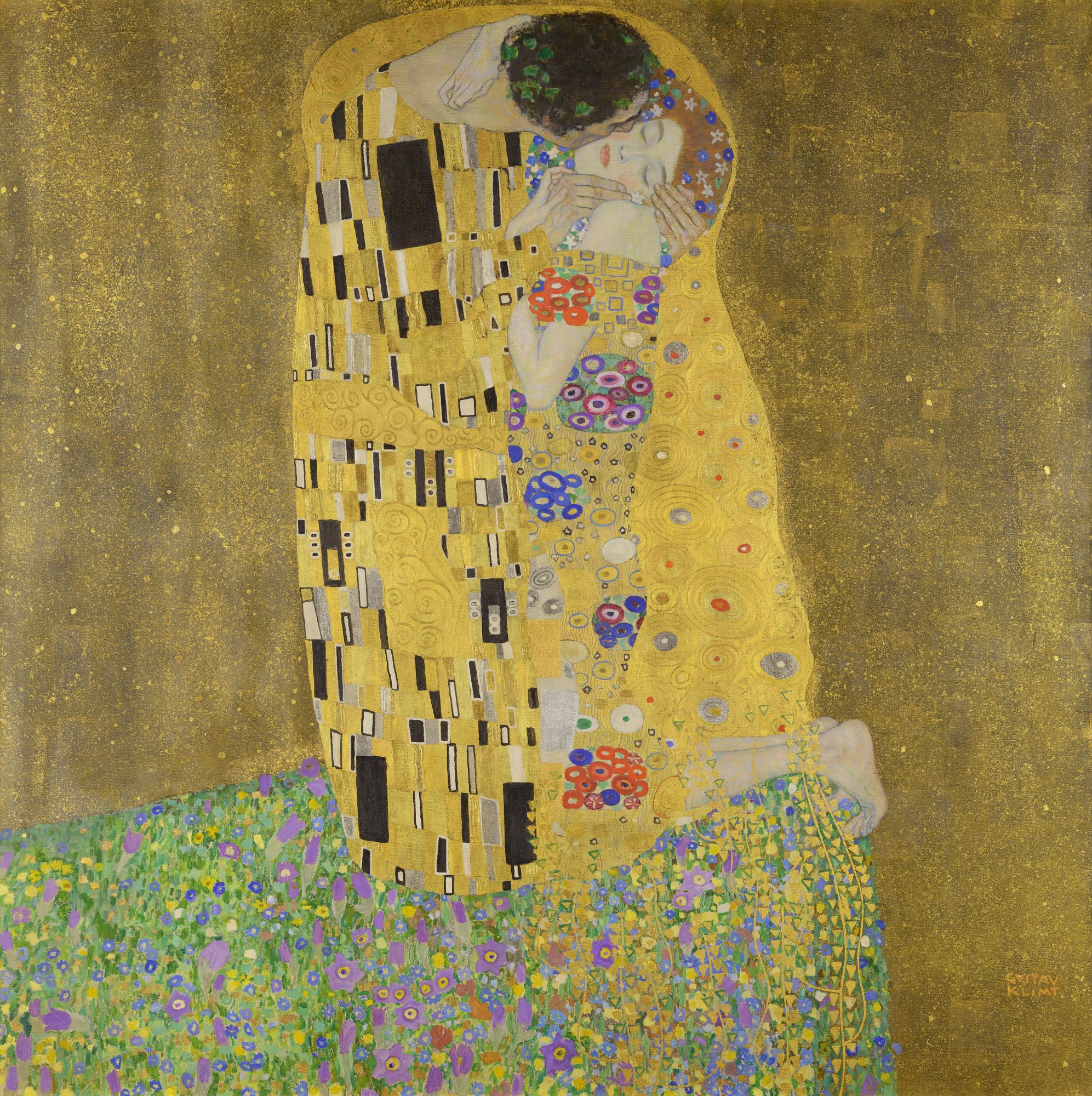
Gustav Klimt’s The Kiss is usually called a golden painting. Yet the Belvedere’s collection catalog in Vienna gives this square canvas, 180 × 180 cm (about 71 × 71 in), two separate lines on materials: one for the lovers, the other for everything around them.
The figures are painted in oil-resin paint with gold, silver and platinum leaf. The base of the background, which reads as solid gold in reproductions, is brass.
Platinum for the lovers, brass around them
Platinum is the surprise on that list. In 2025 the Belvedere’s exhibition Gustav Klimt – Pigment & Pixel, curated by Franz Smola, examined Klimt’s technique through macro photography and infrared imaging.
In autumn 2024, Italian researchers found platinum in The Three Ages of Woman at the National Gallery of Modern and Contemporary Art in Rome. Smola said at the time that the Belvedere had already found platinum in other works, The Kiss among them. The museum does not say which metal lies where on the figures.
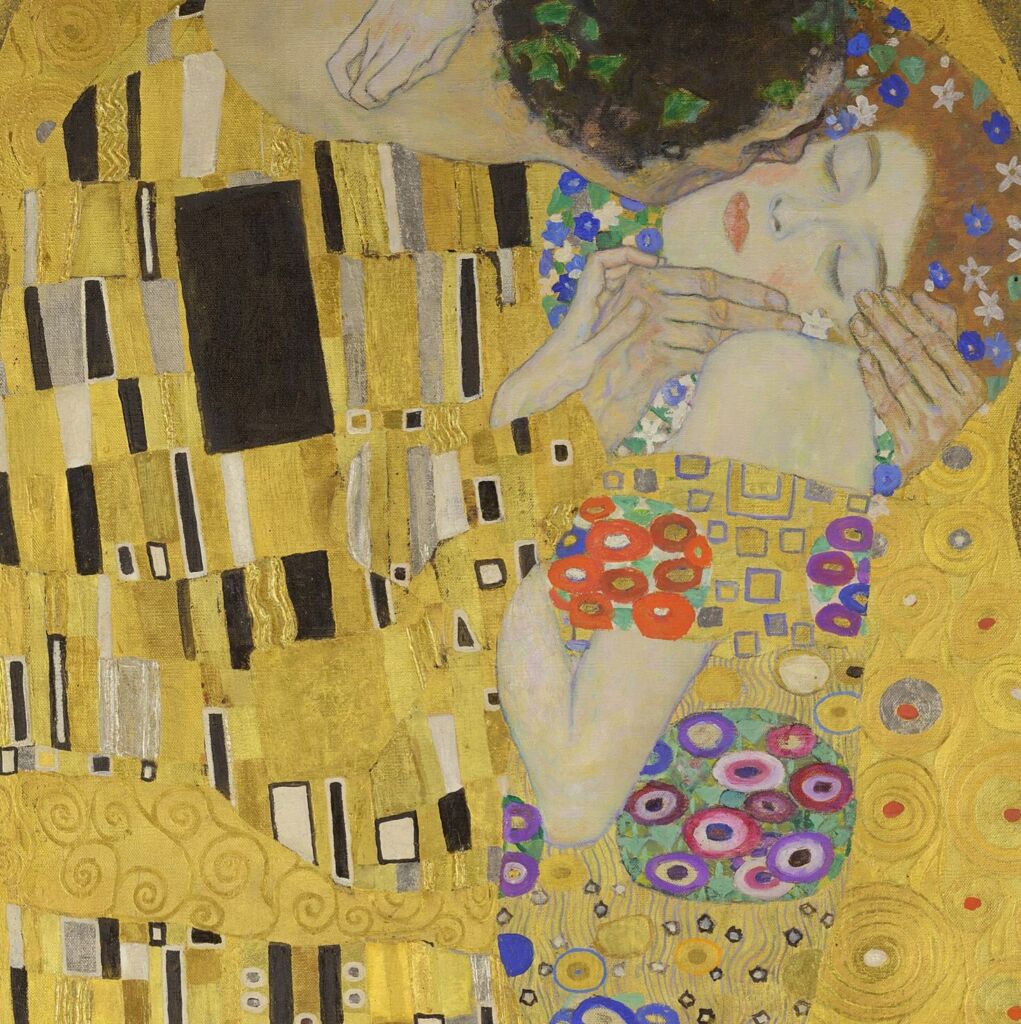
The background is another matter. Its base is Schlagmetall, or composition gold: thin brass sheets that imitate gold leaf. Over it Klimt laid glazes, transparent layers of paint, and scattered flakes of metal leaf.
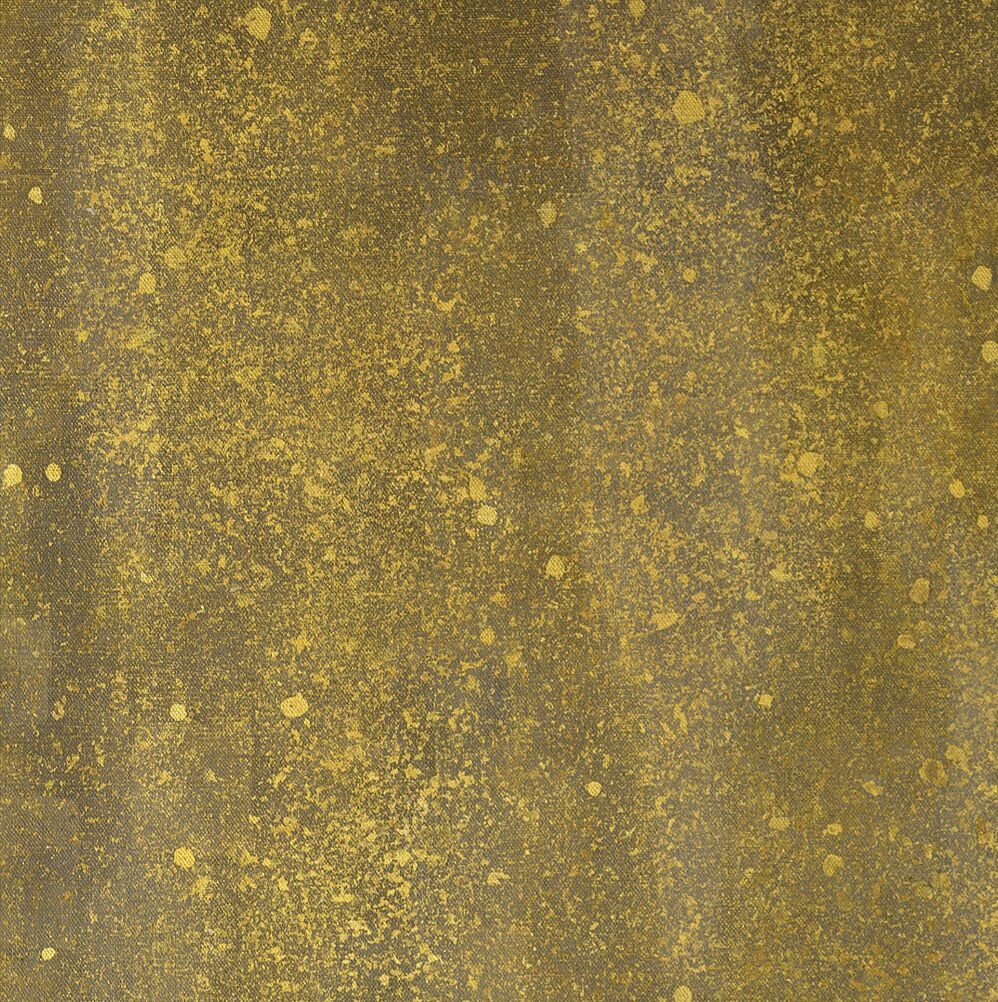
The catalog does not name the flakes’ metal. The Belvedere’s story of the painting on Google Arts & Culture describes the background as “looking like a cosmic nebula with its fine gold flakes.” Underneath, though, the base is brass; the gold, silver and platinum leaf went to the lovers.
A gold engraver’s son
Klimt grew up around metal. His father, Ernst Klimt the Elder, came to Vienna from Prague as a child and trained as a gold engraver. His younger brother Georg, a metal sculptor and medalist by training, made the frame for Gustav’s Judith of 1901 to the painter’s own design.
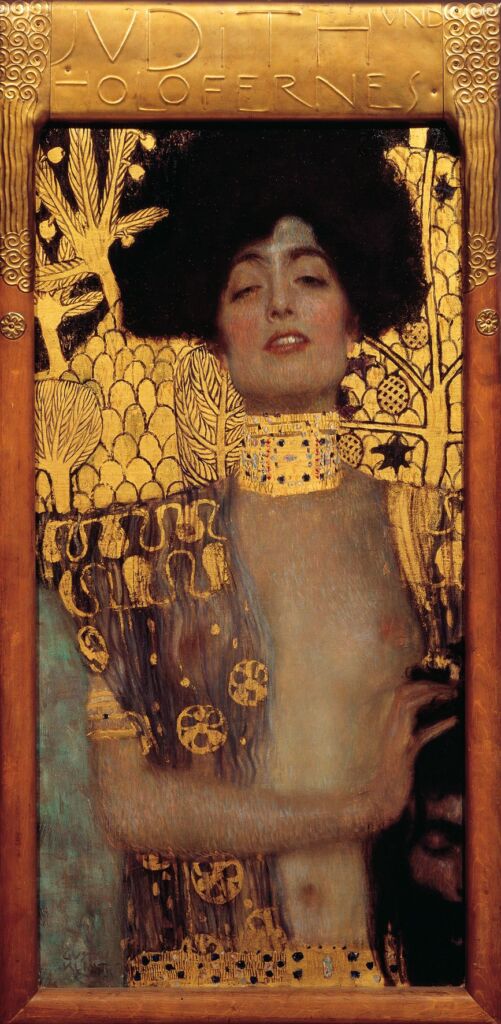
Judith is among the first paintings where Klimt tried gold; the catalog lists its medium as oil and gold leaf on canvas. The museum cautiously allows a link to his father’s trade: Klimt “could have drawn some early inspiration from his family home.”
Italy is usually credited with the decisive push. In 1903 Klimt visited Ravenna twice, in May and in late November. On the second trip he traveled with the painter Maximilian Lenz, whose diary, published only in 1933, says of Ravenna: “Klimt was truly shaken. He did not say a word, but it was plain to see.”
In early December Klimt wrote to Emilie Flöge that the mosaics of San Vitale were “of incredible splendor.” Less often quoted is another line from the same postcard, recorded in the Klimt Foundation’s database: much of Ravenna itself struck him as “very poor.”
Bought at the show, finished later
In June 1908 Klimt showed the canvas at the Kunstschau exhibition in Vienna under the title Lovers. It was the star of the show from the start, and the Ministry of Culture and Education bought it while the exhibition was still running, for the Modern Gallery, the forerunner of today’s Belvedere.
There had been no direct commission; Klimt probably began the picture in 1907. The price was set at 25,000 crowns, which the Belvedere calls “high even then.” The state paid for a “golden” picture with a brass background.
Klimt did not consider it finished. Before delivery he made changes that ran into the following year, which is why the catalog dates The Kiss to 1908, completed 1909. According to the Klimt Foundation, he was paid only then.
The Belvedere does not say exactly what Klimt repainted, but the Klimt Foundation names one change: after the Kunstschau, he painted over the man’s facial hair. The title came later, too: a gallery catalog first called the painting The Kiss in autumn 1909. The state had bought Lovers and ended up with The Kiss.
Comments
For Hroniki readers
Comments are open to readers with an account. Signing up is free and takes a few seconds.
No comments yet. Start the conversation.