Russian art · Artist
Ivan Kramskoy
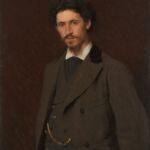
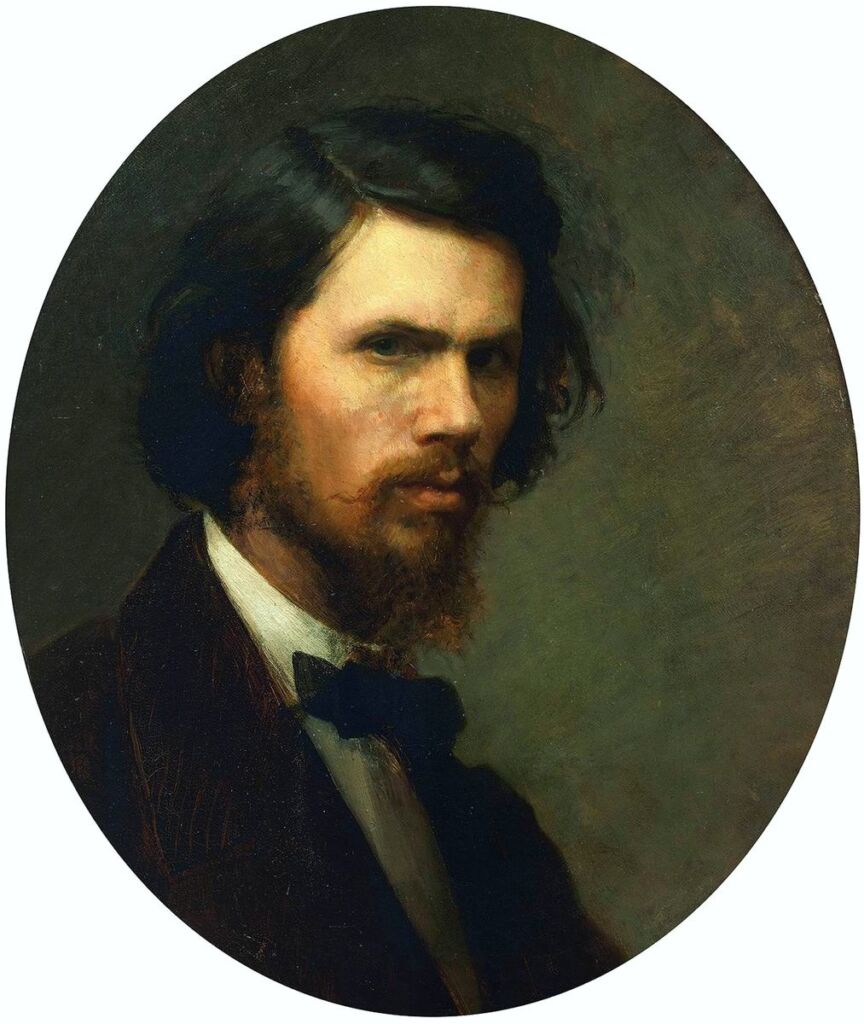
Ivan Nikolaevich Kramskoy · 1837, Ostrogozhsk — 1887, St Petersburg
Biography
Ivan Kramskoy was born on May 27, 1837, in Ostrogozhsk, Voronezh Governorate. His father worked for the town council; Kramskoy himself wrote that he was, he thought, a “journalist,” meaning a clerk who kept the office records. His father died when the boy was twelve. Kramskoy finished the district school at the top of his class, and he learned his trade not in a painter's studio but in a photographer's.
For several years he worked as a retoucher, first for Yakov Danilevsky, an itinerant photographer from Kharkiv, then at the St Petersburg studios of Alexandrovsky and Denier. Colleagues called him the “god of retouching.” In 1857 he entered the Imperial Academy of Arts, where he studied under Alexei Markov. His student works, The Mortally Wounded Lensky (1860) and Moses Striking Water from the Rock (1863), were painted on standard academic subjects.
In 1863 fourteen candidates for the first gold medal refused to paint the set subject, The Feast in Valhalla, and left the Academy, in what became known as the Revolt of the Fourteen. Kramskoy was one of the ringleaders and sat on the delegation to the Academy council. He later called it “the only good day” of his life. Those who left formed the Artel of Artists, a cooperative that Kramskoy led, and from the Artel grew the Association of Traveling Art Exhibitions, the Peredvizhniki. He was one of its founders and its chief ideologist.
He also taught: in 1863–1868 he gave classes at the drawing school of the Society for the Encouragement of the Arts. Among his pupils there was the young Ilya Repin, who later felt he owed Kramskoy a great deal.
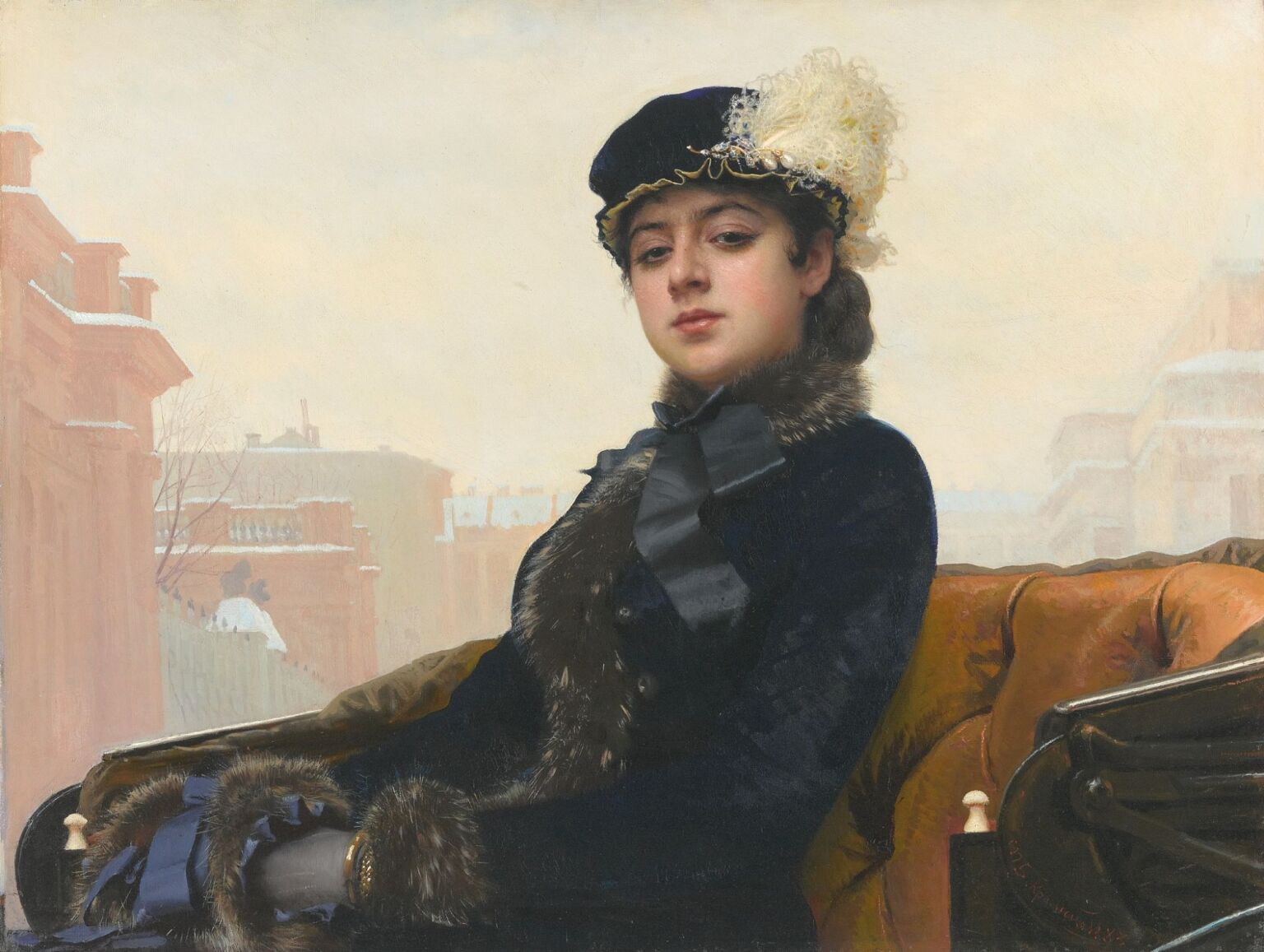
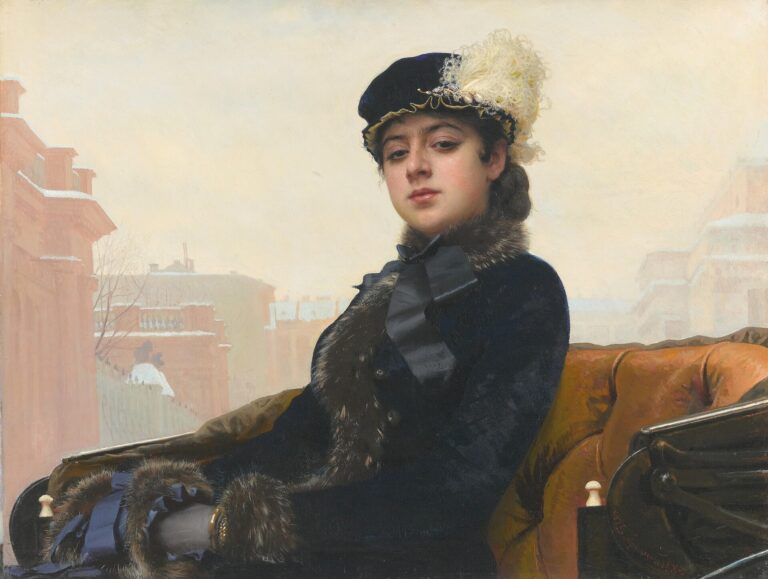
Kramskoy showed Christ in the Wilderness (1872) at the second Peredvizhniki exhibition, and the collector Pavel Tretyakov bought it for his gallery. An Unknown Woman (1883) appeared at the 11th exhibition and puzzled the critics: Vladimir Stasov saw in the sitter “a cocotte in a carriage,” and others called the picture immoral. His other well-known works include The Mermaids (1871), Moonlit Night (1880) and Inconsolable Grief (1884).
But portraiture remained his main work. Kramskoy painted Leo Tolstoy (1873), Pavel Tretyakov (1876), the satirist Mikhail Saltykov-Shchedrin (1879), Ivan Shishkin (1880), the publisher Alexei Suvorin (1881) and the philosopher Vladimir Solovyov (1885); Shishkin he painted more than once. He was made an academician in 1869, by the very Academy he had walked out of. He also wrote a good deal about art: after his death Stasov collected his letters and articles, and Suvorin published them in 1888. Of Alexander Ivanov's The Appearance of Christ Before the People he said simply: “It is not a painting but a word.”
Kramskoy died in St Petersburg in March 1887, before he reached fifty. The cause was an aneurysm: he collapsed at his easel while working on a portrait of Dr. Rauchfuss, which remained unfinished. He was buried in the Smolensky Cemetery; in 1939 his remains were moved to the Necropolis of the Masters of Arts at the Alexander Nevsky Lavra.
Two apartments where he lived, on Admiralteysky Prospekt and on Birzhevaya Line on Vasilyevsky Island, are marked with memorial plaques. The main collections of his work are in the State Tretyakov Gallery and the State Russian Museum.
Major works
Click a painting to see the details.
-
 01
An Unknown Woman
1883 · State Tretyakov Gallery, Moscow -
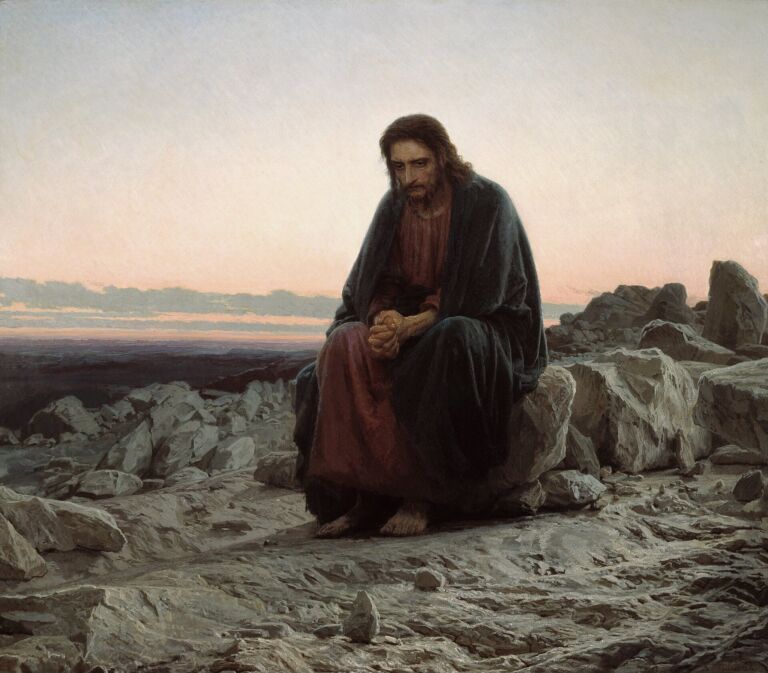 02
Christ in the Wilderness
1872 · State Tretyakov Gallery, Moscow
Stories about Ivan Kramskoy