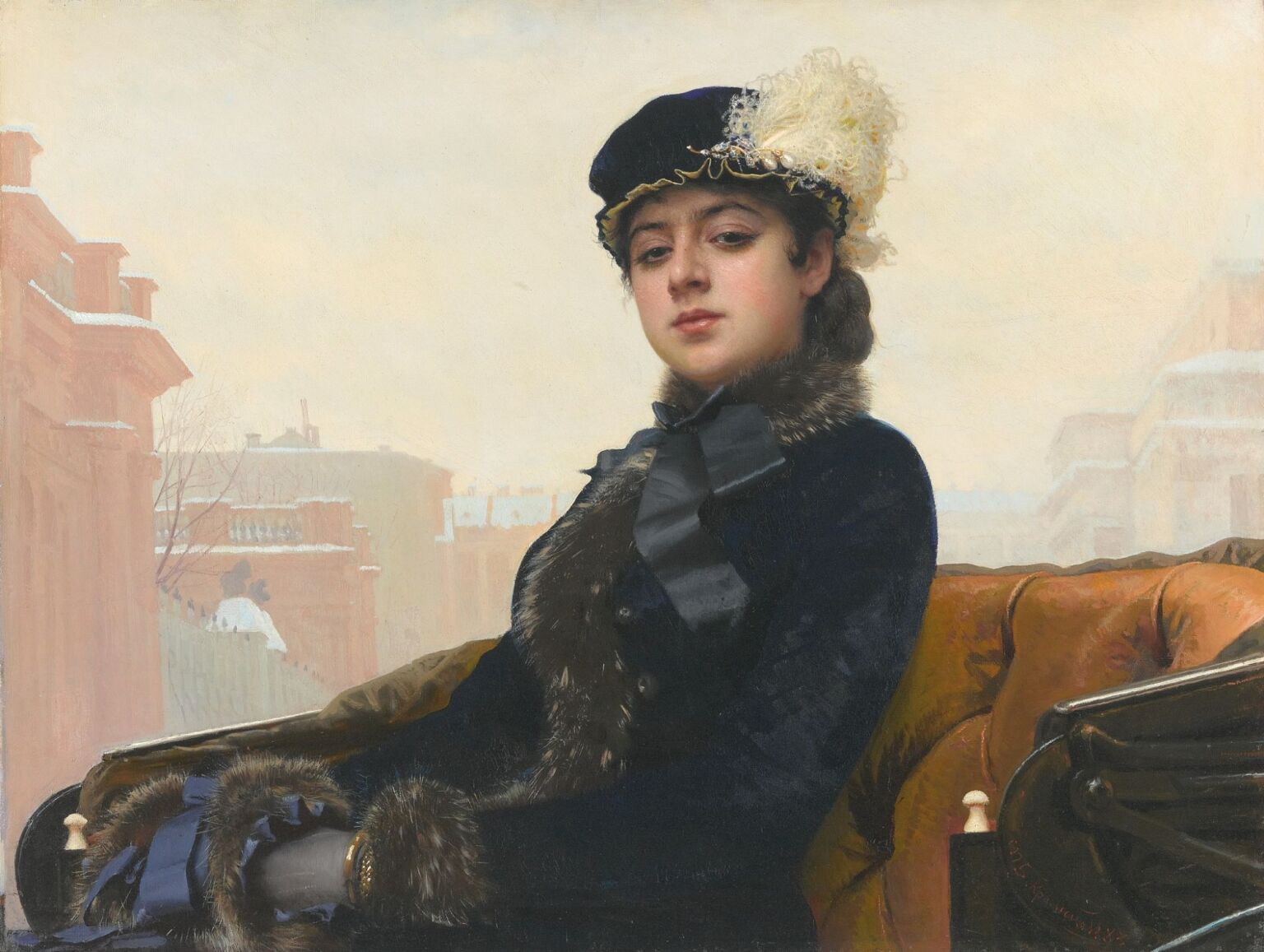
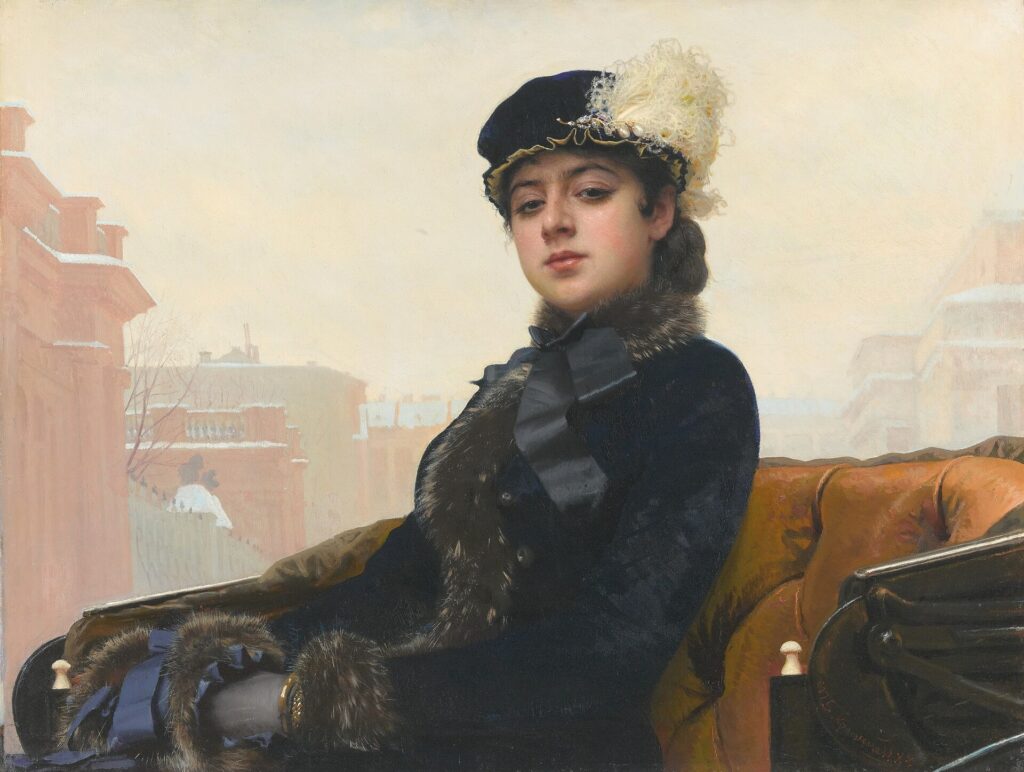
Ivan Kramskoy, An Unknown Woman, 1883
Russian art movement
The Peredvizhniki (Wanderers)
1870–1923 · Russia
About the movement
On November 9, 1863, fourteen of the best graduates of the Imperial Academy of Arts in St Petersburg refused to paint the competition picture on the set subject, The Feast in Valhalla from Norse mythology. They asked for a free choice of theme, were turned down, and walked out of the Academy. The "Revolt of the Fourteen" was led by Ivan Kramskoy. The rebels formed the Artel of Artists, a shared apartment and studio on Vasilyevsky Island where they took commissions and split the income. The Artel fell apart within a few years, but the idea of artists organizing themselves survived.
Painters in Moscow took it up. Grigory Myasoyedov and Vasily Perov proposed to their St Petersburg colleagues a series of exhibitions that would travel from city to city, with the proceeds shared among the participants. The charter of the Society for Traveling Art Exhibitions was approved in 1870. The first show opened in St Petersburg at the end of 1871 with 46 works, then moved on to Moscow, Kyiv and Kharkiv. What was new was not only the content but the economics: the artists depended on the public and on buyers, not on state commissions.
The first exhibition included Alexei Savrasov's The Rooks Have Returned (1871), Nikolai Ge's Peter the Great Interrogating Tsarevich Alexei and Perov's Hunters at Rest (1871). Then came Kramskoy's Christ in the Wilderness (1872), Vasily Polenov's A Moscow Courtyard (1878), Vasily Surikov's Morning of the Streltsy Execution (1881), Kramskoy's Unknown Woman (1883), Surikov's Boyarynya Morozova (1887), Morning in a Pine Forest by Ivan Shishkin and Konstantin Savitsky (1889) and Isaac Levitan's Above Eternal Peace (1894). Almost all of them now hang in the State Tretyakov Gallery.
That is no accident. Pavel Tretyakov, the Moscow merchant whose collection became the Tretyakov Gallery, bought from the Peredvizhniki right at the openings; he acquired The Rooks at the very first show. For the artists his money meant freedom; for viewers it meant the picture would stay in Russia. According to a widely told story, Tretyakov had Savitsky's signature removed from Morning in a Pine Forest, considering Shishkin its principal author. In 1892 he gave his collection to the city of Moscow. The movement's voice in the press was the critic Vladimir Stasov. Not every work was launched at the group shows: Arkhip Kuindzhi left the Society in 1879 and exhibited Moonlit Night on the Dnieper (1880) on its own, in a hall on Bolshaya Morskaya Street, where people queued for hours to see it.
The hero of these pictures was contemporary Russia (the village, the monastery, the prison, the rural court) and later the national past, read as the drama of the common people. The Peredvizhniki painted life, not mythology, and audiences in Kyiv or Kazan saw art that until then could be seen only in the capitals. Ilya Repin joined the Society in 1878, Surikov in 1881, Levitan in 1891. Viktor Vasnetsov, admitted in 1878, brought folk epic and fairy tale into this painting, while Vasily Vereshchagin never joined, preferring to stage his own solo exhibitions, which were just as popular.
By the 1890s the rebels had become the establishment. After the Academy was reformed in 1893, Repin, Shishkin and Kuindzhi became professors there, and from 1898 the young artists of the World of Art group quarreled with the Peredvizhniki as fiercely as the Peredvizhniki had once quarreled with the Academy. The Society carried on after the revolution: there were 48 exhibitions in all, the last in 1923. Some of its members joined the Association of Artists of Revolutionary Russia, and through it the Peredvizhniki tradition became one of the sources of Soviet Socialist Realism, with far less freedom than the founders had enjoyed.
Artists
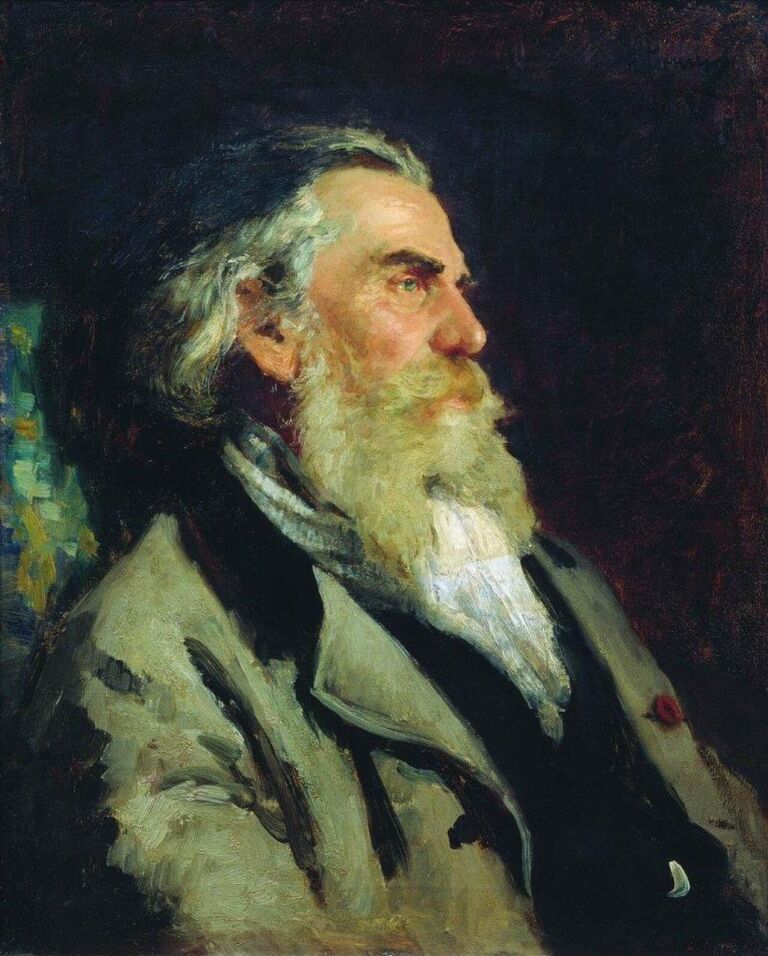
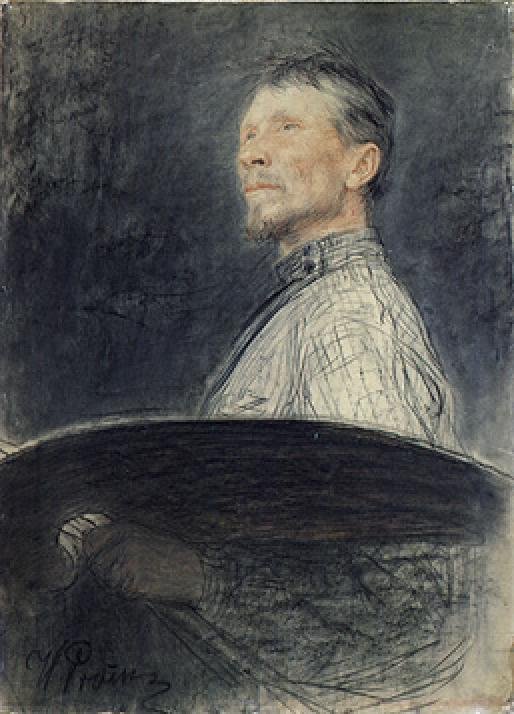 Russian art · PeredvizhnikiAbram Arkhipov1862–1930
 Russian art · Marine painterAlexei Bogolyubov1824–1896
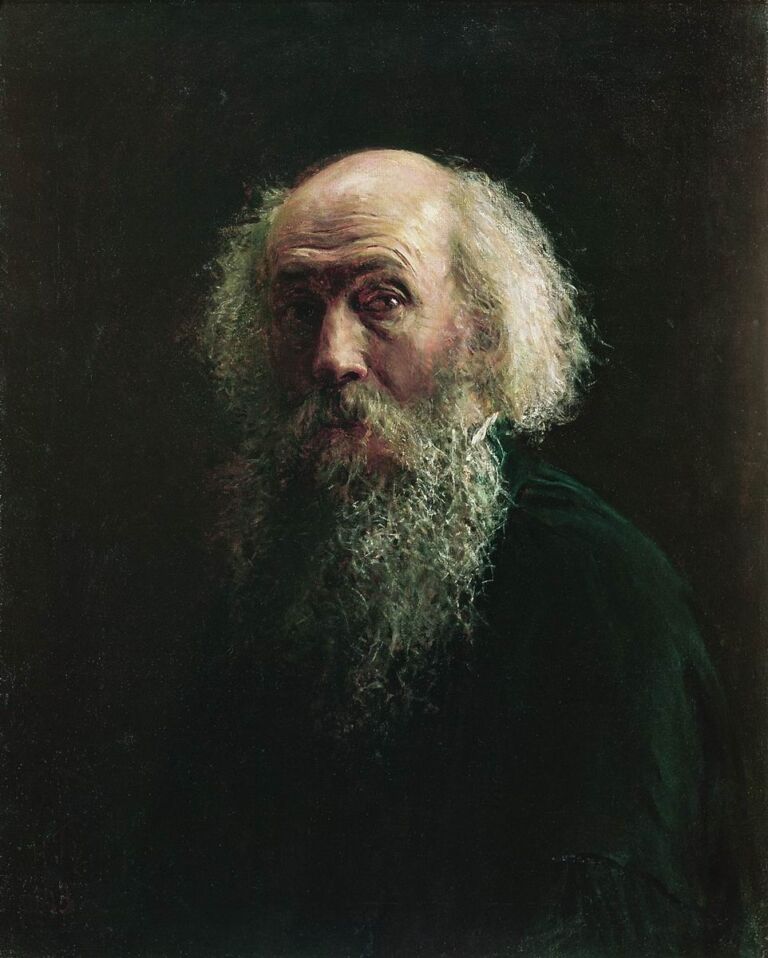 Russian artNikolai Ge1831–1894
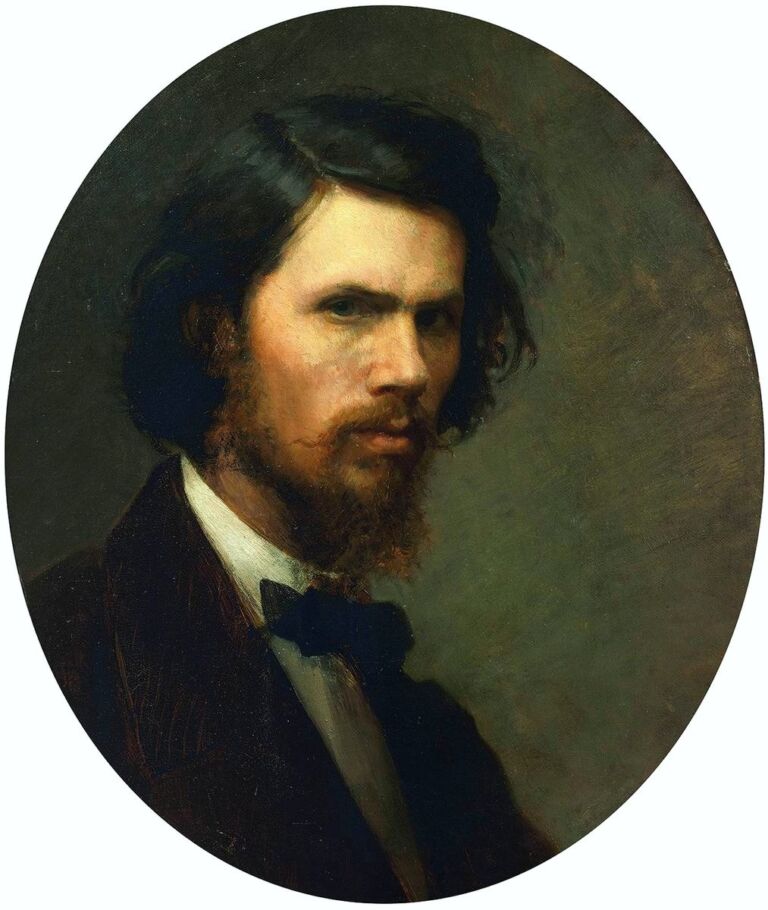 Russian artIvan Kramskoy1837–1887
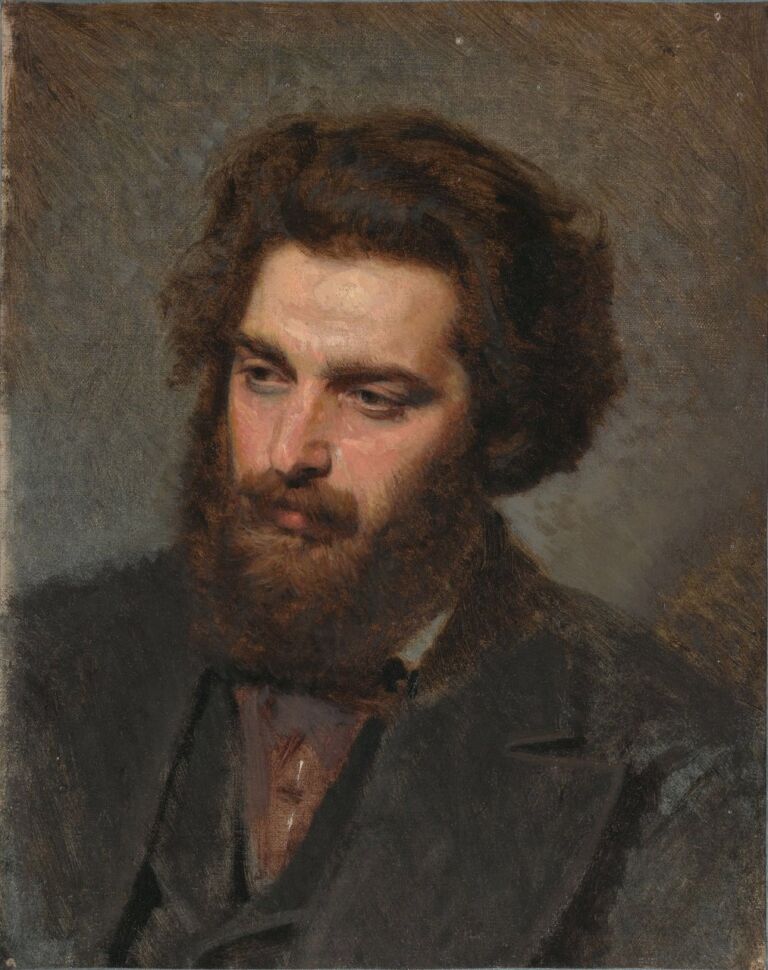 Russian art · PeredvizhnikiArkhip Kuindzhi1841–1910
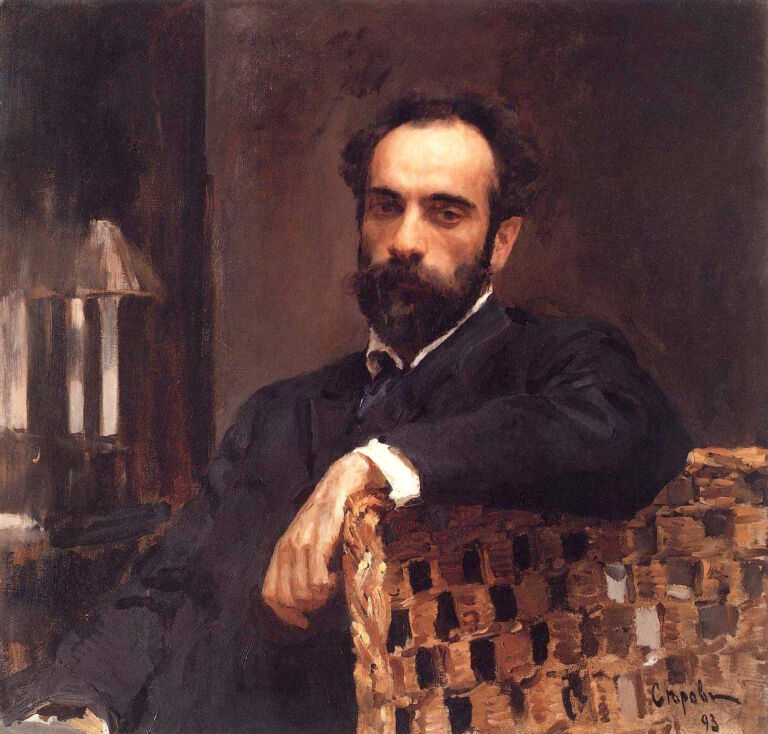 Russian artIsaac Levitan1860–1900
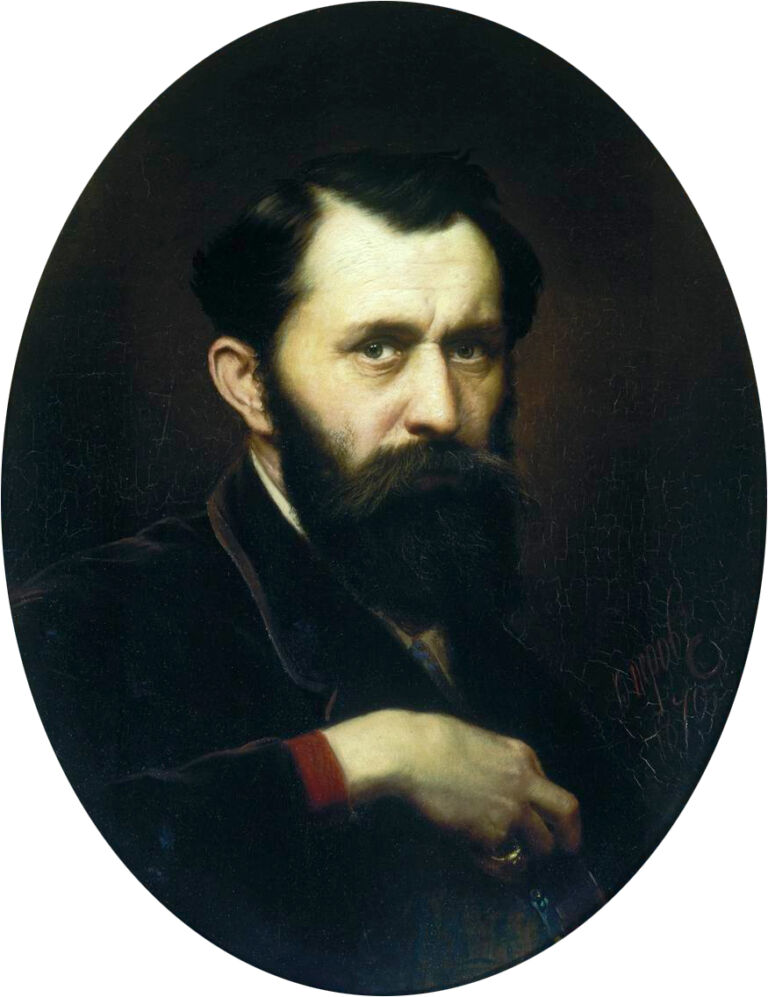 Russian artVasily Perov1834–1882
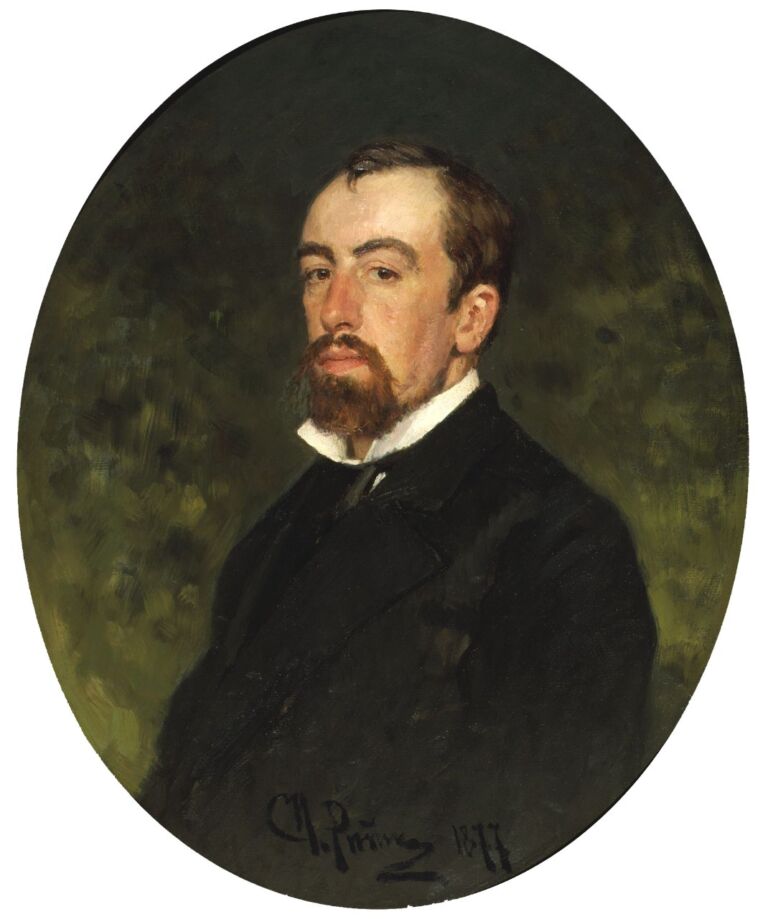 Russian art · PeredvizhnikiVasily Polenov1844–1927
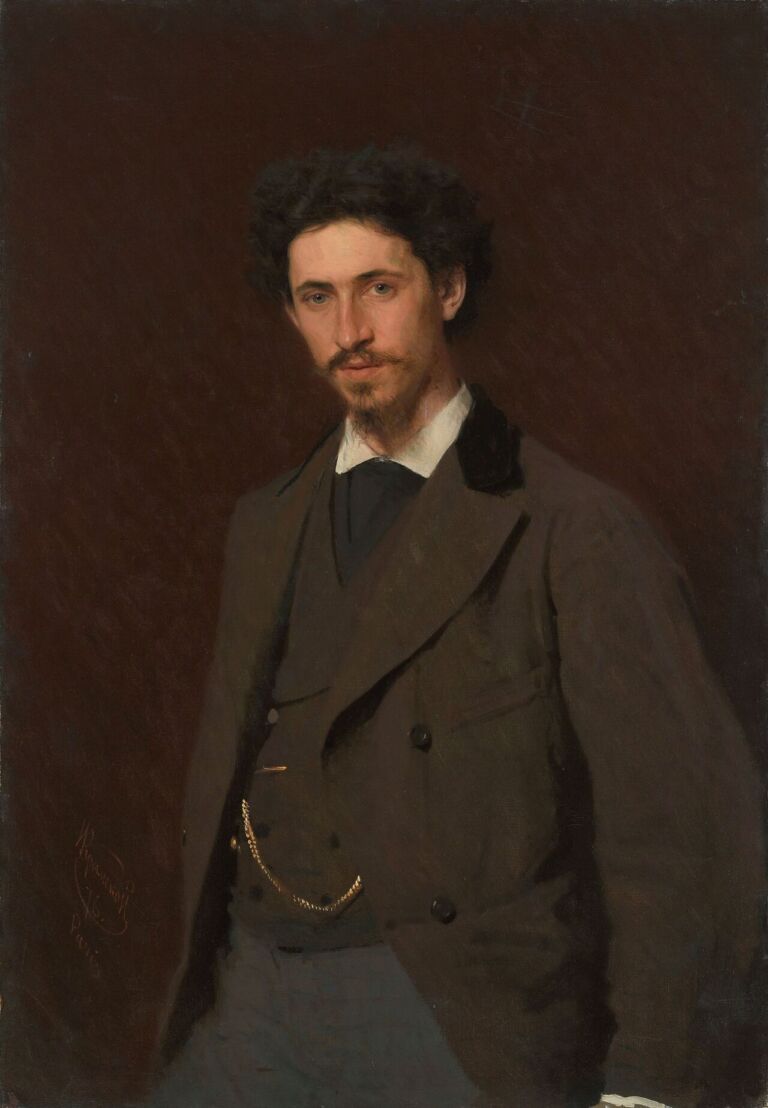 Russian artIlya Repin1844–1930
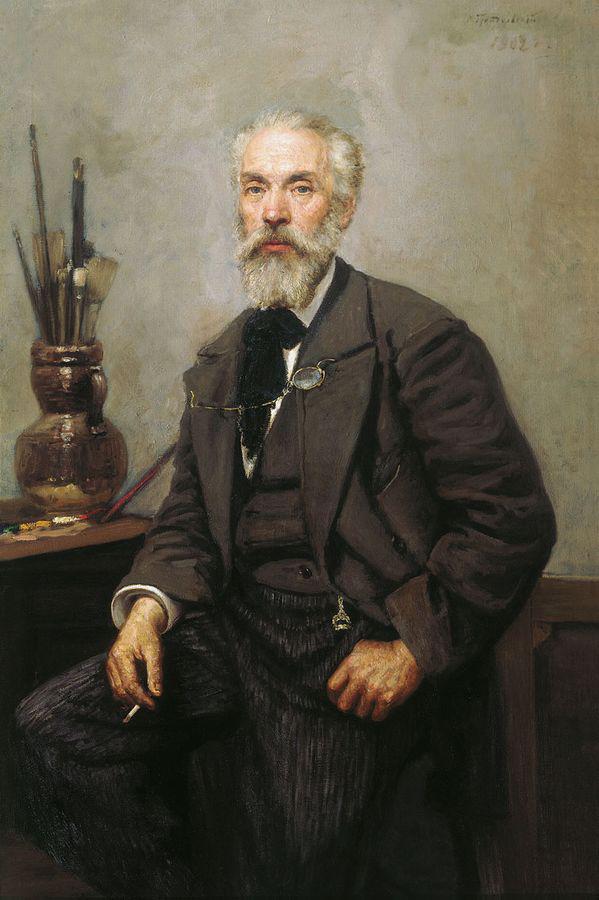 Russian artKonstantin Savitsky1844–1905
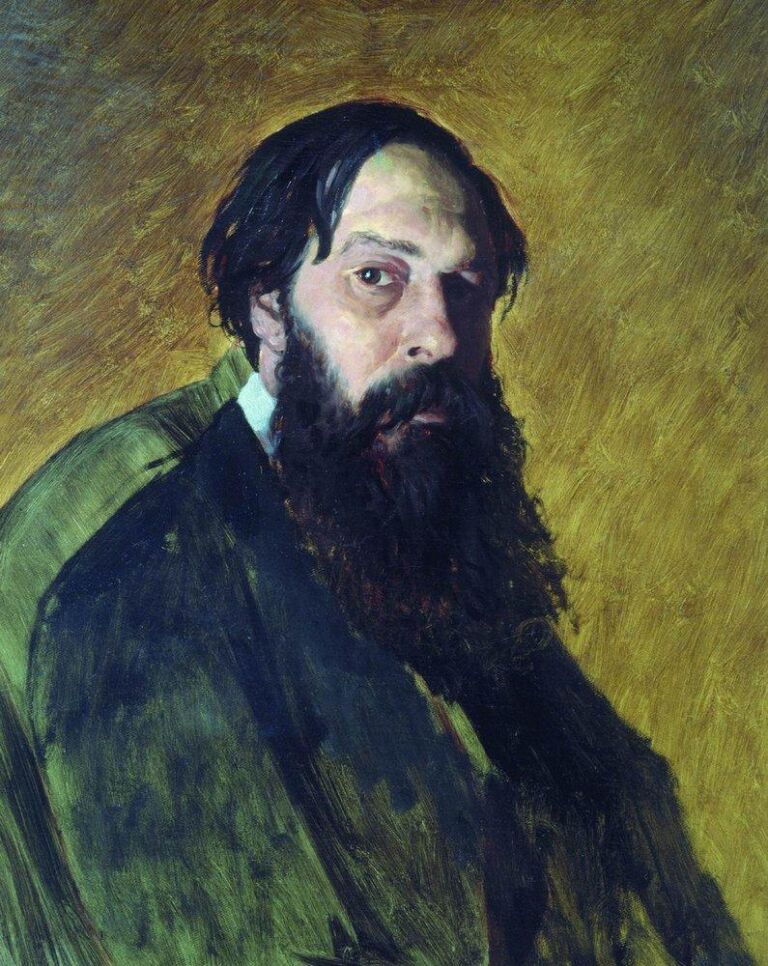 Russian artAlexei Savrasov1830–1897
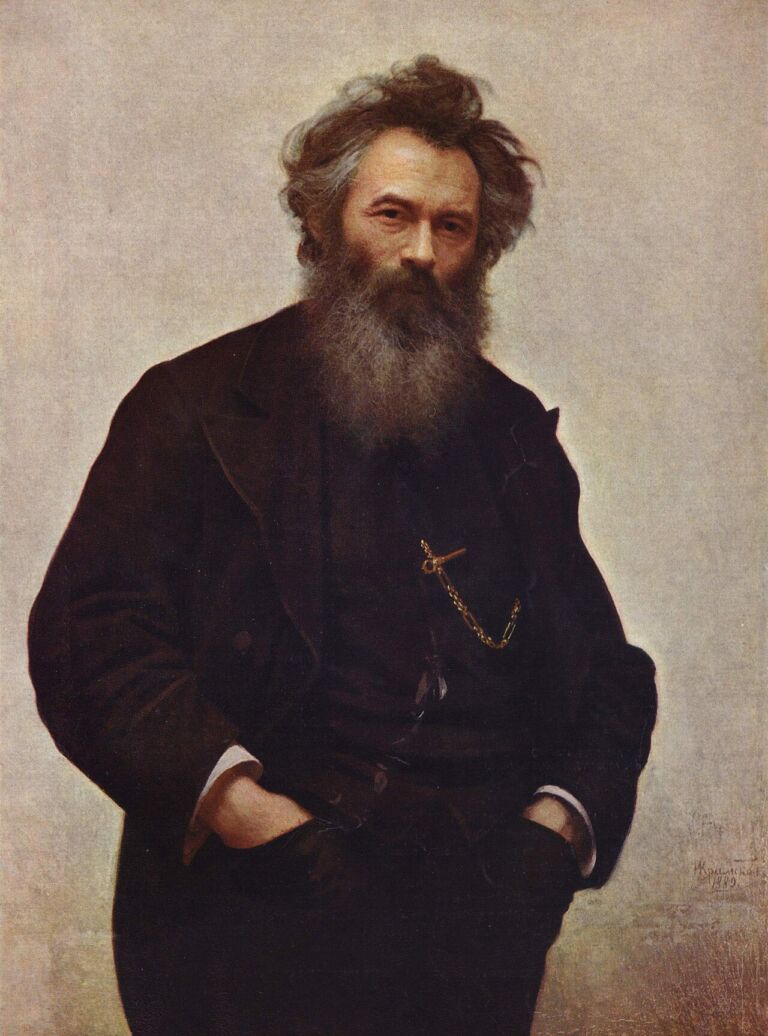 Russian artIvan Shishkin1832–1898
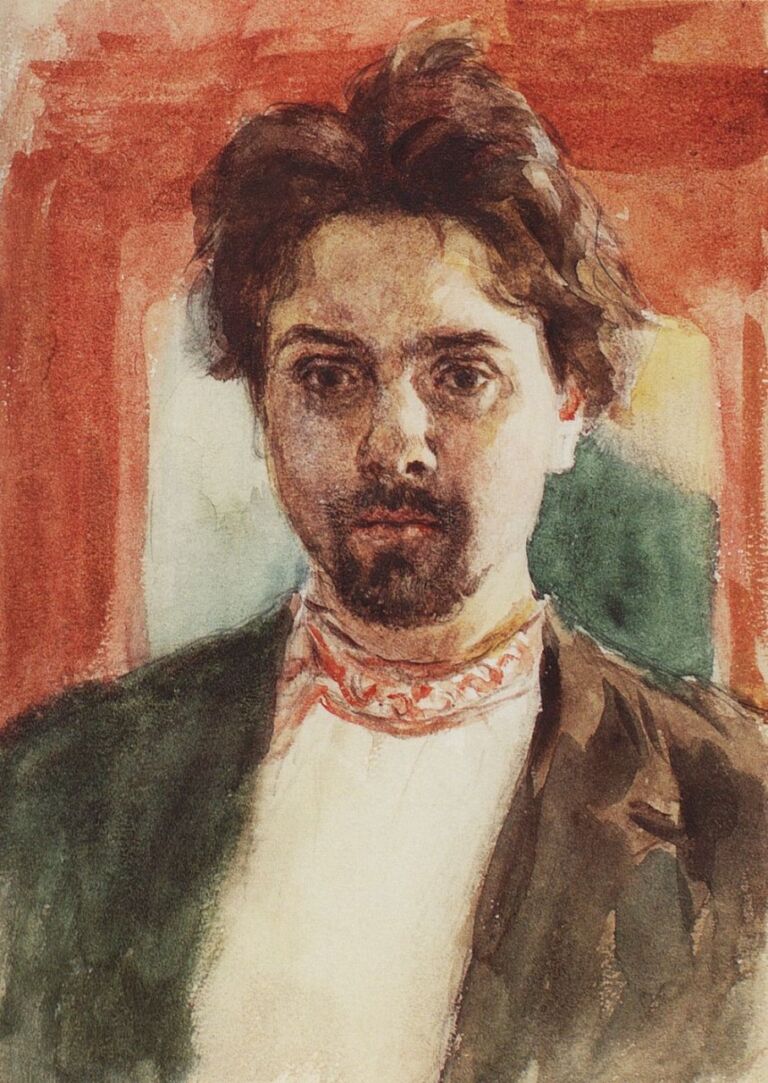 Russian artVasily Surikov1848–1916
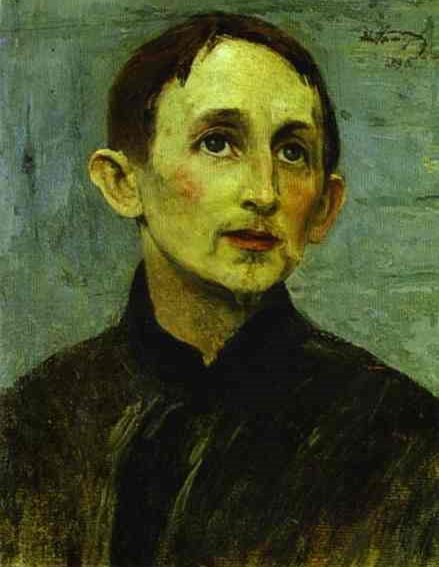 Russian art · PeredvizhnikiApollinary Vasnetsov1856–1933
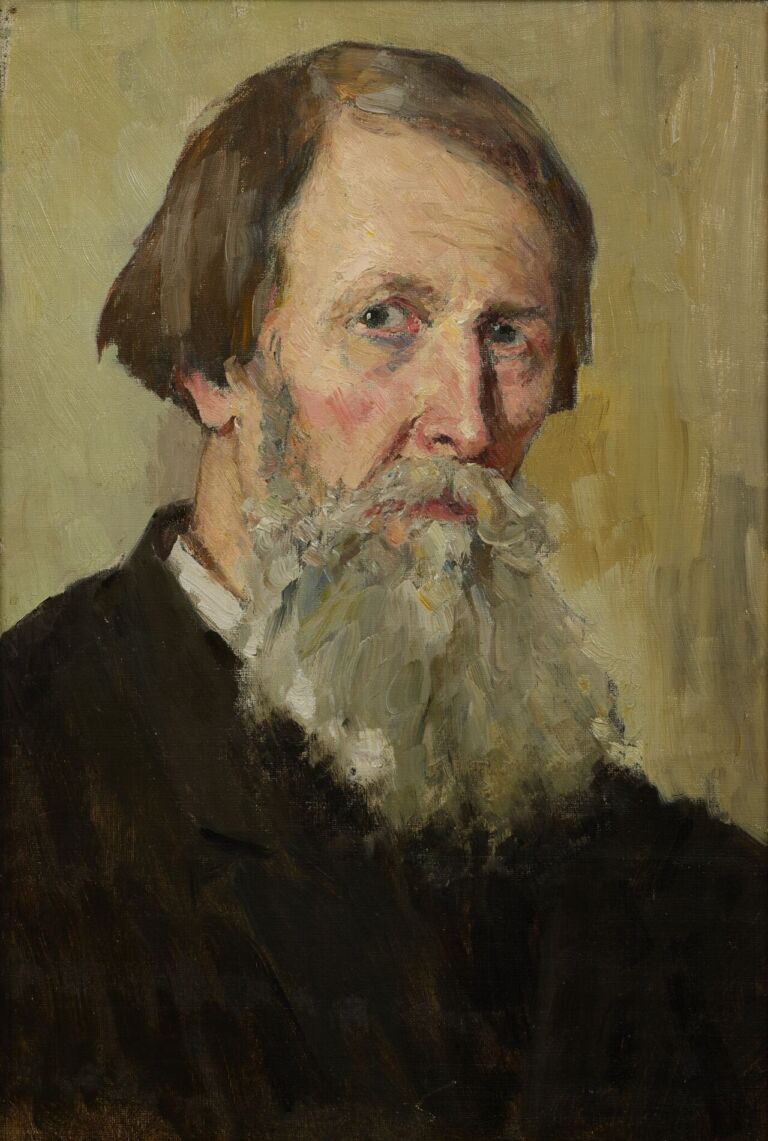 Russian artViktor Vasnetsov1848–1926
Major works
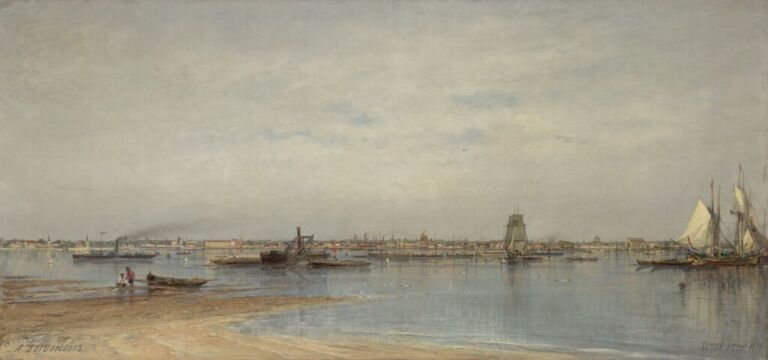 The Mouth of the NevaAlexei Bogolyubov · 1872
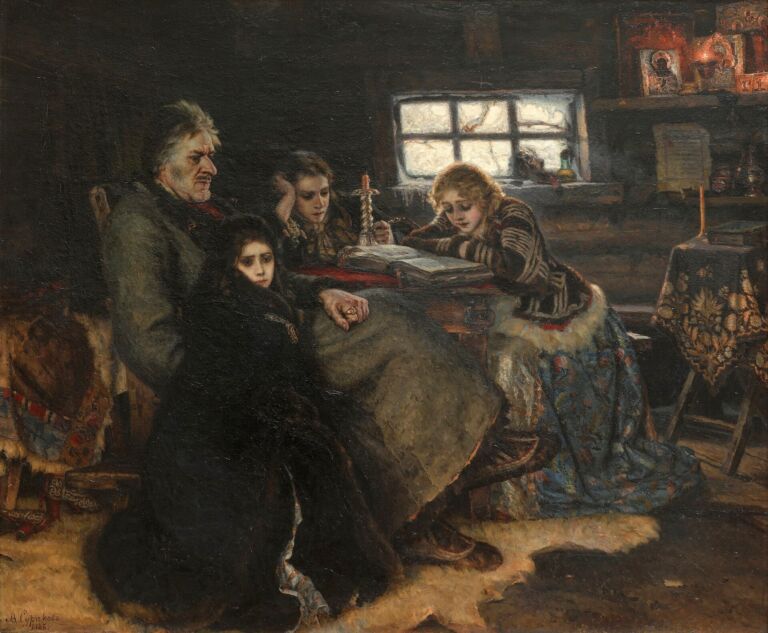 Menshikov in BerezovoVasily Surikov · 1883
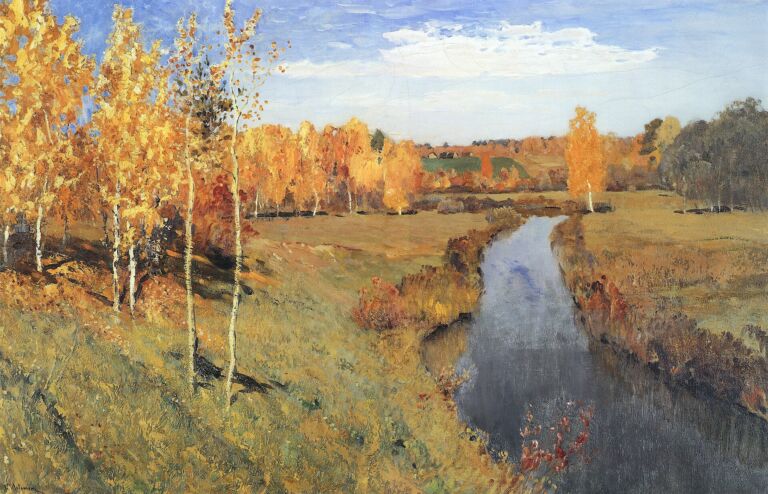 Golden AutumnIsaac Levitan · 1895
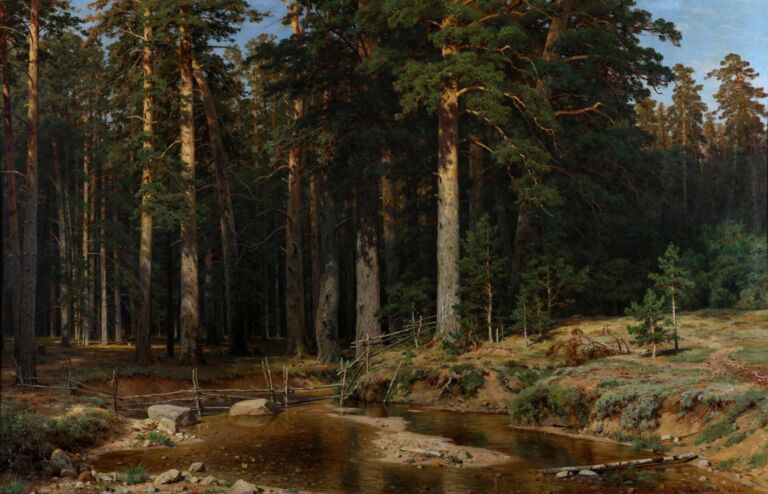 Mast-Tree GroveIvan Shishkin · 1898
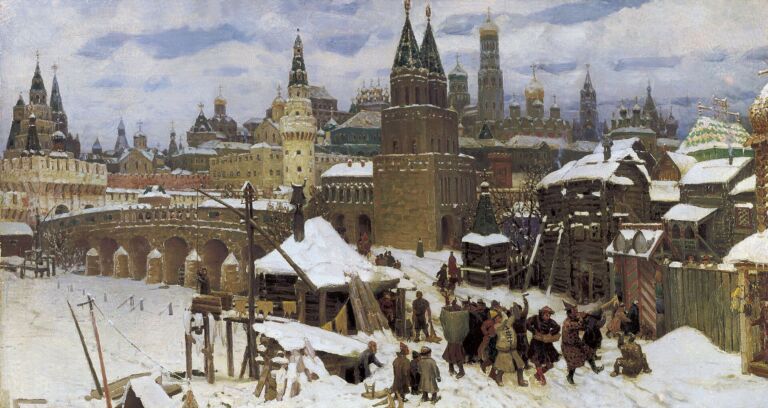 The All Saints Stone Bridge. Moscow in the Late 17th CenturyApollinary Vasnetsov · 1901
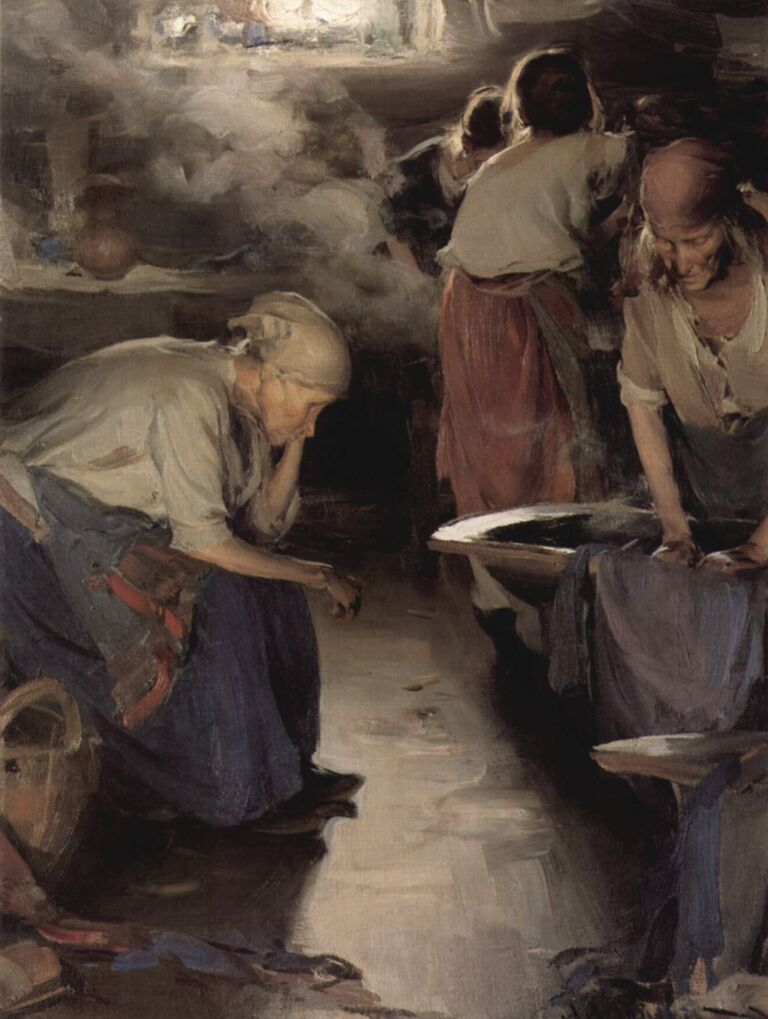 WasherwomenAbram Arkhipov · Late 1890s
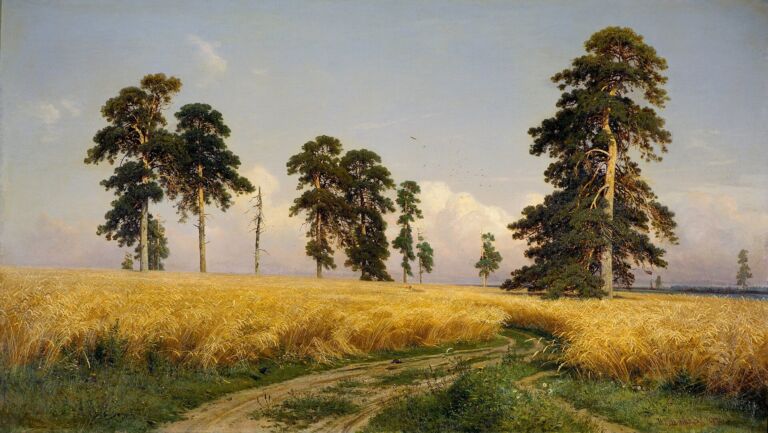 RyeIvan Shishkin · 1878
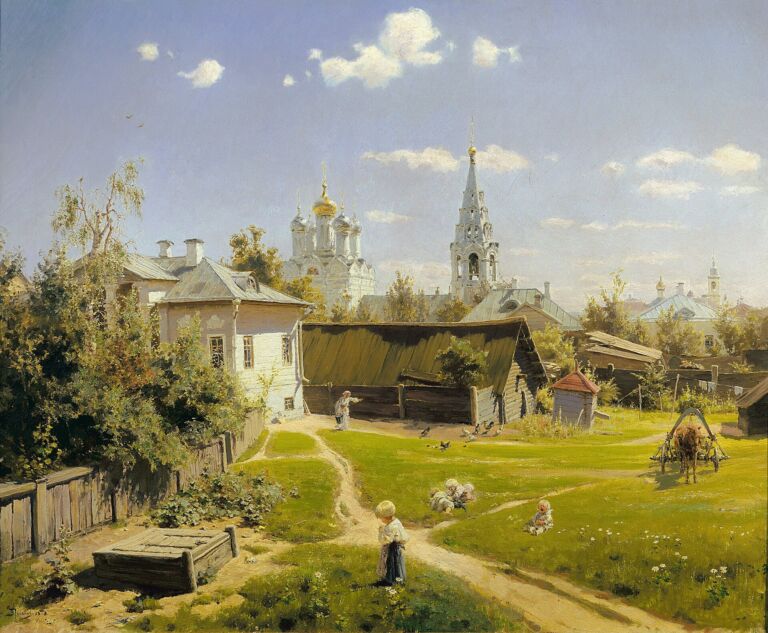 A Moscow CourtyardVasily Polenov · 1878
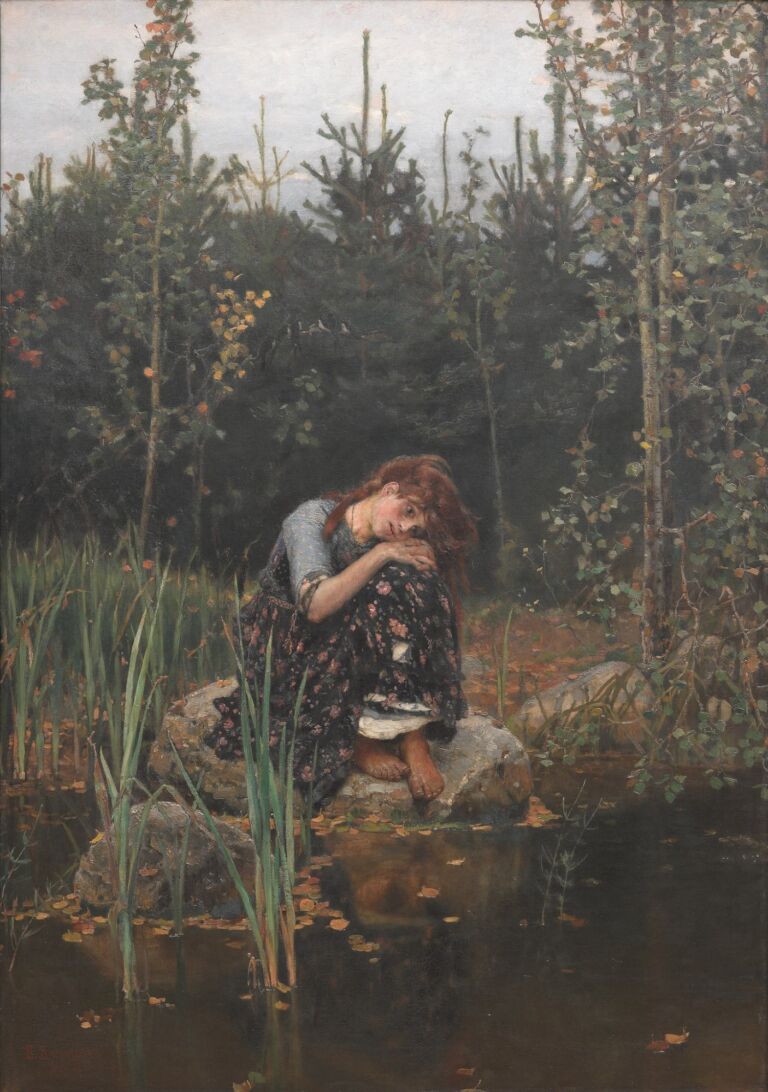 AlyonushkaViktor Vasnetsov · 1881
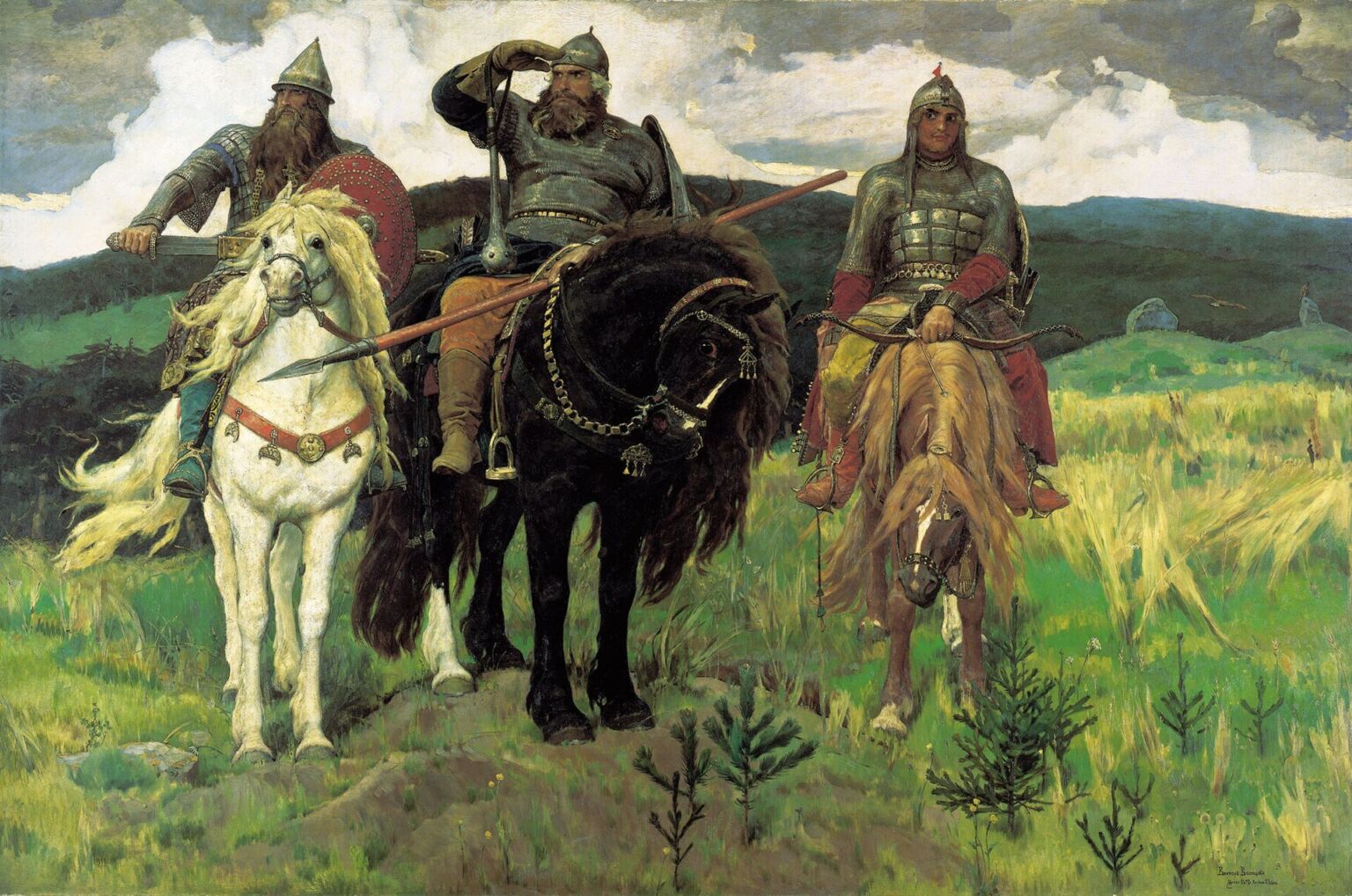
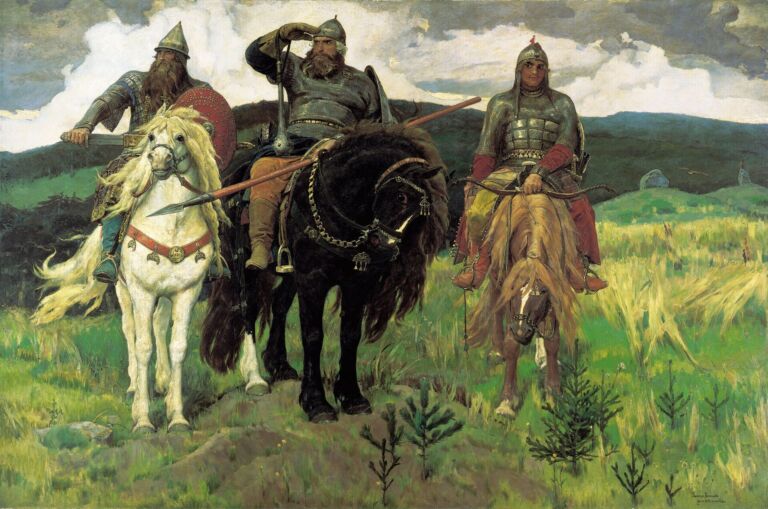 BogatyrsViktor Vasnetsov · 1881–1898
Stories
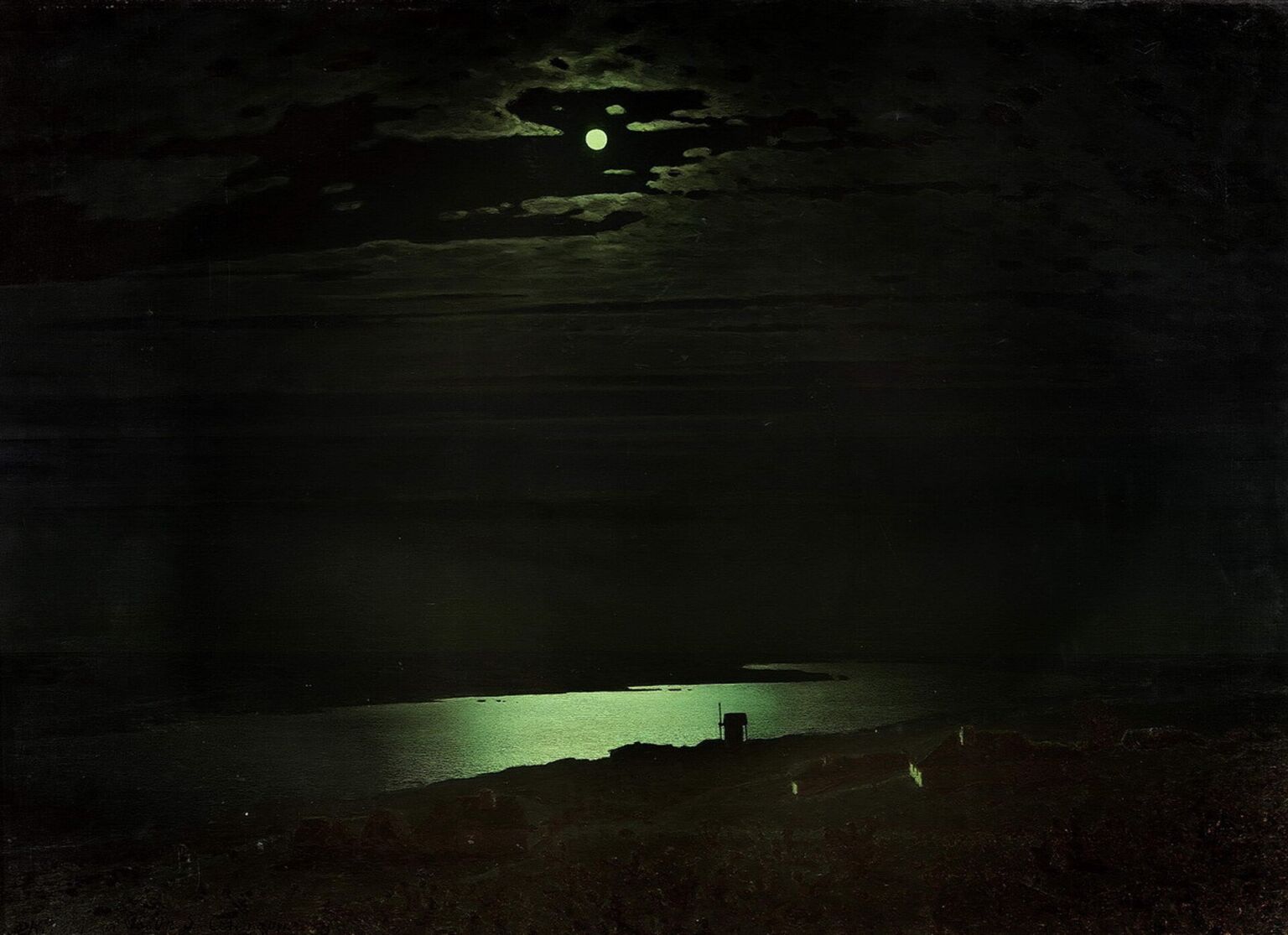
Why Kuindzhi showed Moonlit Night on the Dnieper in a darkened room
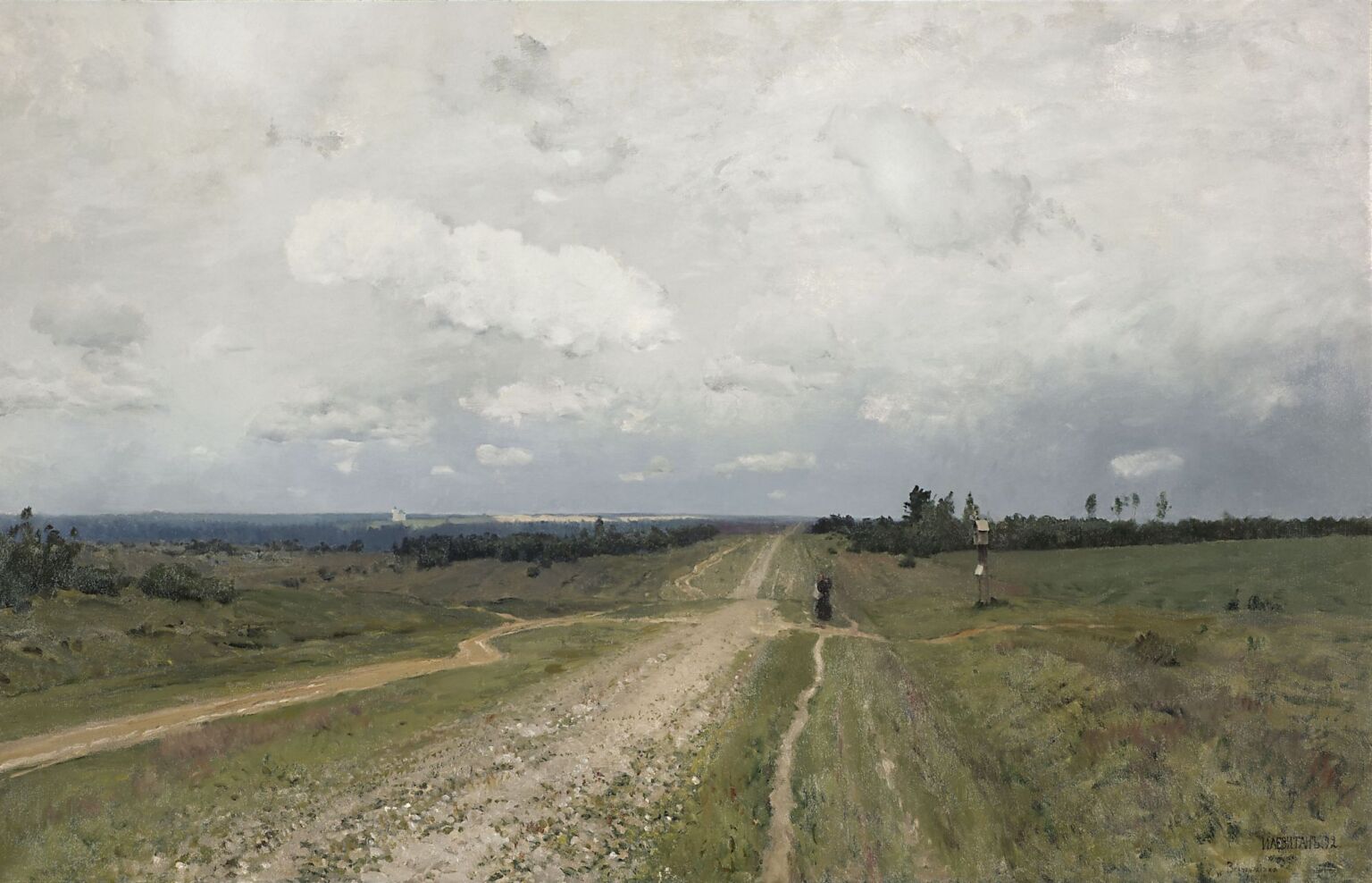
Levitan’s Vladimirka Road: a quiet highway that led convicts to Siberia
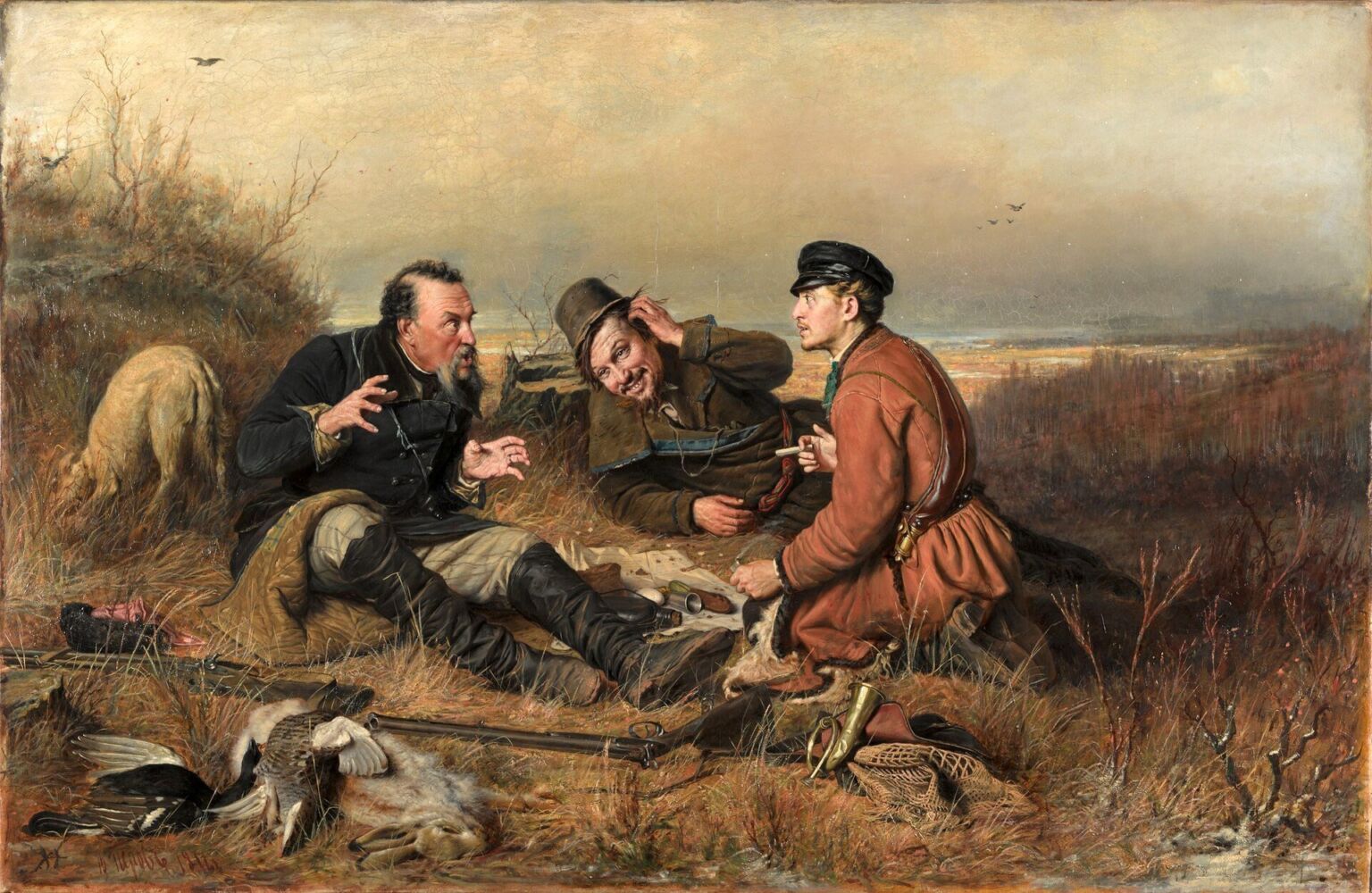
The figure a critic wanted painted out of Perov’s Hunters at Rest