Russian art · Artist
Isaac Levitan
Isaac Ilyich Levitan · 1860, Kibarty — 1900, Moscow
Biography
Isaac Levitan was born on August 30, 1860 (August 18, Old Style), into a Jewish family in the small town of Kibarty in the Suwałki Governorate (now Kybartai, Lithuania). His father, Ilya Abramovich, taught foreign languages, later worked on the railway and as a translator. Around 1870 the family moved to Moscow, where money was always short. His elder brother Adolf was the first to enter the Moscow School of Painting, Sculpture and Architecture, and in 1873 thirteen-year-old Isaac was admitted too.
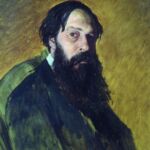
From 1874 he studied in Alexei Savrasov's landscape studio, alongside Konstantin Korovin and Mikhail Nesterov, and from 1882, after Savrasov left, under Vasily Polenov. His mother died in 1875 and his father in 1877. The young man lived on scholarships and often went hungry. In 1879, when Jews were being expelled from Moscow, he had to move out to Saltykovka. Around the same time, through his fellow student Nikolai Chekhov, he met Nikolai's brother Anton, and their friendship lasted two decades.
Success came early: in 1880 Pavel Tretyakov, the Moscow merchant whose collection became the State Tretyakov Gallery, bought Autumn Day. Sokolniki from the student, and from then on he regularly acquired Levitan's best work. Even so, the school refused him the full diploma of a "class artist": in 1884 he received only the lesser title of "non-class artist," which allowed him to teach drawing. In 1885, in deep depression, he attempted suicide.
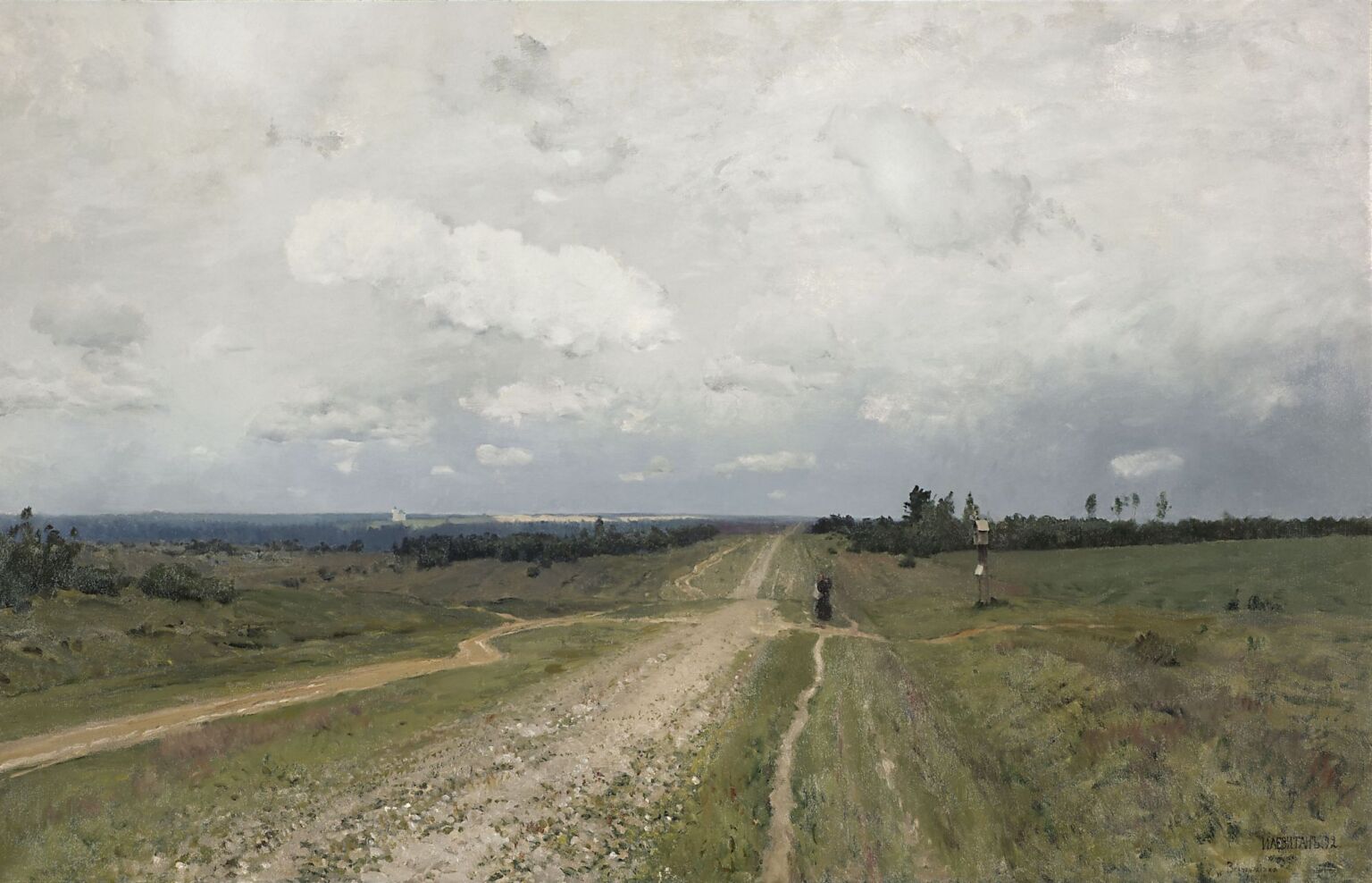
Levitan went looking for his landscapes on the road. From 1886 he traveled to Crimea, and in 1887–1890 to the Volga, above all to the town of Plyos. The Volga trips produced Quiet Abode (1890), and in 1891 he was admitted to the Peredvizhniki (Wanderers), the realist society that took its exhibitions on tour. Then came By the Millpond and Vladimirka Road (both 1892), the latter showing the road along which convicts were marched to Siberia; in 1894 the artist gave it to Tretyakov for his gallery.
In the summer of 1894, on Lake Udomlya near Vyshny Volochyok, he painted Above Eternal Peace, and Tretyakov bought it that same year. Around then Levitan also grew close to the Turchaninov family and began spending long stretches at Gorka, their estate in Tver province. There, in 1895, he painted March and Golden Autumn; Tretyakov acquired both.
He is called the creator of the "mood landscape," and the Russian Museum describes him as "a true poet of nature." Besides landscapes, he painted flowers and portraits. Nor did he work only in oils: the Russian Museum's reference guide also lists him as a watercolorist. His friendship with Chekhov cracked in 1892, when Levitan recognized himself in Ryabovsky, the painter in Chekhov's story The Grasshopper; the two made peace only in 1895, through the good offices of the writer Tatiana Shchepkina-Kupernik.
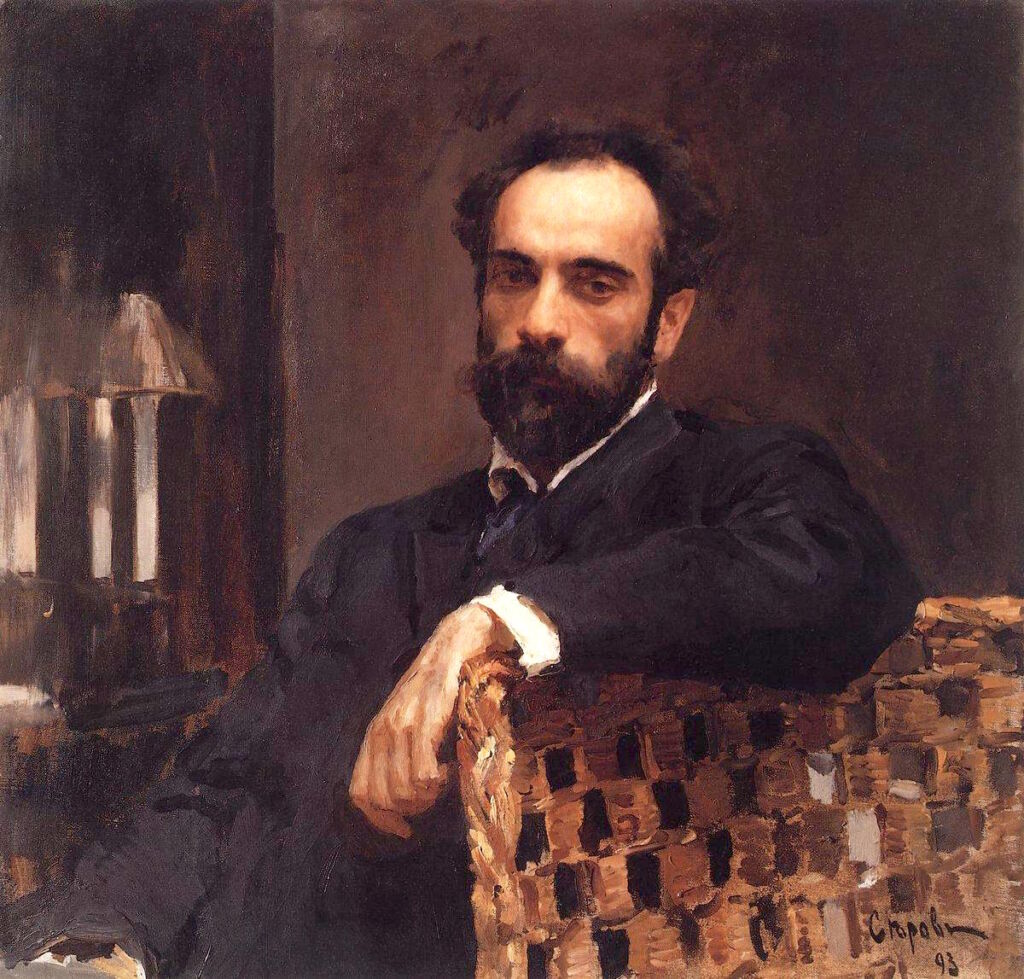
In the 1890s he traveled to Italy, France and Switzerland, and in 1896 to Finland; from 1897 he was a member of the Munich Secession, and in 1898–1900 he exhibited with the World of Art. But as early as 1894 doctors had found a serious disease of the aorta. In 1898 he became an academician, and on September 1 he took over the landscape studio at his old school. In May 1900 he caught a chill while painting studies in the rain at Khimki, and he died in Moscow on August 4, 1900 (July 22, Old Style), before reaching forty. He was buried in the Dorogomilovo Cemetery; Serov and Korovin were at the funeral. The main collections of his work are in the State Tretyakov Gallery and the State Russian Museum.
Major works
Click a painting to see the details.
-
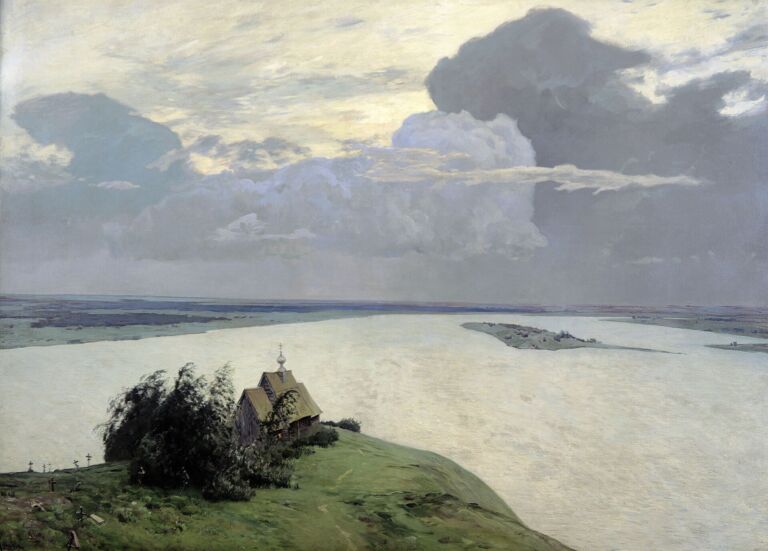 01
Above Eternal Peace
1894 · State Tretyakov Gallery, Moscow -
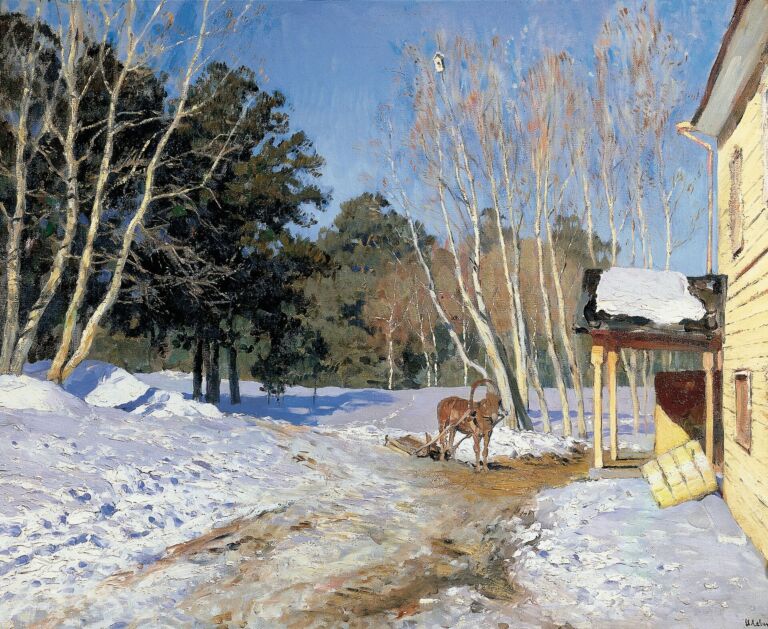 02
March
1895 · State Tretyakov Gallery, Moscow -
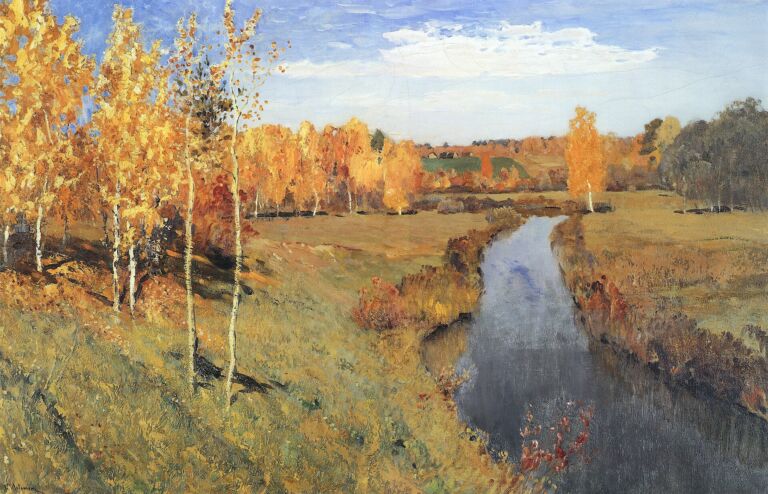 03
Golden Autumn
1895 · State Tretyakov Gallery, Moscow
Stories about Isaac Levitan