Why Kuindzhi showed Moonlit Night on the Dnieper in a darkened room
In the autumn of 1880, St Petersburg lined up to see a single painting in a darkened hall. How Kuindzhi staged the show, where the talk of magic paint came from, and why Moonlit Night on the Dnieper darkened.
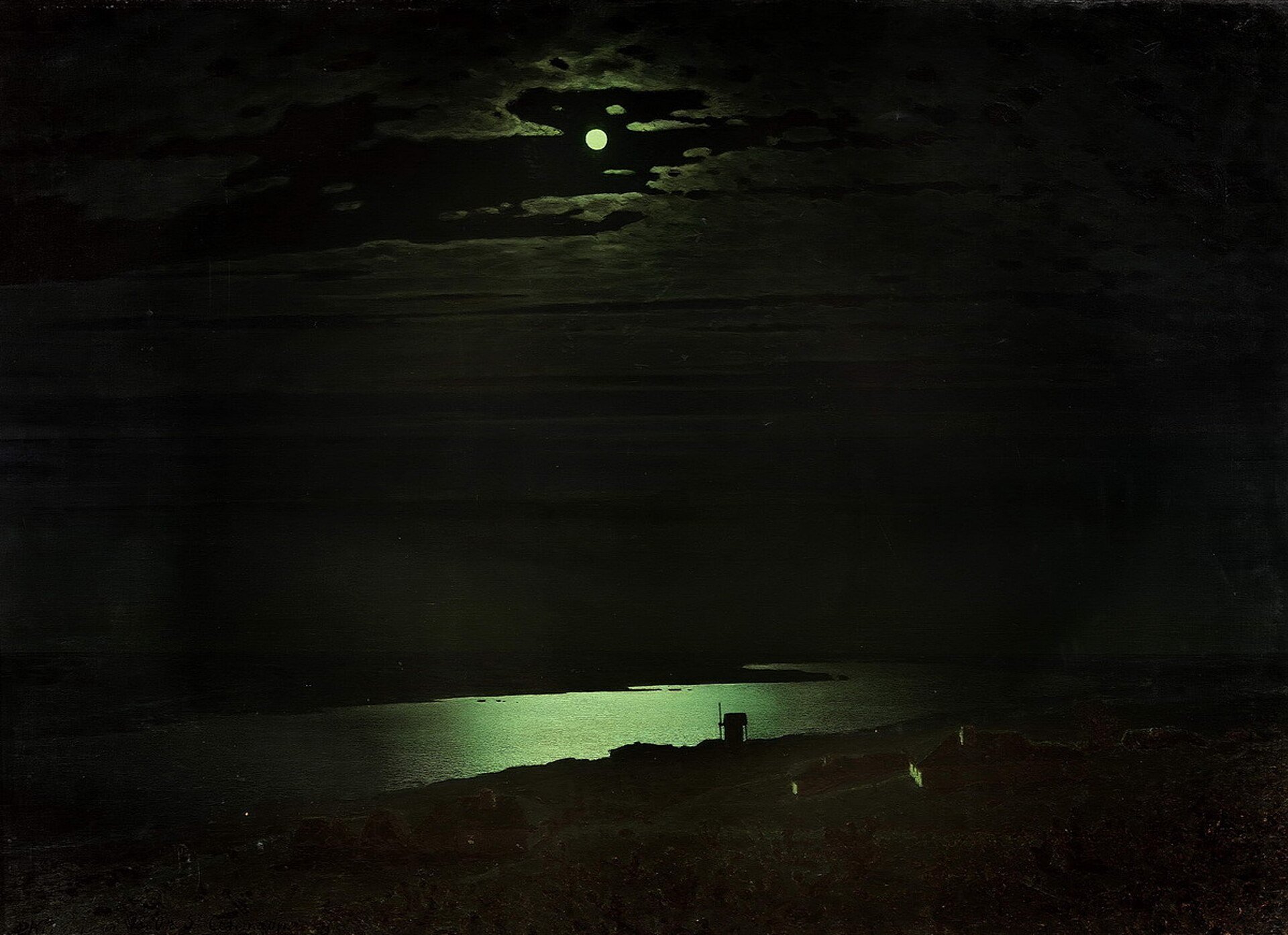
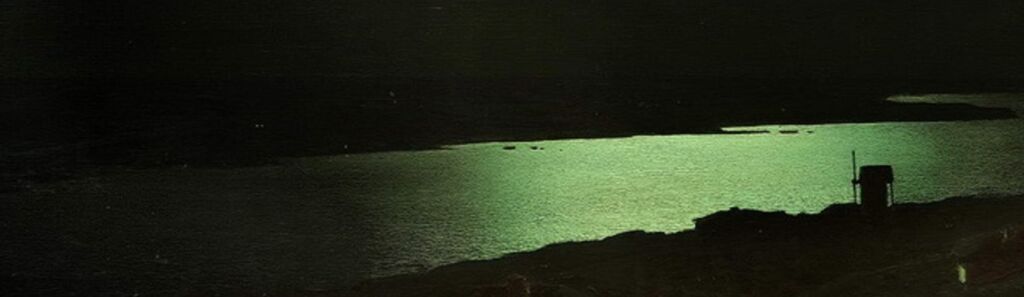
In the autumn of 1880 the hall of the Society for the Encouragement of the Arts, at 38 Bolshaya Morskaya Street in St Petersburg, showed a single painting: Arkhip Kuindzhi’s Moonlit Night on the Dnieper. The windows were covered. It wasn’t showmanship: according to his biographer Vitaly Manin, a red wall opposite cast its reflection onto the canvas. So began Russian art’s most famous one-painting show.
The picture was already sold. It was painted in a rooftop studio on Maly Prospekt, Vasilyevsky Island, and in March 1880 Grand Duke Konstantin Konstantinovich bought it straight off the easel for 5,000 rubles, reports The Tretyakov Gallery Magazine. The public saw a picture that was no longer the artist’s.
One canvas in a darkened hall
A lamp, usually said to be electric, lit the canvas. Viktoria Paranyuk, writing in Slavic Review in 2019, is more cautious: press reports do not even establish the number of lamps, which may well have burned kerosene.
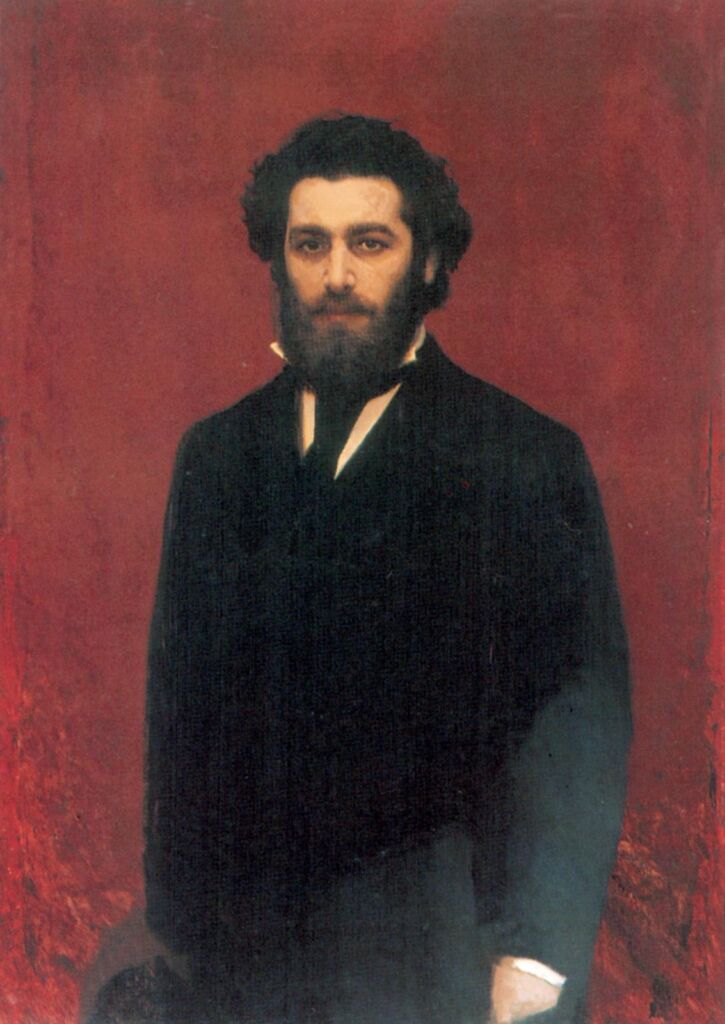
The crowds are well documented. Visitors were admitted in groups, and many came back. Ilya Repin wrote in a 1913 book on Kuindzhi that “an unbroken mass of carriages jammed the whole street” (quotations translated here by Hroniki); later retellings stretch the line to Nevsky Prospekt, the city’s main avenue. On November 15, 1880, the painter Ivan Kramskoy wrote to the publisher Alexei Suvorin that the picture caused “a physiological irritation of the eye, as if from real light.”
Science responded too. Dmitri Mendeleev, a visitor to Kuindzhi’s studio, published “Before the Painting of A. I. Kuindzhi” in the newspaper Golos on November 13, 1880. On how viewers saw it, he was brief: “it will give everyone something of their own.”
A lamp behind the frame and a rumor of phosphorus
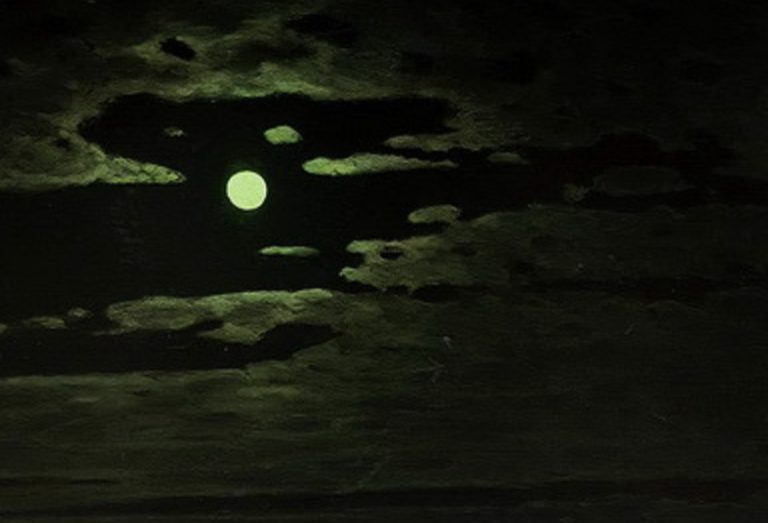
The light looked so real that people peered behind the frame for a lamp and checked whether the scene was painted on glass. Even the critic Nikolai Strakhov, who found the effect too natural, passed on the rumor of a backlit canvas.
The favorite story today, phosphorescent paint, has no support: the 1880 reviews that scholars cite talk of glass and lamps, not phosphorus. The painting is in oil. Manin puts the effect down to painting for the lamp: under it the warm tones blazed, while the cool ones absorbed the light and receded.
Kuindzhi never explained his method, and his silence fed the legends better than any publicity.
The canvas darkens: bitumen and a voyage by frigate
The grand duke would not part with the picture and took it to sea aboard the frigate Gertsog Edinburgsky (Duke of Edinburgh). In December 1880 it was shown for ten days at the Sedelmeyer Gallery, Paris. Ivan Turgenev, who helped arrange the show, feared the voyage would damage it and wanted it kept in Paris. The cruise went on until 1882.
The worry began in St Petersburg. In a letter to Suvorin, quoted by Manin, Kramskoy asked: “Will the combination of paints the artist has discovered last?” The art historian Faina Maltseva and the State Russian Museum’s 2015 Kuindzhi catalog link the darkening to bitumen, an asphalt-based paint Kuindzhi used. Such paints break down and darken in light and air. The sea did not help.
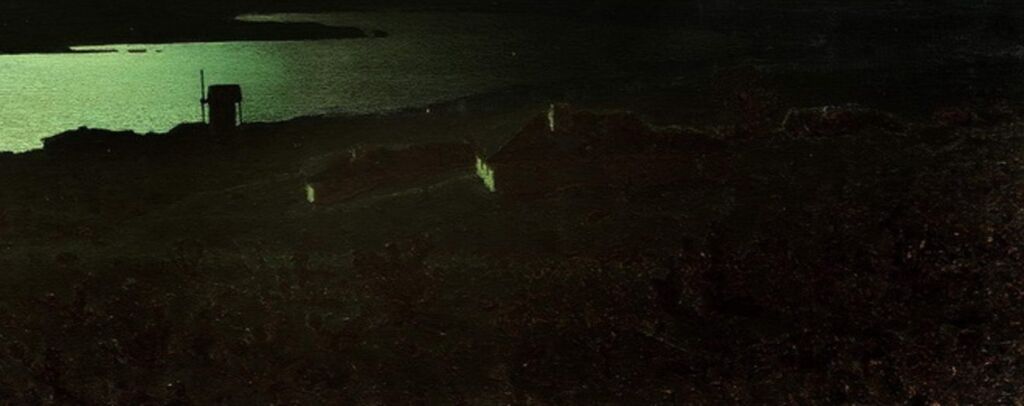
It came back scratched. Kuindzhi retouched it himself but could not restore the glow. In 1882 he painted several replicas; one, Night on the Dnieper, is now in the State Tretyakov Gallery, Moscow. That year Kuindzhi held his last solo exhibition. Not long before, he had shown with the Wanderers (Peredvizhniki), a realist society founded in 1870 independently of the Imperial Academy of Arts. He painted until his death but never again showed new work to the wider public.
The original stayed in the grand duke’s Marble Palace, passed after the revolution to the Academy for the History of Material Culture, and in 1928 to the State Russian Museum, where it remains: oil on canvas, 105 × 146 cm. The moon still shines, but not as it did in the darkened hall on Bolshaya Morskaya Street, where the whole thing was staged.
Comments
For Hroniki readers
Comments are open to readers with an account. Signing up is free and takes a few seconds.
No comments yet. Start the conversation.