Why Polenov waited 22 years for Vasnetsov’s Bogatyrs sketch
Vasily Polenov refused the sketch for Bogatyrs until Viktor Vasnetsov finished the big painting, and then waited 22 years. How a peasant, a tycoon's son and museum armor became three riders on watch.
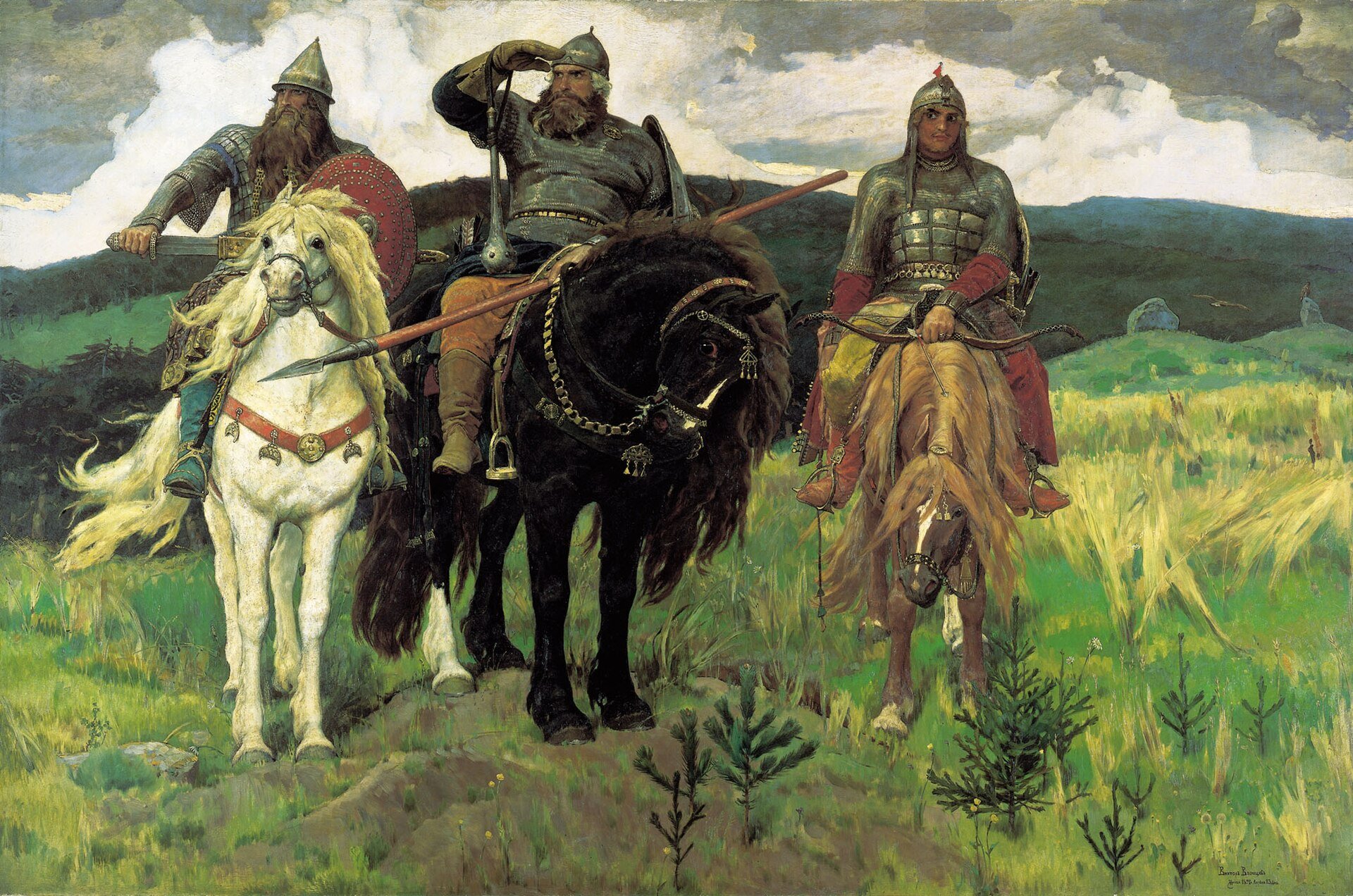
In 1876, in Vasily Polenov’s studio in Paris, Viktor Vasnetsov showed his friends an oil sketch: three horsemen in a field. He meant it as a gift for his host. Polenov declined, saying he would accept it once the big painting was done, and waited 22 years: the sketch reached him only in the spring of 1898.
Today Bogatyrs, three warrior heroes of the Russian epics, hangs in the Vasnetsov room of the State Tretyakov Gallery in Moscow. The canvas is huge, 295.3 × 446 cm (116 × 176 in), and the gallery’s catalog date stretches over 17 years: 1881–1898. In that time it lived in Kyiv, borrowed the features of a peasant and a boy, and reached the collector Pavel Tretyakov six months before his death.
It began in pencil
The Great Russian Encyclopedia (in Russian) dates the first pencil drawing of the composition to 1871. The art historian Eleonora Paston, writing in The Tretyakov Gallery Magazine, is more careful: “the early 1870s.” Either way, almost thirty years separate the first pencil line from the last brushstroke, and 22 the Paris sketch from the finished picture.
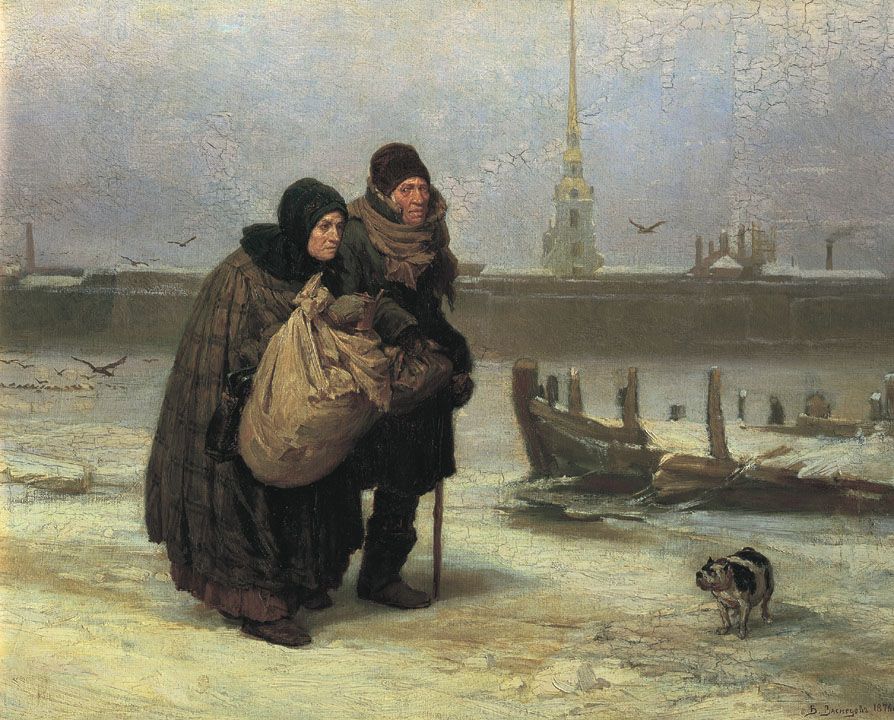
Vasnetsov was born in 1848 in the village of Lopyal in Vyatka Province and came to St Petersburg to study in 1867. In the early 1870s he painted everyday scenes: city poverty, little shops, families moving house with their bundles. In 1878 he joined the Peredvizhniki (the Wanderers, a society of realist painters who broke with the Imperial Academy in 1870), where such genre scenes were prized.
Vasnetsov arrived in Paris in March 1876 at Ilya Repin’s invitation and stayed until May 1877. So the popular story that the 1871 drawing was made at Polenov’s confuses two dates: what his friends saw in Paris was the second stage. They were struck, because the composition was nearly settled. What remained was to find the faces, the horses, the armor and the sky.
Polenov’s refusal looks like mere politeness, but it worked like a contract: until the painting was finished, the gift stayed with the artist.
A studio in a shed at Abramtsevo
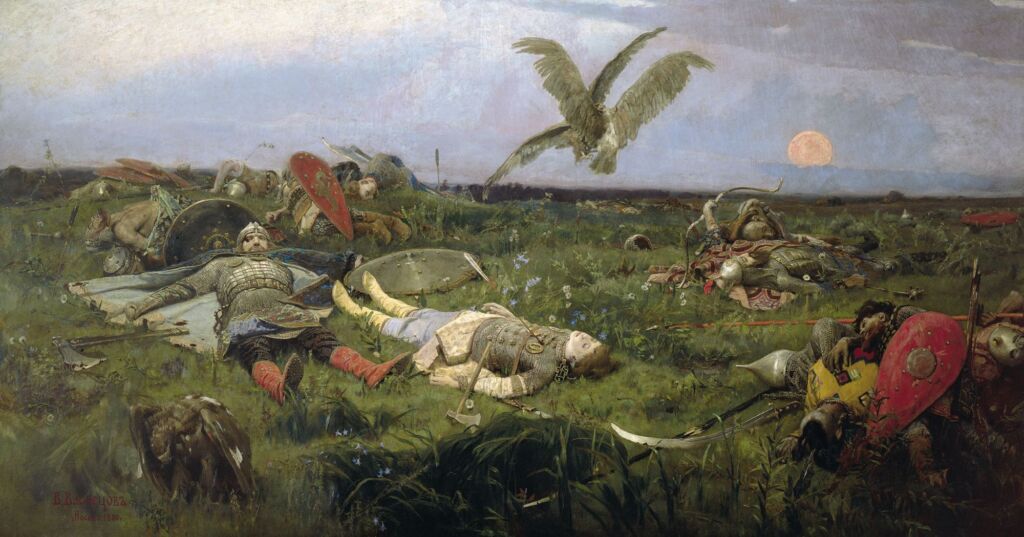
In 1878 Vasnetsov moved to Moscow and was soon drawn into the circle of Savva Mamontov, a railroad magnate whose estate at Abramtsevo was an artists’ colony. Within four years that circle produced After Prince Igor’s Battle with the Polovtsy, Alyonushka and The Knight at the Crossroads. The genre painter had turned storyteller.
In 1881 he took up Bogatyrs again, in earnest. The canvas needed room, so Mamontov had a shed near the Yashkin house, one of the estate’s houses, converted into a studio with a skylight. The landscape comes from the surrounding country: the fields near Akhtyrka, the banks of the Vorya River. Later the artist said he had learned to paint bogatyrs from the Abramtsevo oaks.
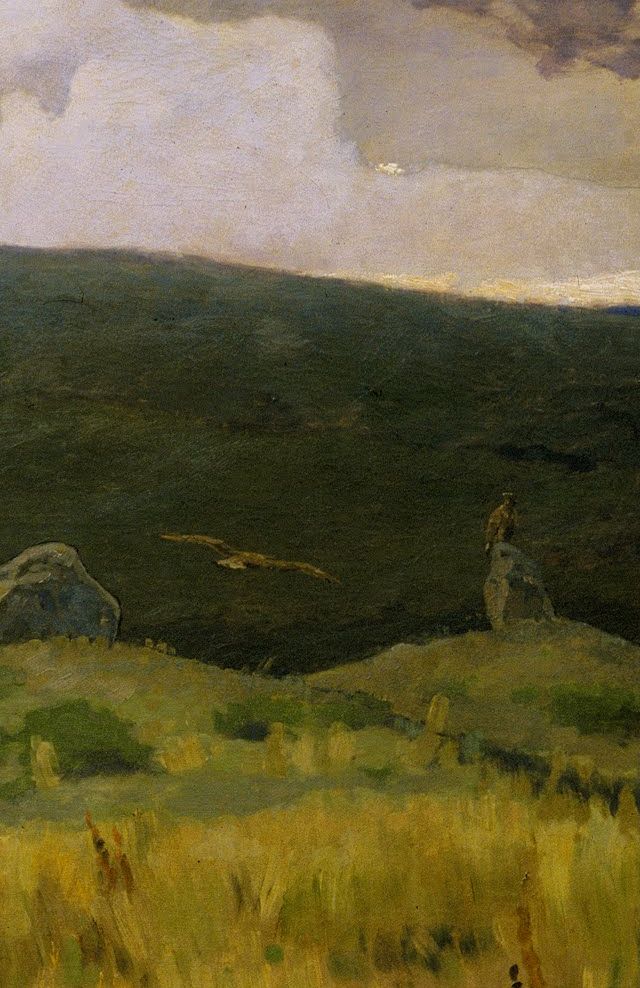
Popular accounts read the hills behind the riders as burial mounds, the graves of warriors from earlier centuries. Vasnetsov himself left no such explanation. But accept that reading and the picture falls into one line: the dead behind, an unseen enemy ahead, three living men between.
In 1882 Vasnetsov explained to his teacher Pavel Chistyakov that the bogatyrs are out in the field “on the lookout,” making sure “there is no one attacking” (in the translation of The Tretyakov Gallery Magazine). That spring he regretted missing the All-Russian Industrial and Art Exhibition: “It would be nice to display my piece, but it’s not finished yet.” Still, he didn’t hurry.
Then commissions intervened. In the fall of 1882 Count Uvarov ordered Stone Age, a frieze, a long painted band along the wall of a hall in the State Historical Museum, then under construction. That work lasted until 1885, when he was called to paint St Vladimir’s Cathedral in Kyiv, which took another decade. Bogatyrs went with him: for years a painting of an outpost on the open steppe lived in a Kyiv apartment.
Vasnetsov was changing, too. In 1889 came Ivan Tsarevich Riding the Gray Wolf, and in 1890 he left the Wanderers, though he kept exhibiting with them until 1897. Fairy tale and epic pushed out genre painting for good, and Bogatyrs became the central work of that turn.
He never thought of dropping it. Years later, by the recollections Paston cites, he called it “my duty, my obligation as an artist to my people.” Solemn words, but he backed them with twenty-odd years of returning to the canvas.
Three faces, assembled from many
Vasnetsov called the painting simply Bogatyrs; Three Bogatyrs stuck later, in everyday use. Who posed for the riders is known with varying certainty: one model left a signed study, another lives only in family legend.
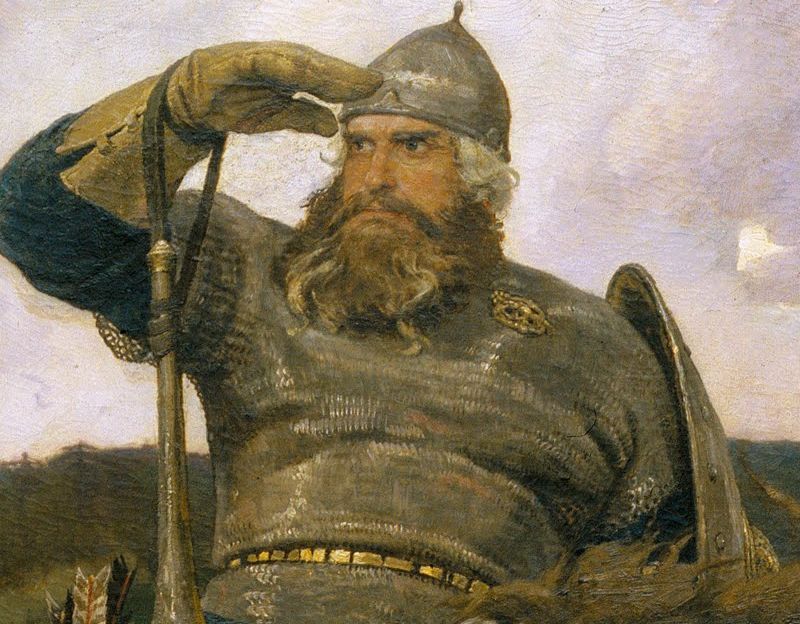
Ilya Muromets is the clearest case. The model was Ivan Petrov, a peasant from Vladimir Province: his 1883 study is in the Tretyakov Gallery, and Paston names him outright. Other accounts have Vasnetsov eyeing an Abramtsevo blacksmith and a Moscow cab driver, too; he seems to have gone through faces until one fit.
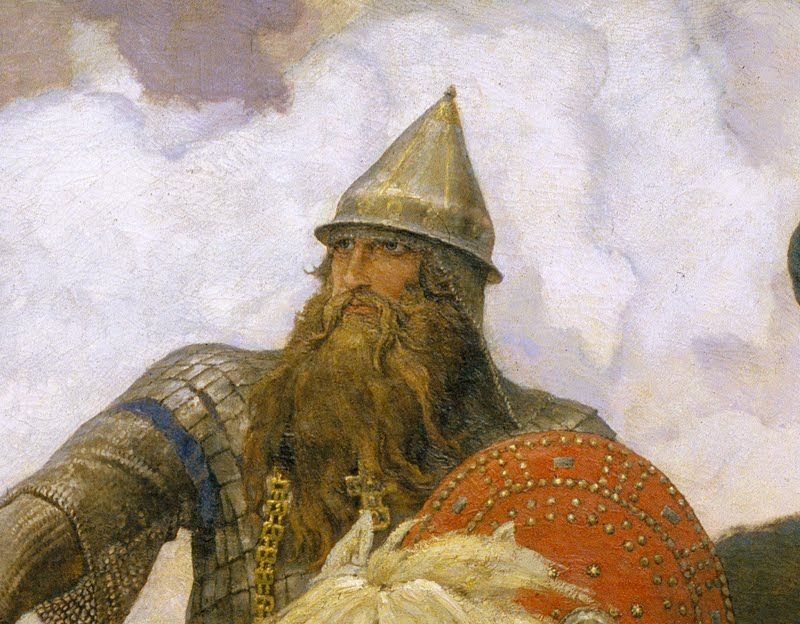
Dobrynya Nikitich is harder. Legend says Vasnetsov painted him from himself, and there is a resemblance. But the Tretyakov also holds a study of a peasant made for Dobrynya, which the artist used heavily. Popular books cite a family type, his father’s and uncle’s features; some add that Polenov posed. Most likely the face was built from several.
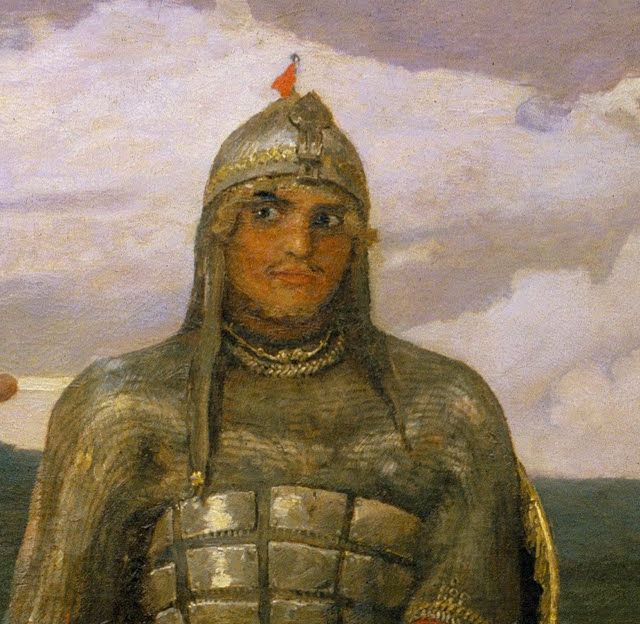
Alyosha Popovich is the teenage Andrei, Savva Mamontov’s son. His brother Vsevolod remembered how the other children envied Andrei for looking like Alyosha. Andrei died young, in 1891, never seeing the finished painting. Vasnetsov worked seven more years, and Alyosha’s face stayed a boy’s.
A horse called Fox from Mamontov’s stables
The horses were painted from life, too. Vsevolod Mamontov recalled that the artist was brought sometimes a heavy draft stallion, sometimes his father’s saddle horse, Lis (Fox). Which of the three horses is Lis the memoir doesn’t say: the name survives in the painting’s story, but not on the canvas.
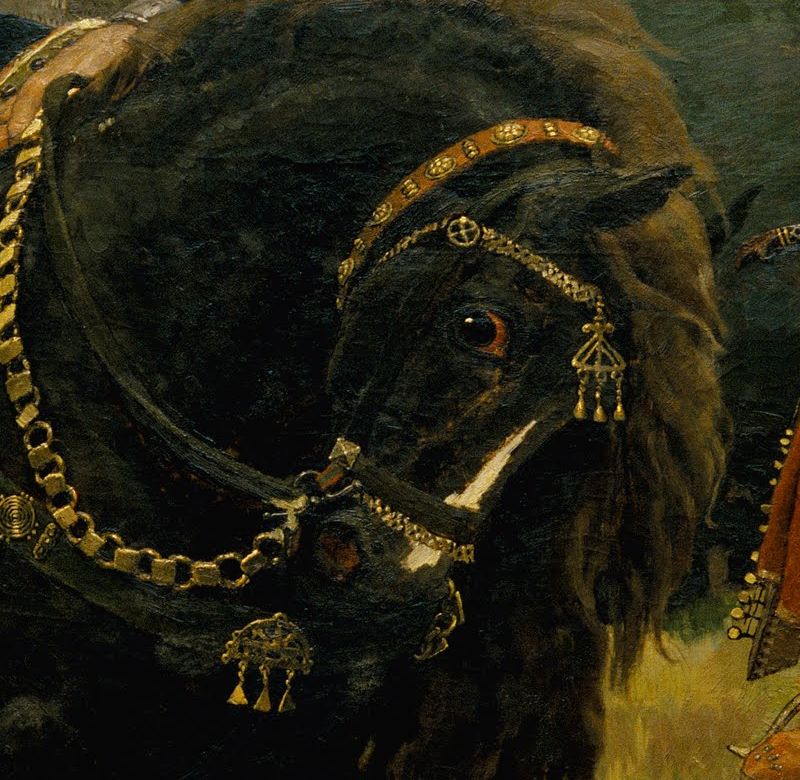
Describing his plan, Vasnetsov spoke of mighty, shaggy horses, and so they reached the canvas. None is a statue’s parade mount; they look led straight from the stable. That weight turns three riders into an outpost.
Helmets from the museum storeroom
The weapons, by all appearances, are not invented. According to the magazine Vokrug Sveta (in Russian), staff at the State Historical Museum let Vasnetsov borrow old armor from its storerooms. He already worked for the museum: Stone Age was painted for it.
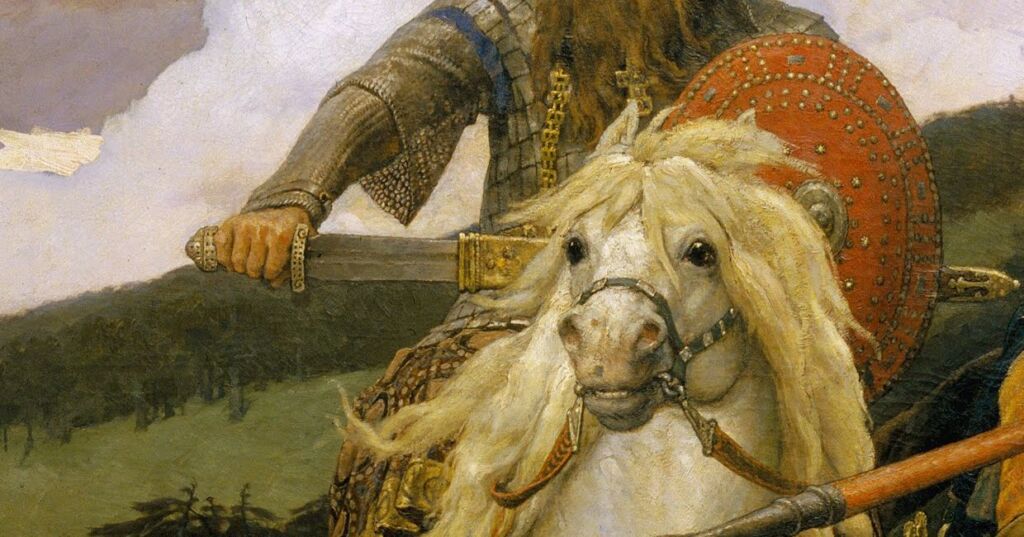
Dobrynya’s tall helmet is a “Greek cap,” a type that came from Byzantium; the same article traces it to a 13th-century helmet in the Kremlin Armory. Ilya’s shishak, a helmet with a pointed spike, belongs to a type popular in Russia in the 16th century. If so, Dobrynya and Ilya stand shoulder to shoulder in helmets three centuries apart.
Paston, for her part, stresses the accurate mail, clothing and stirrups: much really was copied from museum pieces. Popular accounts explain the gap simply: Vasnetsov armed each hero by character, not era. The critic Vladimir Stasov, describing the painting, singled out Dobrynya’s sword: long, straight, Slavic.
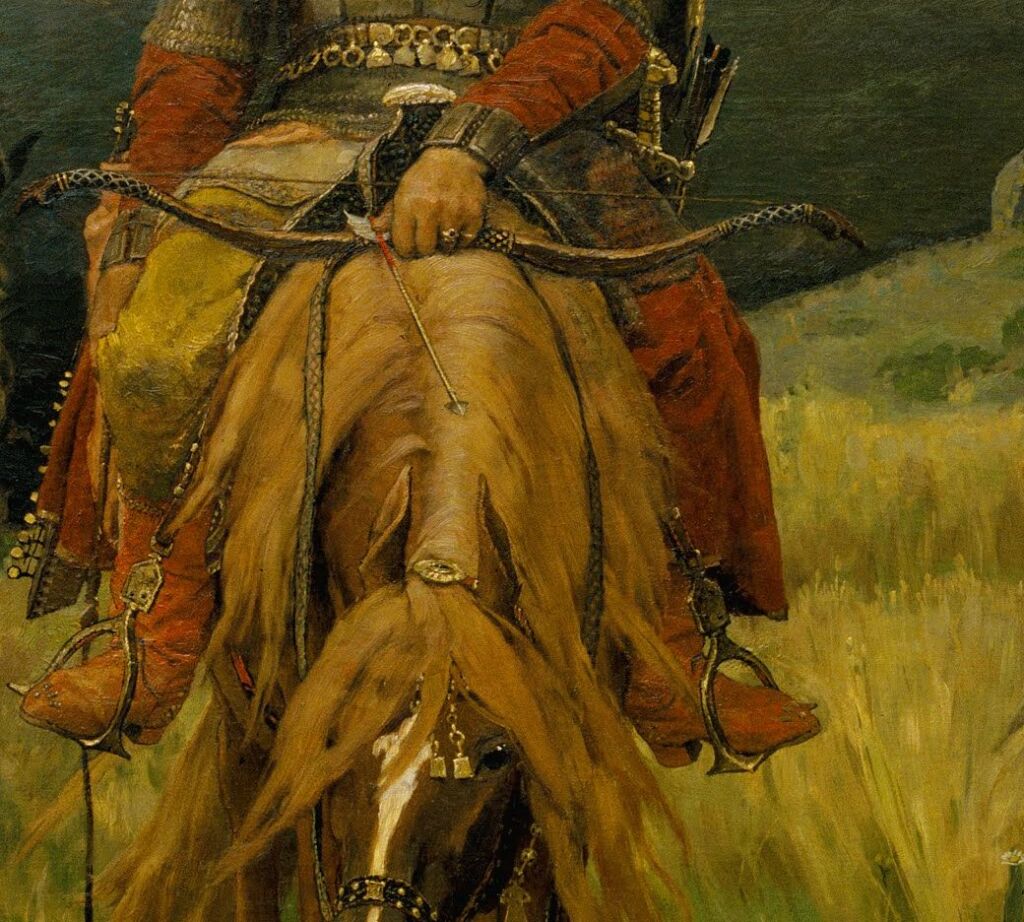
Each man has his own weapons. Ilya holds a heavy mace and a spear; Dobrynya draws his sword behind a shield. Alyosha differs most from the other two: the bow is a light, fast fighter’s weapon. The gusli, a zither-like stringed instrument, hanging from his saddle hint at his character: in the epics the youngest bogatyr is sly and likes to show off.
The wall at the end of the enfilade
Vasnetsov finished it in Moscow, in the studio of the house he built to his own design. By spring 1898 it was done, and Polenov finally got the Paris sketch, now in the Polenov Museum-Reserve.
That summer (the gallery’s magazine says June) Pavel Tretyakov bought Bogatyrs for his collection, together with Tsar Ivan the Terrible of 1897. It is often called Tretyakov’s last purchase; more precisely, it was one of his last. How much he paid is unknown.
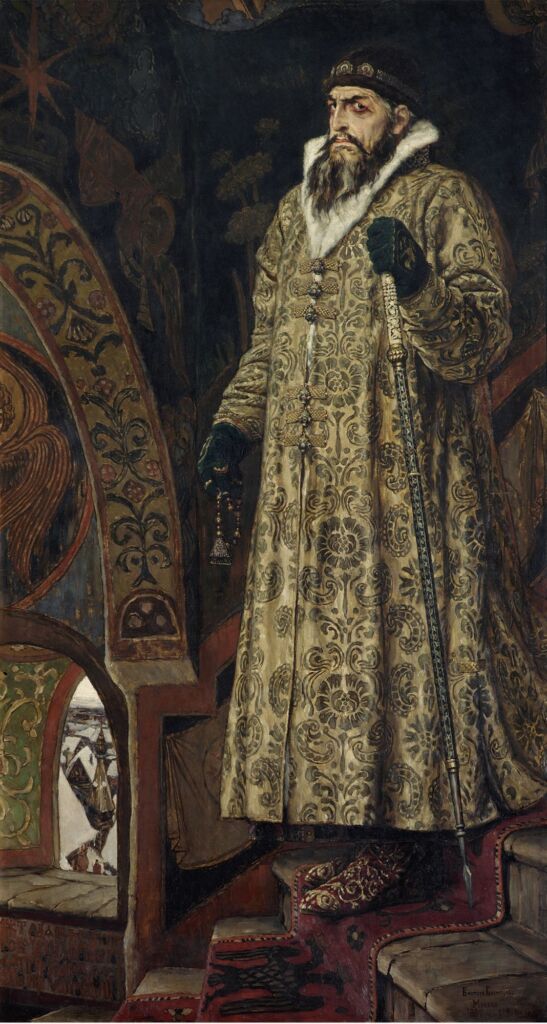
A telling pair: in Bogatyrs three men stand side by side in an open field; Ivan stands alone on a narrow staircase, with almost no space around him.
Tretyakov gave it a spot hard to miss: the wall at the end of the enfilade, the run of connecting rooms on the second floor, where his brother Sergei’s Western collection had hung. Even after the sale Vasnetsov kept at it: on October 5 he wrote to Tretyakov that he had corrected all that was needed in Bogatyrs, for the better, he felt. That December Tretyakov died.
Vasnetsov’s ties to the gallery outlasted its founder: later its fairy-tale facade on Lavrushinsky Lane was built to his drawing.
A gift that could not be handed over until the painting was done made Vasnetsov finish it, 22 years after the promise.
Strength triumphant
In spring 1899 the painting was first shown in public, at Vasnetsov’s solo exhibition at the Imperial Academy of Arts in St Petersburg. Among 38 works, Bogatyrs was the centerpiece. According to the gallery’s staff, it was the first and last time the canvas left the gallery’s walls.
That was no longer Tretyakov’s call: he had died three months before the opening. A painting twenty-odd years in the making belonged to the gallery’s founder for under six months.
Stasov considered Bogatyrs Vasnetsov’s most important work. In his article on the exhibition he recounted a conversation among Academy students who paired it with Ilya Repin’s Barge Haulers on the Volga: there, they said, was strength oppressed; here, strength triumphant, calm, afraid of no one.
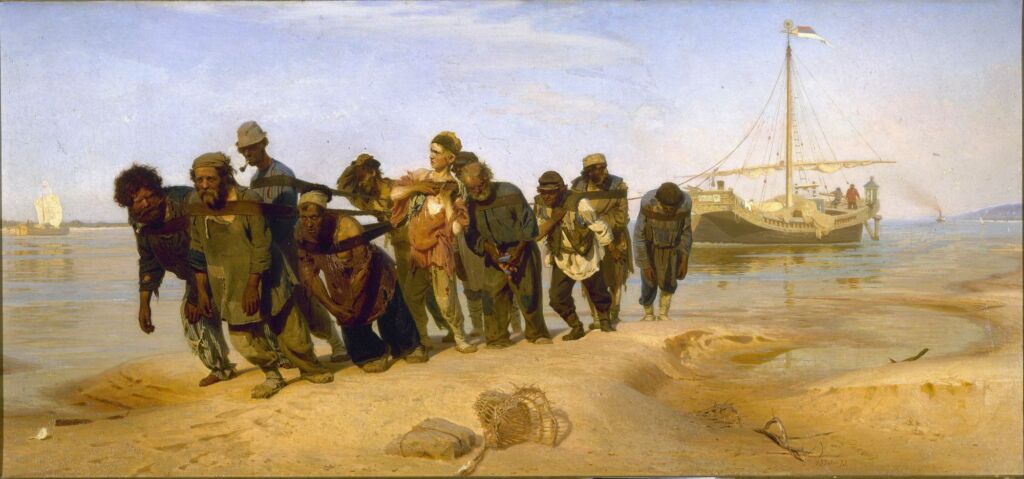
Repin finished Barge Haulers in 1873, when the first drawing for Bogatyrs already existed. A quarter century later the students brought the two strengths together.
After the same show the young Nicholas Roerich admired how in Bogatyrs Vasnetsov stepped beyond form to the essence. A few years later he complained that the overlong labor had dulled the inspiration. Perhaps both were right: the years gave precision and weight but took the freshness that had so struck his friends in Paris.
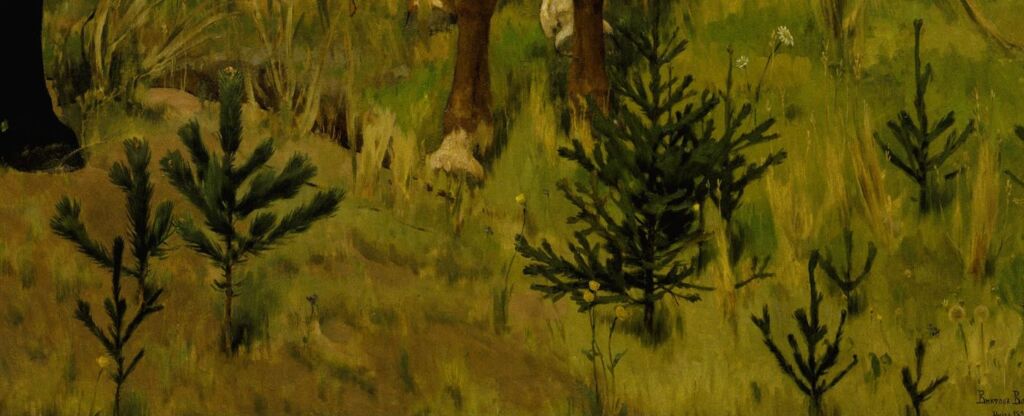
The artist’s son Alexei recalled that to the family Bogatyrs was less a painting than a necessity of life: the children played by it with cardboard swords. And on the canvas, by the horses’ hooves, Vasnetsov planted small fir trees. One can see in them those who will grow up while the outpost keeps watch.
Comments
For Hroniki readers
Comments are open to readers with an account. Signing up is free and takes a few seconds.
No comments yet. Start the conversation.