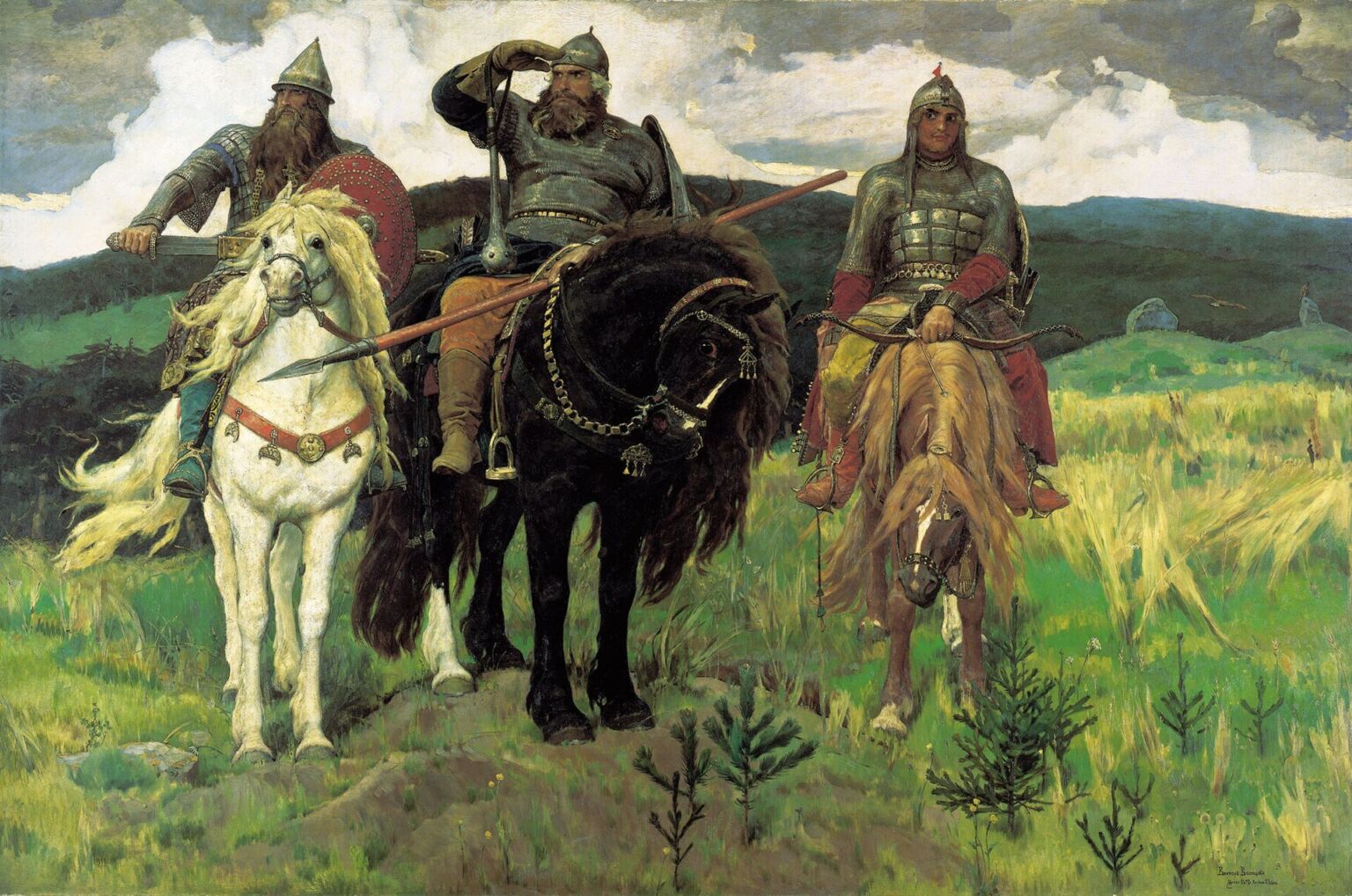
Russian art · Artist
Viktor Vasnetsov
Viktor Mikhailovich Vasnetsov · 1848, Lopyal — 1926, Moscow
Art Nouveau
The Peredvizhniki (Wanderers)
History and epic fairy-tale painting
Religious monumental painting
Genre painting
Architectural design
Biography
The son of a village priest from the backwoods of Vyatka, Viktor Vasnetsov was expected to become a priest himself. He studied at the Vyatka Theological Seminary but left in 1867 without finishing and went to St Petersburg with his drawings and next to no money. In the 1950s a Moscow lane would be named after him, and every Russian schoolchild would come to know his Bogatyrs, the warrior heroes of Russian epic song.
He was born on May 15, 1848 (May 3, Old Style), in the village of Lopyal, in the Urzhum district of Vyatka Governorate. In 1868 he entered the Imperial Academy of Arts, earning his keep with magazine illustrations and genre pictures. He began as a painter of everyday life in the Peredvizhniki manner, with works such as From Apartment to Apartment and Preference. But at the end of the 1870s Vasnetsov moved to Moscow, met the collector Pavel Tretyakov and then joined the Abramtsevo circle of Savva Mamontov, the railway magnate and patron of the arts, at his estate near Moscow. There, amid talk of ancient Rus and folk tales, he found his own subject.
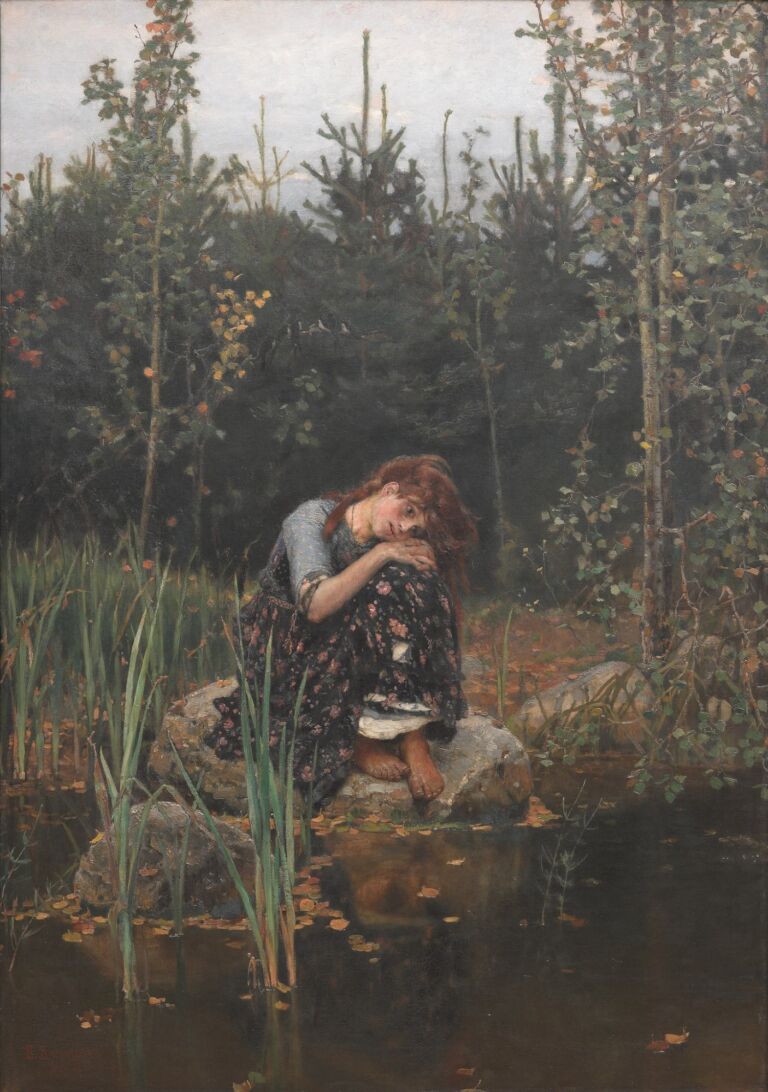
His first real stir came with After Prince Igor's Battle with the Polovtsy (1880), which Tretyakov bought. It was followed by Alyonushka (1881) and A Knight at the Crossroads (1882, State Russian Museum). At the Peredvizhniki exhibitions these fairy-tale subjects looked like a challenge to the painting of everyday life, and not all his fellow members accepted them. The Flying Carpet and other pictures for Mamontov were commissioned by the patron himself. From 1882 Vasnetsov worked on a large mural panel, The Stone Age, for the Historical Museum in Moscow, commissioned by Count Alexei Uvarov.
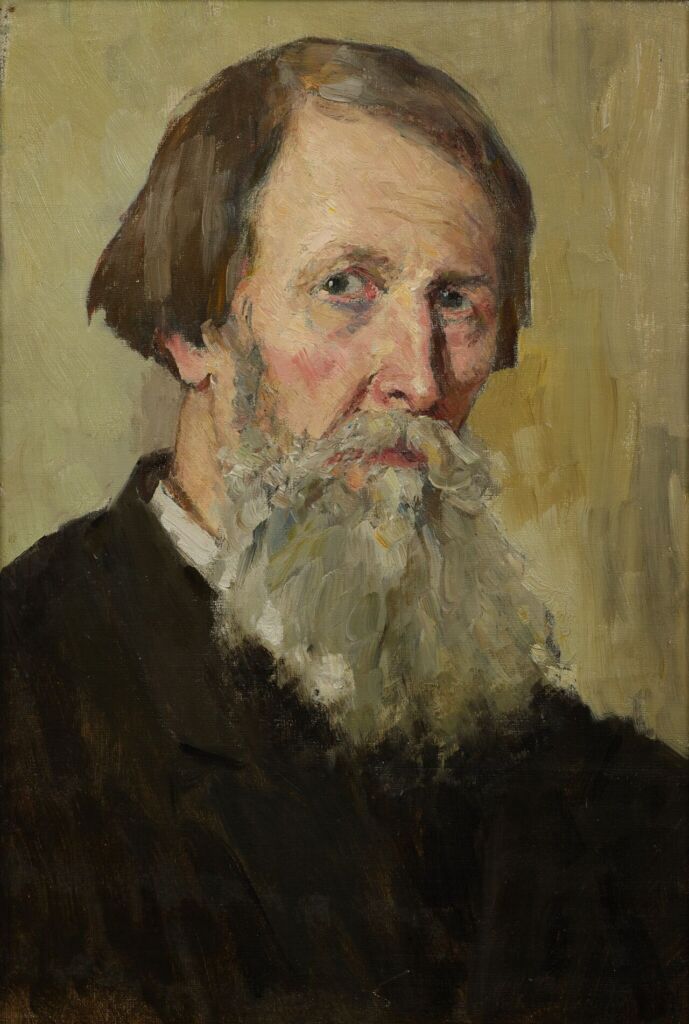
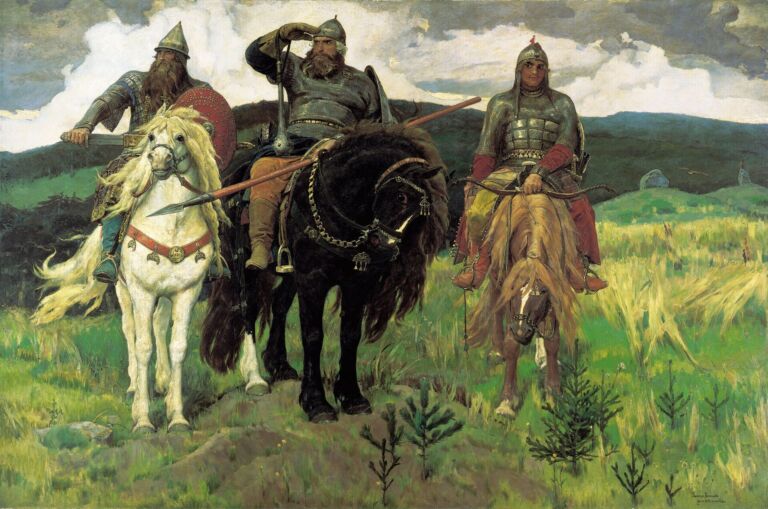
His defining picture was Bogatyrs (the Tretyakov Gallery catalogs it as Warrior Knights). The work stretched over almost twenty years, from 1881 to 1898, and ended with Tretyakov buying the canvas. Running alongside it was a vast church commission: the murals of St Volodymyr's Cathedral in Kyiv (1885–1896), to which Adrian Prakhov invited him. The Kyiv images spread across Russia in reproductions and made Vasnetsov the leading religious painter of his time. Later came Ivan Tsarevich Riding the Gray Wolf (1889) and Tsar Ivan Vasilievich the Terrible (1897).
Vasnetsov approached folklore less as an illustrator than as a director. From an epic poem he took not a single episode but the overall feeling of an age, and he built it through large, almost ornamental silhouettes. From there it was a short step to architecture and the applied arts. The Church of the Savior Not Made by Hands at Abramtsevo (1880–1882) was built to his design, together with Vasily Polenov, and the Tretyakov Gallery's facade in the “Russian style” (early 1900s) followed his sketches. This put Vasnetsov at the origins of Russian Art Nouveau.
Academic honors came late: he was made a professor in 1892 and a full member of the Academy of Arts in 1893. In his last years he went on painting fairy-tale subjects in his own house and studio, where he died on July 23, 1926. He was buried in the Lazarevskoye Cemetery; after it was destroyed in the late 1930s, his remains were moved to the Vvedenskoye Cemetery.
The house, built to his own design, has been open since 1953 as the Viktor Vasnetsov House-Museum, one of the most complete memorial interiors in Moscow. Bogatyrs, Alyonushka and After Prince Igor's Battle are in the State Tretyakov Gallery, A Knight at the Crossroads in the State Russian Museum. In Kirov (formerly Vyatka) there is an art museum named after the Vasnetsov brothers: his younger brother Apollinary also became a well-known painter.
Major works
Click a painting to see the details.
-
 01
Bogatyrs
1881–1898 · State Tretyakov Gallery, Moscow -
 02
Alyonushka
1881 · State Tretyakov Gallery, Moscow
Stories about Viktor Vasnetsov
Related artists
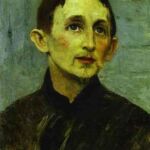 Apollinary Vasnetsov
1856–1933 · younger brother, painter
SM
Savva Mamontov
1841–1918 · patron; Abramtsevo circle
PT
Pavel Tretyakov
1832–1898 · bought his paintings
AP
Adrian Prakhov
1846–1916 · invited him to paint St Volodymyr's Cathedral