Art movement
Art Nouveau
1890s–1910s · Europe and Russia
About the movement
On December 26, 1895, Siegfried Bing, a dealer in Japanese art, opened a gallery at 22 rue de Provence in Paris under the sign Maison de l'Art Nouveau, "House of the New Art." It sold furniture, glass, textiles and paintings, and the sign soon gave its name to an entire style. In Germany it was called Jugendstil, after the Munich magazine Jugend, published from 1896; in Austria, Secession style; in Italy, stile Liberty; in Spain, modernismo. In Russia the word that stuck was "modern."
The style was born of weariness. In the second half of the 19th century Europe built and furnished its houses in a mix of historical styles, from Gothic Revival to Neo-Baroque. A new generation wanted a language of its own, free of quotation. It found one in nature (the stem, the wave, the dragonfly's wing) and in Japanese prints, with their flat color and free outline. But the heart of it was the idea: to erase the line between "high" art and craft, and make a mansion, a poster, a spoon and a door handle equally beautiful.
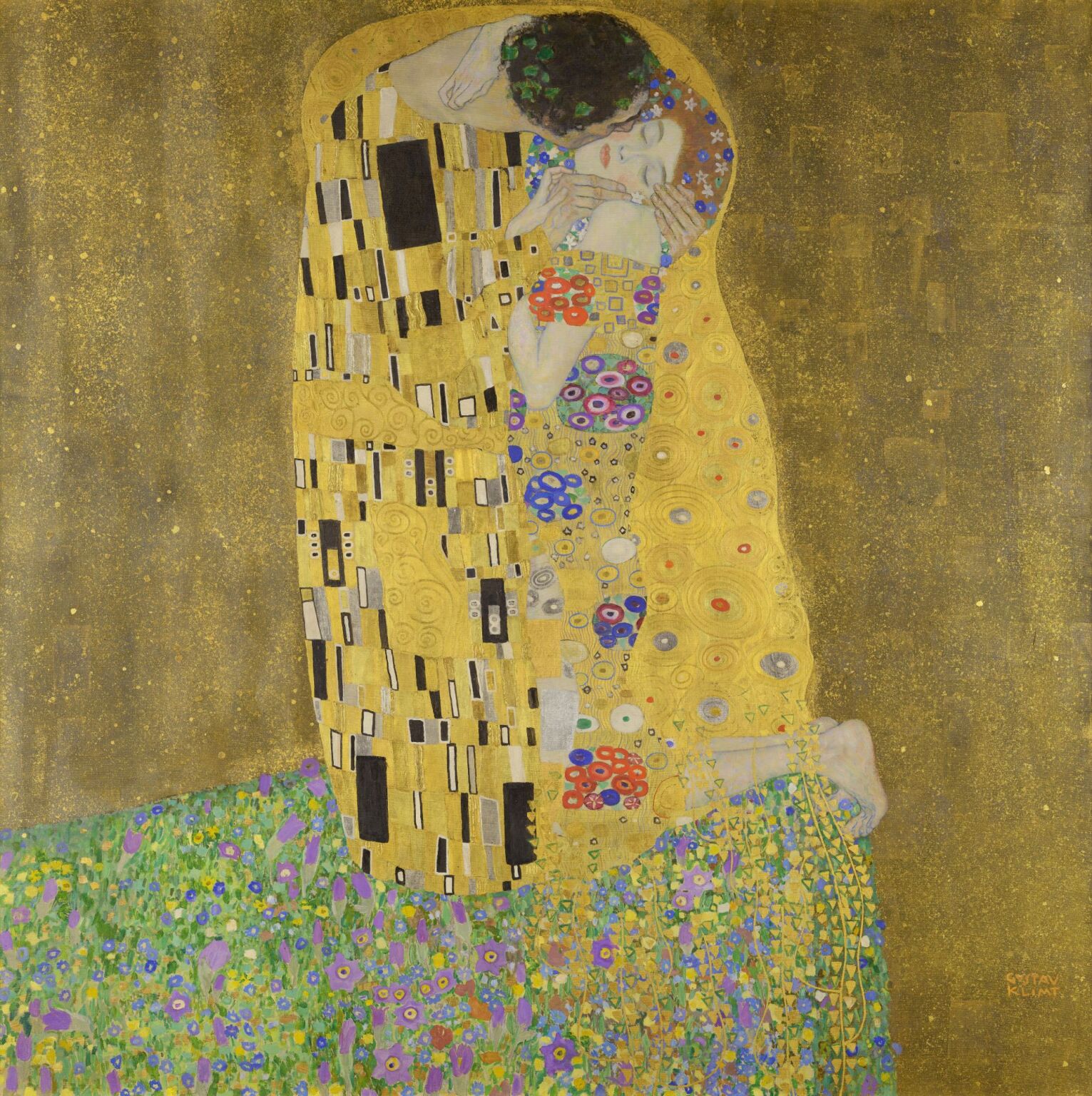
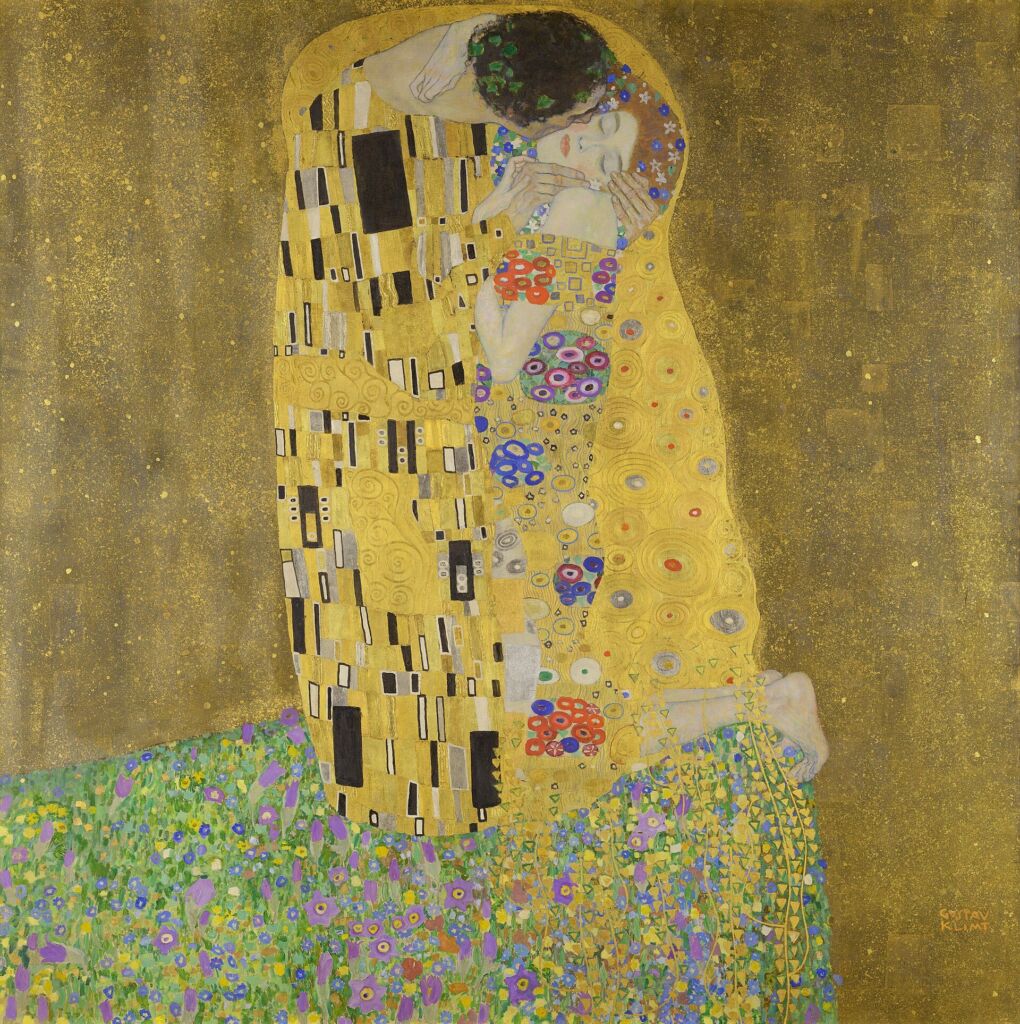
The first manifestos came in architecture. In Brussels Victor Horta built the Hôtel Tassel (1892–1893), with an iron staircase that resembles a plant shoot. Hector Guimard designed the entrances of the Paris Métro by 1900, and in Barcelona Antoni Gaudí built the Casa Milà (1906–1912). In Glasgow Charles Rennie Mackintosh offered a severe, geometric version. In painting and graphic art the style is recognizable in the posters of Alphonse Mucha (his Gismonda for Sarah Bernhardt appeared on the streets of Paris in early 1895) and in the work of Henri de Toulouse-Lautrec. In Vienna in 1897 a group of young artists broke away from the official artists' society and founded the Vienna Secession, led by Gustav Klimt; his Portrait of Adele Bloch-Bauer I (1903–1907) and The Kiss (1908–1909) became the emblems of the era.
The style reached its apotheosis at the 1900 Exposition Universelle in Paris, where Bing's pavilion showed furniture and objects entirely in the new taste. But acclaim soon gave way to irritation. Critics found it mannered and gave it mocking nicknames, and the Austrian architect Adolf Loos, in his lecture "Ornament and Crime" (1910), declared decoration a relic of the past.
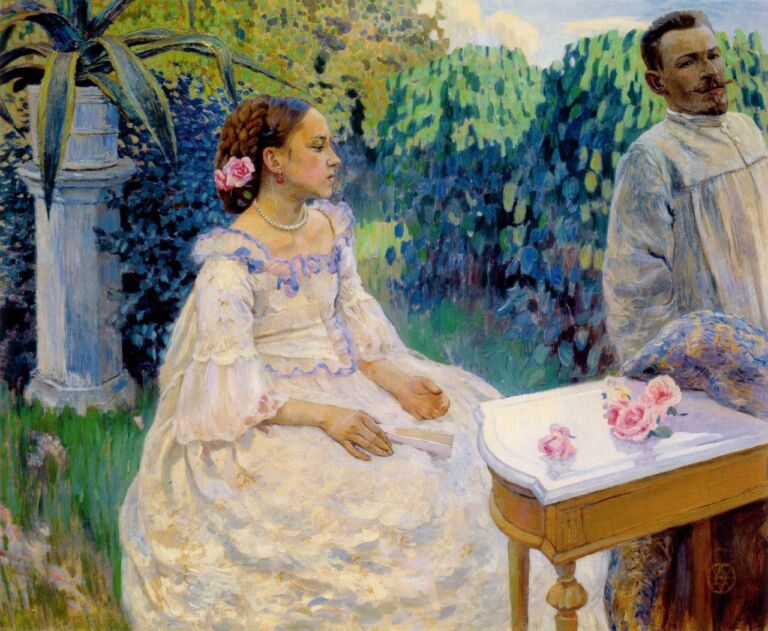
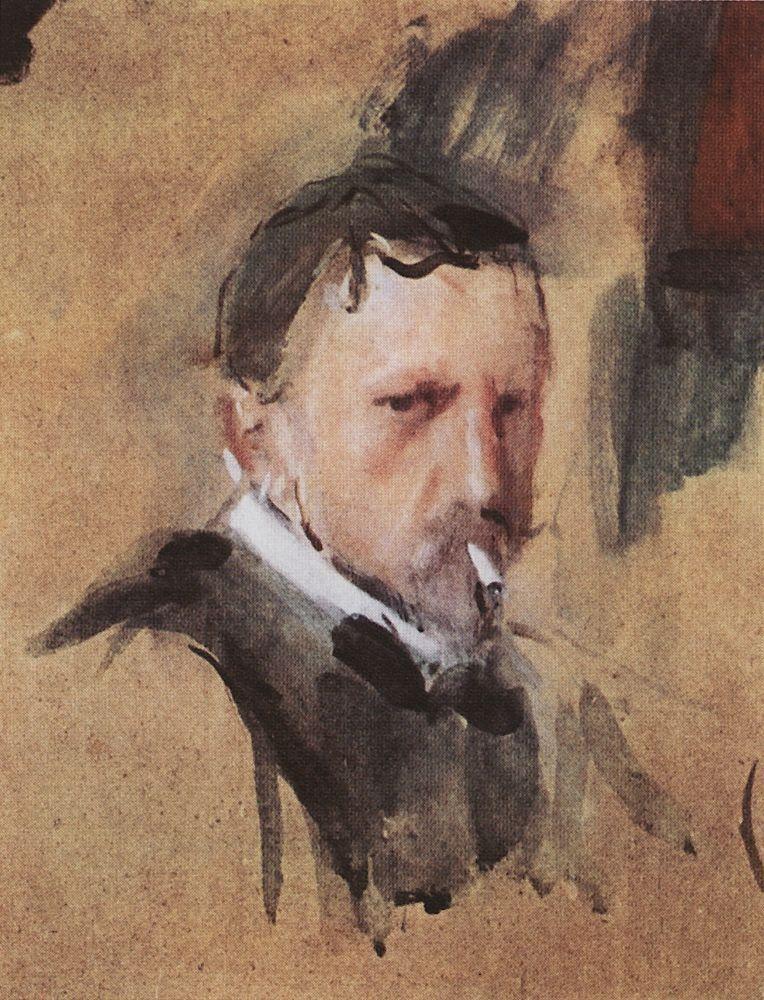
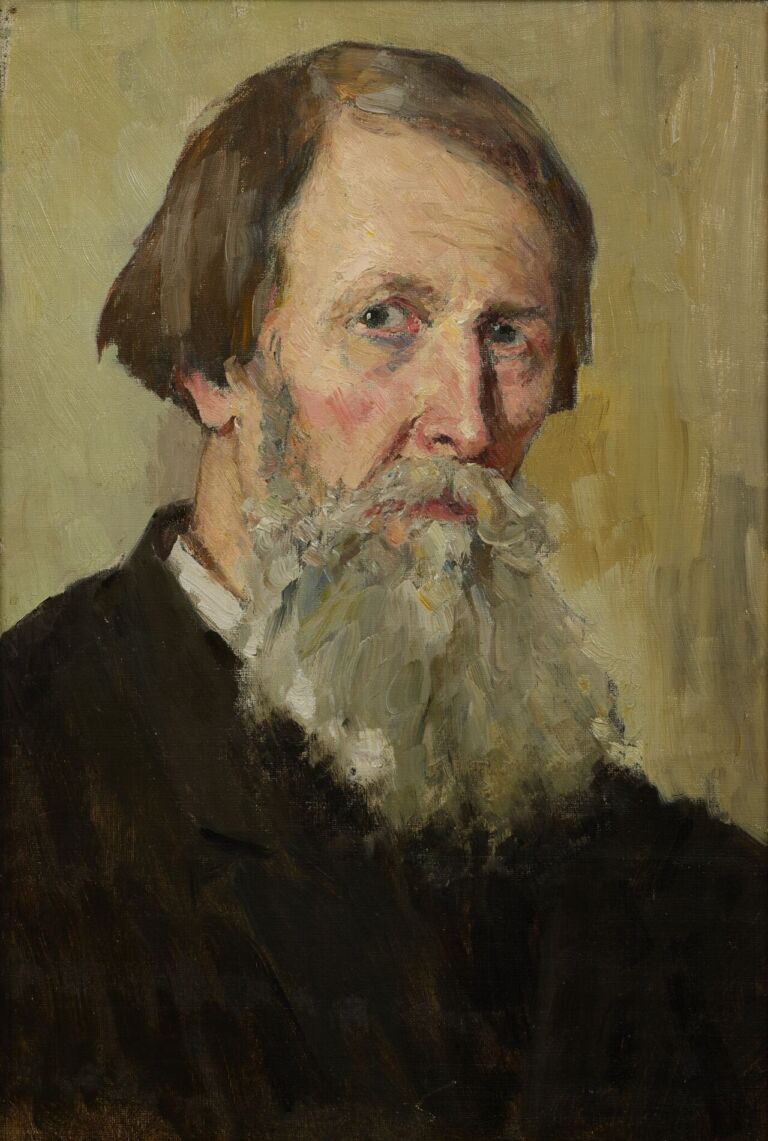
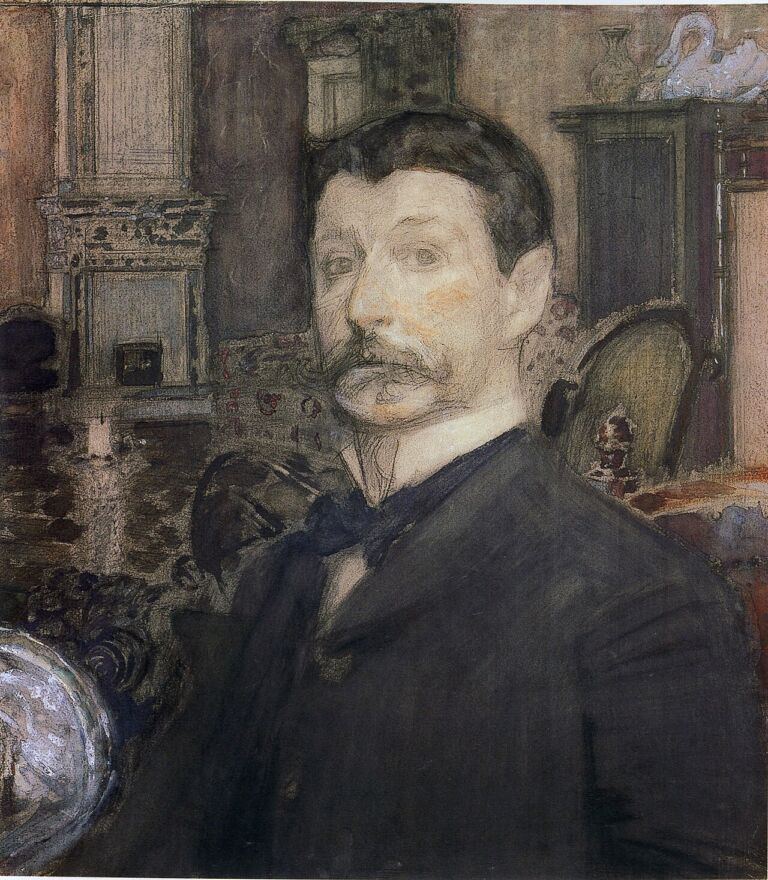
In Russia, Art Nouveau grew out of workshops on country estates. At Savva Mamontov's Abramtsevo, Mikhail Vrubel worked in majolica and designed sets for Mamontov's private opera company; The Swan Princess (1900) is a portrait of his wife, the singer Nadezhda Zabela, in a role from Rimsky-Korsakov's The Tale of Tsar Saltan. Vrubel's Demon Downcast (1902) is in the State Tretyakov Gallery. At Talashkino near Smolensk, Princess Maria Tenisheva brought together workshops that sought a new style in folk art. Fyodor Schechtel built a mansion on Malaya Nikitskaya Street in Moscow (1901–1903) for the banker Stepan Ryabushinsky; Maxim Gorky later lived there. The graphic art of the World of Art circle in St Petersburg, Ivan Bilibin's illustrations such as Ivan Tsarevich and the Firebird (1899), Léon Bakst's work for the theater and Valentin Serov's Portrait of Ida Rubinstein (1910) all belong to the Russian branch of the same style.
By the outbreak of the First World War Art Nouveau had run its course. Its flowing line straightened into the geometry of Art Deco, and the dream of the "total work of art" passed to the Bauhaus and the Constructivists. For a long time the style was dismissed as the bad taste of grandmothers' parlors; it was rediscovered in the 1960s, when Mucha's posters went back up on the walls of student rooms. Mucha himself, meanwhile, had spent almost two decades on The Slav Epic, twenty huge canvases on Slavic history that he gave to the city of Prague.
Artists
Major works
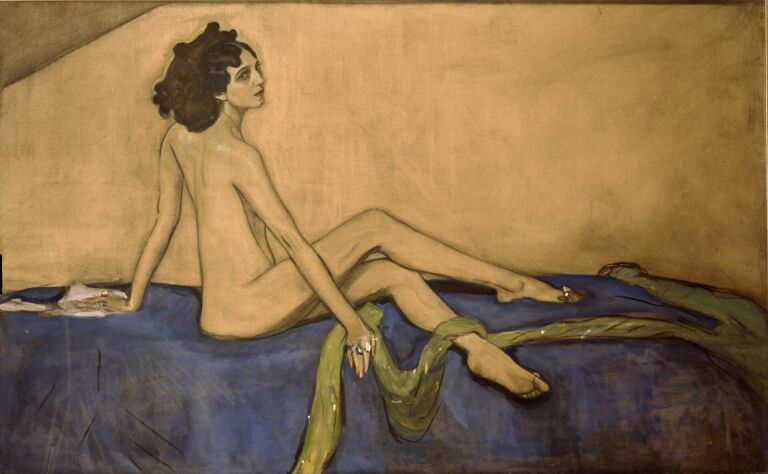 Portrait of Ida RubinsteinValentin Serov · 1910
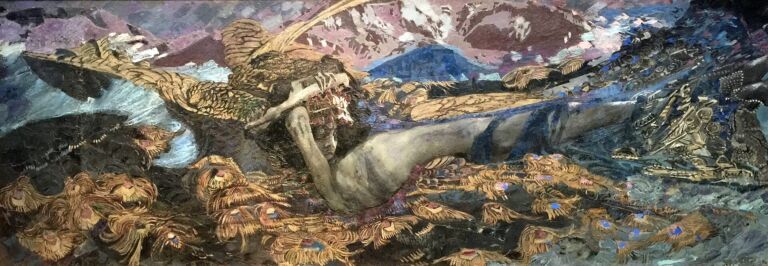 Demon DowncastMikhail Vrubel · 1902
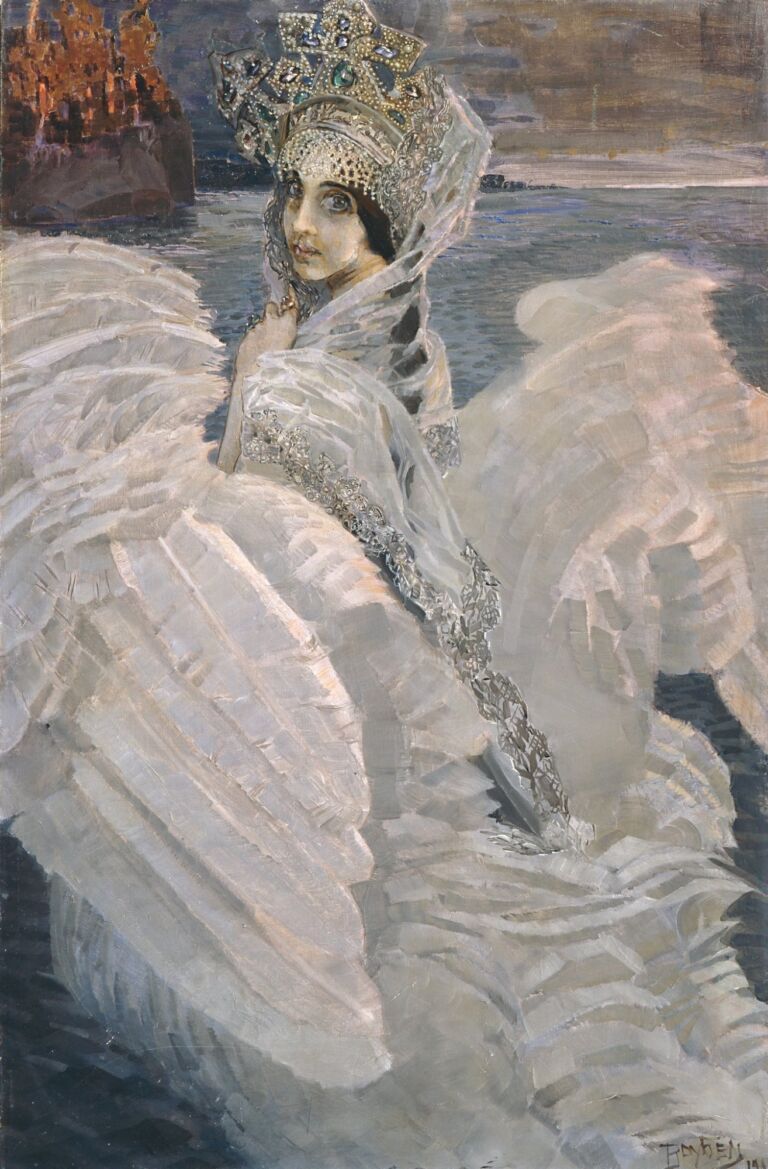 The Swan PrincessMikhail Vrubel · 1900
Stories