Russian art · Peredvizhniki · Artist
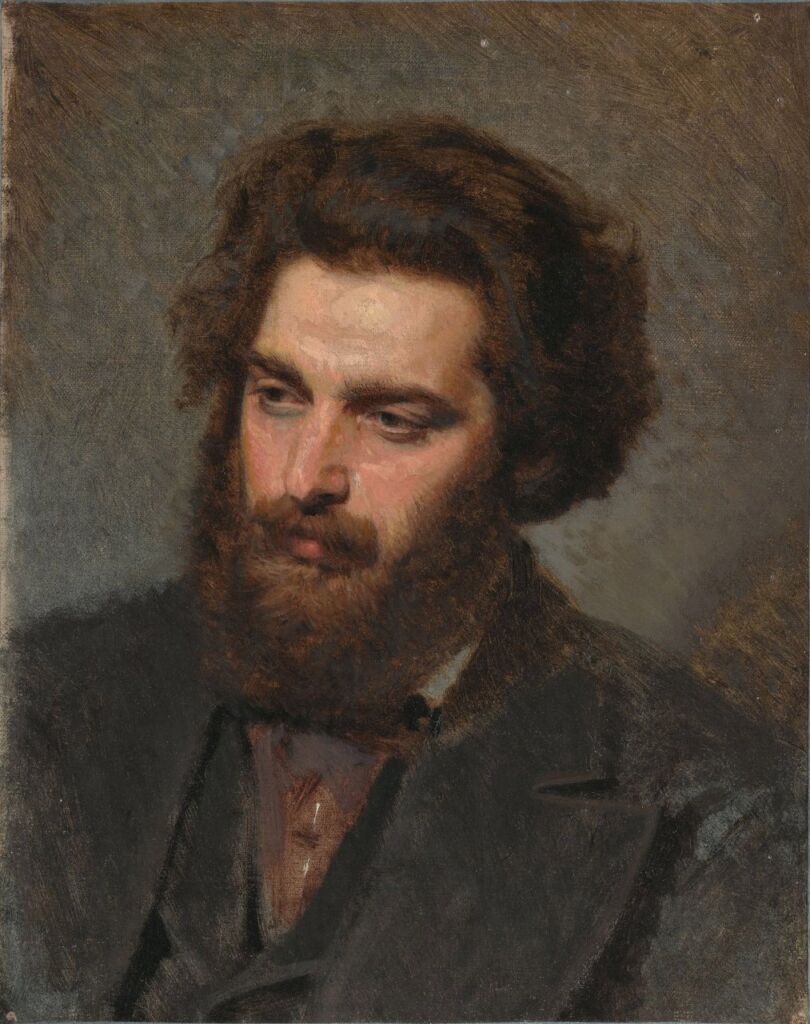
Arkhip Kuindzhi
Arkhip Ivanovich Kuindzhi · 1841, Mariupol district — 1910, St Petersburg
The Peredvizhniki (Wanderers)
Landscape
Biography
When the Academy of Arts asked Kuindzhi for his date of birth, he wrote “1841” confidently, then, less sure of himself, “January,” and crossed out the month several times. He did not know the exact day himself. Today he is generally held to have been born on January 27, 1841 (January 15, Old Style), in the Mariupol district of Yekaterinoslav Governorate, the son of a Greek shoemaker. Orphaned at about six, the boy worked on the building of a church, herded cattle and served a grain merchant. He spent his youth in Taganrog.
His training was patchy. Around 1855 the teenager made his way to Feodosia, to Ivan Aivazovsky, but spent more time grinding paints than painting; his lessons came from the master's pupil Adolf Fessler. From 1860 to 1865 Kuindzhi worked as a retoucher in Simeon Isakovich's photography studio in Taganrog, and an attempt to open a studio of his own failed. From 1868 he attended classes at the Imperial Academy of Arts in St Petersburg, and in 1872 he left to work independently.
Recognition came quickly. On the Island of Valaam was the first of his works bought by the collector Pavel Tretyakov. Snow (1873) won a bronze medal at the international exhibition in London in 1874. Then came Forgotten Village (1874) and The Chumak Road in Mariupol (1875; the chumaks were ox-cart carriers of salt and grain), followed by The Birch Grove and After Rain (both 1879), all now in the State Tretyakov Gallery. Kuindzhi exhibited with the Peredvizhniki, the Association of Traveling Art Exhibitions, and was one of its members.
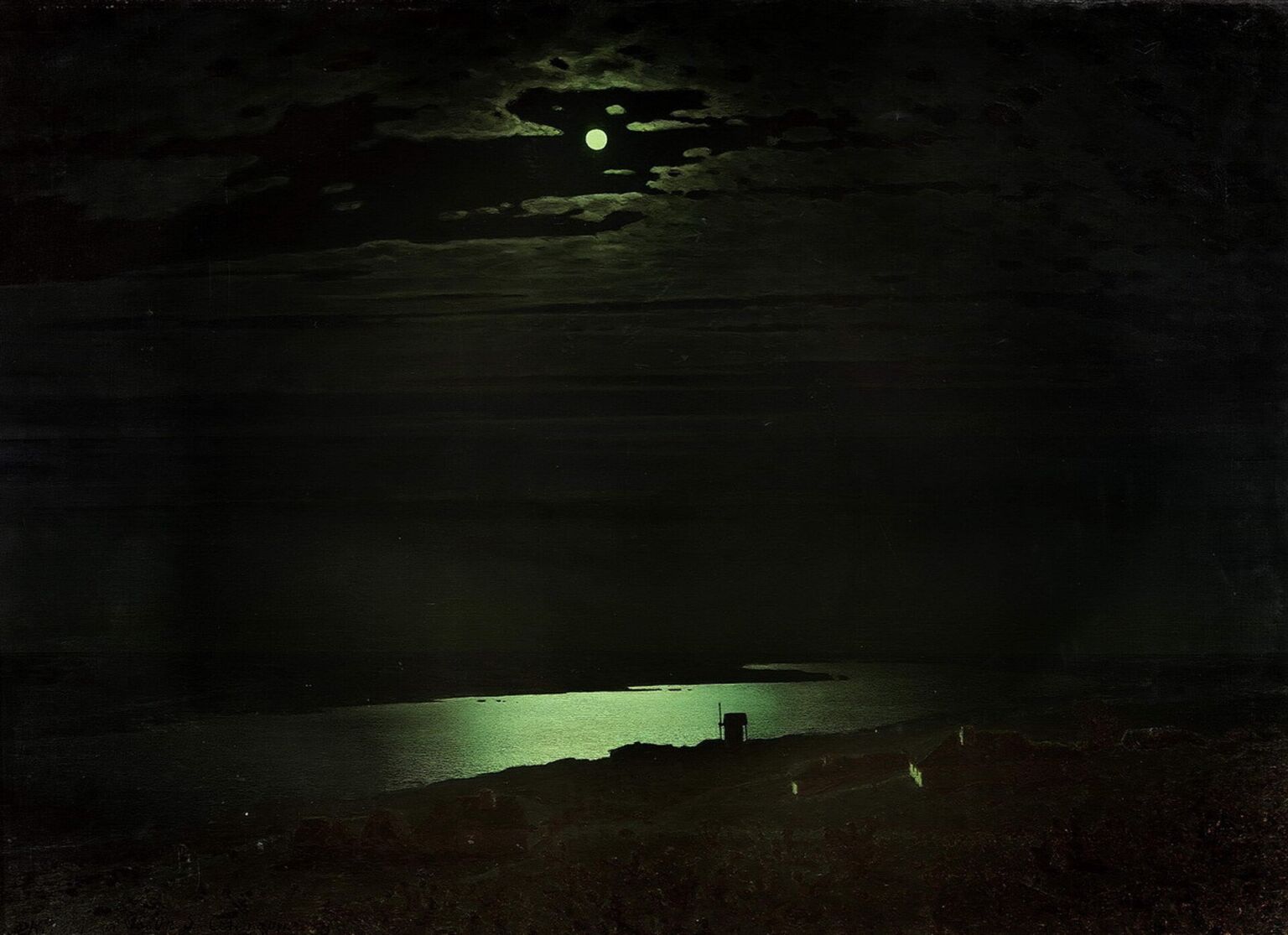
The most famous story concerns Moonlit Night on the Dnieper (1880). Grand Duke Konstantin Konstantinovich bought the canvas straight from the studio, before it had been exhibited. The picture was then shown in the hall of the Society for the Encouragement of the Arts in St Petersburg, entirely on its own. The windows were curtained and the only light was trained on the canvas. A line formed in the street, and visitors were let in in groups to avoid a crush. While it was still in the studio, the picture had been seen by Ivan Turgenev, the poet Yakov Polonsky, Ivan Kramskoy and the chemist Dmitri Mendeleev. It is now in the State Russian Museum.
This was Kuindzhi's method: light as the main event of the picture. He reduced the drawing to a few large masses and built the image on the contrast between dark land and a glowing sky or water. He was a close friend of Mendeleev, attending the scientist's lectures and his weekly gatherings.
He went on working after the sensation: Elbrus (1890–1895), Christ in the Garden of Gethsemane (1901), Red Sunset on the Dnieper (1905–1908). From 1892 he was a professor at the Academy and from 1894 headed its landscape studio, but in 1897 he was dismissed for supporting student protests. His pupils included Arkady Rylov, Nicholas Roerich and Konstantin Bogaevsky. In 1909 the Society of Artists was founded on his initiative; it was later named after him. Kuindzhi died in St Petersburg on July 24, 1910 (July 11, Old Style), and was buried in the Smolensky Cemetery; in 1952 his remains were moved to the Tikhvin Cemetery.
The main collections are the State Russian Museum and the State Tretyakov Gallery. In 2019 his Ai-Petri. Crimea was taken off the wall at the Tretyakov; the painting was found the next day, and the thief was sentenced to three years. The Kuindzhi Art Museum in Mariupol was hit in an airstrike on March 21, 2022; three works moved to the basement beforehand survived but were later taken to Russia. In 1975 the historian John Bowlt wrote about Red Sunset on the Dnieper in the journal of the Metropolitan Museum of Art and raised the question of a “Russian school of Luminism.”
Major works
Click a painting to see the details.
-
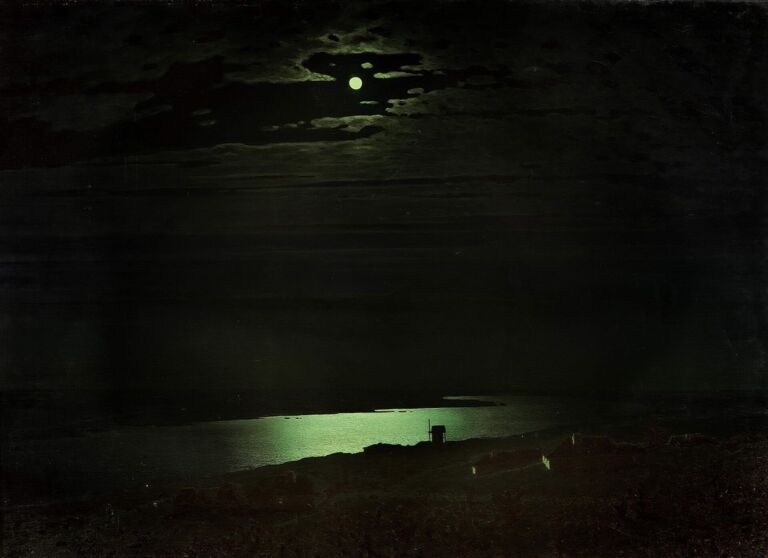 01
Moonlit Night on the Dnieper
1880 · State Russian Museum, St Petersburg
Stories about Arkhip Kuindzhi
Related artists
 Ivan Aivazovsky
c. 1855 · would-be teacher, Feodosia
AF
Adolf Fessler
c. 1855 · teacher
DM
Dmitri Mendeleev
1870s–1900s · friend
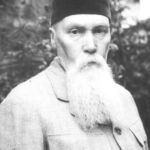 Nicholas Roerich
1890s · pupil
AR
Arkady Rylov
1890s · pupil
KB
Konstantin Bogaevsky
1890s · pupil
GK
Grand Duke Konstantin Konstantinovich
1880 · bought Moonlit Night on the Dnieper