Russian art · Artist
Karl Bryullov
Karl Pavlovich Bryullov · 1799, St Petersburg — 1852, Manziana
Biography
Karl Bryullov was born in St Petersburg on December 23, 1799 (December 12, Old Style), the son of Pavel Ivanovich Bryullov, an ornamental sculptor who taught at the Academy of Arts for several years. The boy grew up among artists, and in 1809 he entered the Academy himself. He spent twelve years in the history painting class under Andrei Ivanov and Alexei Yegorov, and in 1821 won the large gold medal for The Appearance of the Three Angels to Abraham by the Oak of Mamre.
In 1822 Karl and his brother Alexander went abroad as the first scholarship holders of the recently founded Society for the Encouragement of Artists. Karl reached Rome in May 1823 and began by copying Raphael's School of Athens. Italy kept him for twelve years. He painted genre scenes and portraits, and in 1827, after visiting the excavations at Pompeii, he conceived a large history painting.
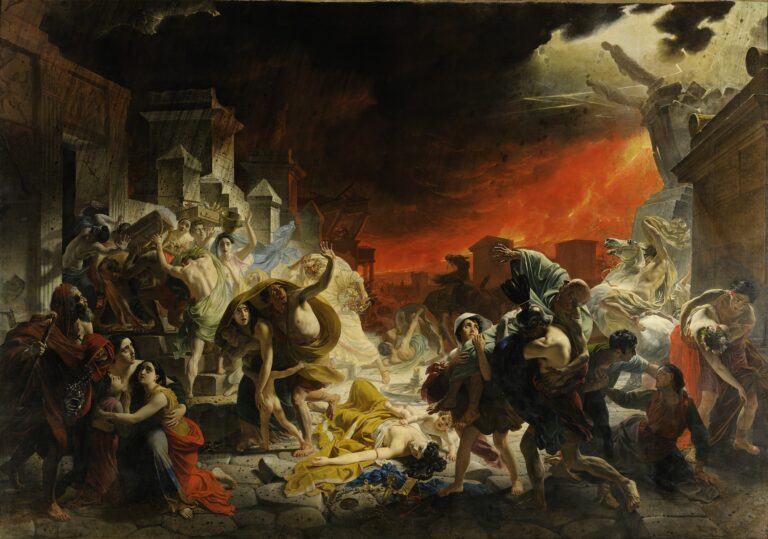
The commission came from Anatoly Demidov, heir to a family of Ural industrialists. The Last Day of Pompeii (1830–1833) was first shown at the Brera in Milan, and at the Paris Salon of 1834 it won a first-class gold medal. Demidov presented it to Nicholas I; it was shown at the Hermitage, then at the Academy of Arts, and since 1897 it has been in the State Russian Museum. Gogol devoted an essay to it, calling the painting one of the brightest phenomena of the 19th century.
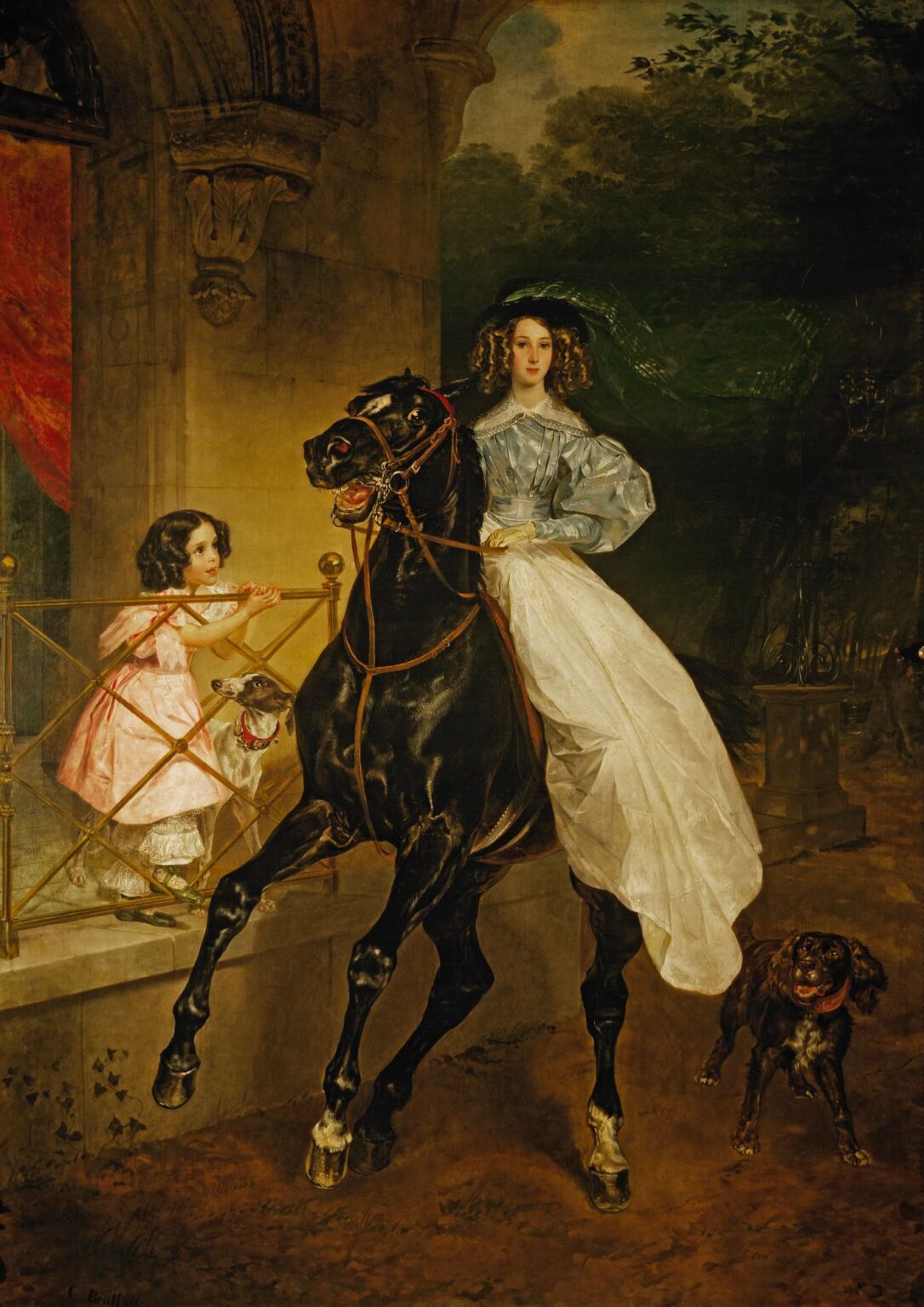
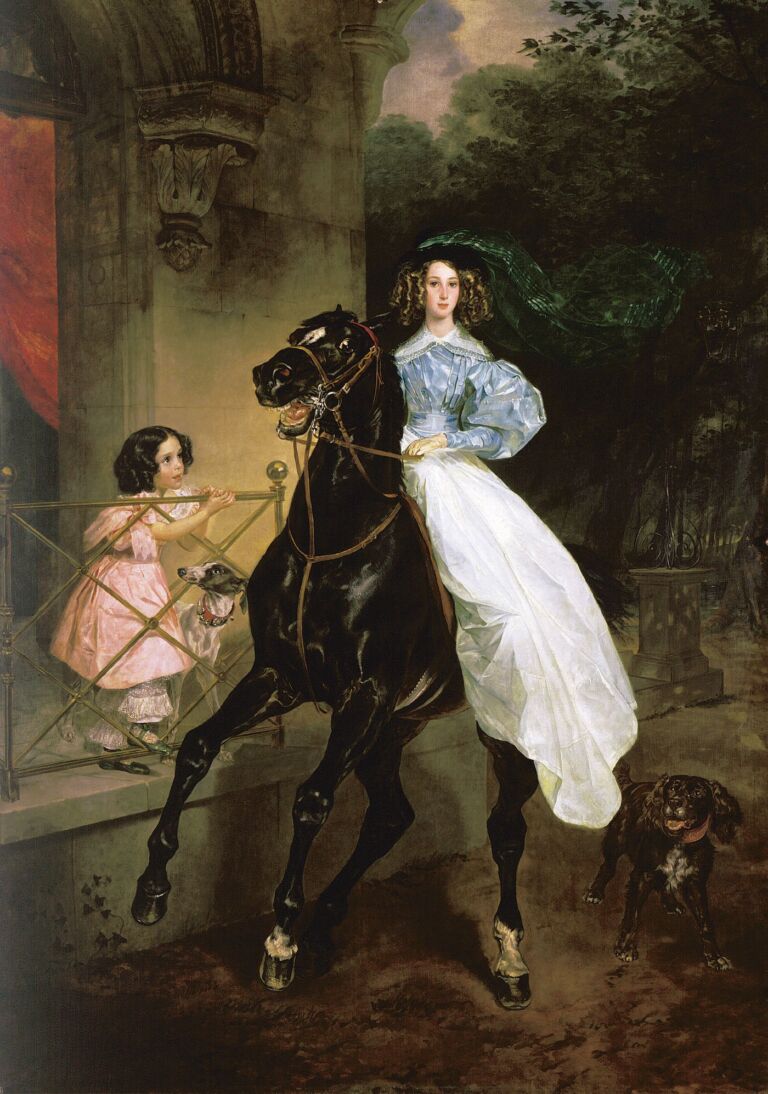
In the same period, in 1832, Bryullov painted Horsewoman, a portrait of Giovannina and Amazilia Pacini, the wards of his close friend Countess Yulia Samoilova. The picture stayed with Samoilova for a long time; in 1874 Ilya Repin wrote to Pavel Tretyakov, the Moscow merchant whose collection became the State Tretyakov Gallery, that works by Bryullov from her collection were for sale in Paris. Today Horsewoman is in the State Tretyakov Gallery.
Bryullov came back to Russia by way of Greece and Odessa, spent several months of 1836 in Moscow and arrived in St Petersburg on June 4 (May 23, Old Style). From 1836 to 1849 he led the history painting class at the Academy, and in 1846 he became a professor of the first rank. Contemporaries called him "the Great Karl," and the critic Pavel Kamensky remarked that Bryullov painted not portraits of people but pictures. Many young artists turned to him for advice, among them Taras Shevchenko, whom Bryullov helped to buy out of serfdom.
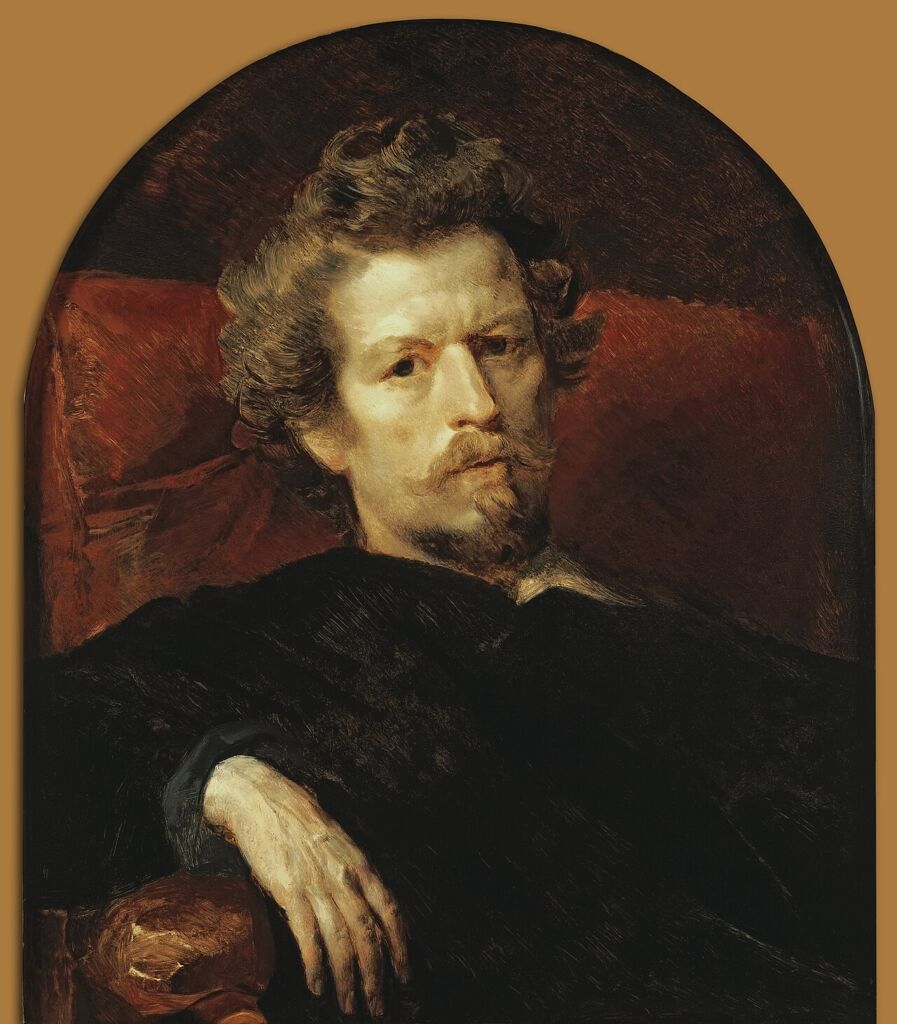
Not all of his grand projects came off. He never finished The Siege of Pskov by the Polish King Stefan Batory (1839–1843), a subject proposed by Nicholas I. His marriage to the pianist Emilie Timm in 1839 broke up within the same year. From 1843 Bryullov painted the central dome of St Isaac's Cathedral, but in February 1848 heart disease forced him to give up the work, and Pyotr Basin completed the murals from his sketches. That same year he painted the Self-Portrait now in the State Tretyakov Gallery.
In 1849 the ailing artist left for Madeira to recover his health, stopping on the way in Poland, Belgium, England and Portugal. In the spring of 1850 he moved to Italy. He spent his last years outside Rome, in the house of the Tittoni family, and died in Manziana on June 23, 1852 (June 11, Old Style). He was buried in Rome's Non-Catholic Cemetery at Testaccio.
The main collections of Bryullov's work today are in the State Russian Museum and the State Tretyakov Gallery. In 2025–2026 the Tretyakov marked his 225th anniversary with the exhibition "Karl Bryullov. Rome – Moscow – St Petersburg": more than 170 works, and the first time in about a quarter of a century that The Last Day of Pompeii had been brought to Moscow.
Major works
Click a painting to see the details.
-
 01
The Last Day of Pompeii
1833 · State Russian Museum, St Petersburg -
 02
Horsewoman
1832 · State Tretyakov Gallery, Moscow -
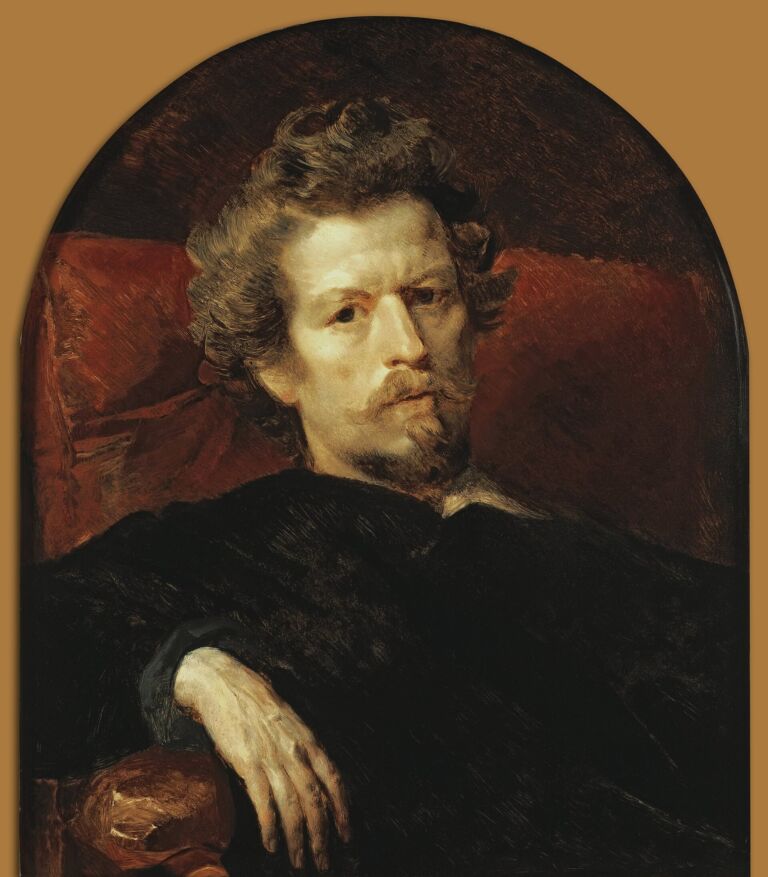 03
Self-Portrait
1848 · State Tretyakov Gallery, Moscow
Stories about Karl Bryullov