Who really sits in the saddle of Bryullov’s The Horsewoman
Bryullov's The Rider was long catalogued as a portrait of Countess Samoylova. In fact it shows the two girls she raised in Milan, and their lives went very different ways.
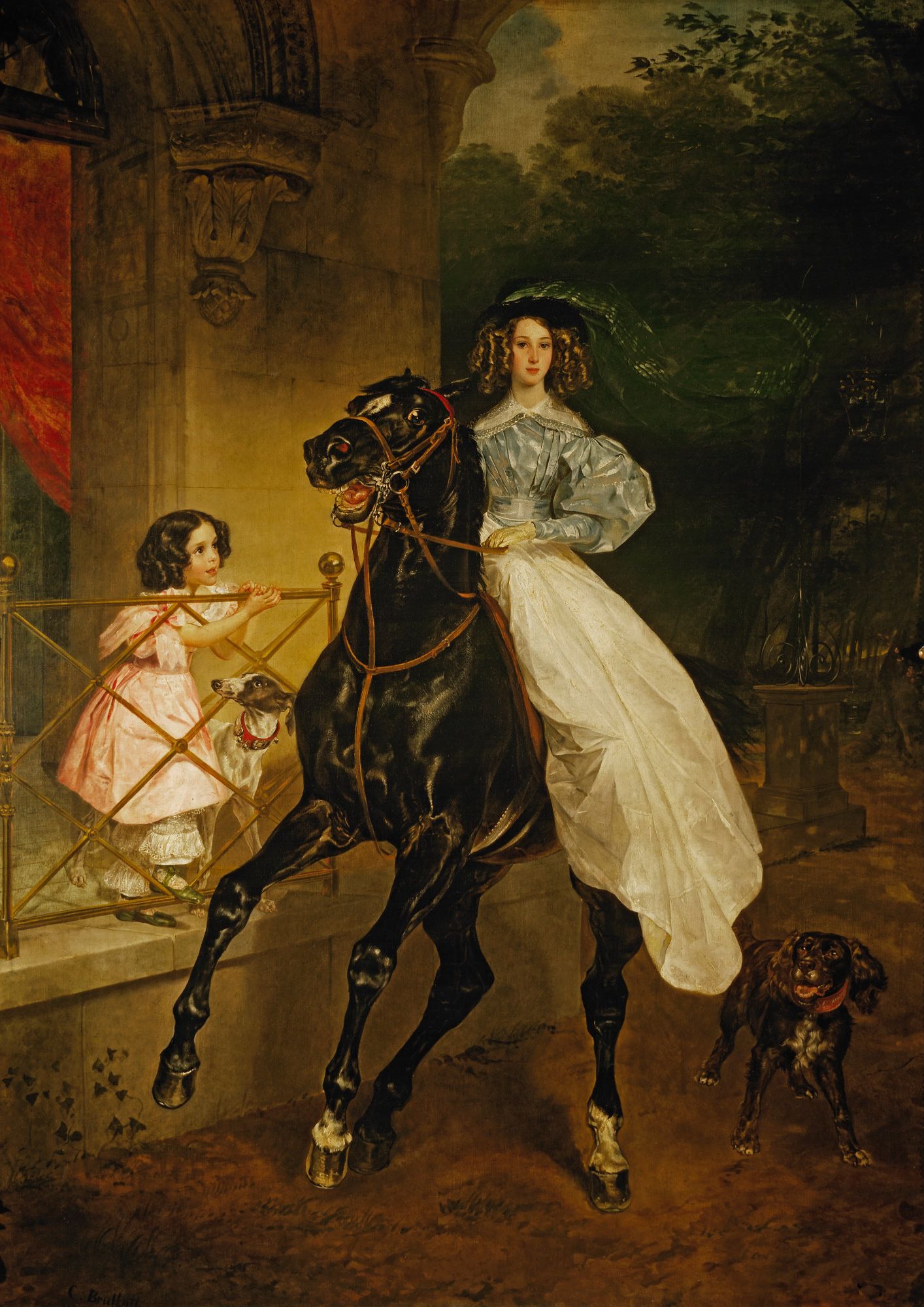
Early 20th-century Tretyakov catalogs listed Karl Bryullov’s The Rider, also known as The Horsewoman, as a portrait of Countess Yulia Samoylova. But she only commissioned it. In the saddle and at the railing are two girls she raised in Milan.
The only sign of the patron is the name “Samoylo” on the collar of the dog by the horse. Only in the 20th century did art historians try to work out who the sitters were, comparing The Rider with Bryullov’s other portraits of girls.
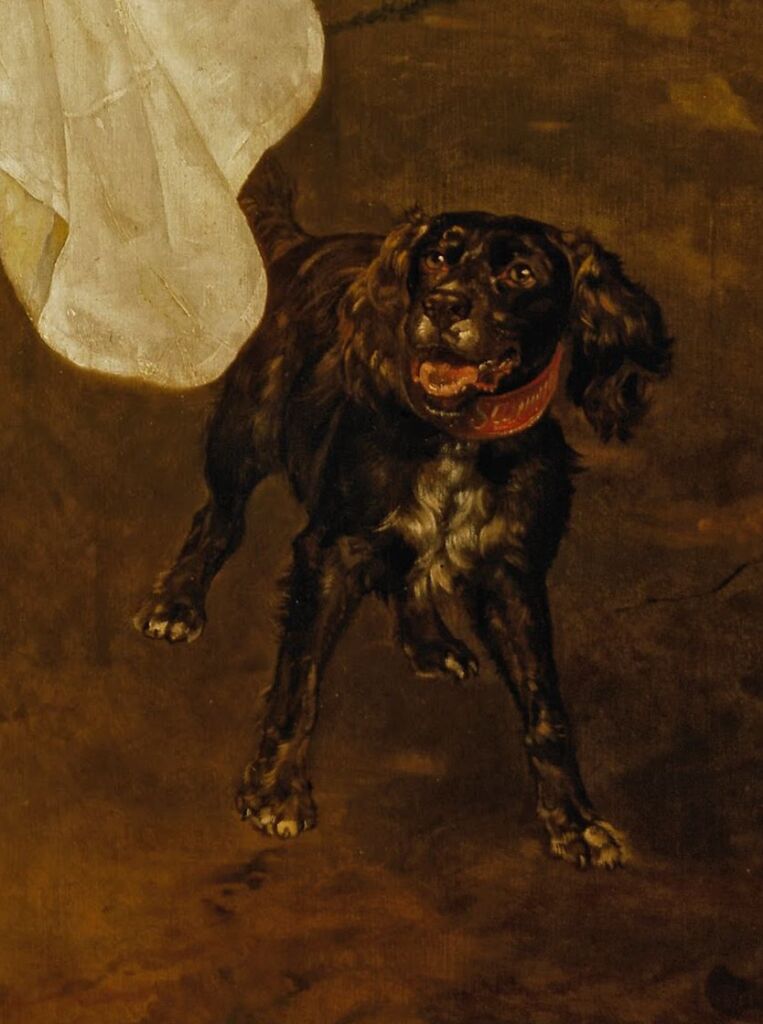
Samoylova had no children of her own. She took the younger girl, Amazilia, into her care (in Russian) after the girl’s mother died. Her father, the composer Giovanni Pacini, named her in 1827 after his opera Amazilia. Here she is about four. Pacini also wrote an opera, The Last Day of Pompeii; Bryullov was then painting his own huge canvas on that subject.
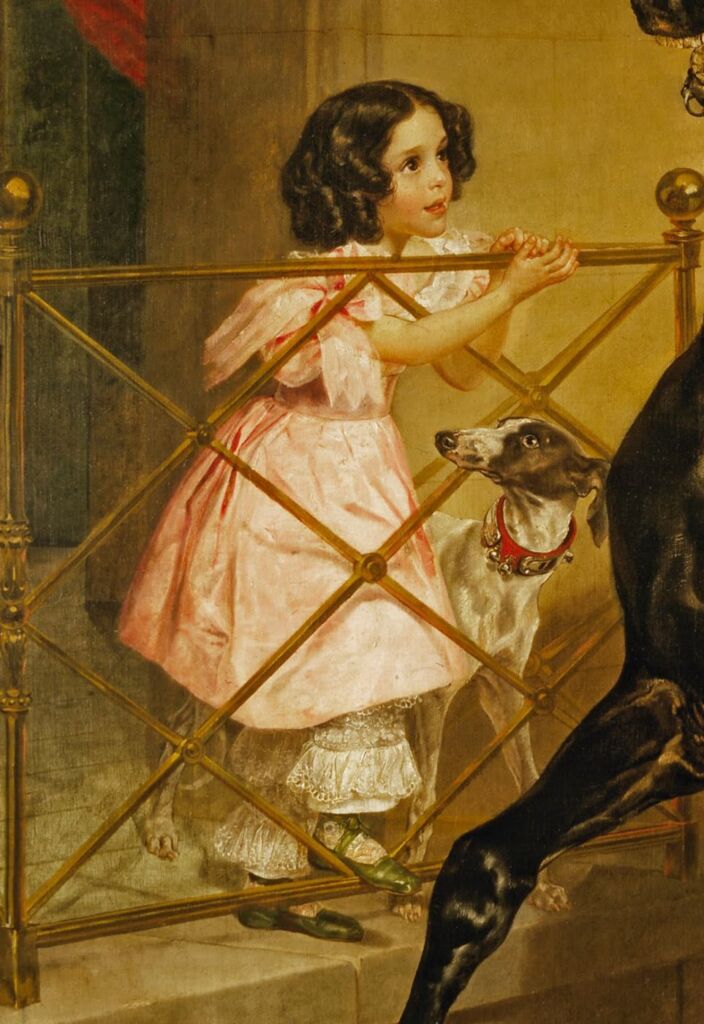
The rider is a tangled case. The Tretyakov calls both the composer’s relatives. But a notarized deed is known in which the countess left her Milan house to “the orphan Giovannina Carmine Bertolotti.” By one account the girl’s mother was Clementina Perri, and Samoylova’s second husband was the singer Perri, so Giovannina was most likely his niece (in Russian). The confusion over surnames persists: Hillwood Museum in Washington labels the older girl Giovannina Pacini, and the State Russian Museum calls both girls the composer’s daughters.
From the Brera to the Tretyakov
In 1832 Milan did not ask about the sitters. At the Brera Academy show, critics admitted, in words translated here by Hroniki, that they had “never seen an equestrian portrait conceived and executed with such skill.” They called the rider “a flying angel.”
The horse won praise too. Bryullov turned it almost straight toward the viewer, and one contemporary wrote of the animal “shown head-on,” finding in it “truly astonishing lines of foreshortening.” The Last Day of Pompeii was not yet finished; Bryullov would complete it in 1833.
Samoylova kept the painting until she went bankrupt and sold her collection in Paris. It passed to a French commission agent. As early as 1874 the painter Ilya Repin told Pavel Tretyakov, the gallery’s founder, that the countess was selling works by Bryullov, but Tretyakov bought The Rider only in 1893. It has hung in the Tretyakov Gallery ever since.

The same girls in other portraits
Bryullov knew these girls well. He met Samoylova in Italy in 1827, and they became close friends; according to the Russian Museum, they once even discussed marriage. Her house in Milan was open to musicians: the Tretyakov Gallery’s magazine lists Rossini, Bellini, Donizetti and, of course, Pacini among the guests.
The Rider is not the only canvas in which Bryullov painted the countess’s girls. Soon afterward, in 1832–34, he portrayed Samoylova herself with Giovannina and a young Black servant. That portrait is now at Hillwood in Washington, the former estate of the American collector Marjorie Merriweather Post.
Amazilia appears in a later work, Portrait of Countess Yulia Samoylova Retiring from a Ball with Her Foster Daughter Amazilia Pacini. The State Russian Museum dates it before 1843 and believes Bryullov painted it in St Petersburg in 1839–40, when the countess came to Russia on family business. The little girl who greets the rider at the railing was by then about twelve.
Bryullov never finished the canvas, which stands almost 2.5 meters (8 feet) tall. It entered the Russian Museum in 1897, four years after Tretyakov bought The Rider. So Bryullov painted Samoylova’s foster daughters at least three times: both of them in The Rider, Giovannina beside the countess, and Amazilia as a teenager, leaving a ball with her.
What became of Giovannina and Amazilia
The countess outlived Bryullov, who died in 1852, as well as Bellini, Donizetti, Pacini and Rossini. She died in 1875, three years after the Paris sale. By then her foster daughters were long grown.
The girls’ lives diverged. Giovannina wed Ludwig Aschbach, an Austrian hussar captain, and moved to Prague, where her trail ends. Amazilia married twice, once to Achille Manara, brother of Luciano Manara, a hero of the fight for Italian unification. Neither marriage was happy. She spent her last years in a Milan convent home for the elderly and died around 1911.
She left an album of 135 photographs of her Milan circle: officers, musicians, artists, society ladies. It is shown at the Museum of the Risorgimento on Via Borgonuovo, where the countess once lived. Bryullov painted Amazilia at the railing, greeting the rider. Decades later she collected the faces of her visitors.
Comments
For Hroniki readers
Comments are open to readers with an account. Signing up is free and takes a few seconds.
No comments yet. Start the conversation.