John Martin's Destruction of Pompeii: lost and restored

The volcano that vanished from John Martin’s Destruction of Pompeii for 83 years

He painted the fall of Babylon and Pompeii, and spent years drawing up sewers for London. Then the Thames flooded the Tate, and the volcano disappeared from his painting.
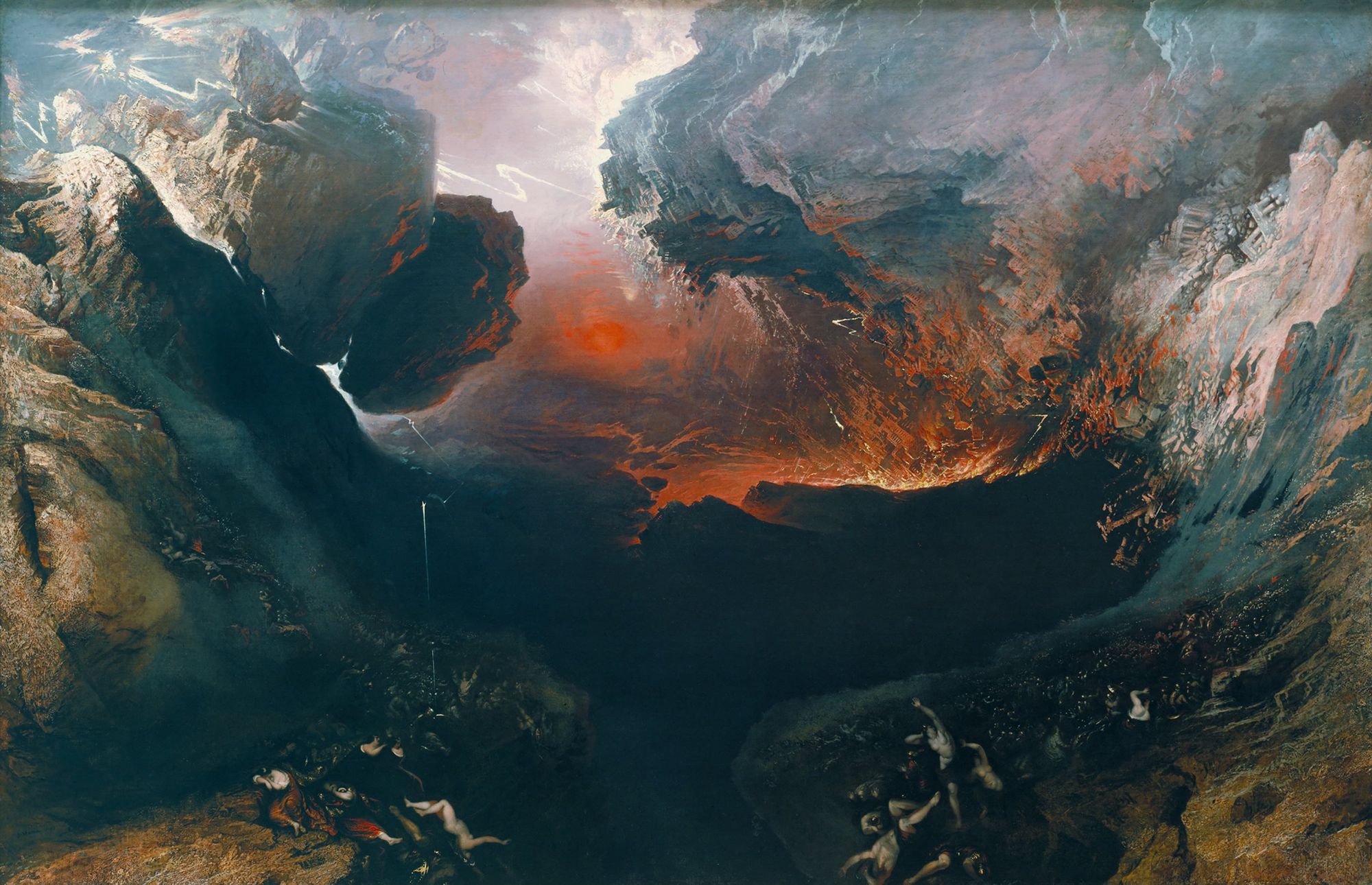
Джон Мартин, «Великий день Его гнева»

I’ll admit it: for a long time I thought of John Martin as a poster artist. Huge canvases, lightning, collapsing cities and tiny people at the bottom — it all looked to me like painting for a fairground, not a museum. Then I found out what he did when he wasn’t painting the end of the world, and I saw him quite differently.

First, Martin was a star. In 1821 his Belshazzar’s Feast went on show at the British Institution in London, and it had to be railed off from the crowds. He won a £200 prize and fame across the country. A year later, at the Egyptian Hall in Piccadilly, he showed The Destruction of Pompeii and Herculaneum — more than ten years before the Russian painter Karl Bryullov finished his own The Last Day of Pompeii, one of the best-known paintings in Russia. So that Russian classic had an English predecessor, and a far darker one.

You’ve read 17% of this column

Finish this one — and every one after it.

Every Editor’s Column · no ads · card, Apple Pay, Google Pay Become a member
Read next