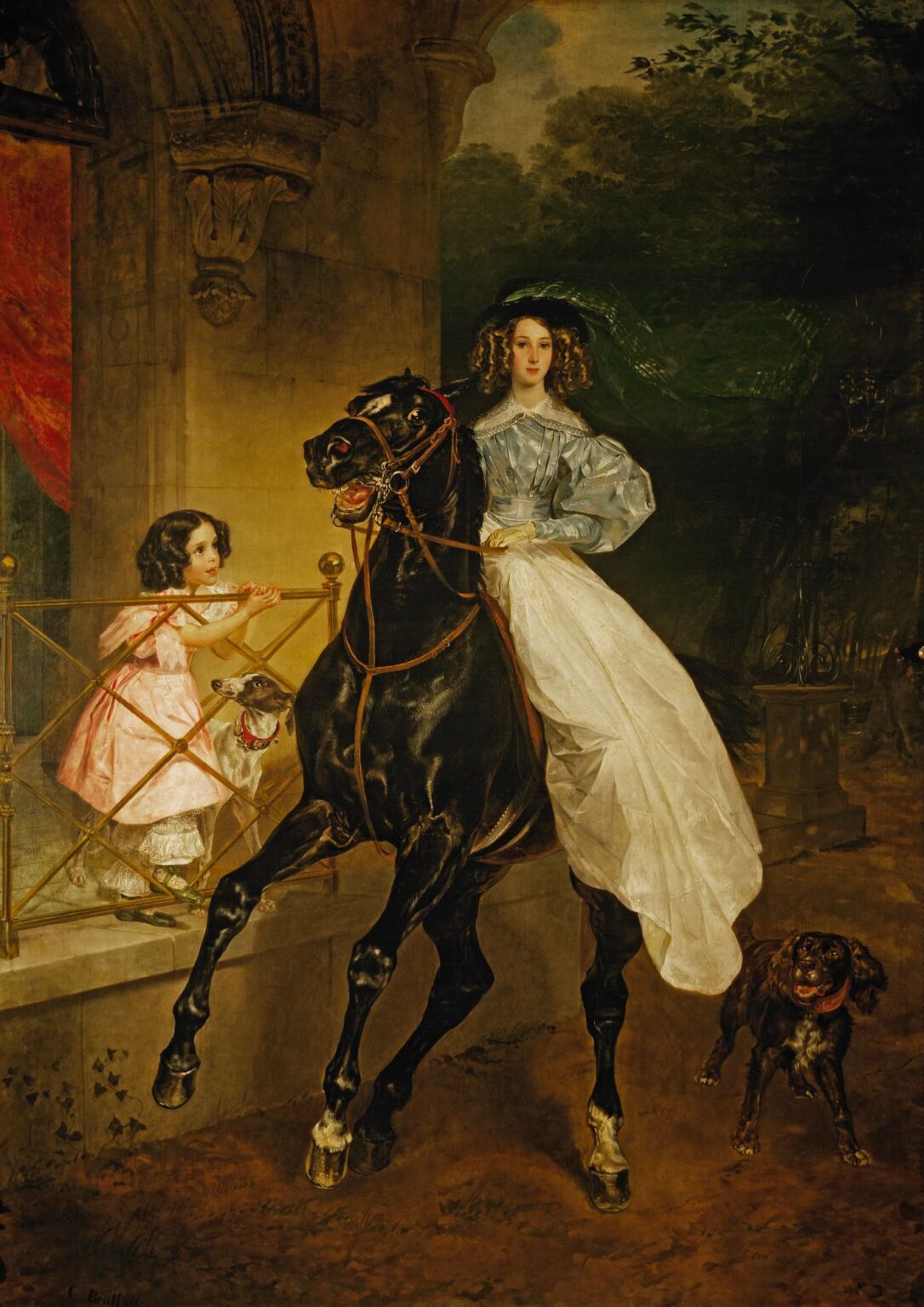
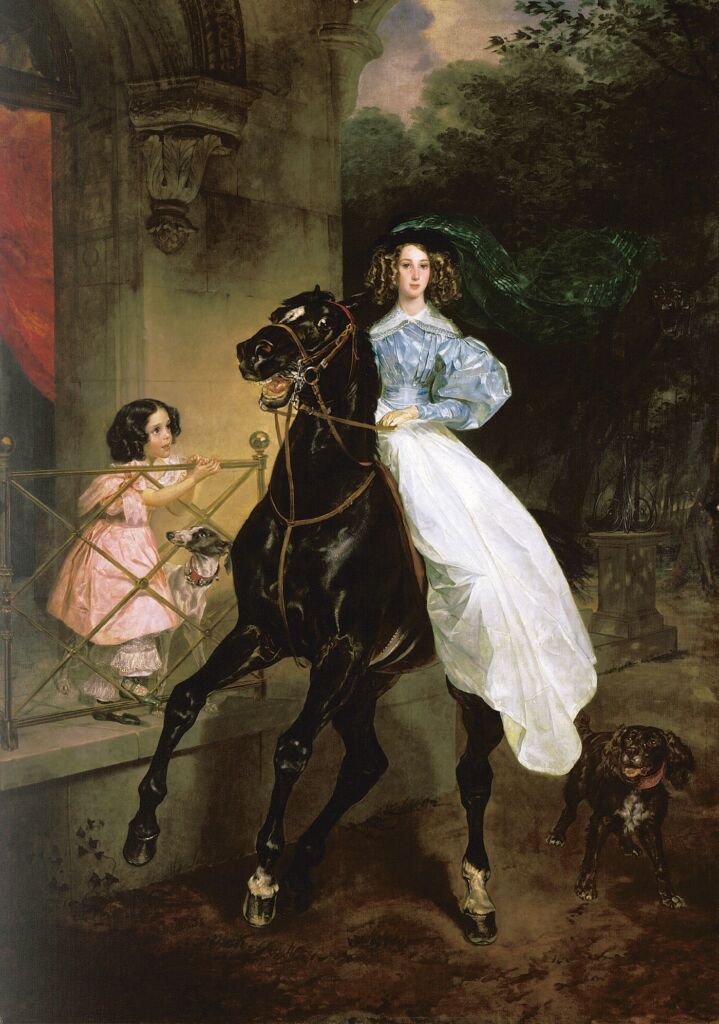
Karl Bryullov, Horsewoman, 1832
Art movement
Academic art
17th–19th centuries · Europe and Russia
About the movement
Academic art began as an attempt to raise the artist above the craftsman. In 1563 the Accademia del Disegno opened in Florence with the involvement of Giorgio Vasari, and around 1582 the Carracci founded their own academy in Bologna, where students drew from life and from antique sculpture. But the system all of Europe took as its model was the Royal Academy of Painting and Sculpture in Paris, established in 1648. The artist was no longer a guild member but an educated man who knew history, anatomy and perspective.
The method rested on a few rules. First drawing from plaster casts, then from the live model, and only then paint. The subject mattered more than the viewer, and form had to be corrected toward the ideal. In his preface to the Academy's Conférences of 1667, the historiographer André Félibien fixed the hierarchy of genres: at the top, history painting on biblical, classical or mythological subjects; below it, portraiture; lower still, scenes of everyday life, landscape and still life. From 1663 the best students received the Prix de Rome, several years of living and studying in Italy at the Crown's expense. The Academy's exhibitions were called the Salon, after the Salon Carré in the Louvre, where they were held from 1725. Getting in meant commissions; being left out meant going without.
In the 19th century academic art became the language of official success. Jean-Auguste-Dominique Ingres, heir to Jacques-Louis David, defended line against the color of the Romantics. Alexandre Cabanel showed The Birth of Venus at the Salon of 1863, and Napoleon III bought it for himself. William Bouguereau and Jean-Léon Gérôme perfected a smooth manner with no visible brushstrokes and sold it all over the world. In England, John Everett Millais traveled the road from rebel to pillar of the establishment: he started out as a Pre-Raphaelite and in 1896 became president of the Royal Academy of Arts.
That same year, 1863, marked the beginning of the end. The Salon jury rejected about 3,000 of some 5,000 works, and the emperor allowed them to be shown separately, at the Salon des Refusés. The great scandal of the show was Édouard Manet's Luncheon on the Grass. From then on, the history of art was increasingly made outside the Academy, and "academic" became a byword for routine.
In Russia the Academy of the Three Noblest Arts was founded in 1757 by Ivan Shuvalov, and in 1764 Catherine II made it the Imperial Academy. Its fame peaked with Karl Bryullov. The Last Day of Pompeii (1830–1833), painted in Rome on a commission from Anatoly Demidov, won a gold medal at the Paris Salon of 1834, and Nikolai Gogol wrote that "his colors blaze and leap to the eye." The canvas is now in the State Russian Museum; Bryullov's Horsewoman (1832) is in the State Tretyakov Gallery. So is Alexander Ivanov's The Appearance of Christ to the People: twenty years of work (1837–1857) on a single painting, which the public received more coolly than the artist had hoped. The academic school also produced genre scenes such as Vasily Khudyakov's Skirmish with Finnish Smugglers (1853) and the monumental canvases of Fyodor Bruni and Henryk Siemiradzki.
On November 9, 1863, fourteen of the best graduates, led by Ivan Kramskoi, refused to paint the set competition subject from Norse mythology, "The Feast in Valhalla," and left the Academy. Their Artel, a cooperative of artists, grew into the Peredvizhniki, the Society for Traveling Art Exhibitions. The Academy took its time to respond: the reform of 1893 brought the former rebels themselves in to teach, Ilya Repin among them.
By the early 20th century academic art had lost the argument about the future, but it did not disappear. Its drawing school outlived every avant-garde and became the foundation of art education in the Soviet Union, and from the 1970s historians rediscovered Cabanel, Bouguereau and Gérôme. In 1986 their paintings were hung in the new Musée d'Orsay alongside the Impressionists, whom they had once fought as members of Salon juries.
Artists
Major works
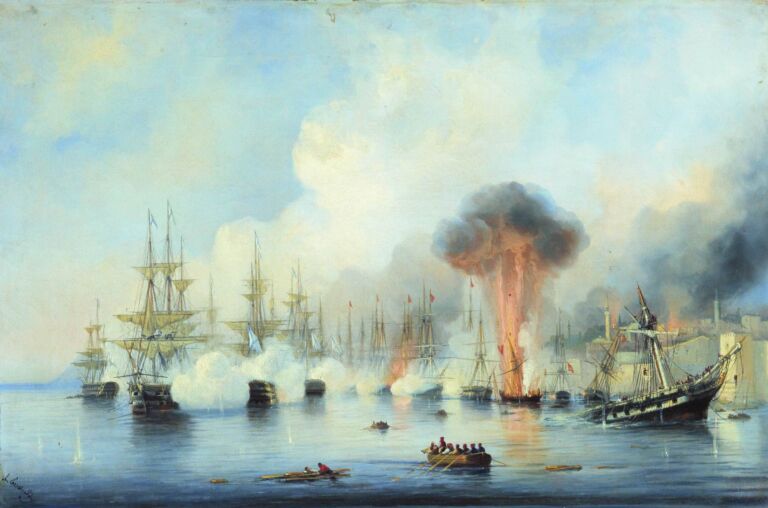 The Battle of Sinop on November 18, 1853Alexei Bogolyubov · 1860
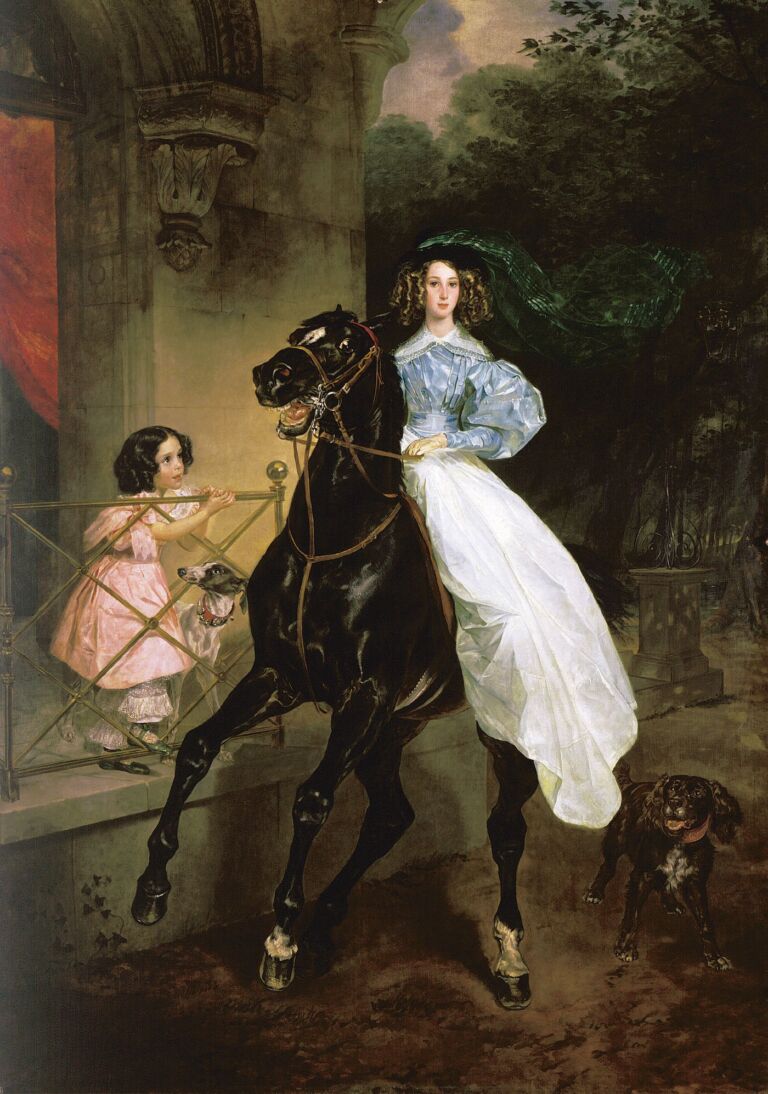 HorsewomanKarl Bryullov · 1832
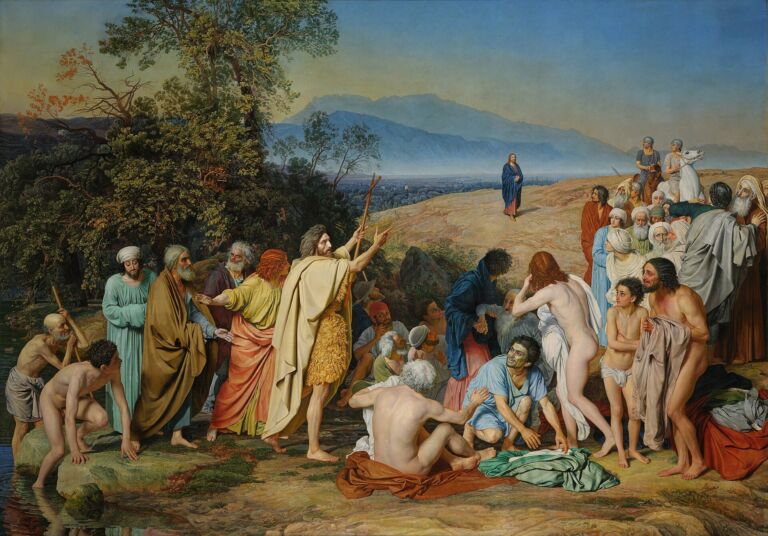 The Appearance of Christ to the People (The Appearance of the Messiah)Alexander Ivanov · 1837–1857
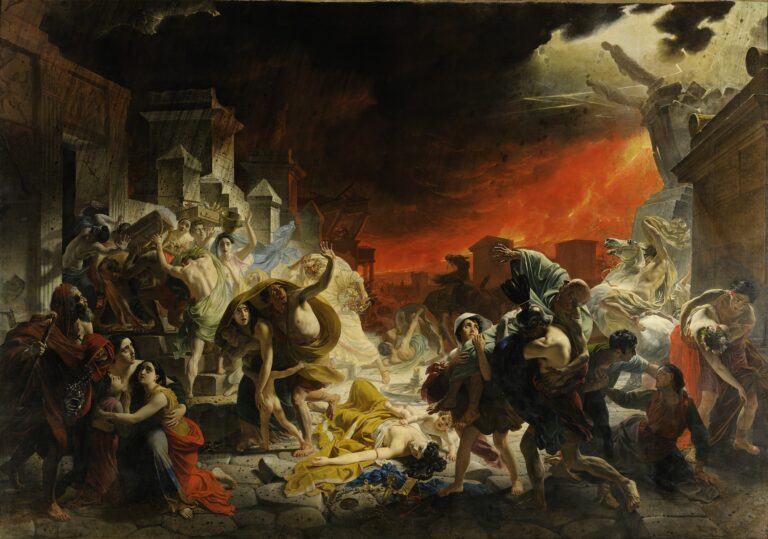 The Last Day of PompeiiKarl Bryullov · 1833
Stories