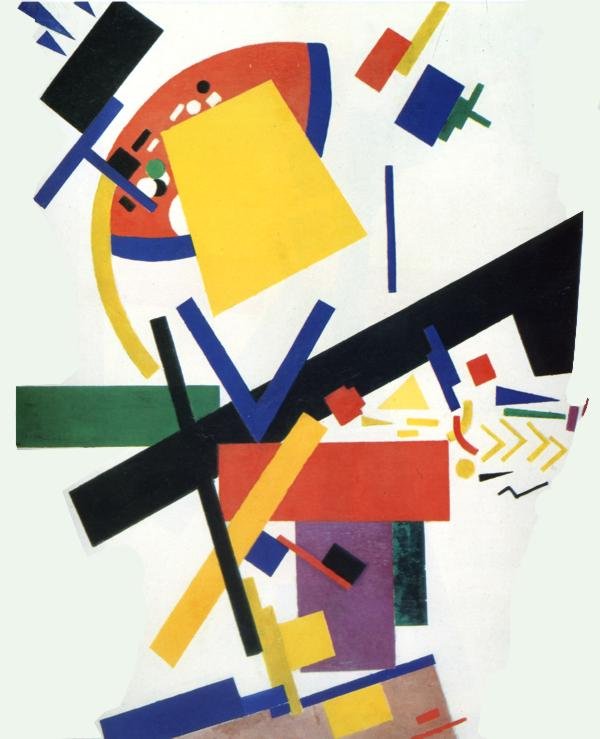
Kazimir Malevich, Suprematism, 1915
Russian art movement
Russian avant-garde
1910–1932 · Russia, USSR
About the movement
The title of the exhibition that opened in Moscow in March 1912 was an insult aimed at the public. "Donkey's Tail" alluded to a Paris hoax of 1910, when an "abstraction" supposedly painted by a donkey with its tail was shown at the Salon des Indépendants. Under this banner Mikhail Larionov and Natalia Goncharova gathered Kazimir Malevich, Vladimir Tatlin, Marc Chagall and other young artists, pointedly breaking away from the Jack of Diamonds group. Over the next twenty years Russian art covered ground that would have taken Europe half a century: from Neo-Primitivism and Rayonism to non-objective art and construction.
The central idea of the avant-garde was that a painting does not depict the world; it is an object in its own right, built according to its own laws. At first artists took form apart, combining French Cubism with Italian Futurism and the lubok, the Russian popular print. In 1912–1913 Larionov invented Rayonism, in which objects dissolve into intersecting rays of light. Then artists dared to give up depiction altogether. Malevich later recalled that the square first appeared in his set designs for the Futurist opera Victory over the Sun, staged in St Petersburg in December 1913, although historians treat this dating with caution. The last step was social: if art is construction, it can be used to build life itself, from books, textiles, furniture and posters to whole cities.
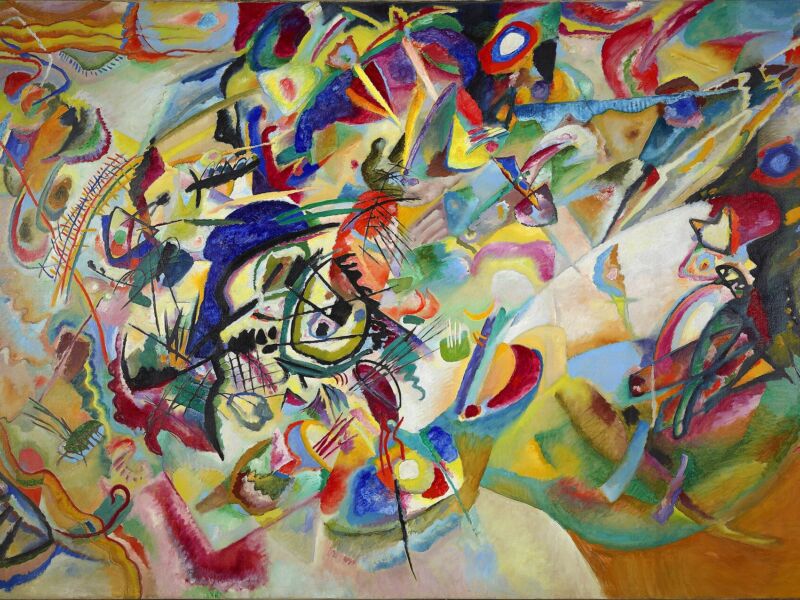
The breakthrough came in Petrograd on December 19, 1915, at "The Last Futurist Exhibition of Paintings 0,10" in Nadezhda Dobychina's Art Bureau. There Malevich showed Black Square and other Suprematist works, hanging the square high in a corner just below the ceiling, where Russian homes kept their icon. In the next room Tatlin exhibited his counter-reliefs. Around them others went their own way: Pavel Filonov with his "analytical" Feast of Kings (1912–1913), Lyubov Popova with her Painterly Architectonics (1916), and in Moscow, in 1916, Wassily Kandinsky painted Moscow I. After the Revolution the avant-garde briefly became almost an official art: El Lissitzky printed the poster Beat the Whites with the Red Wedge (1919–1920).
The reaction to 0,10 was predictably harsh. Alexandre Benois, the leading critic of the day, saw the square, hung in the "red corner" reserved for icons, as a challenge to the icon itself. But that only egged the avant-garde on: scandal was part of the method, and public debates, yellow blouses and painted faces were part of the program. Critics were also irritated that the avant-gardists wrote their own manifestos, leaving reviewers without the last word. Europe truly discovered the Russians in 1922, at the "First Russian Art Exhibition" at the Van Diemen Gallery in Berlin.
After 1917 the schools became the main laboratories. In Vitebsk in 1919 Chagall opened the People's Art School and invited Malevich to teach there; in 1920 the UNOVIS group formed around Malevich. In 1920 Moscow saw the opening of VKhUTEMAS, the Higher Art and Technical Studios, where Alexander Rodchenko and Popova taught, and of the Institute of Artistic Culture. Here Constructivism grew out of painting: artists declared the easel picture exhausted and turned to industrial production, photography and typography.
The end came with the Communist Party Central Committee resolution of April 23, 1932, "On the Restructuring of Literary and Artistic Organizations," which dissolved all independent groups. In his last years Malevich painted figurative works such as Red Cavalry and dated them to earlier years. Much survived thanks to collectors, above all George Costakis: when he left the USSR in 1977, he gave the State Tretyakov Gallery 142 paintings and 692 works on paper by more than forty artists. Worldwide recognition came with the exhibitions of the 1970s and 1980s, and today the story of 20th-century art cannot be told without the avant-garde.
Artists
Major works
SuprematismKazimir Malevich · 1915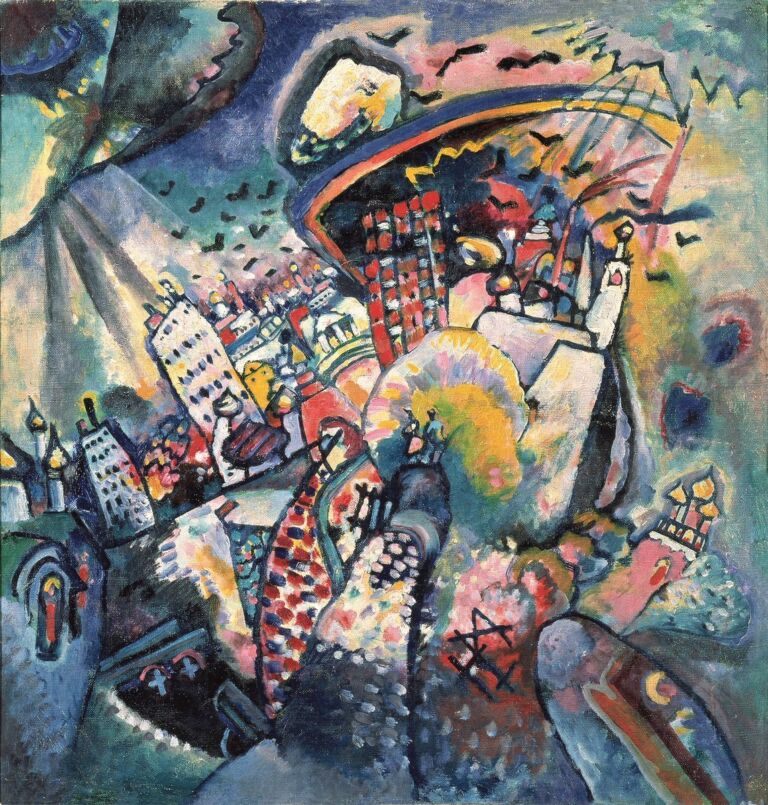 Moscow IWassily Kandinsky · 1916
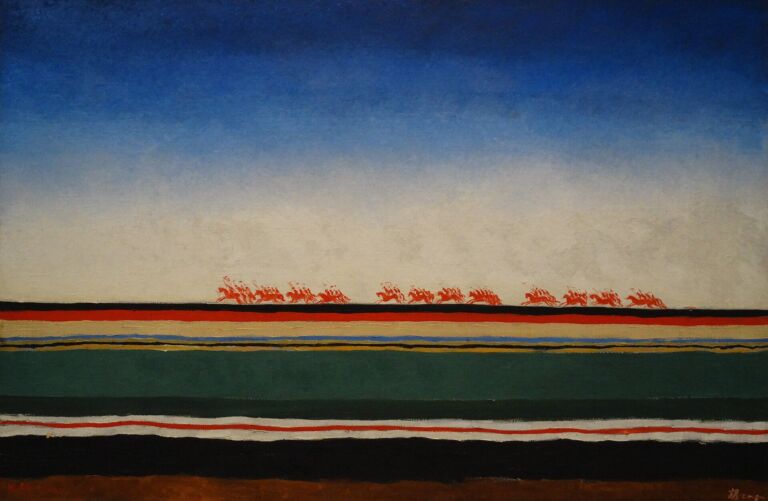 Red CavalryKazimir Malevich · c. 1932
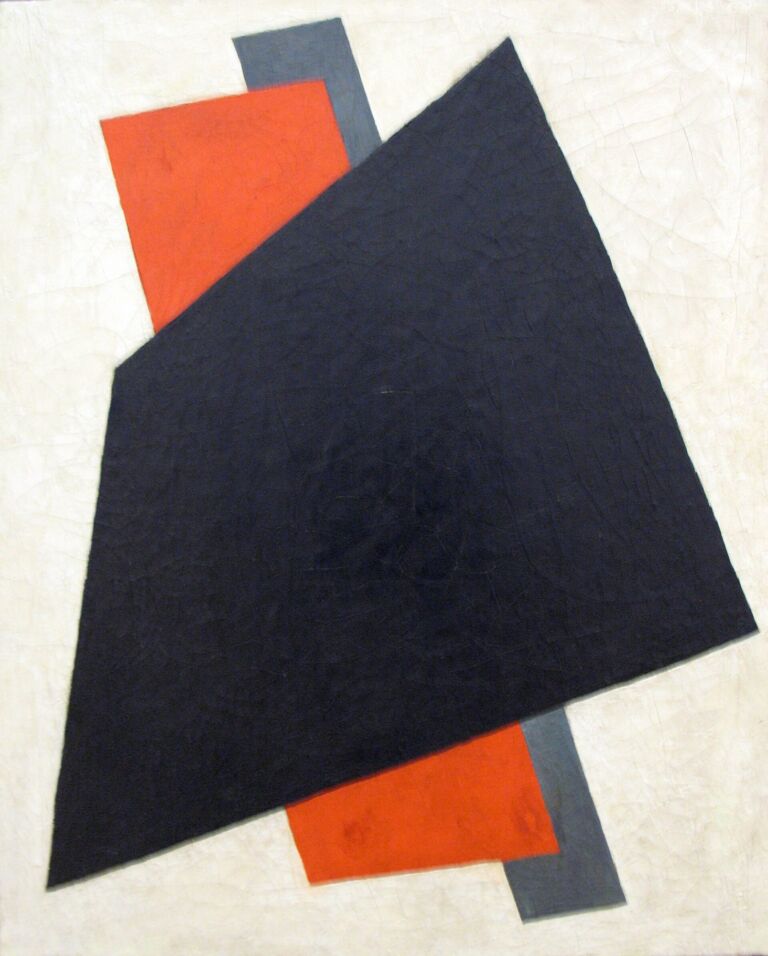 Painterly ArchitectonicsLyubov Popova · 1917
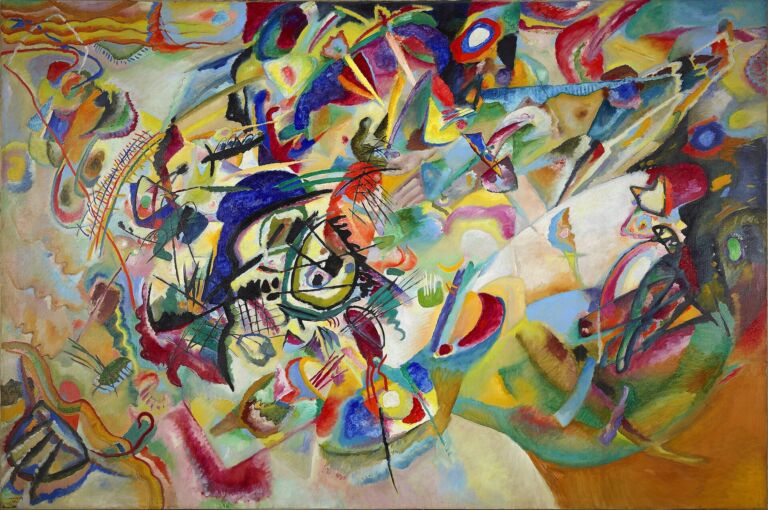 Composition VIIWassily Kandinsky · 1913
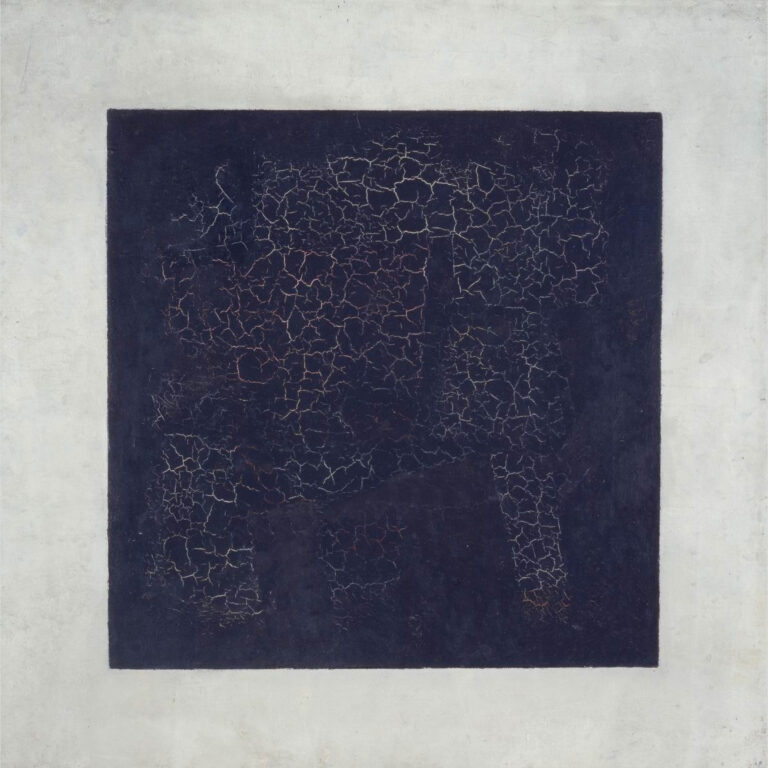 Black SquareKazimir Malevich · 1915
Stories