Isle of the Dead by Böcklin: history and five versions

How a tomb island ended up in German parlors: Böcklin’s Isle of the Dead

How a landscape painted for one client became a farewell for another, and why a reproduction of it could be found in every Berlin home.
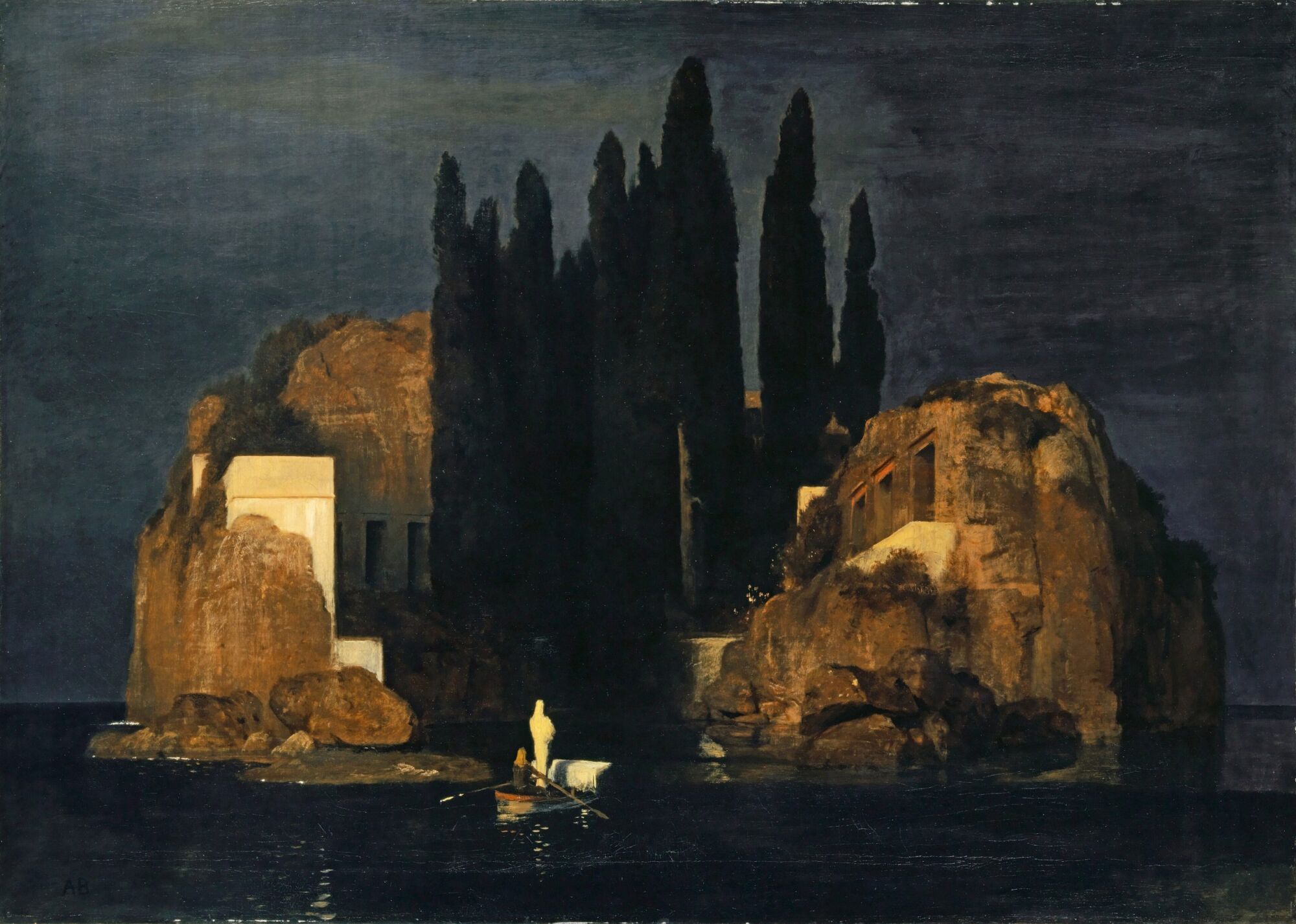
Арнольд Бёклин, «Остров мёртвых», 1880, Художественный музей Базеля

In the spring of 1880 a widow walked into Arnold Böcklin’s studio in Florence. Her name was Marie Berna. On the easel stood an unfinished canvas: a night sea, a rocky island, a dark wall of cypresses and a boat by a landing. She asked him to paint the same picture for her. And she asked him to add two things to the boat: a coffin and a figure in white.

Arnold Böcklin, Isle of the Dead, 1880
Arnold Böcklin. Isle of the Dead (first version). 1880. Oil on canvas. Kunstmuseum Basel

That is how Isle of the Dead came about. Half a century later Vladimir Nabokov wrote in Despair that a reproduction of it could be found in every Berlin home. Freud and Lenin are said to have kept reproductions of it. Rachmaninoff wrote a symphonic poem based on it. And one of its versions ended up belonging to Hitler.

You’ve read 8% of this column

Finish this one — and every one after it.

Every Editor’s Column · no ads · card, Apple Pay, Google Pay Become a member
Read next