Girl with Peaches: how Valentin Serov made weeks look like a moment
In the late summer of 1887 Valentin Serov spent more than a month painting Vera Mamontova at Abramtsevo. What the young painter was after, and what became of his sitter.
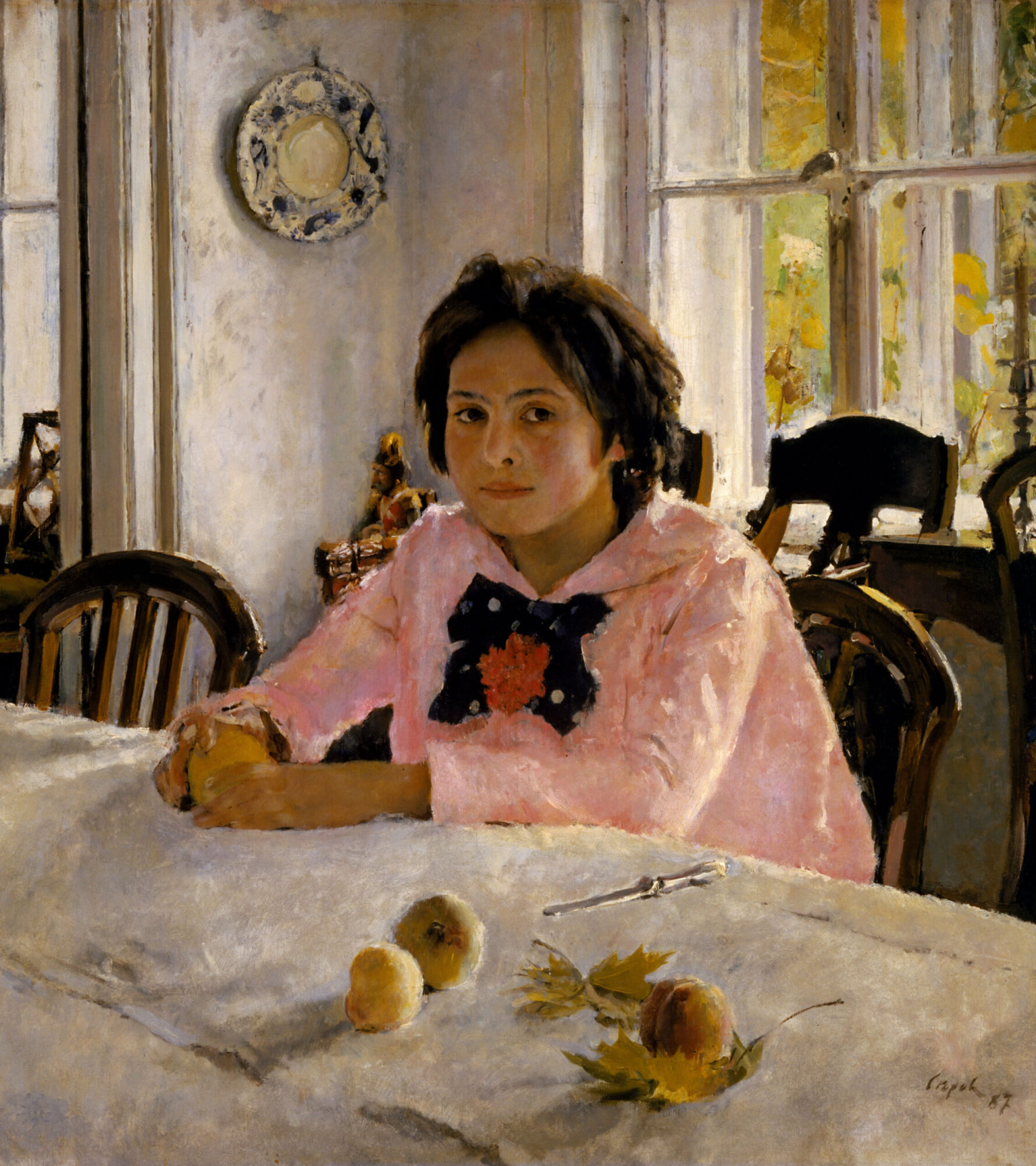
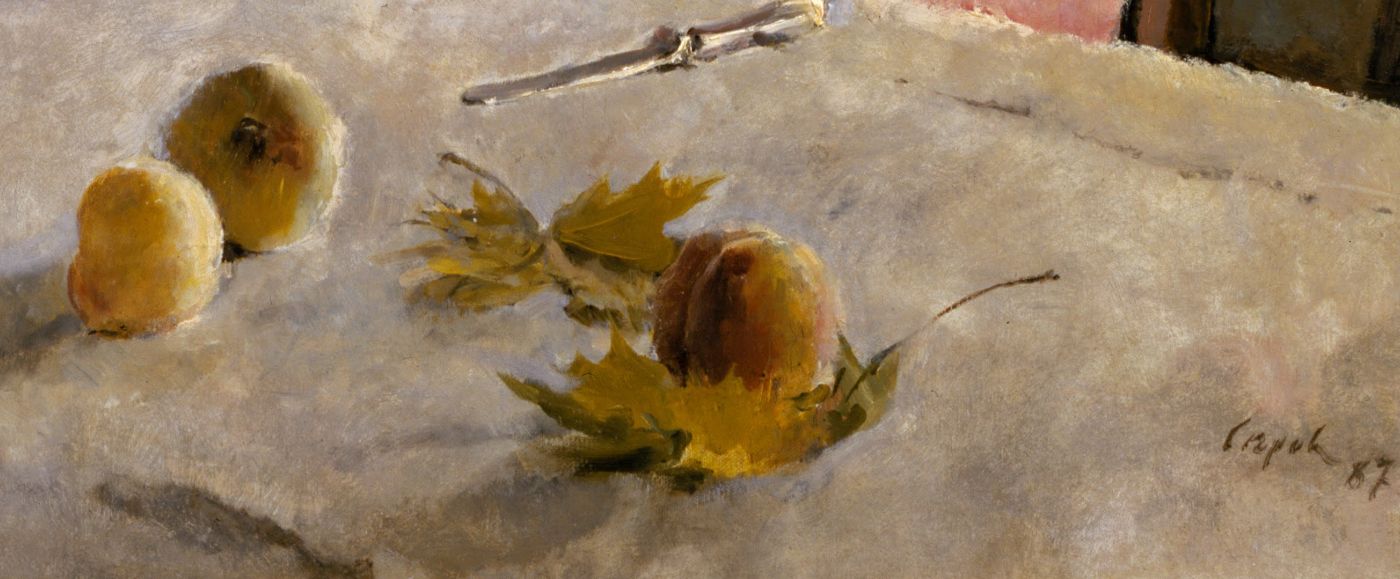
The peaches on this table came from the Abramtsevo greenhouse; the maple leaves beside them are a sign that summer is ending. The Russian painter Valentin Serov began the portrait in mid-August 1887, according to the Tretyakov Gallery (in Russian), and worked on it for more than a month, while Vera, the daughter of the house, sat at the Mamontovs’ table.
Girl with Peaches is oil on canvas, 91 by 85 centimeters. It made the twenty-two-year-old Serov’s name, though he himself wrote about it far more modestly than others later did. It now hangs in the State Tretyakov Gallery in Moscow, the museum founded on the merchant Pavel Tretyakov’s collection.
A girl who loved horses
Abramtsevo, outside Moscow, was the estate of the railway magnate Savva Mamontov, founder of the Abramtsevo artists’ colony. Serov knew it from boyhood: his drawing A Little Bridge over a Ditch is inscribed “Abramtsevo” and dated July 1879, when he was fourteen. From 1885 he stayed for long stretches, acted in home theatricals and was treated as family. The house predated the colony: its 1840s-style mahogany chairs had belonged to the previous owners, the writer Sergei Aksakov’s family.
At home Vera was Verushka — “with the accent on the first syllable, which gave it an affectionate overtone,” as the Tretyakov Gallery Magazine explains. She and Serov shared a love of horses. She agreed to sit, the magazine says, “both because he was a friend and because she was accustomed to obeying adults.” She was about twelve.
The number of sittings is unknown; the museum gives only the span. Popular retellings claim “almost two months” and “hours at a stretch,” but we have found no document supporting either.
In words the Tretyakov Gallery quotes, Serov later said he was after “that special freshness you always feel in nature and never see in paintings” (translated here by Hroniki).
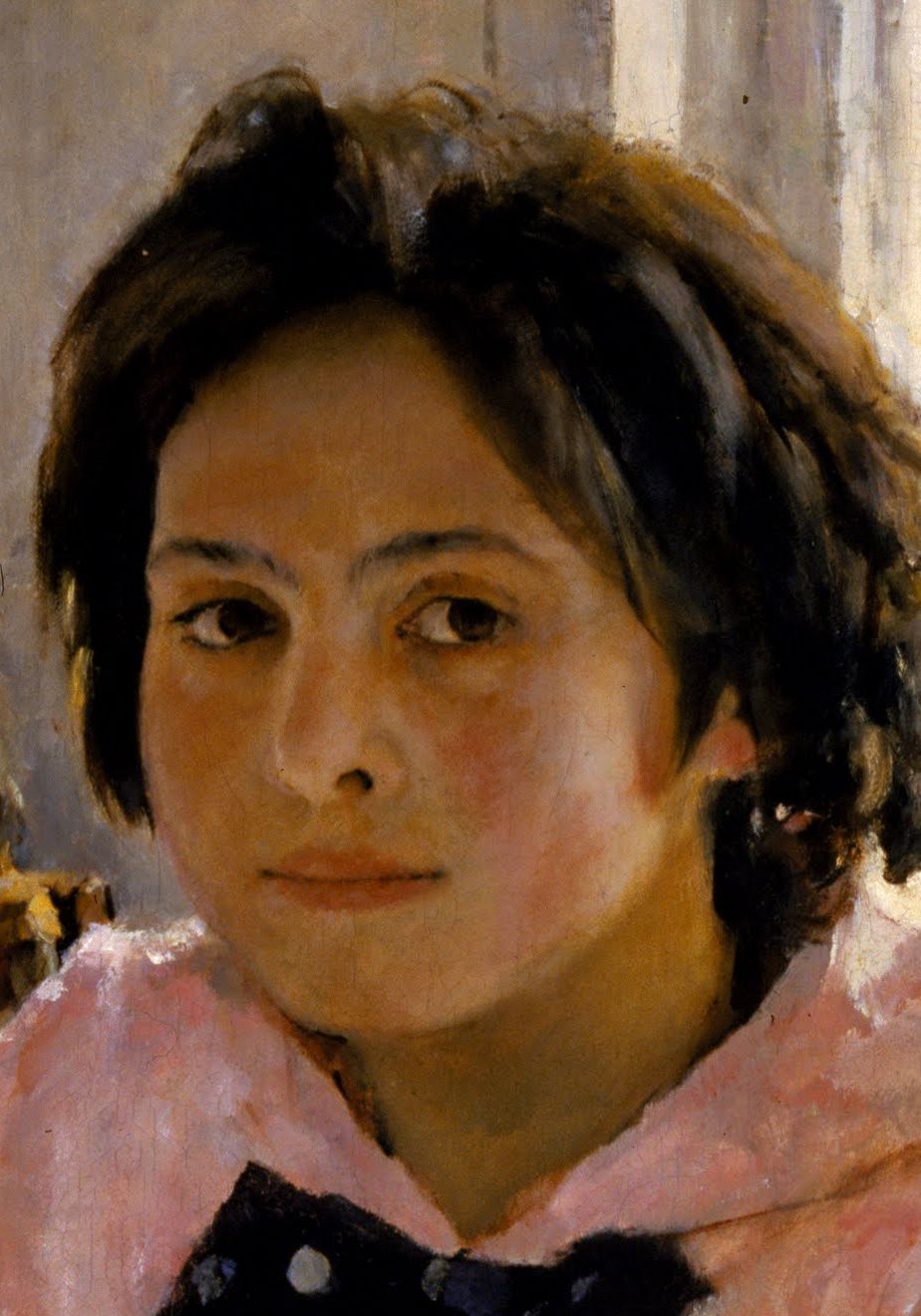
Freshness did not mean speed. The face is the most finely painted passage; the fingers, background and peaches are laid in with broad, quick strokes, almost sketchily. Most of those weeks seem to have gone into the face. The window behind her does not glare: the light is diffused, and the room seems filled with warm air.
The nutcracker Serov decorated by hand
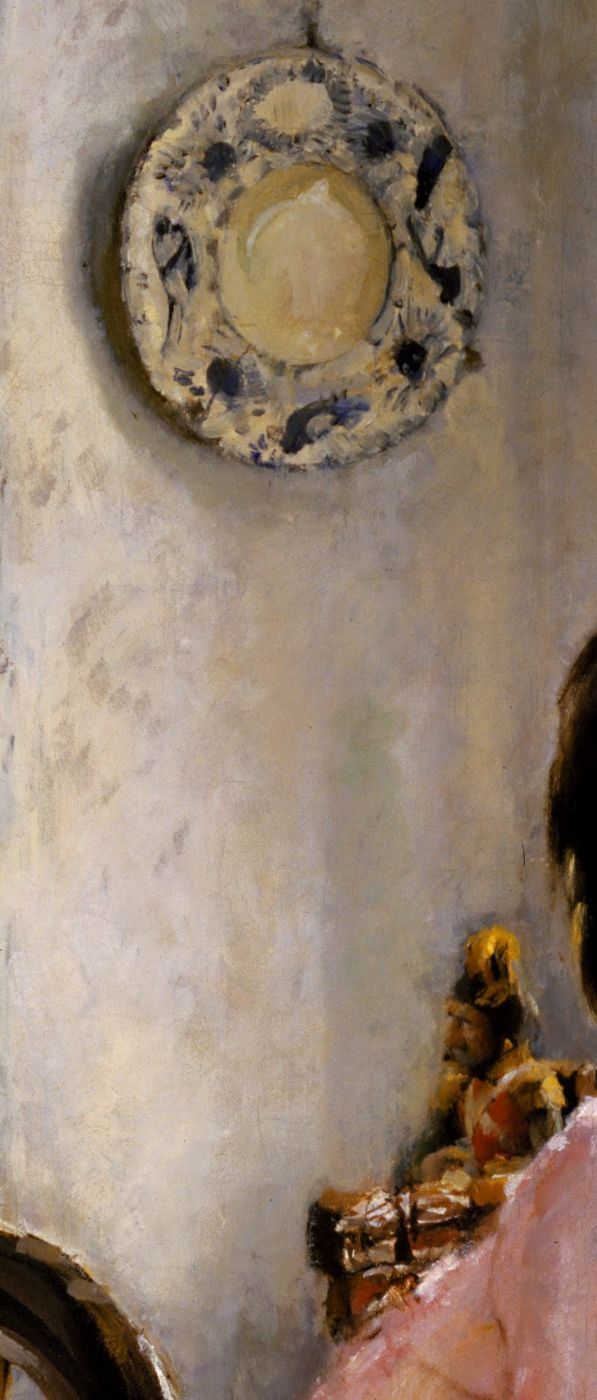
Every object here belonged to the house. The white plate with cobalt birds and flowers was, the museum suggests, painted by Elena Polenova, Vasily Polenov’s sister. The wooden grenadier nutcracker was bought at a fair in Sergiev Posad, and Serov decorated it himself. It stands on the left, almost at the girl’s shoulder, easy to miss.
On November 16, 1887, Serov wrote from Yaroslavl to his fiancée, Olga Trubnikova. Verushka’s portrait, he reported, already “hangs in Abramtsevo in a place of honor,” in “a handsome oak frame.” Later in the letter (in Russian), turning to his current portrait, he admits: “every portrait is a real illness for me.”
Verushka’s portrait hung in a place of honor, and Serov was already agonizing over the next one.
The Moscow Society of Lovers of Art showed it at a periodic exhibition under a modest title, Portrait of V. M., and gave it first prize in its 1888 competition. According to the museum, it caused a sensation among artists; today it is seen as the dawn of Russian Impressionism.
It had precedents. In the 1880s Vasily Polenov and Ilya Repin, Serov’s principal teacher, were developing the plein-air portrait, painted in natural daylight. For Serov, the painting summed up his years at the Imperial Academy of Arts. In 1894 he joined the Peredvizhniki, or Wanderers, the realist painters whose traveling exhibitions toured Russia.
Verushka after the portrait
What Vera thought of the sittings is unknown. But a letter to one of her brothers sounds like the horse-crazy girl Serov knew: “I ride a horse a lot, nearly every day.” In another she writes that the new Karabakh stallion from her father “is nothing like Zilan or Basan,” her old favorites.
Viktor Vasnetsov, best known for Bogatyrs, had already painted her as a child, in Boyar Maiden (1884). At Abramtsevo in 1896 he painted her again, a young woman of twenty, holding a maple branch, and inscribed the date, July 27. By family tradition, he kept it, promising: “I’ll present it to your bridegroom, if he’s Russian.”
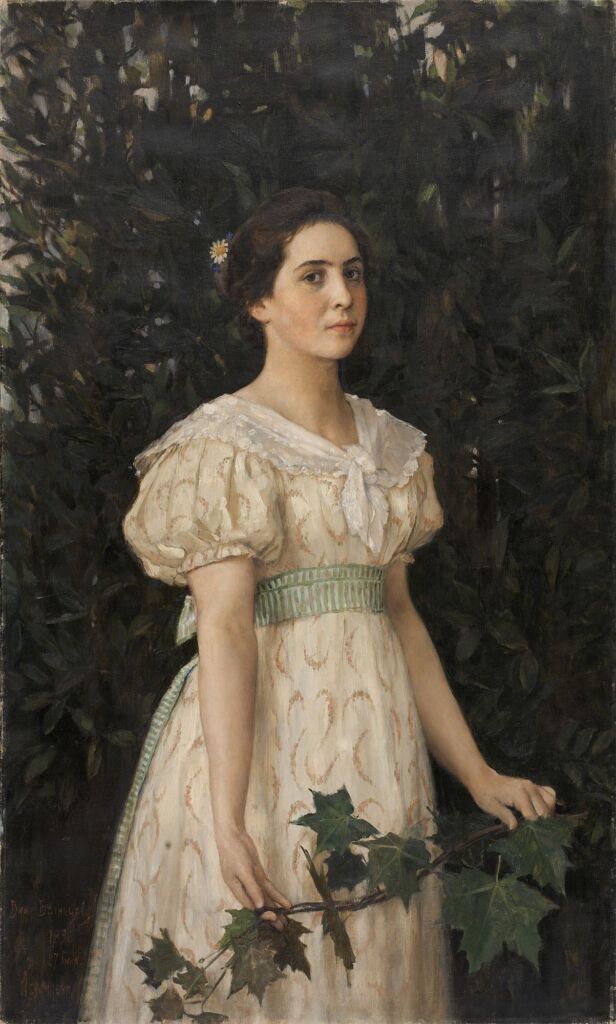
A suitor did appear, but his parents’ objections and Savva Mamontov’s bankruptcy in 1900 delayed the wedding for years. On January 26, 1903, Vera married Alexander Samarin. They had three children.
Before Christmas 1907 Vera went into Moscow to buy presents, caught a chill and developed pneumonia. She died on December 27, at thirty-two. Her youngest son, Sergei, was under a year old. Serov’s portrait stayed with the family until 1929, when the Tretyakov bought it from her sister Alexandra.
In Vasnetsov’s portrait, the maple branch in the grown woman’s hands seems to echo the leaves on the 1887 tablecloth. For everyone else, though, she remains the girl at the Abramtsevo table, at the end of the summer when the peaches ripened and the maples began to turn.
Comments
For Hroniki readers
Comments are open to readers with an account. Signing up is free and takes a few seconds.
No comments yet. Start the conversation.