How Washington Crossing the Delaware got its Washington in Düsseldorf
Emanuel Leutze painted the most American of history pictures in Germany, with Americans who happened to be in Düsseldorf as his models. One of them stood two hours in a copy of Washington's uniform.
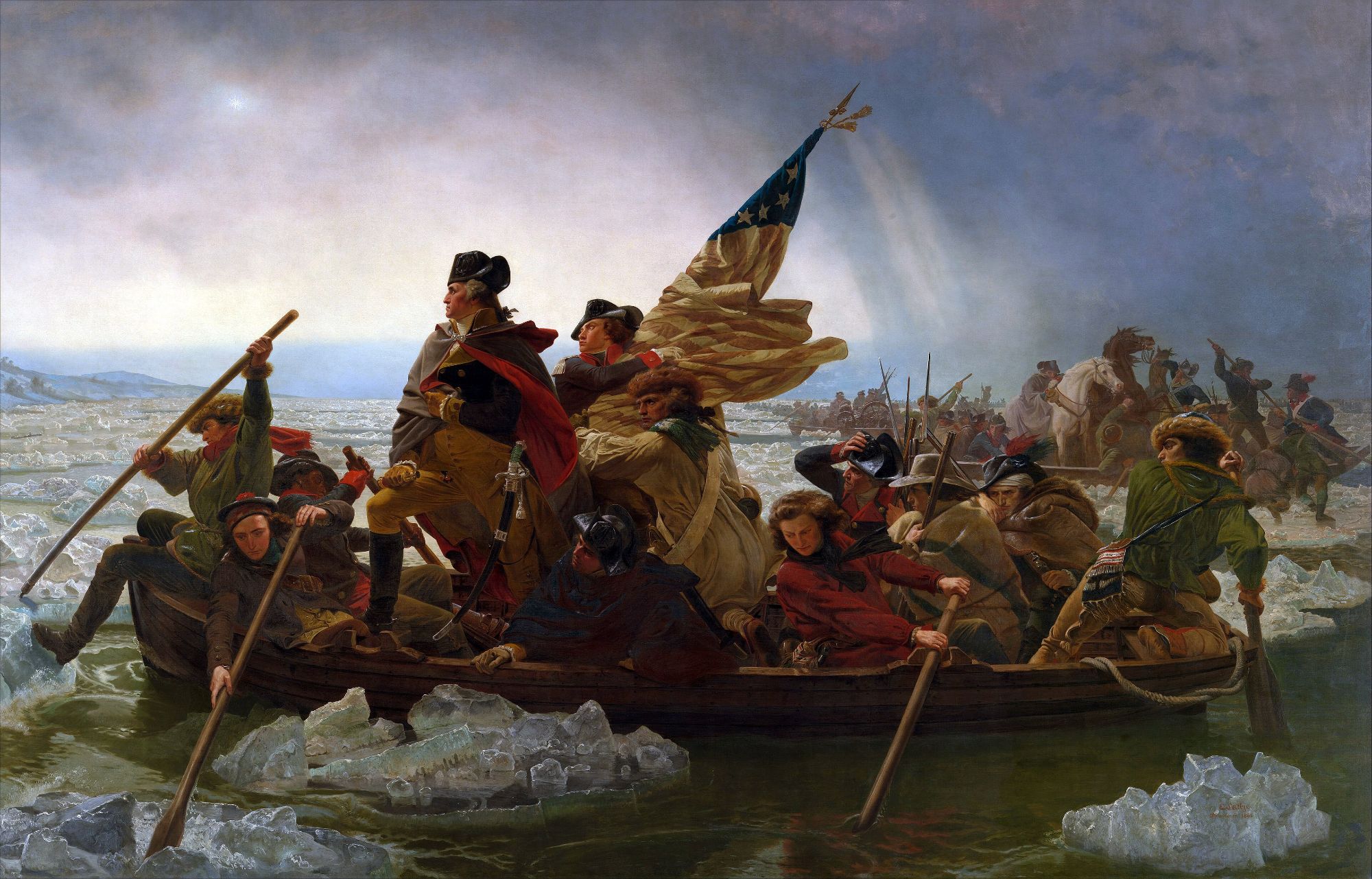
In Düsseldorf, around 1850, a young landscape painter from Ohio put on a copy of George Washington’s uniform and held still. “I stood two hours without moving for the cloak of the Washington to be painted at a single sitting,” Worthington Whittredge recalled. The studio rewarded him afterward: “They poured champagne down my throat and I lived through it.”
The picture he posed for is Washington Crossing the Delaware. Its surviving version hangs in The Metropolitan Museum of Art and measures 378.5 by 647.7 centimeters (149 by 255 inches). It shows the most American of scenes, yet it was made far from America: the painter lived in Germany, and the first version never crossed the Atlantic.
Every American that came along
Emanuel Leutze, born in 1816 in Schwäbisch Gmünd, in Württemberg, was brought to the United States at nine and grew up in Philadelphia. Commissions he won around 1840 paid for his return to Germany and the Düsseldorf Academy; he married there and stayed until 1859.
Leutze openly backed the revolutions of 1848. When they collapsed, he turned to a revolution that had succeeded. The picture he began in their aftermath held up 1776 as an example for European liberals.
Düsseldorf was full of young Americans, and Leutze put them to work. German models, Whittredge wrote, were “either too small or too closely set in their limbs.” So Leutze, as Whittredge’s memoir was retold in American Heritage in 1964, “caught every American that came along and pressed him into his service.”
John Groesbeck of Cincinnati, over six feet tall, was recruited on sight. Whittredge posed twice, once as Washington and once as the steersman, with the oar in his hand.
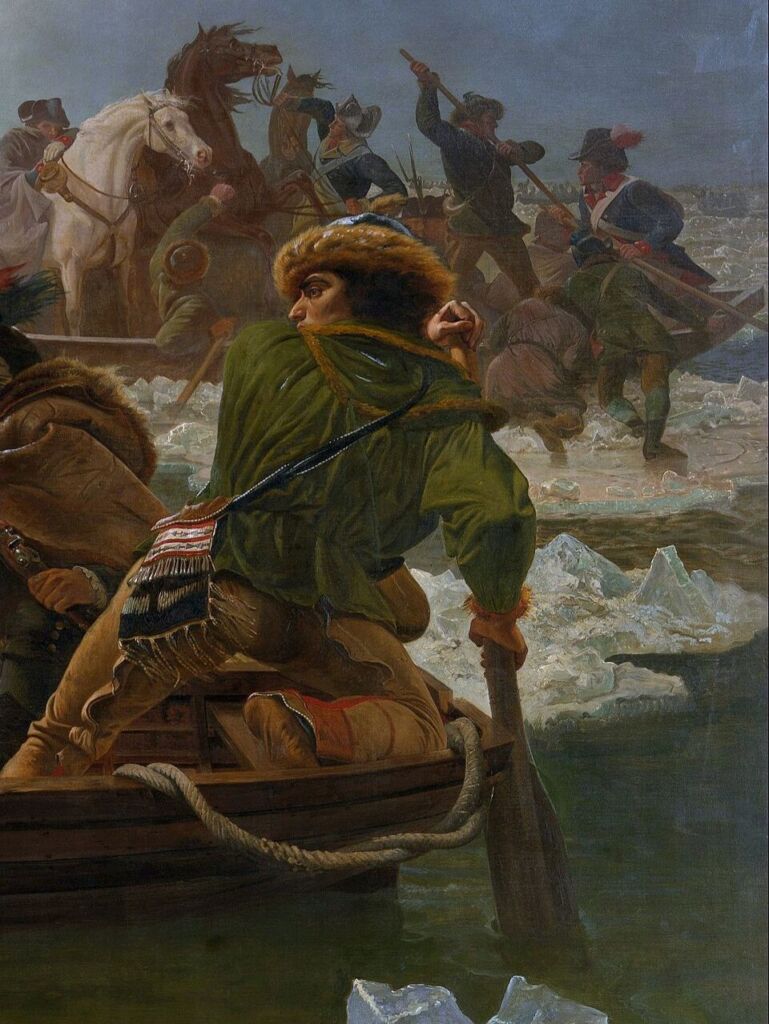
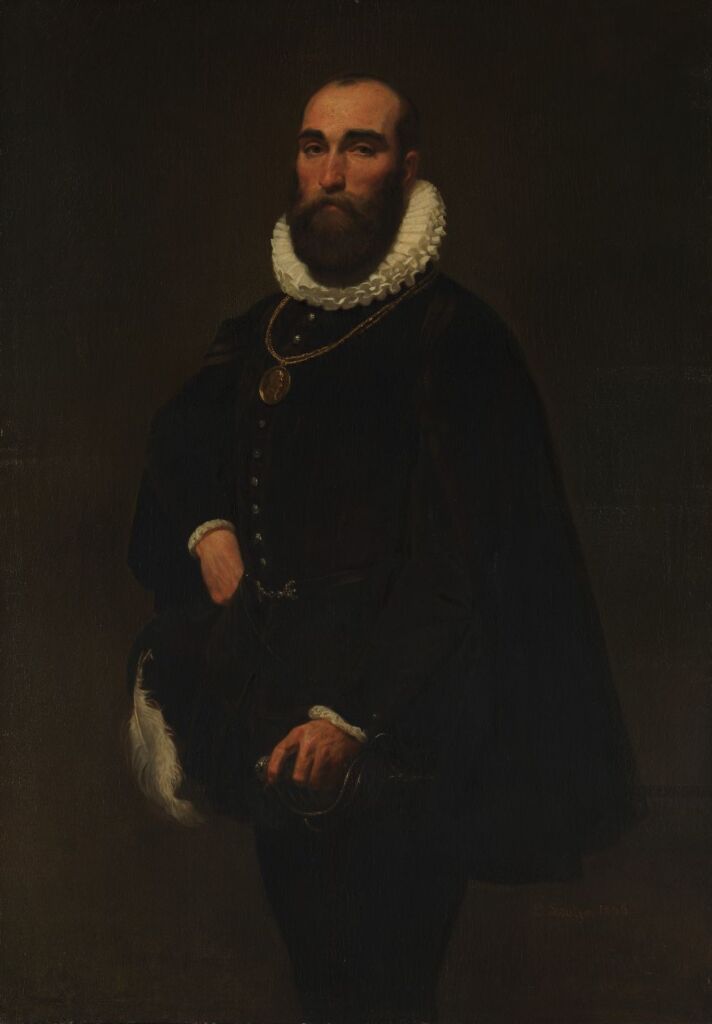
Only the body was Whittredge’s. For the head, Leutze worked from Jean-Antoine Houdon’s bust of Washington, in profile. A few years later he painted his friend as himself.
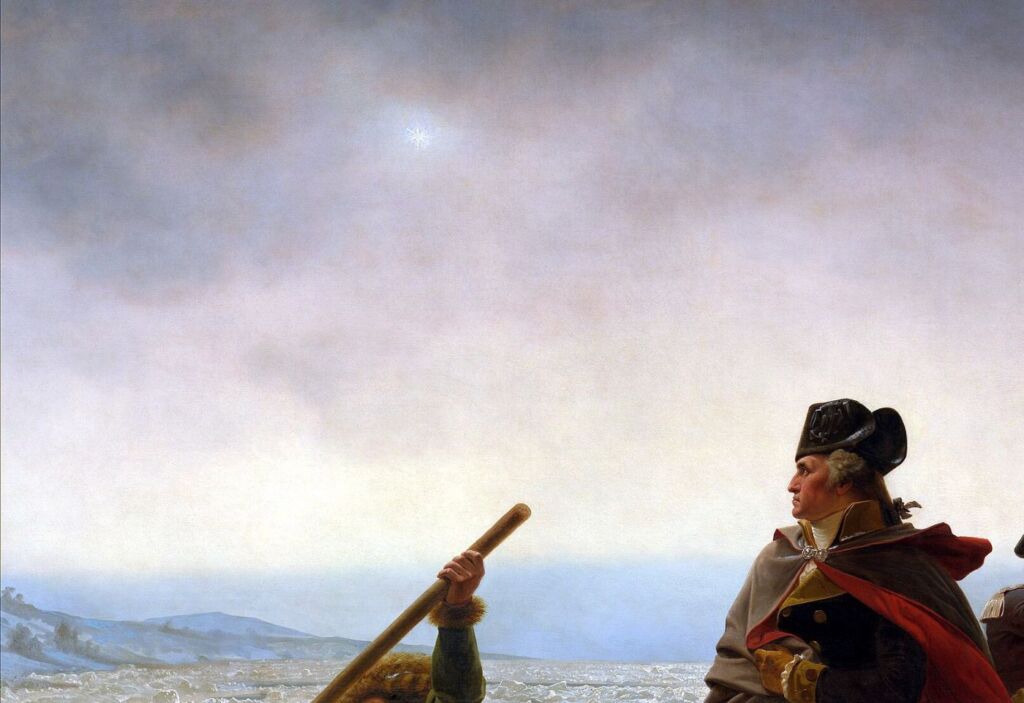
On that first canvas the sky, which takes up much of the picture, was done in a day. Leutze mixed the colors overnight, and Whittredge and the landscape painter Andreas Achenbach helped him paint it in. The star was Achenbach’s idea: “one lone, almost invisible star, the last to fade in the morning light,” as Whittredge put it.
Fire in 1850, bombs in 1942
In November 1850 a fire in Leutze’s studio damaged the first version. It was repaired and in 1863 entered the Kunsthalle Bremen. On September 5, 1942, a Royal Air Force raid on Bremen destroyed it, and it survives only in black-and-white photographs.
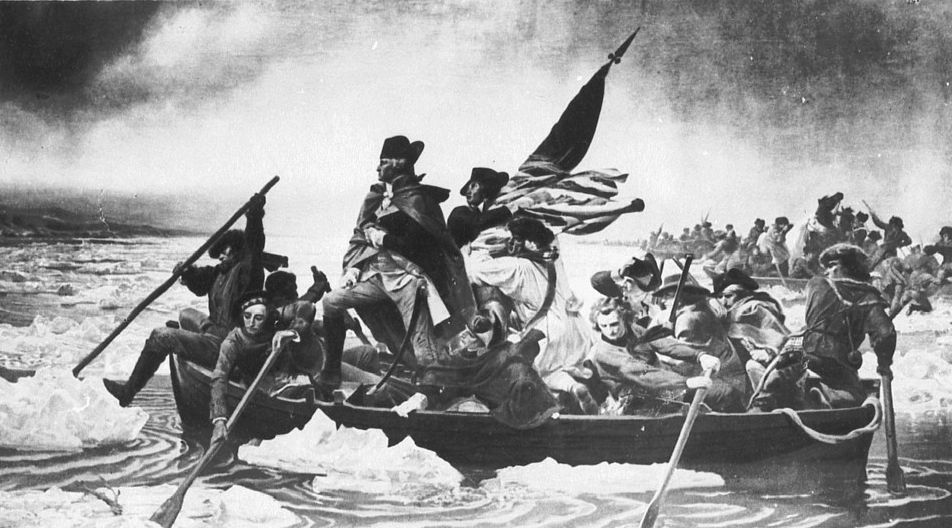
The canvas in New York is a full-size replica begun in 1850, so Whittredge’s Washington passed into it from the first. It went on show on Broadway in October 1851, and one account counts five thousand visitors in under two weeks.
The New York businessman Marshall O. Roberts bought it for $10,000, and John Stewart Kennedy gave it to the Met in 1897. Since 2012 it has hung in a copy of its original trophy-style frame, rebuilt from an 1864 photograph by Mathew Brady.
Dawn, a flag and a man on his feet
The crossing itself happened in the dark, on the night of December 25, 1776. Two days later, in his report to John Hancock, the president of Congress, Washington wrote that ice “impeded the passage of Boats so much” that the artillery was not over until three in the morning.
Leutze moved the scene to dawn and used the Rhine as a stand-in for the Delaware. The Met is frank that he was “less concerned with historical accuracy” than with drama.
The flag arrived early too. Congress adopted thirteen stripes and “thirteen stars, white on a blue field” on June 14, 1777, about six months after the crossing, as the Library of Congress notes. An 1853 exhibition catalog identifies the officer holding it as Lieutenant James Monroe, the future president.
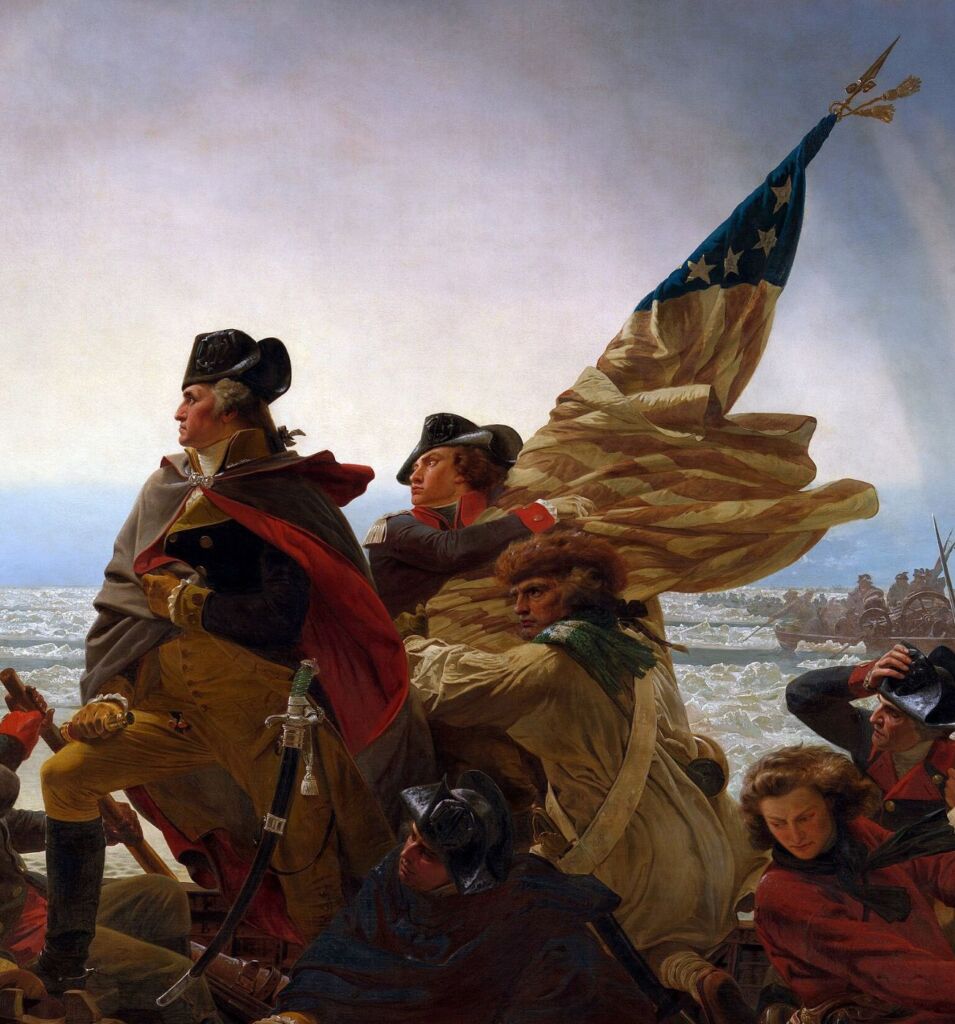
Then there is the pose. A commander upright in a small boat on an icy river has long struck critics as reckless. The historian David Hackett Fischer, in Washington’s Crossing (2004), turns the objection around. The troops crossed in big flat-bottomed Durham boats, and with icy water underfoot, he argues, everyone would have been standing.
What Fischer’s argument cannot save is the boat, far too small for the twelve men Leutze crowded into it. But Leutze was painting an argument for 1848, not a record of 1776. His Delaware was the Rhine, and his Washington stood on the legs of an Ohio landscape painter in a copy of Washington’s uniform.
Comments
For Hroniki readers
Comments are open to readers with an account. Signing up is free and takes a few seconds.
No comments yet. Start the conversation.