Art movement
Baroque
Late 16th to mid-18th century · Europe (from Rome) and Russia
About the movement
For a long time "Baroque" was a term of abuse. It is most often traced to the Portuguese barroco, an irregularly shaped pearl; another theory links it to a term in medieval logic for a contorted, convoluted argument. In the 18th century the word meant anything bizarre or excessive, and only in 1888 did the Swiss historian Heinrich Wölfflin, in his book Renaissance and Baroque, turn the insult into a scholarly concept: the name of an era rather than a verdict.
The era itself began in Rome at the turn of the 17th century. The Council of Trent, which closed in 1563, demanded clarity and force from church art: an image was meant to move the faithful, not to delight the connoisseur. Two very different painters answered. In 1597–1601 Annibale Carracci frescoed the gallery of the Palazzo Farnese, restoring a powerful classical form to painting. In the same years Caravaggio received his first public commission, the Contarelli Chapel in San Luigi dei Francesi, where The Calling of Saint Matthew appeared in 1599–1600. Harsh light striking out of darkness, people off the street cast as saints: it was a revolution.
The Baroque soon spread beyond painting. Gian Lorenzo Bernini raised a bronze baldachin over the high altar of St Peter's and created The Ecstasy of Saint Teresa (1647–1652), a chapel arranged like a box at the theater. In 1691–1694 Andrea Pozzo painted the vault of Sant'Ignazio so that the ceiling seems to open into the sky. This fusion is the hallmark of the Baroque: architecture, sculpture and painting working together as a single performance.
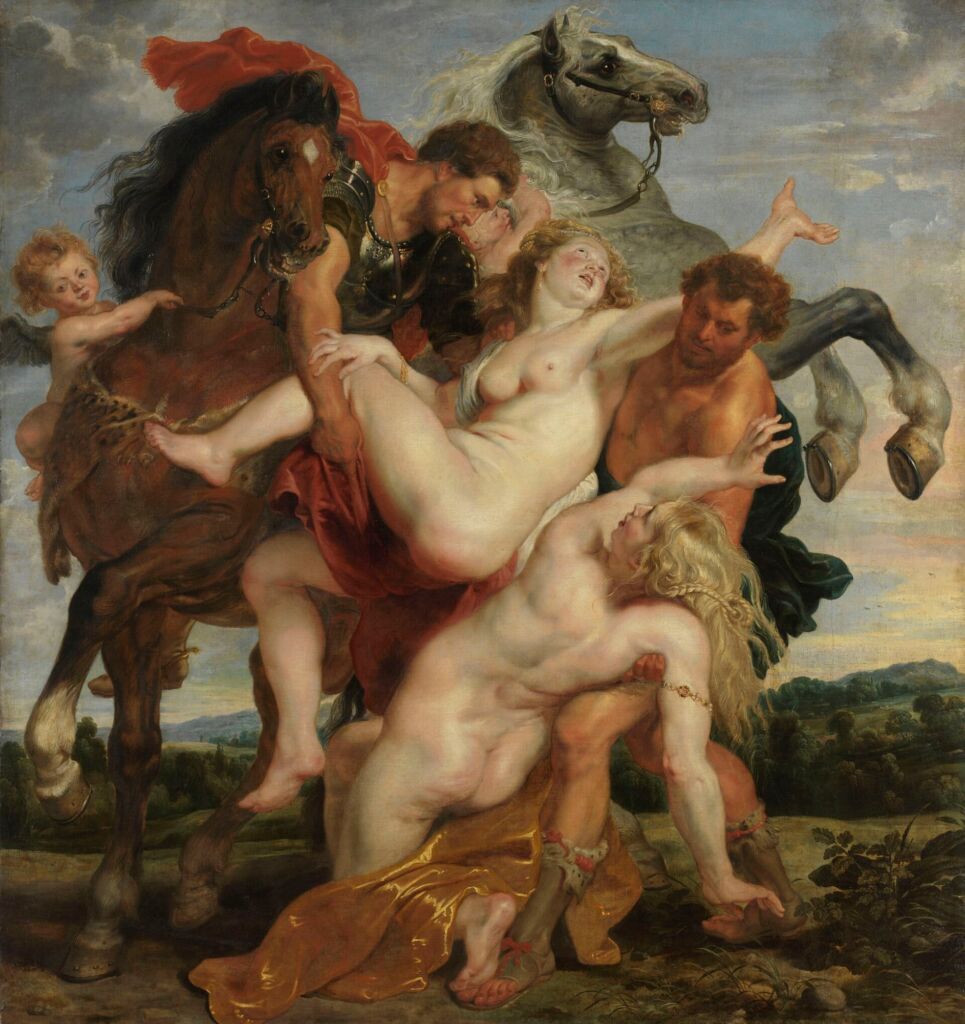
From Rome the style spread across Europe and took on a local character in each country. In Flanders there was Peter Paul Rubens, with The Rape of the Daughters of Leucippus (around 1618, Alte Pinakothek, Munich), and his pupil Anthony van Dyck, with Charles I at the Hunt (around 1635, Louvre). In Spain, Diego Velázquez painted Las Meninas (1656, Prado). Artemisia Gentileschi, the daughter of a follower of Caravaggio, painted Judith Slaying Holofernes (around 1620, Uffizi). The paradox of the age was Holland: a Protestant republic without church commissions, where Rembrandt created Danaë (1636) and The Night Watch (1642, Rijksmuseum).
Contemporaries argued fiercely over the new art. The friars of Santa Maria della Scala rejected Caravaggio's Death of the Virgin as indecent, and the young Rubens, then in service at Mantua, persuaded the duke to buy it; it is now in the Louvre. Nicolas Poussin, according to André Félibien, said that Caravaggio had come into the world to destroy painting. Bernini, meanwhile, was so famous in his lifetime that in 1665 Louis XIV summoned him to Paris to design the Louvre, though the project was never carried out.
The Baroque reached Russia twice. In the late 17th century Moscow developed the so-called Naryshkin Baroque, exemplified by the Church of the Intercession at Fili (1690–1694), with its stacked tiers and white-stone ornament. In the mid-18th century Francesco Bartolomeo Rastrelli built the Winter Palace and the Great Palace at Tsarskoye Selo (the Catherine Palace) for Empress Elizabeth. Baroque painting arrived later, through collections: Catherine the Great bought the Crozat collection in 1772 and Robert Walpole's collection in 1779. Rembrandt's Danaë came with the Crozat purchase of 1772 and has been in the Hermitage ever since.
Already in the 18th century Baroque splendor softened into the lighter Rococo, then collided with the Neoclassicism of Johann Joachim Winckelmann, who held up the calm of antiquity as the ideal. But the Baroque never vanished: opera sets inherited its theatricality, and its passion for movement was taken up by Delacroix and by 20th-century film directors. For the national schools, see our entries on Caravaggism, 17th-century Flemish painting, Dutch Golden Age painting and the Spanish Golden Age.
Stories
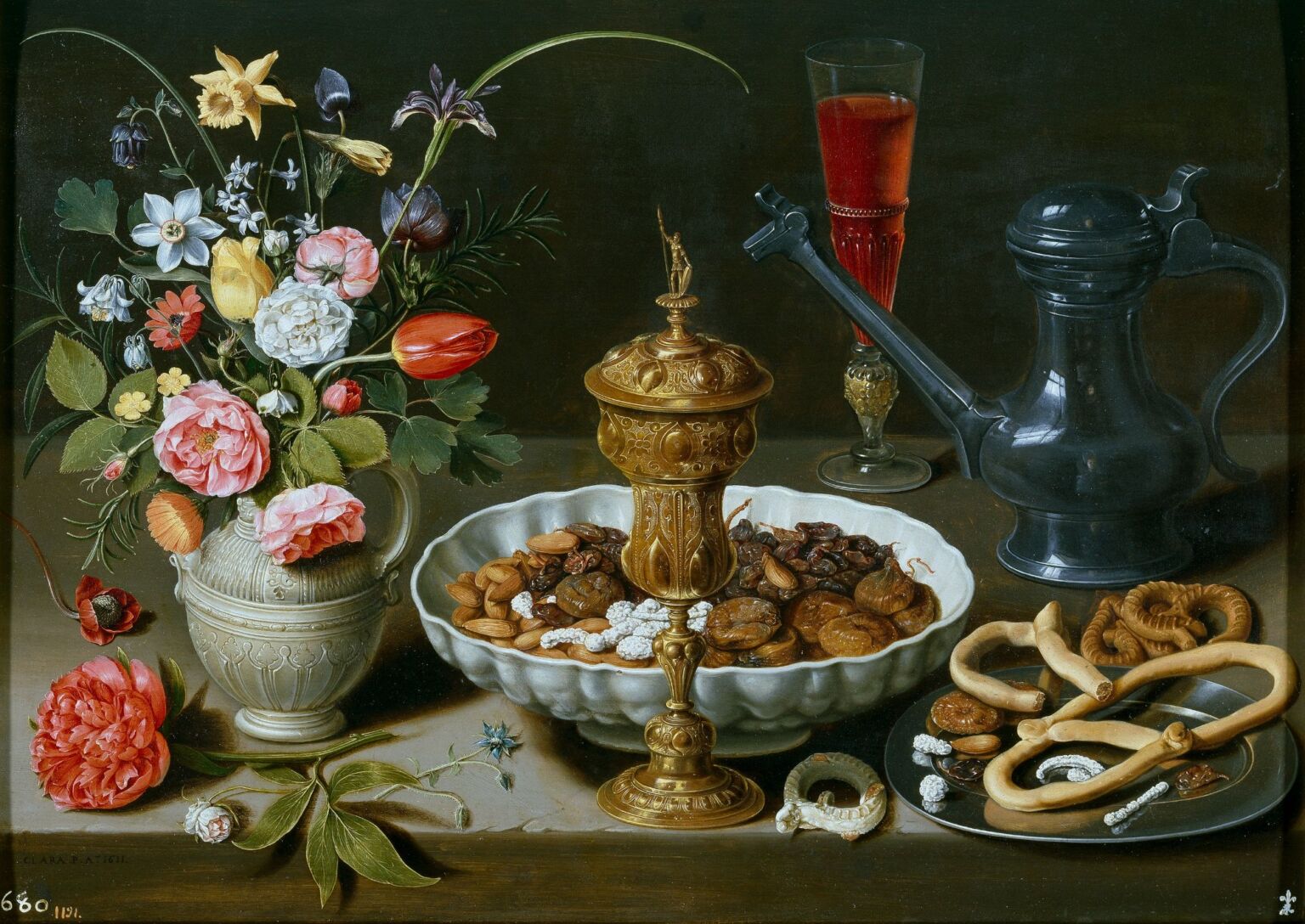
Clara Peeters: seven self-portraits hidden in reflections
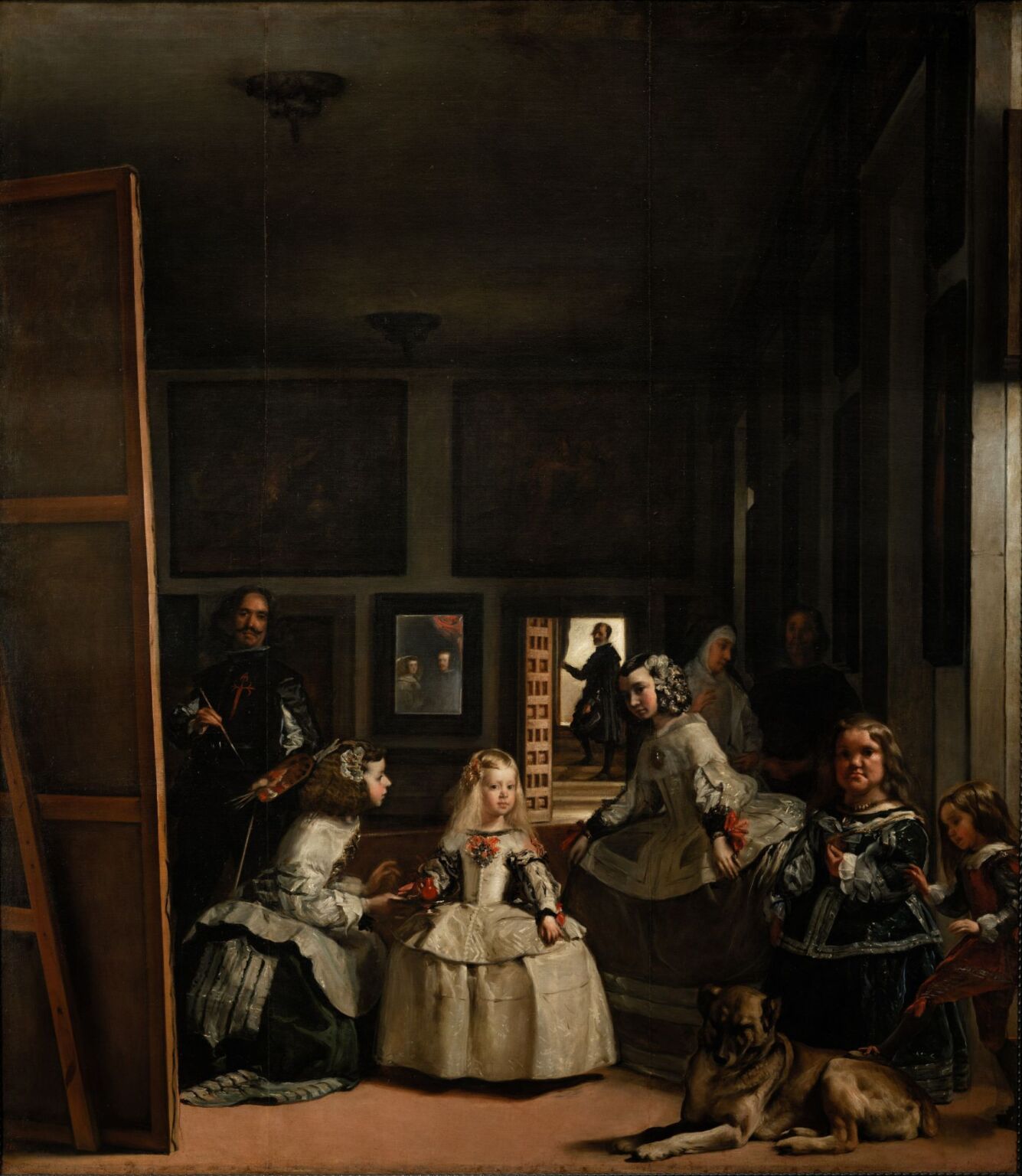
Las Meninas: what is hidden in Velázquez’s mirror
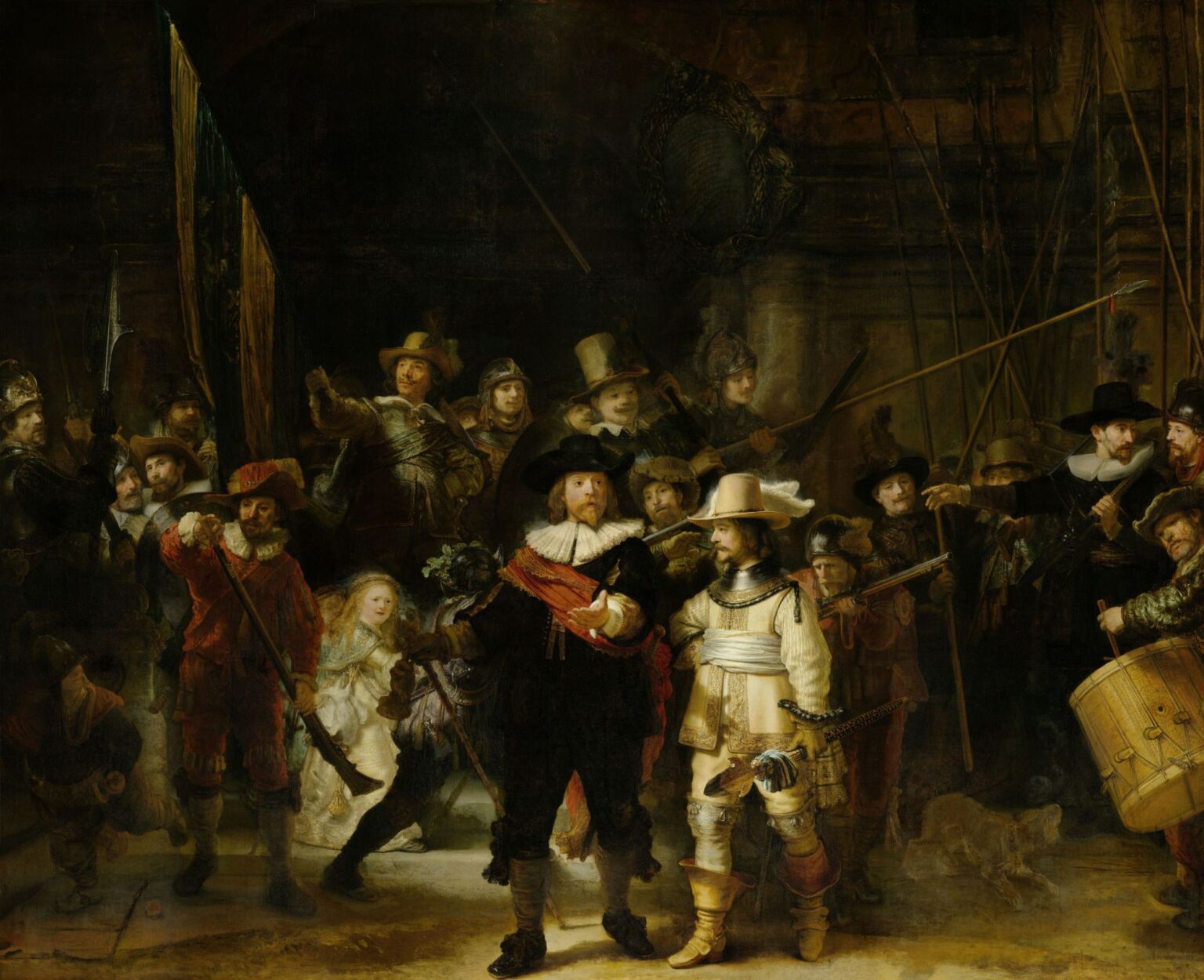
The girl with a dead chicken at the heart of Rembrandt’s Night Watch