Art movement
Symbolism
1880s–1910s · Europe and Russia
About the movement
On September 18, 1886, Le Figaro printed a manifesto by the poet Jean Moréas. He proposed a new name, Symbolism, for a literature weary of Zola's Naturalism, and defined its task as "to clothe the Idea in a sensuous form." Five years later the critic Albert Aurier, writing in the Mercure de France, applied the principle to painting and held up Paul Gauguin as its model. Art, Aurier argued, should be not a reflection of the world but a sign of thought.
Symbolism took on two opponents at once: the academic Salon, and Naturalism together with Impressionism. The Impressionists pursued the truth of the eye; the Symbolists considered the eye a deceiver. For them the visible was only a shell hiding the real meaning: dream, myth, fear, desire, death. That is why they were so drawn to Salome, sphinxes, chimeras and angels, yet painted them as visions rather than historical scenes. Symbolism has no common style; what unites it is not a manner but an attitude to the image.
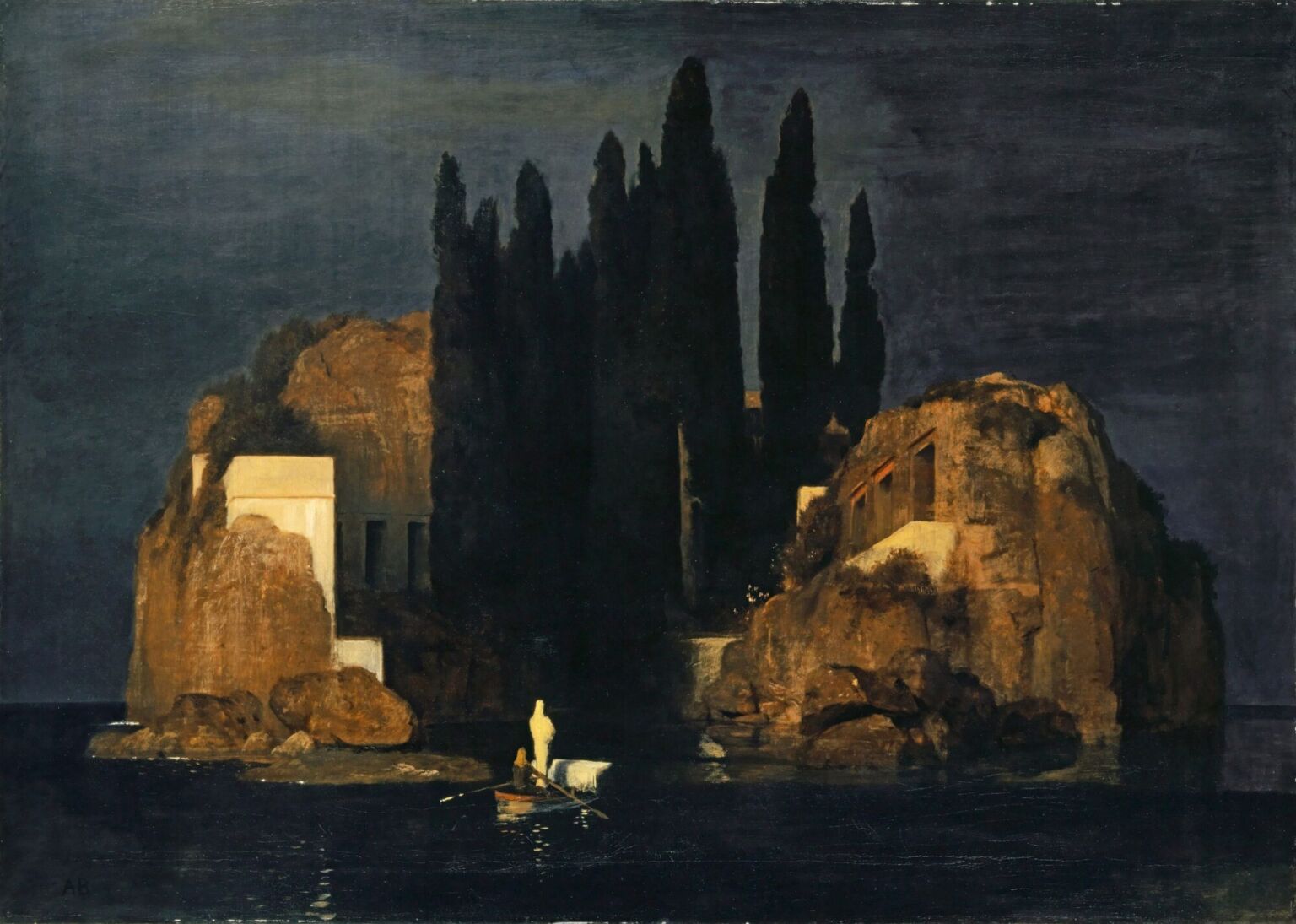
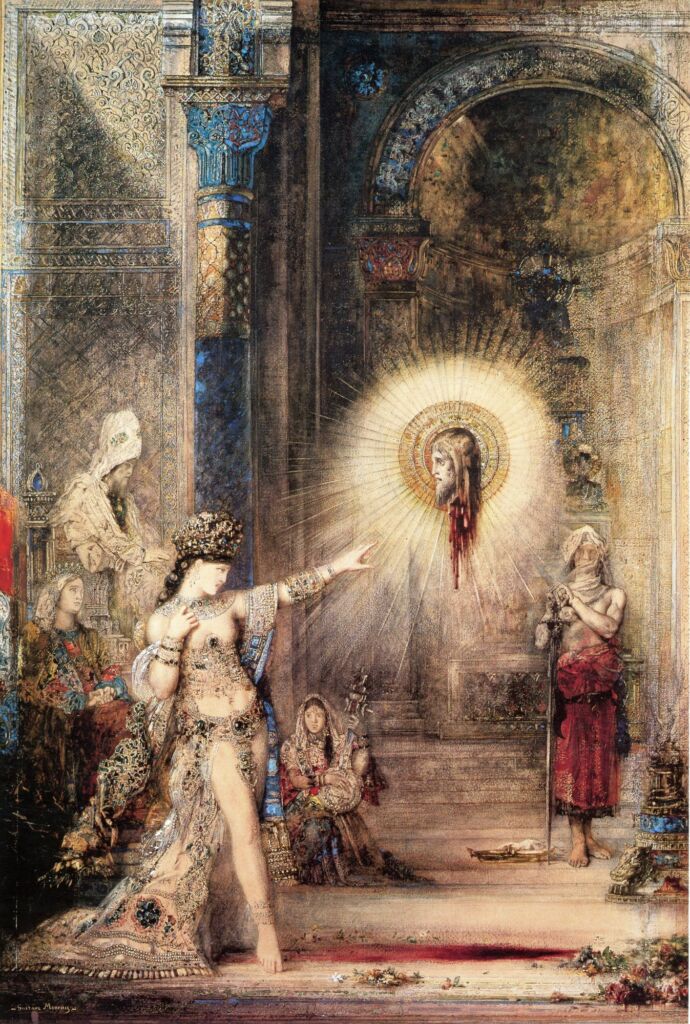
Gustave Moreau and Pierre Puvis de Chavannes were regarded as the elders. Moreau's watercolor The Apparition (1876), with the severed head of John the Baptist floating before Salome, became the movement's emblem. Odilon Redon worked for years only in charcoal and lithography; color came to him late, and his The Cyclops (around 1914) is in the Kröller-Müller Museum. In Tahiti, Gauguin painted Where Do We Come From? What Are We? Where Are We Going? (1897, Museum of Fine Arts, Boston). Belgium gave Symbolism Fernand Khnopff, and Switzerland Arnold Böcklin, with Isle of the Dead (first version 1880). In northern Europe it produced Edvard Munch, with The Scream (1893) and Madonna (1894), and in Vienna Gustav Klimt and the Secession of 1897.
Literature publicized Symbolism before the critics did. In Joris-Karl Huysmans's novel Against Nature (À rebours, 1884), the aesthete hero Des Esseintes collects Moreau and Redon, and after the book came out all Paris was talking about them. From 1892 to 1897 the eccentric Joséphin Péladan staged the Salons de la Rose+Croix, mystical exhibitions with their own rulebook. In 1892 Munch was invited to show with the Association of Berlin Artists, but the exhibition was shut after a week amid outraged protests. The scandal was one of the causes of the split that produced the Berlin Secession.
In Russia, Symbolism was arguably stronger than anywhere else in Europe. Mikhail Vrubel painted The Demon Seated (1890) and The Swan Princess (1900), both in the State Tretyakov Gallery. In 1896 the jury rejected his panels for the Nizhny Novgorod exhibition, and the industrialist and patron Savva Mamontov built a separate pavilion for them. Mikhail Nesterov showed The Vision of the Youth Bartholomew (1889–1890) at an exhibition of the Peredvizhniki, the realist society, and the collector Pavel Tretyakov, by the artist's own account, bought it despite the objections of the critic Vladimir Stasov and other members of the society. Then came Viktor Borisov-Musatov's The Reservoir (1902), the Blue Rose exhibition in Moscow (1907) and Kuzma Petrov-Vodkin's Bathing of a Red Horse, first shown at a World of Art exhibition in 1912.
After 1910 Symbolism dissolved into newer movements, but it left them the essential thing: the right to an inner world. From the early 1890s Moreau taught at the École des Beaux-Arts, where his students included Henri Matisse and Georges Rouault. Munch became the father of Expressionism, the Surrealists claimed Redon as a forerunner, and Russian Symbolism (Vrubel, Borisov-Musatov, the Blue Rose painters) proved a bridge to the avant-garde of Kandinsky and Malevich.
Artists
Major works
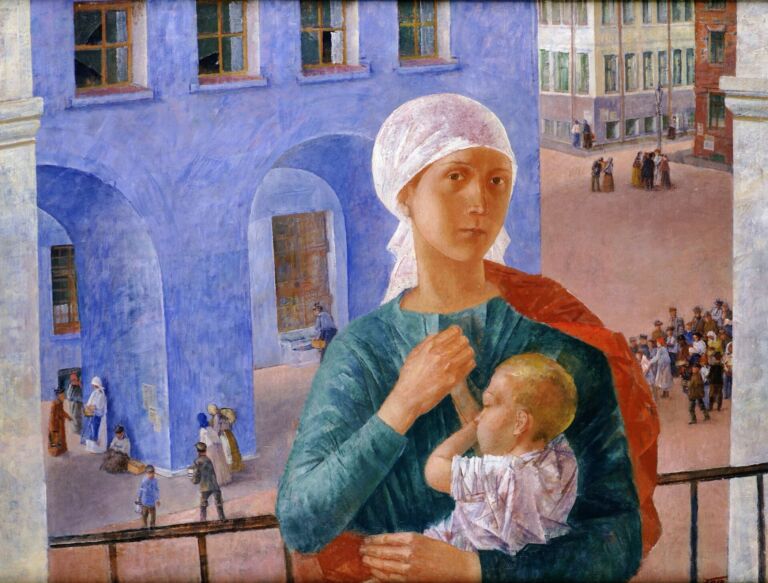 1918 in PetrogradKuzma Petrov-Vodkin · 1920
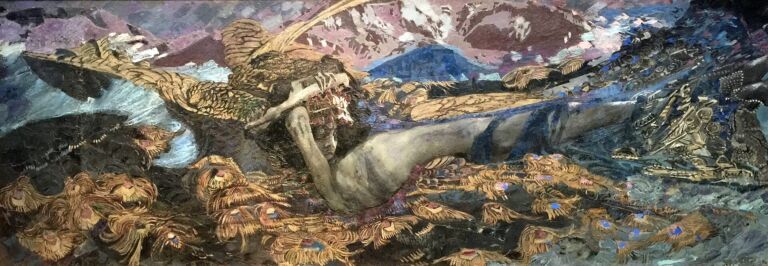 Demon DowncastMikhail Vrubel · 1902
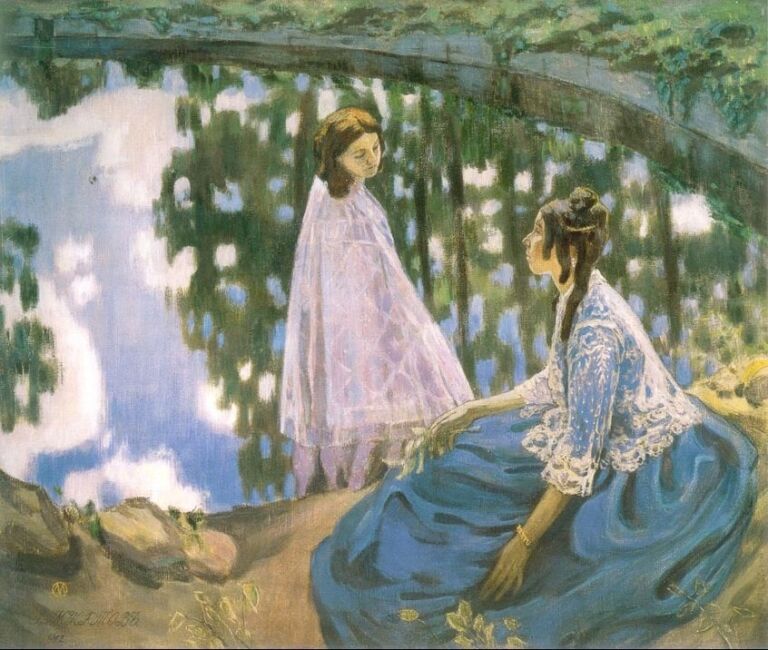 The PoolVictor Borisov-Musatov · 1902–1903
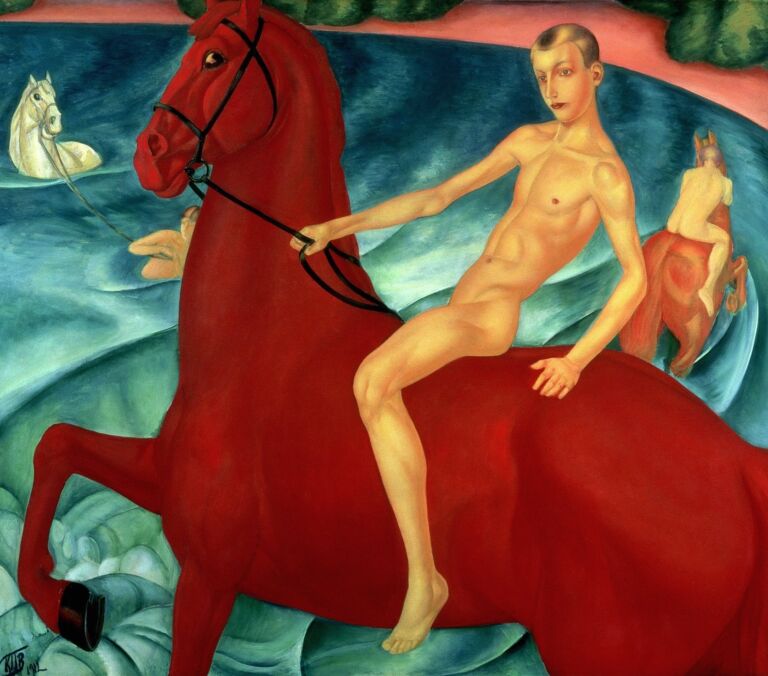 Bathing of a Red HorseKuzma Petrov-Vodkin · 1912
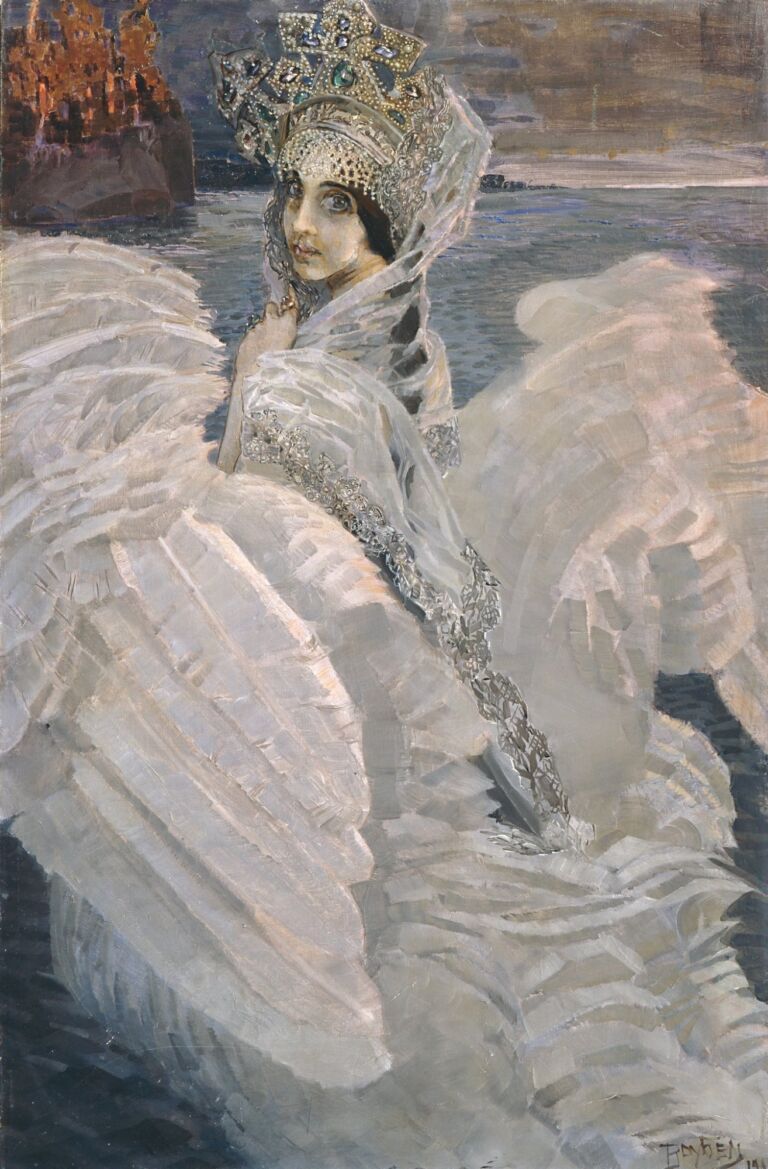 The Swan PrincessMikhail Vrubel · 1900
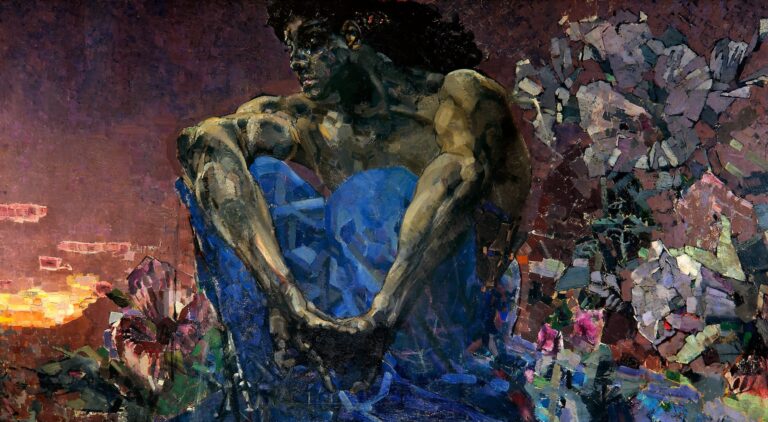 Demon SeatedMikhail Vrubel · 1890