What the X-ray of Millet’s Angelus found under the potato basket
In 1889 France won Millet's The Angelus at auction, then within weeks ceded it to an American buyer. Decades later Dalí searched under its basket of potatoes for a child's coffin. Here is how much of it is true.
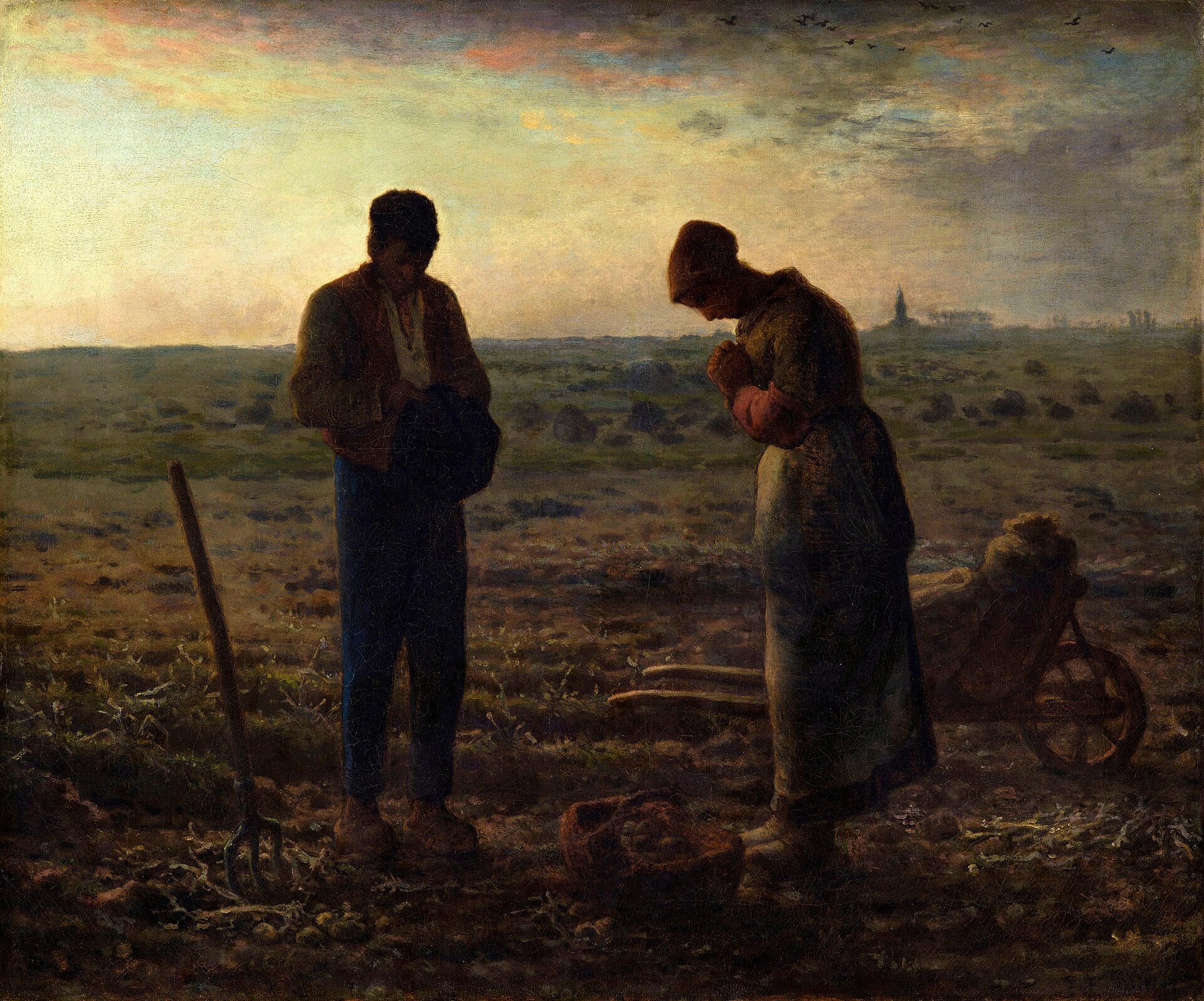
Jean-François Millet’s The Angelus is easy to miss: the canvas, 55.5 by 66 cm (about 22 by 26 inches), hangs on the ground floor of the Musée d’Orsay in Paris, in the same room as The Gleaners. The title refers to a Catholic prayer said when the church bell rings in the morning, at noon and at sunset. Millet chose the evening prayer.
Millet finished it in 1859. Thirty years later parliament argued over it; four decades after that, a Louvre visitor took a knife to it; and Salvador Dalí was sure the artist had painted over a child’s coffin under the basket of potatoes.
France won the auction, and the painting sailed to America
The first owner was meant to be an American, Thomas Gold Appleton, who commissioned the picture but never collected it. The canvas passed from owner to owner, its price climbing; in 1872 the dealer Paul Durand-Ruel paid 30,000 francs for it.
In the summer of 1889 the collector Eugène Secrétan, ruined by a bid to corner the copper market, timed the sale of his collection to the Exposition Universelle, hoping for foreign buyers. Two bidders remained: the American Art Association of New York and a consortium raising money for the Louvre, led by Antonin Proust, a former minister of fine arts.
Bids rose 1,000 francs at a time; Proust won at 553,000, then a record for a modern painting. The state was to repay the consortium.
The Chamber of Deputies approved the funds almost unanimously, but the Senate deferred the matter until after the summer recess, and the deal collapsed. Proust had to give the painting up to the American Art Association. “Today The Angelus belongs to America,” he wrote to the newspaper Le Temps that year.
In August the canvas sailed to tour seven cities in the United States and Canada. The Metropolitan Museum of Art and Washington’s Corcoran Gallery made offers, but the highest came from a Frenchman, Alfred Chauchard, co-founder of the Paris department store Grands Magasins du Louvre.
In November 1890 Chauchard paid 750,000 francs (some sources say 800,000), and two months later The Angelus was back in France. He kept it until his death and left it to the Louvre with his whole collection.
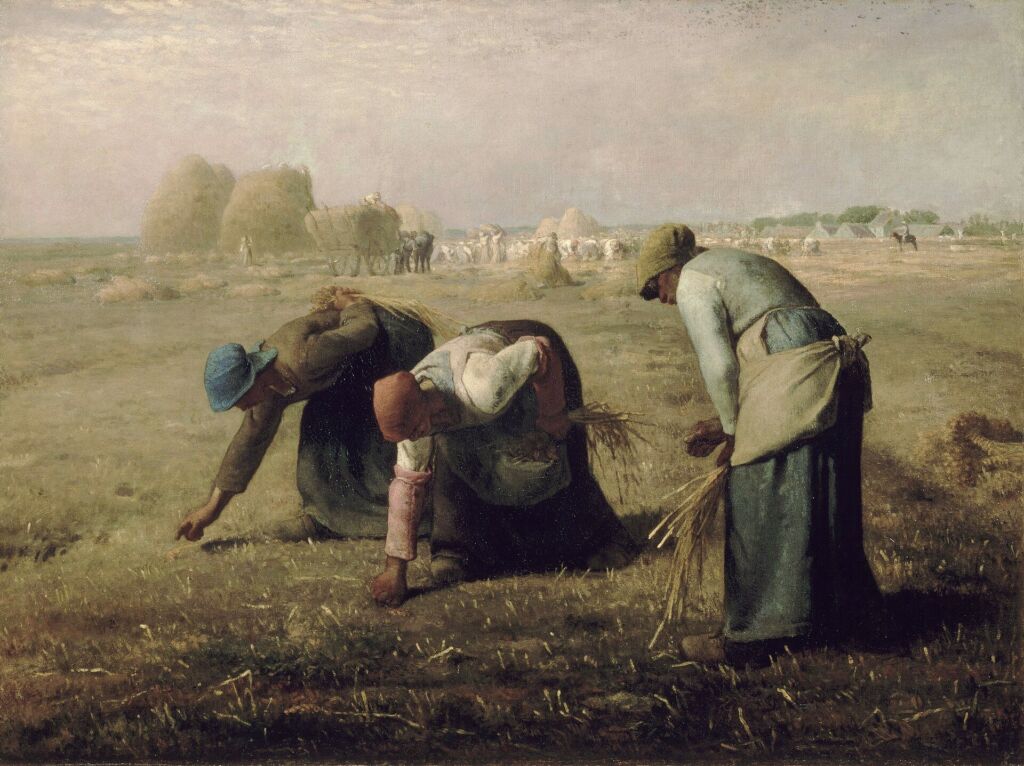
While The Angelus toured America, France gained another Millet. Madame Pommery, widow of a champagne-house owner, bought The Gleaners and gave it to the state for the Louvre. In an article for The Art Bulletin, the art historian Bradley Fratello ties her gift directly to the loss of The Angelus.

A penknife in the Louvre
In August 1932 an engineer, Pierre Guillard, stabbed The Angelus in the Louvre several times with a penknife. Time counted five gashes and many scratches. A guard overpowered Guillard, who was declared insane.
Asked why, he reportedly replied, “At least they will talk about me.” According to Time, every knife mark could be hidden except a tear in the sky.

Dalí went looking for a coffin under the basket
Dalí first saw The Angelus as a reproduction on his schoolroom wall, and he could not get it out of his head. He later called it “the most troubling of pictorial works, the most enigmatic, the most dense.”
Dalí wrote The Tragic Myth of Millet’s Angelus in 1932–35 but lost the manuscript fleeing Arcachon ahead of the German occupation. It turned up later and was not published until 1963. In his reading, the couple are mourning a dead child, not praying. He compared the peasant woman to a praying mantis.
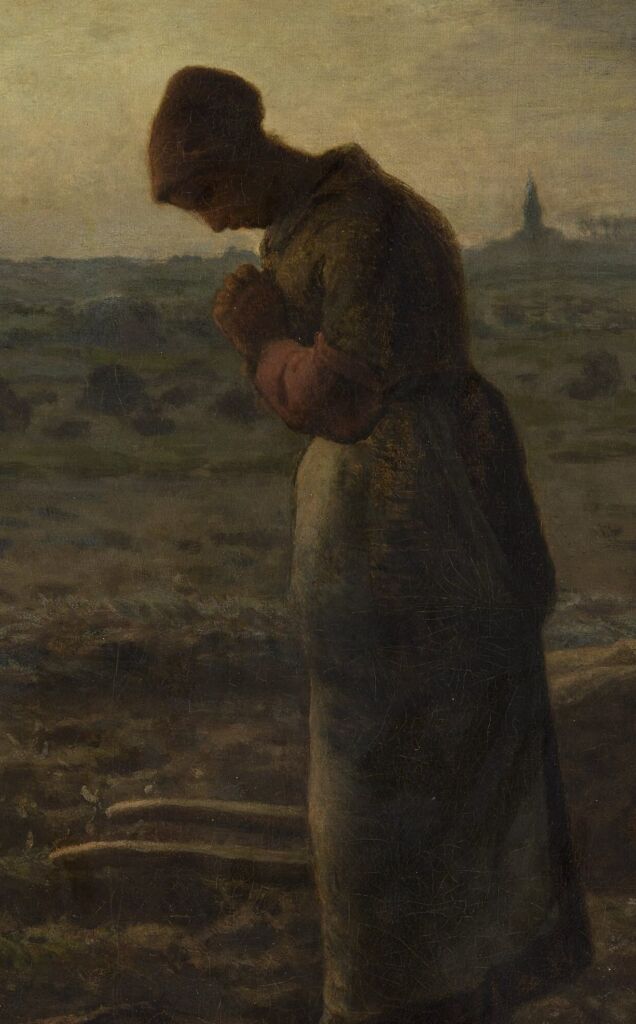
At Dalí’s insistence the Louvre laboratory X-rayed the painting. A dark rectangular shape showed beneath the basket: to Dalí, a child’s coffin that Millet had painted over. The X-ray is often dated 1963, the year the book appeared; Philip McCouat, writing in the Journal of Art in Society, more cautiously puts it in “the 1960s.”
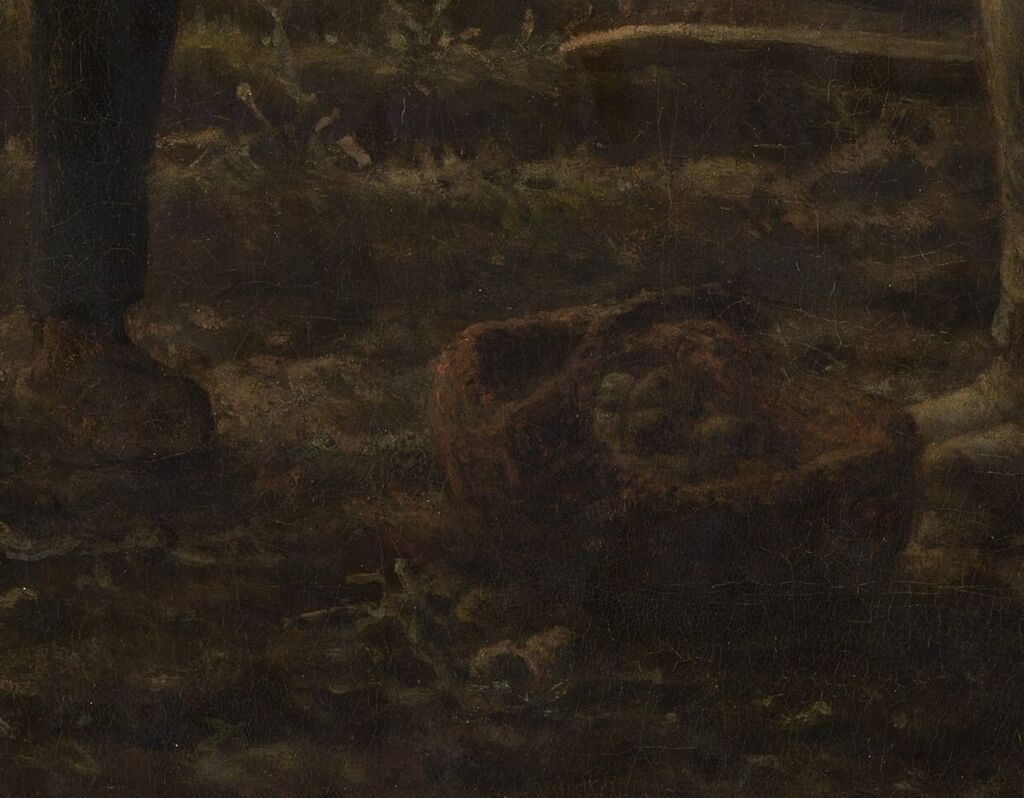
The Saint Louis Art Museum says the X-ray showed an area of overpainting that, for Dalí, confirmed his theory. McCouat notes that the basket was originally more like a box.
The Musée d’Orsay’s entry never mentions the X-ray and calls Dalí merely an admirer. The basket still stands at the couple’s feet. The coffin stayed in the book.
Comments
For Hroniki readers
Comments are open to readers with an account. Signing up is free and takes a few seconds.
No comments yet. Start the conversation.