Surrealism: from Breton’s manifesto to Dalí and Magritte
How a circle of Paris poets steeped in Freud became the most famous art movement of the 20th century — with a manifesto, a trial of Dalí and a lecture in a diving suit.
London, summer 1936. A man in a deep-sea diving suit climbs onto the platform at the International Surrealist Exhibition. It is Salvador Dalí, and he is about to give a lecture on plunging into the unconscious. He shows his slides upside down, nobody can hear a word through the brass helmet, and then the air really does run out. The poet David Gascoyne unscrews the helmet with a spanner while the audience applauds — convinced that the suffocation was part of the act.
By then Surrealism was twelve years old and had learned to turn any accident into a manifesto. But it did not begin with painting, or even with scandal. It began with a word a poet let drop, and with a war after which reason no longer looked like something you could rely on.
A word older than the movement
The word “surrealism” was coined by Guillaume Apollinaire. It first appeared in 1917, in the program for the ballet Parade, and then in the subtitle of his play The Breasts of Tiresias, “a surrealist drama.” Apollinaire died in 1918 without knowing he had named an era: the word was picked up by young poets back from the front.
The movement also had a noisier forerunner. In February 1916, at the Cabaret Voltaire in Zurich, Dada was born — a furious rejection of everything, art and common sense included, since neither had kept Europe out of the slaughter. Even the origin of the word “dada” is uncertain: a child’s word for a hobbyhorse found in a French dictionary, the Russian “da, da,” or a brand of soap. André Breton started out as a Dadaist, but soon decided that tearing things down was not enough. He wanted to build something from the rubble.
The third source was Sigmund Freud. During the war Breton served in a psychiatric ward, read Freud and tried his methods on shell-shocked soldiers; in 1921 he managed to meet Freud in person. Back in 1920 he and Philippe Soupault had published The Magnetic Fields, the first Surrealist work of automatic writing: the hand follows whatever surfaces on its own rather than a plan.
Thought dictated without censorship
In October 1924 Breton published the Manifesto of Surrealism, and a circle of poets became a movement with a program, rules and discipline. The definition in the manifesto reads as drily as a dictionary entry, and that was the provocation.
“Psychic automatism in its pure state… Dictated by thought, in the absence of any control exercised by reason” — Breton’s definition of Surrealism in the 1924 manifesto (translated by Richard Seaver and Helen R. Lane).
The machinery was already in motion. A Bureau of Surrealist Research had opened in Paris that October, days before the manifesto, and on December 1, 1924, the first issue of the journal La Révolution surréaliste came out. Surrealism declared itself not a style of painting but a way of living: the border between dream and waking, reason and madness, was to be erased.
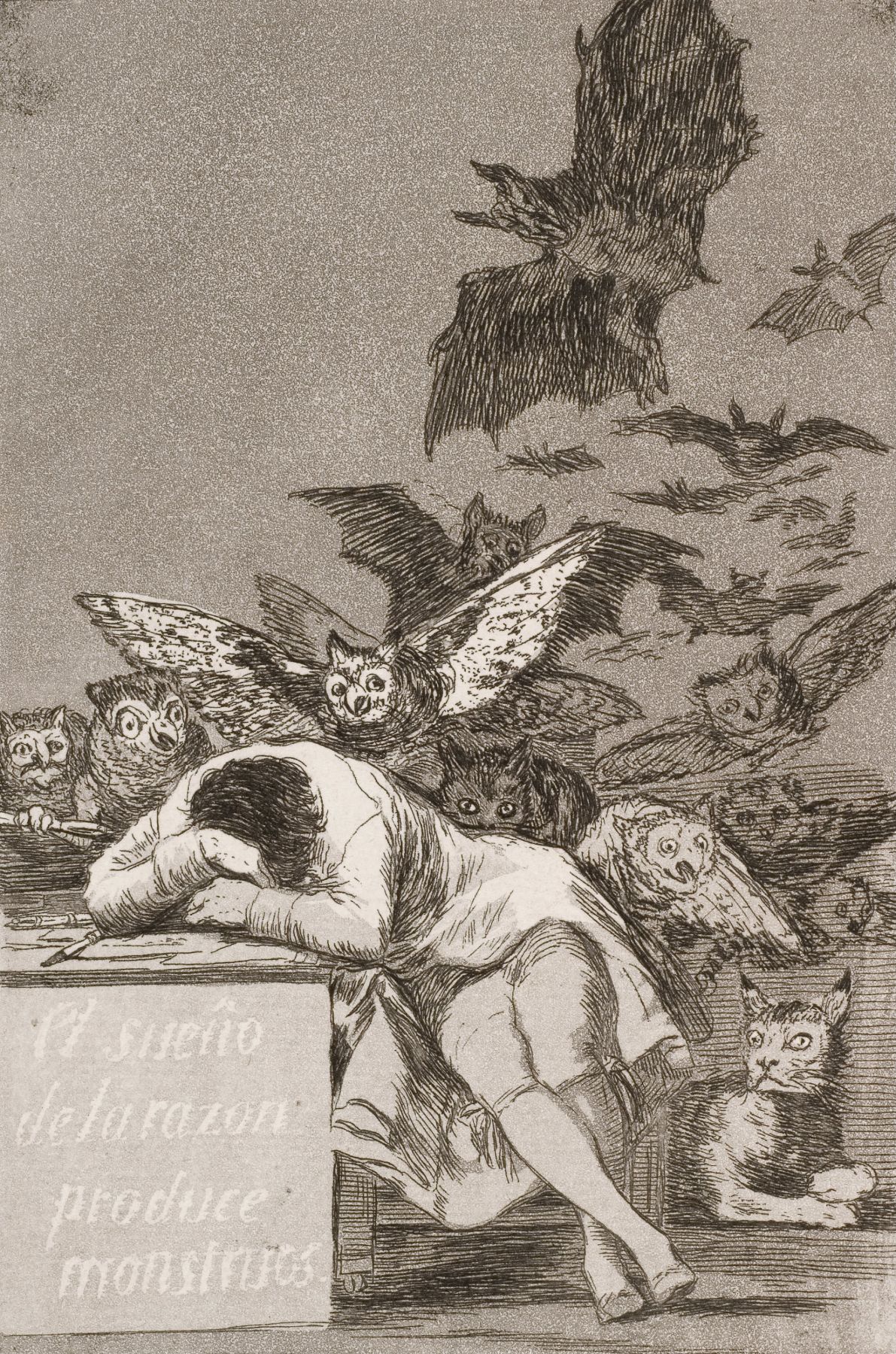
What set the new movement apart from Dada was its direction. Dada said no; Surrealism offered a positive program, a systematic, almost laboratory study of the unconscious. More than a century earlier, Goya — the same Goya who would later paint Saturn on the wall of his house — had captioned an etching The Sleep of Reason Produces Monsters, and he meant it as a warning. The Surrealists read the same words as an invitation: the monsters were the interesting part.
Ancestors appointed after the fact
A movement that rejected tradition quickly acquired a family tree of its own. Its bible was Lautréamont’s The Songs of Maldoror, with its famous simile — “as beautiful as the chance meeting on a dissecting table of a sewing machine and an umbrella.” The chance meeting of distant things became the Surrealists’ recipe for an image. In painting, they found ancestors four centuries back.
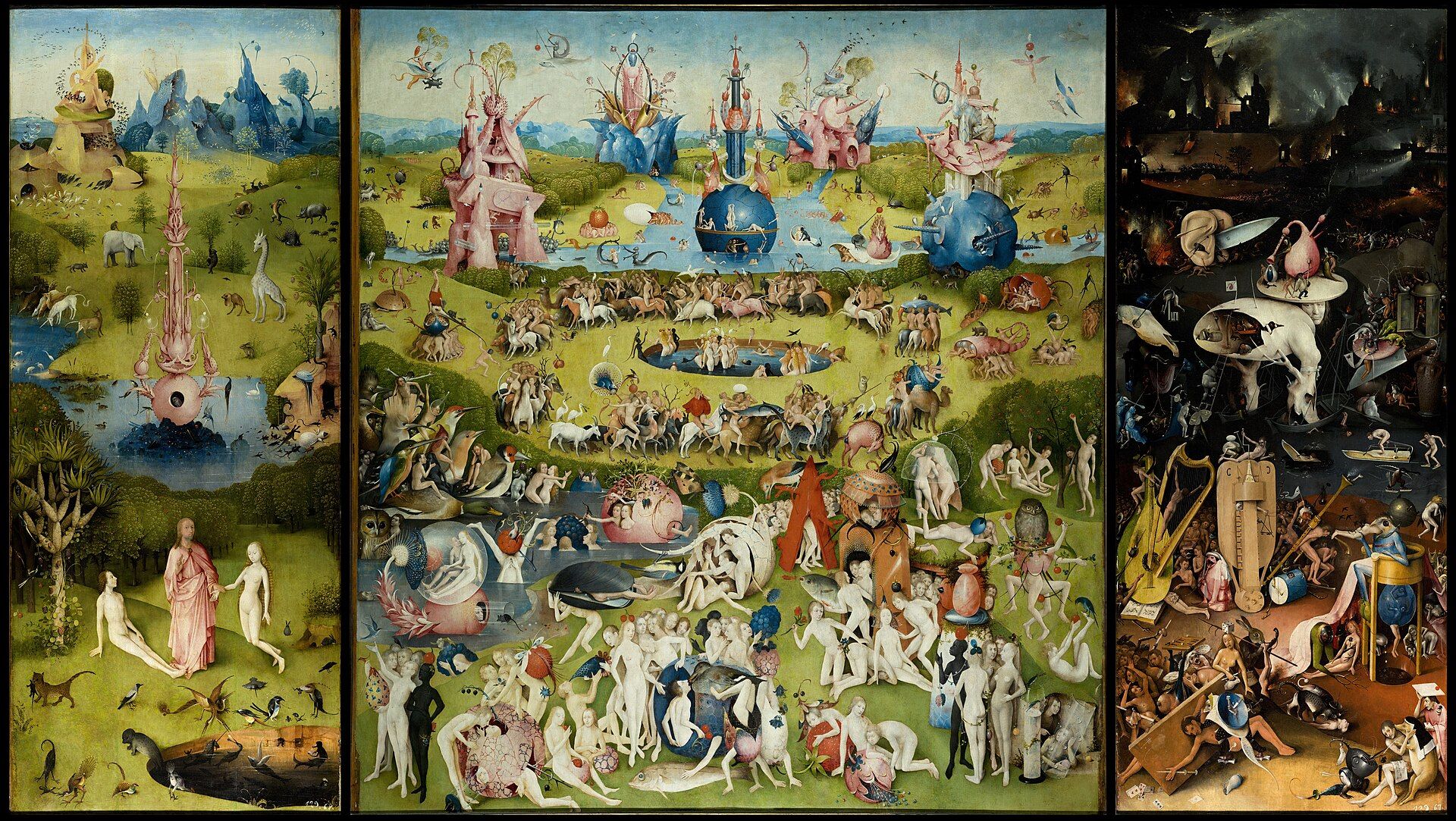
Hieronymus Bosch assembled people, birds, berries and instruments of torture into contraptions that still have no name. The Surrealists looked at his triptych in the Prado as colleagues would — asking not “what did he mean?” but “how is it done?”
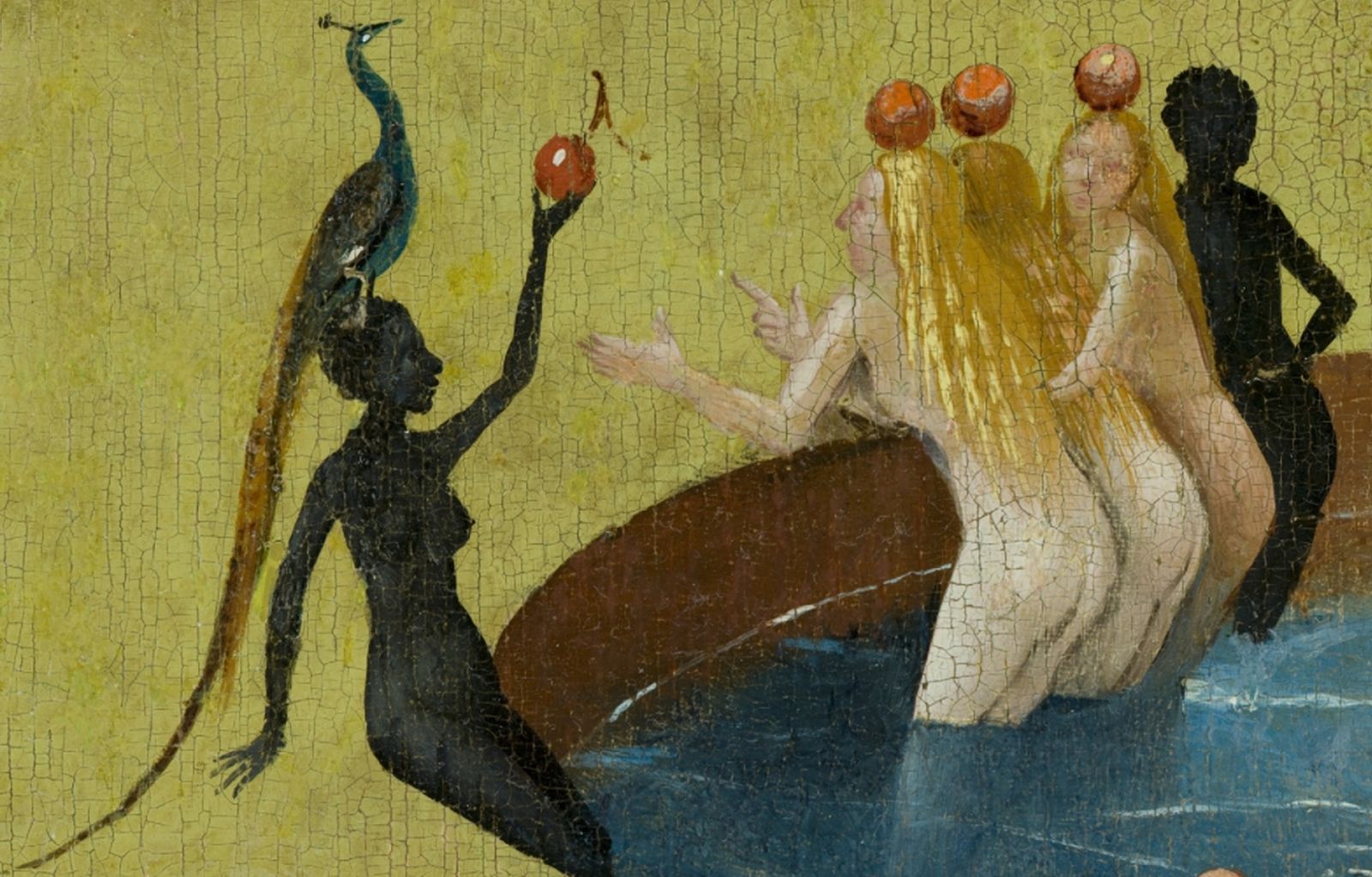
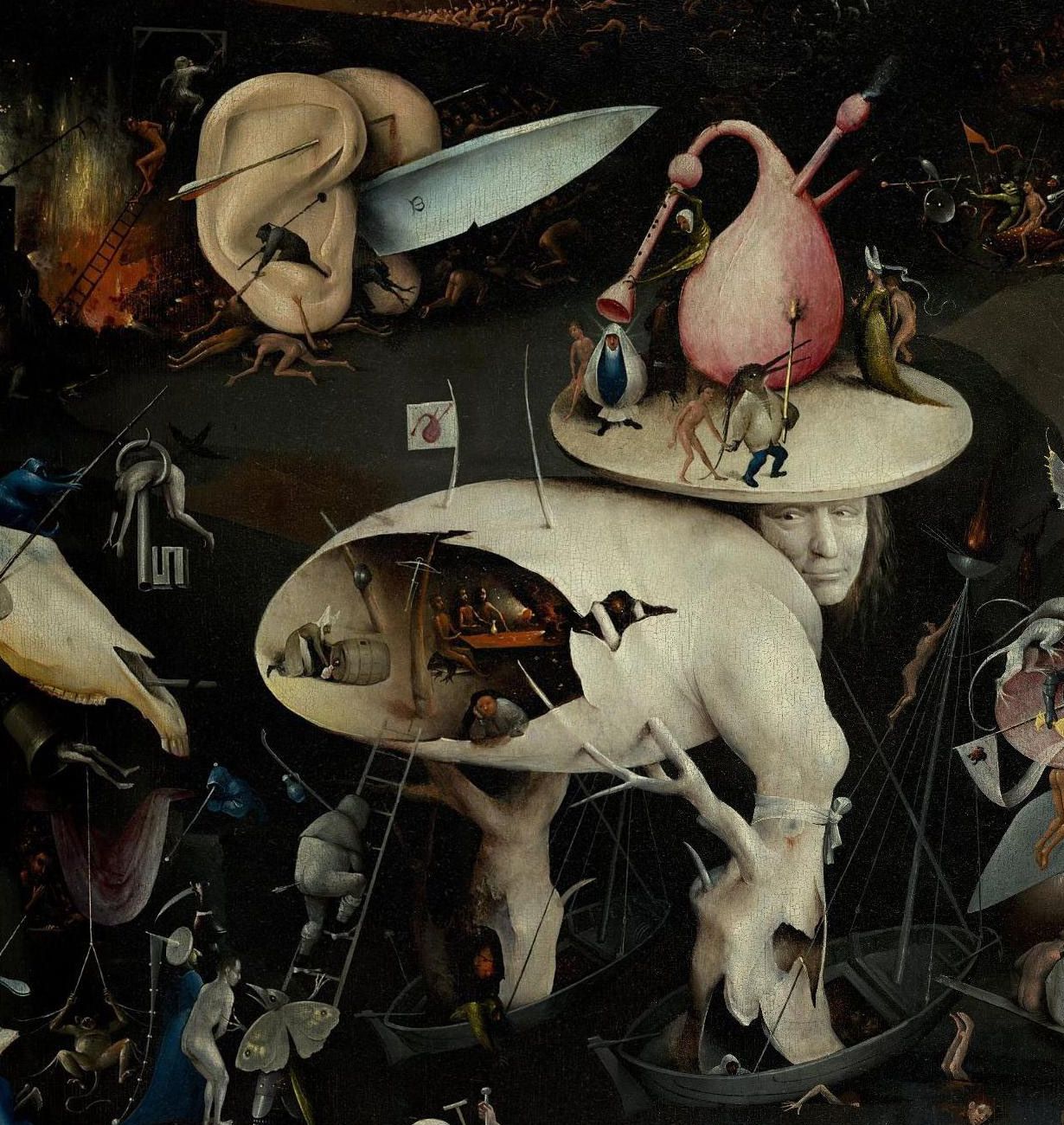
A museum made the family tree official. In December 1936 the Museum of Modern Art in New York opened Fantastic Art, Dada, Surrealism, and its director, Alfred Barr, hung works by Bosch, Arcimboldo, Goya, Fuseli and Odilon Redon alongside Dalí and Ernst. The young movement gained four centuries of history — retroactively, but for good.
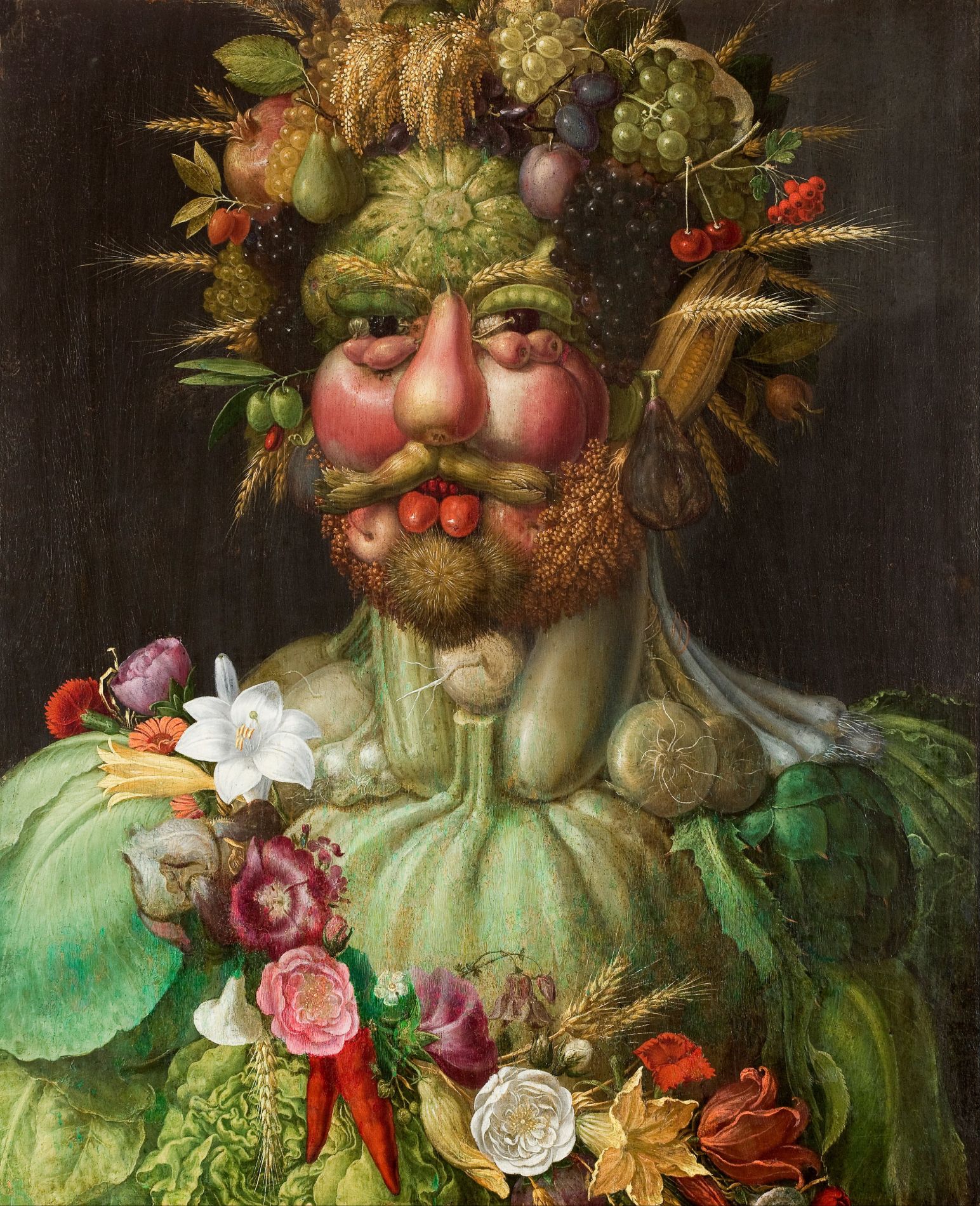
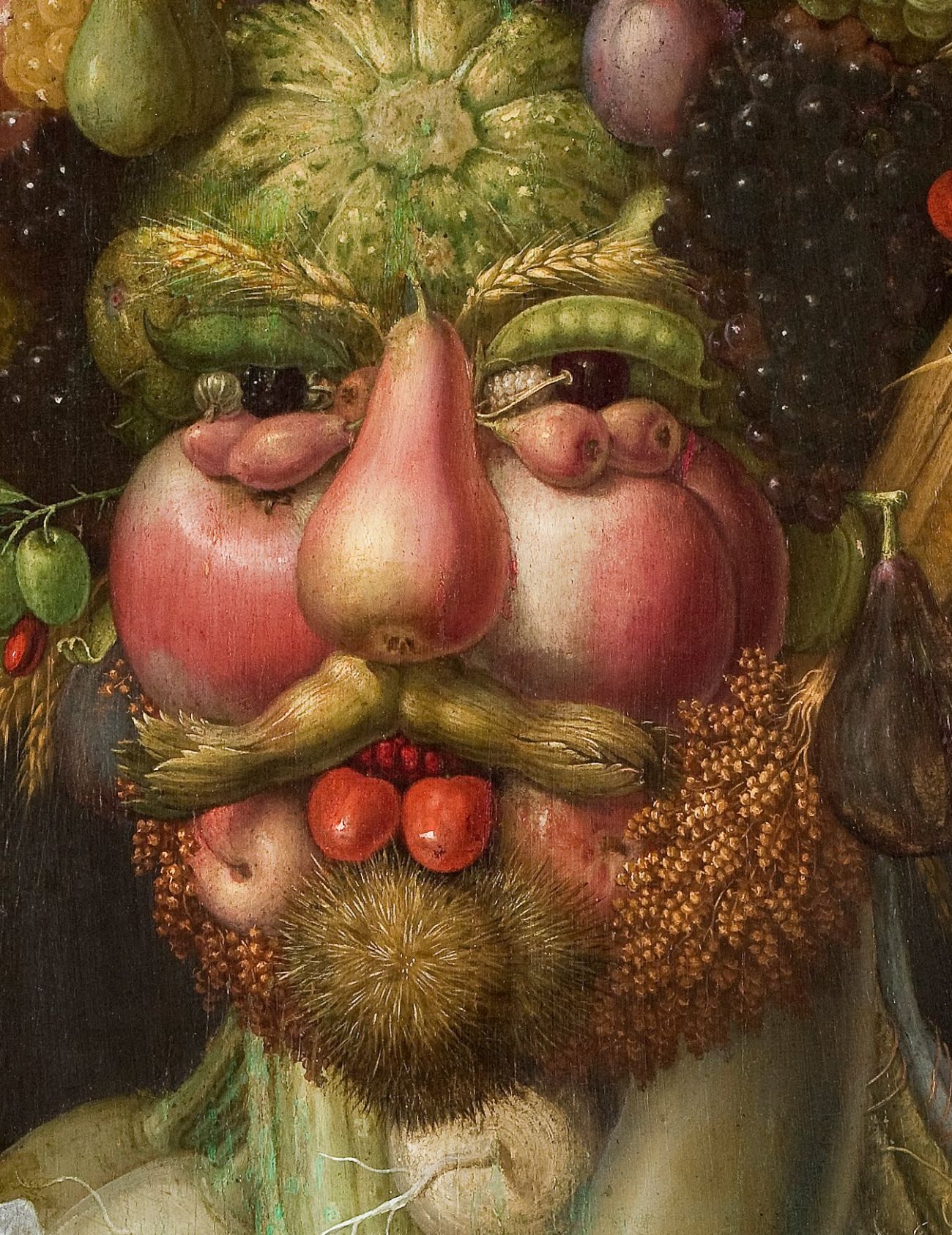
In the 16th century Arcimboldo built a portrait of the Emperor Rudolf II out of pears, ears of wheat and squash — a double image in which the eye keeps jumping between a face and a still life. More than three centuries later Dalí would base his paranoiac-critical method on double images like this one, and announce it as his own invention.
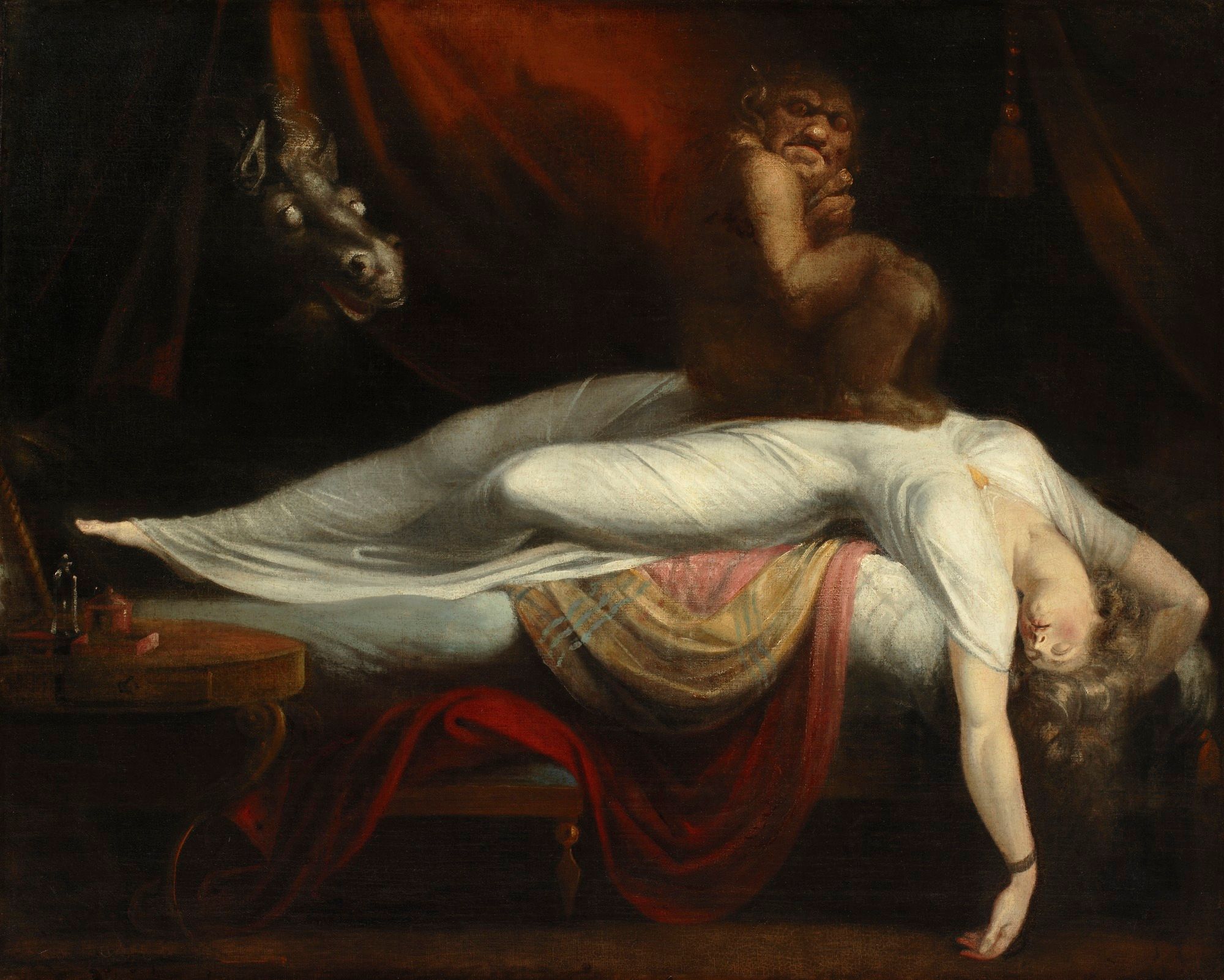
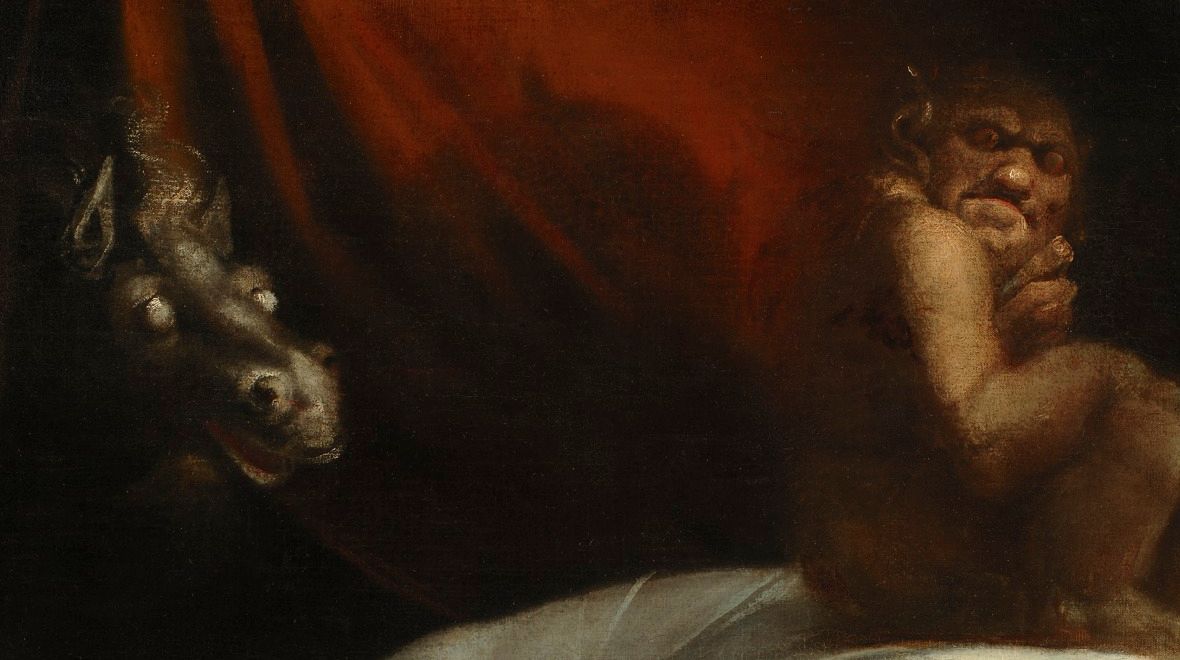
Henry Fuseli’s The Nightmare, now in the Detroit Institute of Arts, is perhaps the first European painting to show the nightmare itself as a creature, rather than what a sleeper dreams. When it was shown at the Royal Academy in 1782, the public was scandalized and enthralled at the same time.
The Surrealists also had a forerunner among their contemporaries: Giorgio de Chirico. His “metaphysical painting” of the 1910s — according to MoMA, it was Apollinaire again who first applied the word “metaphysical” to these works — brought together on empty piazzas things that had no business being side by side: a plaster head, a rubber glove, a green ball. The Surrealists saw him as their direct predecessor. In The Song of Love (1914) the pairing of things that don’t belong together still looks like chance; the Surrealists turned it into a program. The group later fell out with de Chirico himself: he turned to neoclassicism, and Breton took it as betrayal.
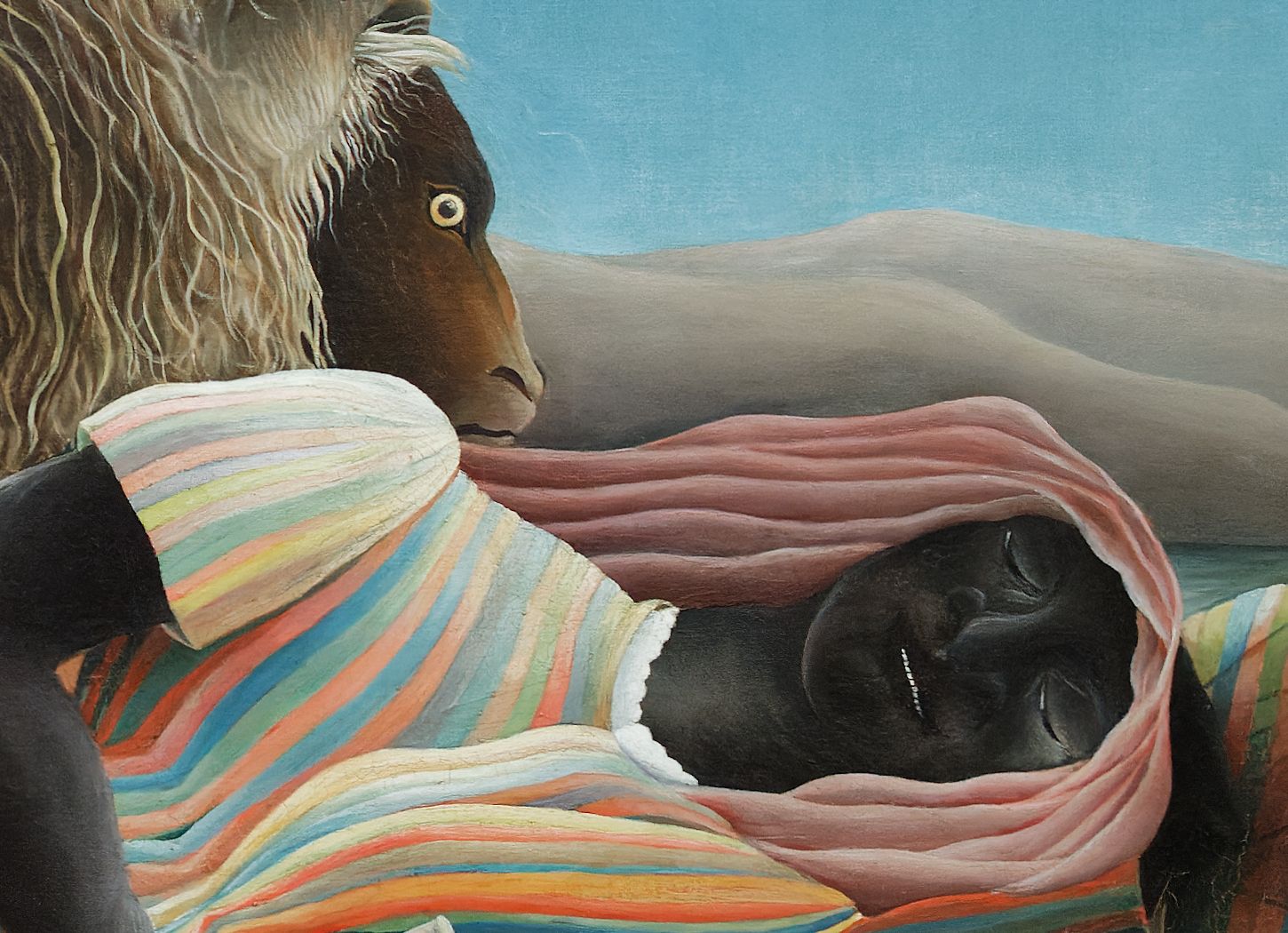
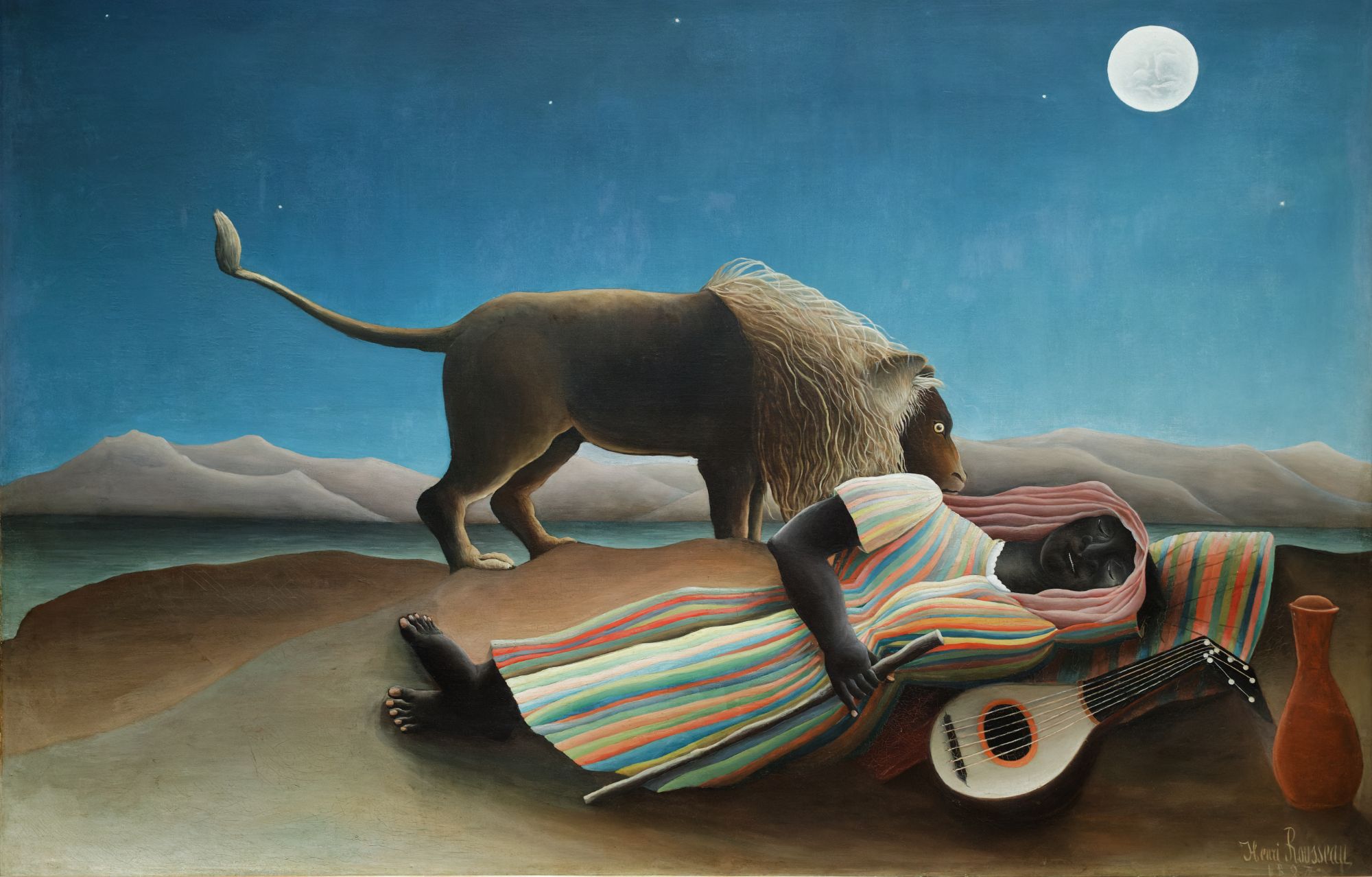
The family tree ends with Henri Rousseau, “Le Douanier,” a self-taught toll collector the Paris salons laughed at. His The Sleeping Gypsy of 1897 was painted twenty-seven years before the manifesto, yet it looks as if Breton had commissioned it himself. Today it hangs in MoMA, a few galleries away from The Persistence of Memory.
Techniques instead of inspiration
The Surrealists did not trust talent; it was too obedient to reason. Instead of inspiration they invented procedures, almost laboratory protocols for catching the unconscious.
In 1925 Max Ernst, staring at the cracked floorboards of a hotel room, laid a sheet of paper on them and rubbed it with a pencil. That was the birth of frottage: the grain of the wood suggested forests, birds and fossils by itself. Its painted version was grattage, scraping paint off a canvas laid over a textured surface. Joan Miró began a picture with a free, uncontrolled gesture and only then “carefully calculated” the second stage; the Surrealist poets gave his 1925 The Birth of the World its name, as one names a newborn.
There was also a group game, the exquisite corpse. Each player adds a part without seeing what the others have done; in the drawing version, a sheet of paper is folded like an accordion and each player draws a section of a creature. The game began with words, and took its name from the first sentence it produced, played around 1925 by Breton, Yves Tanguy, Jacques Prévert and Marcel Duhamel: “The exquisite corpse shall drink the new wine.” Chance did the work of the artist; the players were only its instruments.
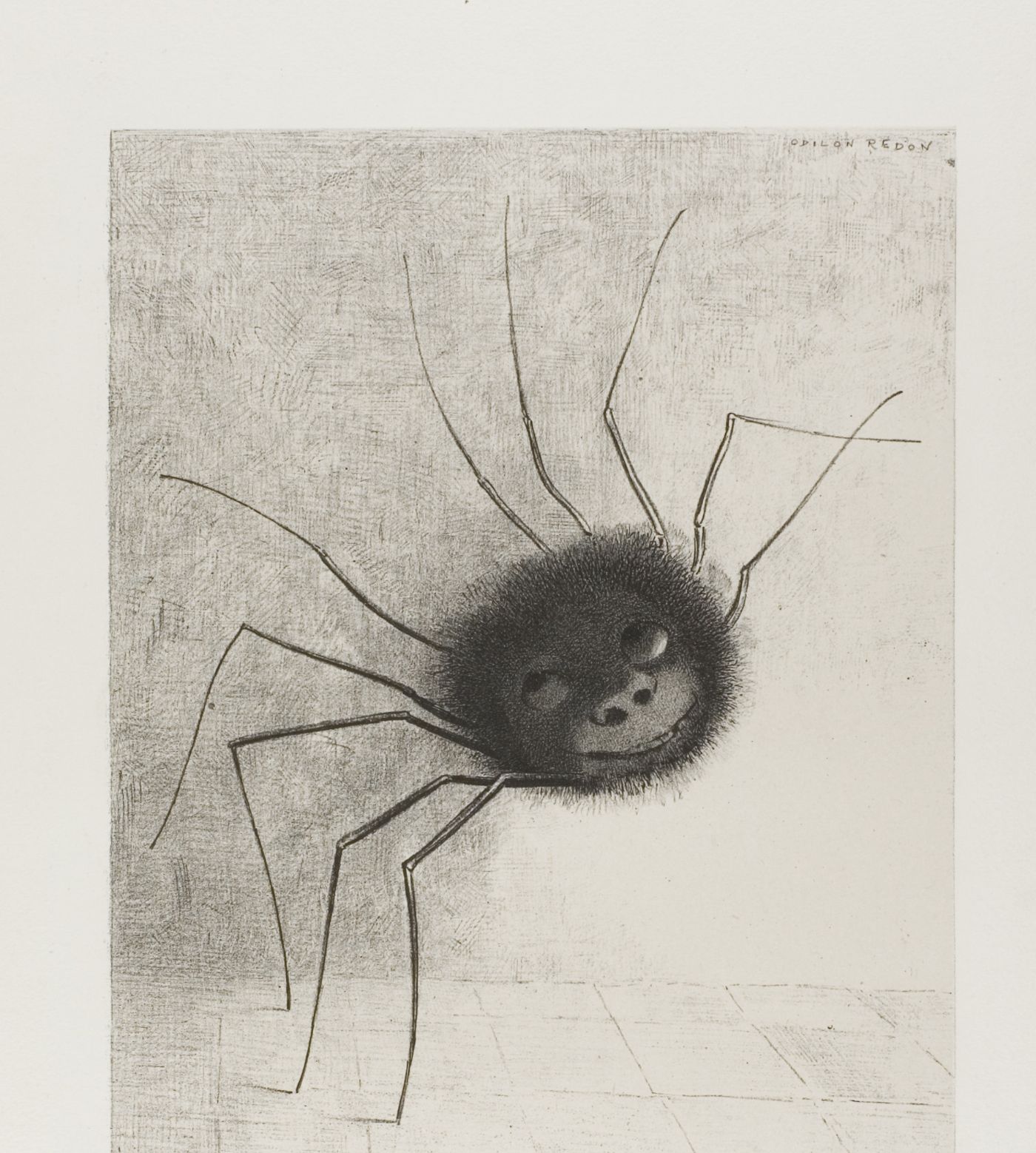
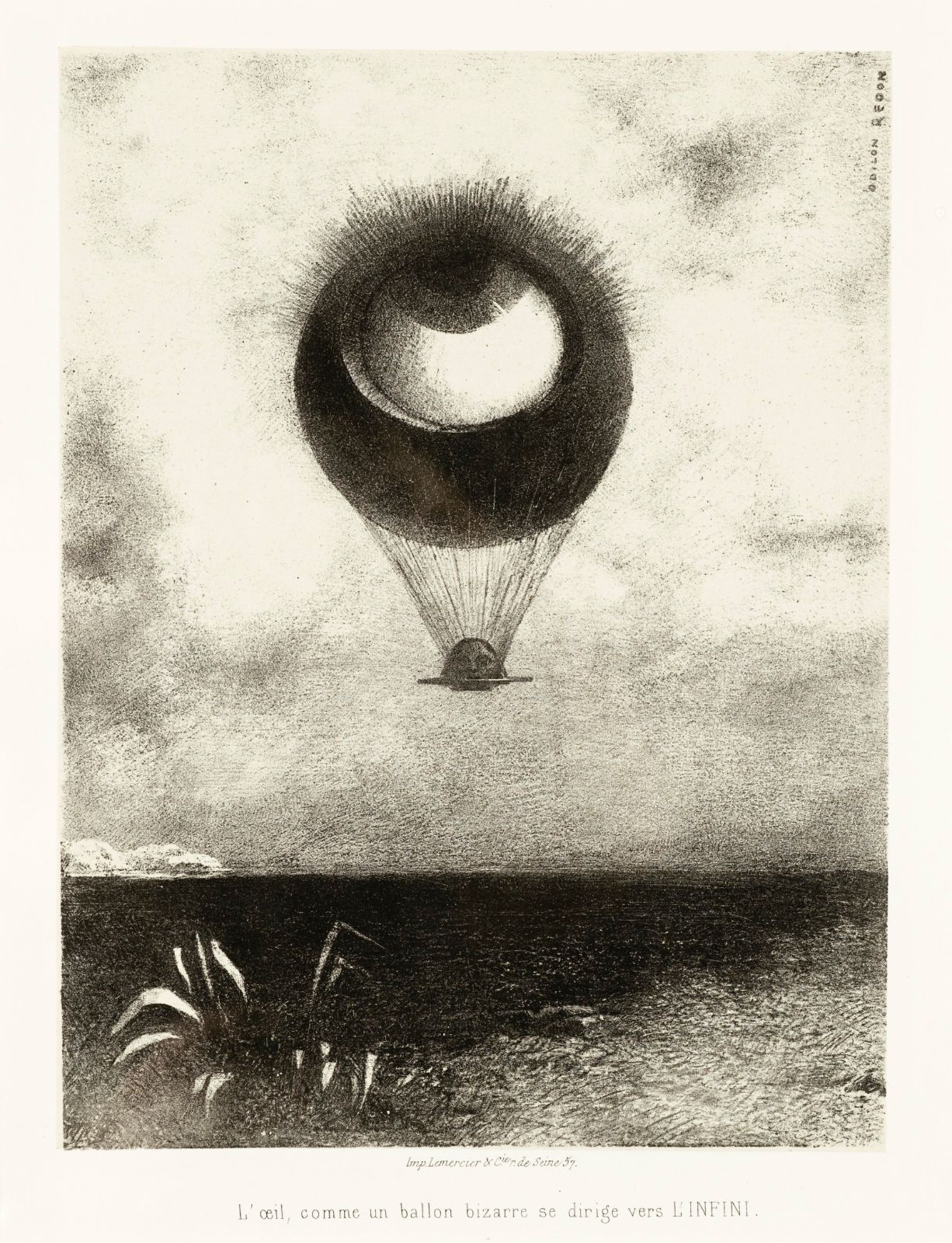
From the 1870s on, Odilon Redon was producing his charcoal noirs, claiming — in a phrase from his journal To Myself — that he put “the logic of the visible at the service of the invisible.” The Surrealists did not borrow his techniques, but they certainly borrowed his tone.
Dalí: from favorite son to Avida Dollars
Salvador Dalí joined the group later than any of its stars, in November 1929, after the poet Paul Éluard and his wife Gala visited him in Cadaqués. Gala stayed with Dalí, first as his muse and, from 1934, as his wife. Breton welcomed the newcomer with enthusiasm: in the preface to Dalí’s first Paris exhibition, he called his art the most hallucinatory yet produced and “a real menace.”
It was Dalí who pushed the method to its limit. The Persistence of Memory (1931), with its melting watches, is surprisingly small: 24 × 33 cm (9½ × 13 in). In 1932 it sold in New York for $250, and two years later an anonymous donor gave it to MoMA, where it still hangs. Dalí claimed the soft watches came to him not in a dream but after a dinner of Camembert — but that is his own story, and it deserves exactly as much trust as anything Dalí said.
By then the movement had already weathered its first storm. In the Second Manifesto — published in the last issue of La Révolution surréaliste on December 15, 1929, and as a book in 1930 — Breton demanded political discipline from Surrealism and expelled dissenters by name. A movement founded to escape all control had acquired a censorship of its own, an irony critics still point out.
Things came to a head in a trial. In February 1934 the Surrealists put Dalí through a “comrades’ trial” on charges of flirting with fascism. He arrived with a thermometer in his mouth, faked a fever and stripped off one layer of clothing after another, turning the tribunal into a performance of his own. That time he was forgiven. In 1939, after more remarks about Hitler and Franco, Breton expelled him for good, and later rearranged the letters of Salvador Dalí into the anagram Avida Dollars, “greedy for dollars.” Dalí liked the nickname. His reply to the group became famous: “The only difference between me and the Surrealists is that I am a Surrealist.”
Twenty thousand Londoners and the coal sacks
By the mid-1930s the movement had gone global. The London exhibition of 1936 — the one with the diving suit — drew some 20,000 visitors in three and a half weeks, to see around 400 works by about 70 artists. That December New York embraced Surrealism, and in January 1938 Paris followed: at the International Surrealist Exhibition at the Galerie Beaux-Arts, Marcel Duchamp hung 1,200 coal sacks from the ceiling, and visitors looked at the paintings in the dark, by flashlight. An exhibition was no longer a hang of pictures but an environment the viewer was plunged into — a device museums still use today.
The war scattered the Surrealists around the world. Breton, Ernst, André Masson and Dalí ended up in the United States, and American painting received a dose of automatism. Young New York painters, the future Abstract Expressionists, took the essential lesson from the refugees: trust in the spontaneous gesture and the unconscious. So European Surrealism, without ever planning to, prepared the ground for art that a decade later would push Paris into second place.
A hundred years of surreality
While Dalí was quarreling with Paris, his quiet opposite was at work in Brussels. René Magritte dressed like a bank clerk, painted to a schedule and refused to explain his pictures through dreams or psychoanalysis. His weapon was not delirium but logic pushed to absurdity. Under a neatly painted pipe he wrote, in careful script, “This is not a pipe” — and he was right: it is a picture of a pipe. Philosophers are still unpacking The Treachery of Images (1929), in the Los Angeles County Museum of Art since 1978, while The Son of Man (1964), a man in a bowler hat with an apple in place of a face, has become perhaps the movement’s most quoted image, even though it is in a private collection.
Each artist took Surrealism in his own direction — Magritte toward logic, Dalí toward delirium, Miró toward signs, Tanguy toward empty horizons — and the movement survived both its schisms and Breton’s death. In autumn 2011 the Pushkin Museum in Moscow showed a major Dalí retrospective with loans from the foundation that runs his Theatre-Museum in Figueres — the museum the artist built on the ruins of a burned-out theater, and where he lies buried in a crypt beneath the stage.
For the manifesto’s centenary in 2024, the Centre Pompidou gathered more than 500 works, arranging its galleries in a spiral around Breton’s manuscript, lent by the Bibliothèque nationale de France. Surrealism is that rare thing: an avant-garde that did not age but dissolved into the language — into advertising, film, and the way we say “this is surreal” whenever reality outruns a dream once again. Reason has been asleep for a hundred years now, and the monsters are still more interesting than anything else.
Comments
For Hroniki readers
Comments are open to readers with an account. Signing up is free and takes a few seconds.
No comments yet. Start the conversation.