Musée d’Orsay in two hours: what to see in the old train station
A two-hour route through the Musée d'Orsay, from Courbet's A Burial at Ornans to Gauguin's The White Horse, and what to check before you go in case a famous painting is away on loan.
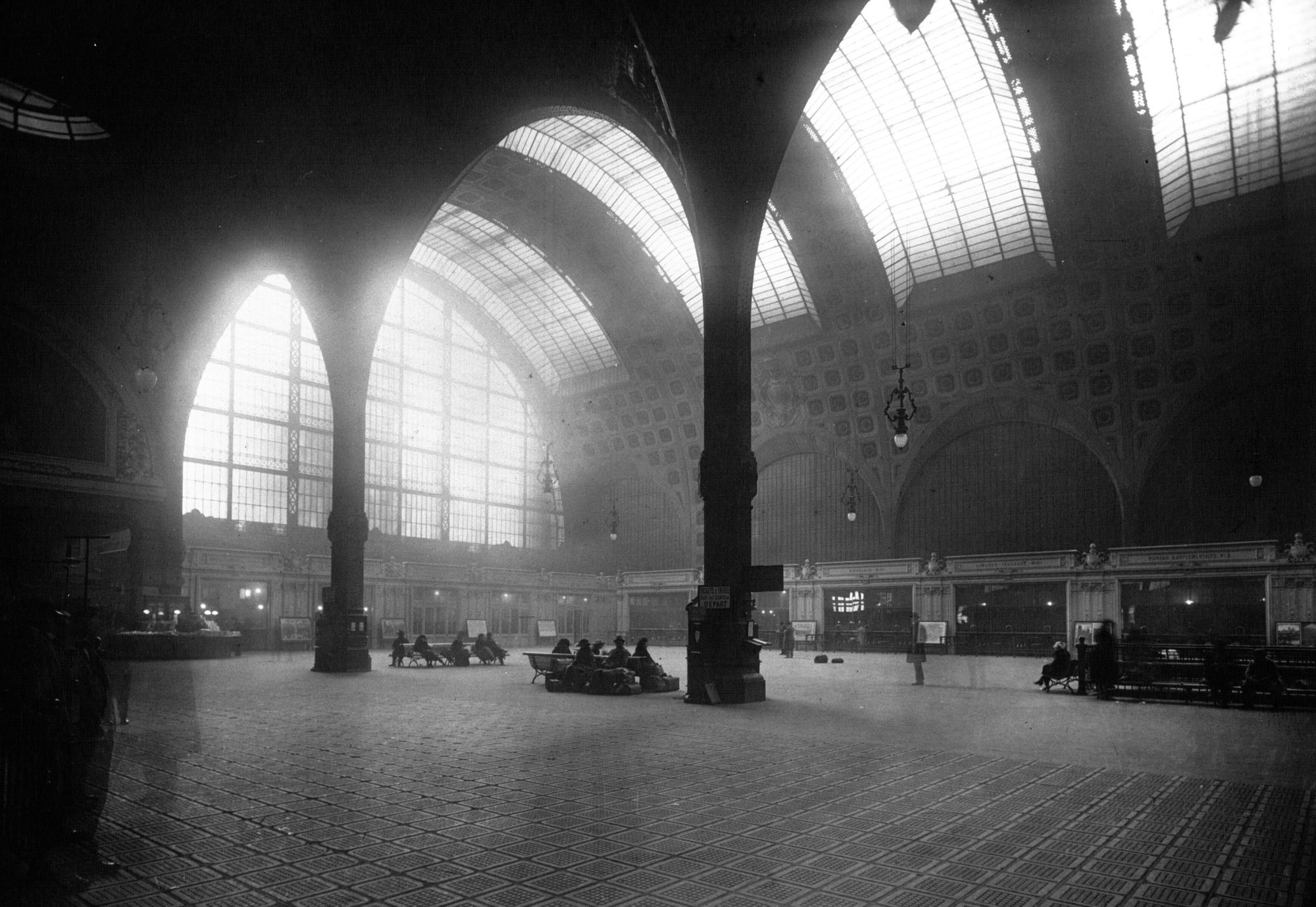
In 1900 the military painter Édouard Detaille looked at a new Paris railway station and wrote: “The station is superb and looks like a palace of fine arts” (translated here by Hroniki). The Musée d’Orsay quotes him on its page about its own history (in French). Eighty-six years later it did become a museum. The building still looks like a station; only now the platforms belong to Manet, Monet, Van Gogh and Gauguin.
Two hours is not much for a museum of art from 1848 to 1914, but it is enough for the essentials if you follow a route and remember that the Orsay’s most famous paintings often go out on loan. The ticket section explains how to check.
A station built for a world’s fair
Before the station came the Palais d’Orsay, home to France’s Court of Audit and Council of State. During the Paris Commune of 1871 the whole district burned, and for thirty years the ruined palace stood in the middle of the city, across the river from the Tuileries.
The state gave the plot to the Orléans Railway Company, whose Gare d’Austerlitz lay too far from the center. In 1897 the company invited three architects, and in 1898 it chose Victor Laloux, fresh from building the city hall in Tours. Station and hotel took two years and opened in summer 1900, in time for the world’s fair.
With the Louvre and the Palace of the Legion of Honor next door, Laloux hid the iron frame behind a stone facade. Inside, everything was new: passenger elevators, baggage lifts, electric traction and sixteen tracks below street level. The main hall is 138 meters long, 40 wide and 32 high.
Long-distance trains used it for under forty years: from 1939 its platforms were too short for the longer trains, and only suburban services remained. During the war, parcels for prisoners of war were sent from here; later the station became a film set, where Orson Welles shot his Kafka adaptation The Trial.
It was nearly demolished for a big modern hotel. Its own hotel closed on January 1, 1973, and on March 8 that year the building was listed as a historic monument.
The decision to make it a museum came on October 20, 1977, under President Valéry Giscard d’Estaing. The ACT group of architects made the vast nave the museum’s main axis. The Italian architect Gae Aulenti, who designed the interiors, clad the gallery floors and walls in stone. François Mitterrand opened it on December 1, 1986; the public came in on December 9.
A ticket with a time on it
From March 10, 2026, until summer 2028, the public areas are being renovated, according to the museum’s official website. The museum stays open and all collections remain on view, but the entrances have changed, so buy a timed ticket in advance.
The essentials as of November 2026 (check current conditions on the museum’s visitor page). Prices are in euros:
- Hours: Tuesday to Sunday, 9:30 a.m. to 6 p.m.; Thursday until 9:45 p.m. Closed Mondays, May 1 and December 25.
- Last entry: 5 p.m. (Thursdays 9 p.m.). Galleries close at 5:30 p.m. (Thursdays 9:15 p.m.).
- Tickets: €16 online or €14 at the museum; reduced €11 (museum only). Thursdays from 6 p.m.: €12 online, €10 at the museum.
- Free: under-18s; EU and EEA nationals and long-term EU residents aged 18 to 25; everyone on the first Sunday of the month, with a booked slot.
- Entrances: Entrance 1 (quay side) for timed tickets; Entrance 2 (forecourt) for visitors without tickets, with luggage or in groups. Arrive at least 15 minutes before your slot.
The museum publishes no hour-by-hour crowd figures. The longest window is Thursday, open until nearly 10 p.m., with cheaper tickets after 6. Personal photography is allowed without flash.
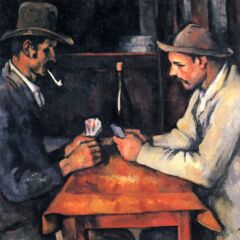
As of November 2026, several of the Orsay’s star paintings are away. Renoir’s Bal du moulin de la Galette (Dance at the Moulin de la Galette) is in Renoir and Love at the National Gallery in London, through January 31, 2027. Whistler’s Mother is at the Van Gogh Museum in Amsterdam until January 10. Cézanne’s The Card Players is, per the Orsay, in Cézanne et nous at the Grand Palais in Paris until January 17.
Courbet’s The Origin of the World, three of Monet’s four Rouen Cathedral paintings, and Gauguin’s Arearea and Tahitian Women are not listed as on view either. Before you go, look up your painting on the museum’s website: works off the walls carry the note “Artwork not currently exhibited.”
Ground floor: a funeral and two scandals
A rough plan for two hours: about 30 minutes on the ground floor, 40 for the Impressionists on Level 5, 30 for Van Gogh and Seurat, and 20 for Gauguin and the clocks.
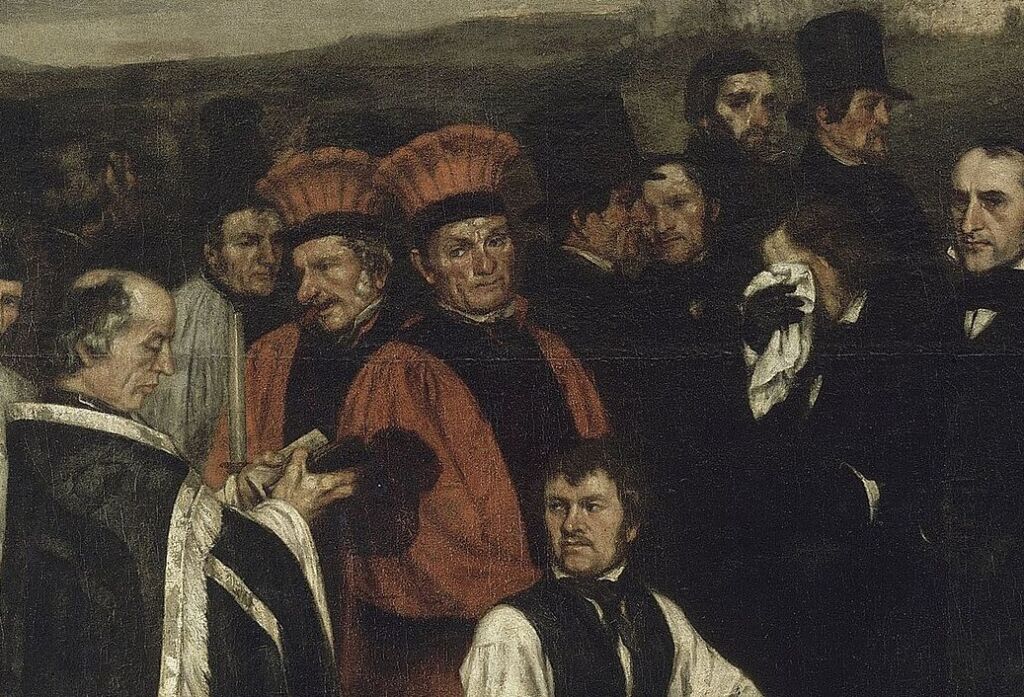
Start downstairs, along the central aisle, with works that explain why the next generation was in such a hurry to break the rules. In Room 7 is Gustave Courbet’s A Burial at Ornans.
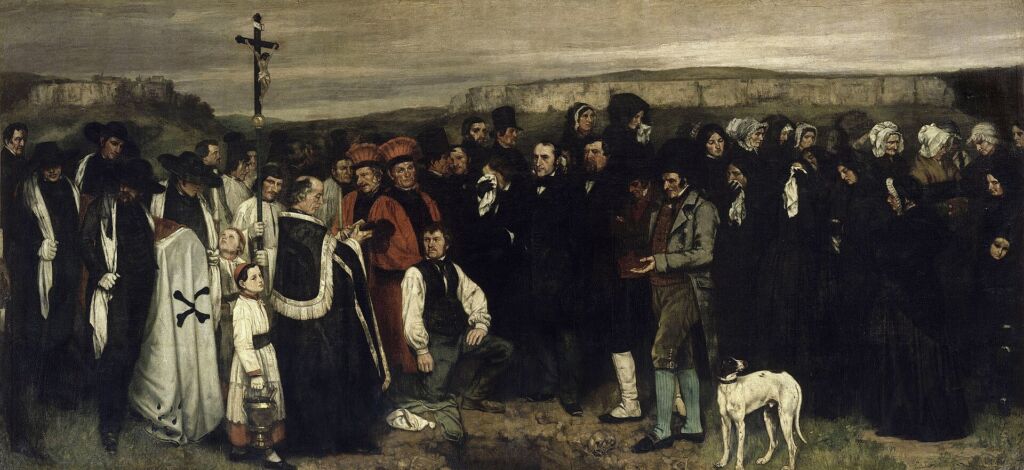
The canvas, almost seven meters (22 feet) wide, shows the funeral of a nobody from a small town, at a size meant for kings and battles.
The faces offended critics even more. The museum says they resented coming face to face with villagers; reviewers wrote of “vulgar ugliness” and the glorification of “odious triviality.” Courbet got what he was after: a place at the center of the Paris argument about art.
Courbet’s most famous painting, The Origin of the World, is often away on loan. The small 1866 canvas first belonged to the Ottoman-Egyptian diplomat Khalil Bey, and its last private owner was the psychoanalyst Jacques Lacan. In 1995 his heirs handed it to the state in lieu of inheritance tax, as the Orsay’s entry for the painting records.
Room 18 has Édouard Manet’s Luncheon on the Grass. Rejected by the Salon jury in 1863, it was shown as Le Bain (The Bath) at the Salon des Refusés, which Napoleon III permitted that year. The public laughed and fumed: a naked woman among clothed men, with no myth or allegory to excuse her.
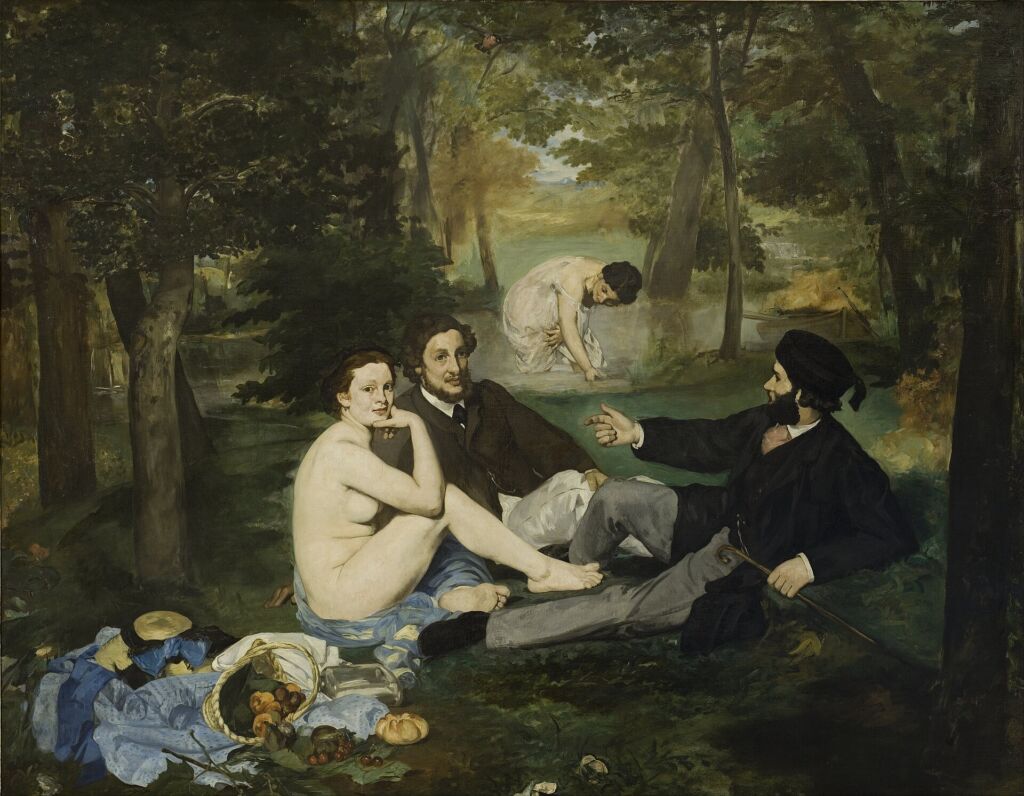
Manet jokingly called it la partie carrée, a foursome of two couples. Two years later he sent Olympia to the Salon, and the uproar was louder. It hangs in Room 14: the walk between the two traces Manet’s path from one fiasco to the next.
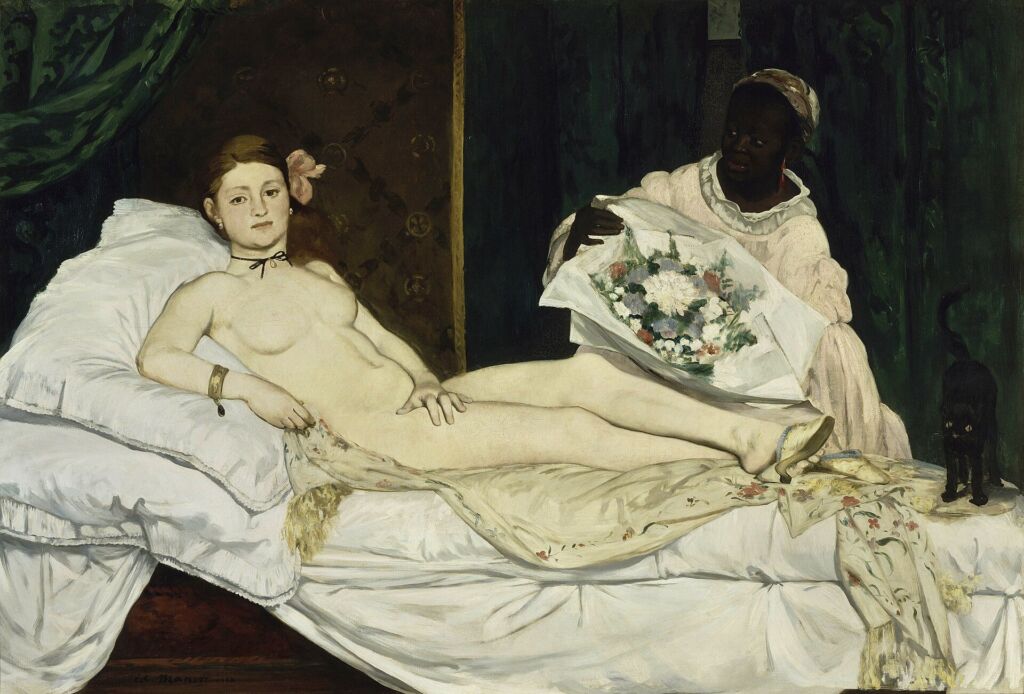
Our separate piece on Manet’s Olympia explains why it needed guards at the Salon of 1865. It was given to the state in 1890 through a public subscription organized by Claude Monet. In 2016 it traveled to the Pushkin Museum of Fine Arts in Moscow and the Hermitage in St Petersburg.
In Room 11, Cézanne answers Manet. According to the museum, he dashed off A Modern Olympia at Dr. Gachet’s house in Auvers “in the heat of a discussion.” The man in black studying the woman, the museum notes, looks strangely like Cézanne.
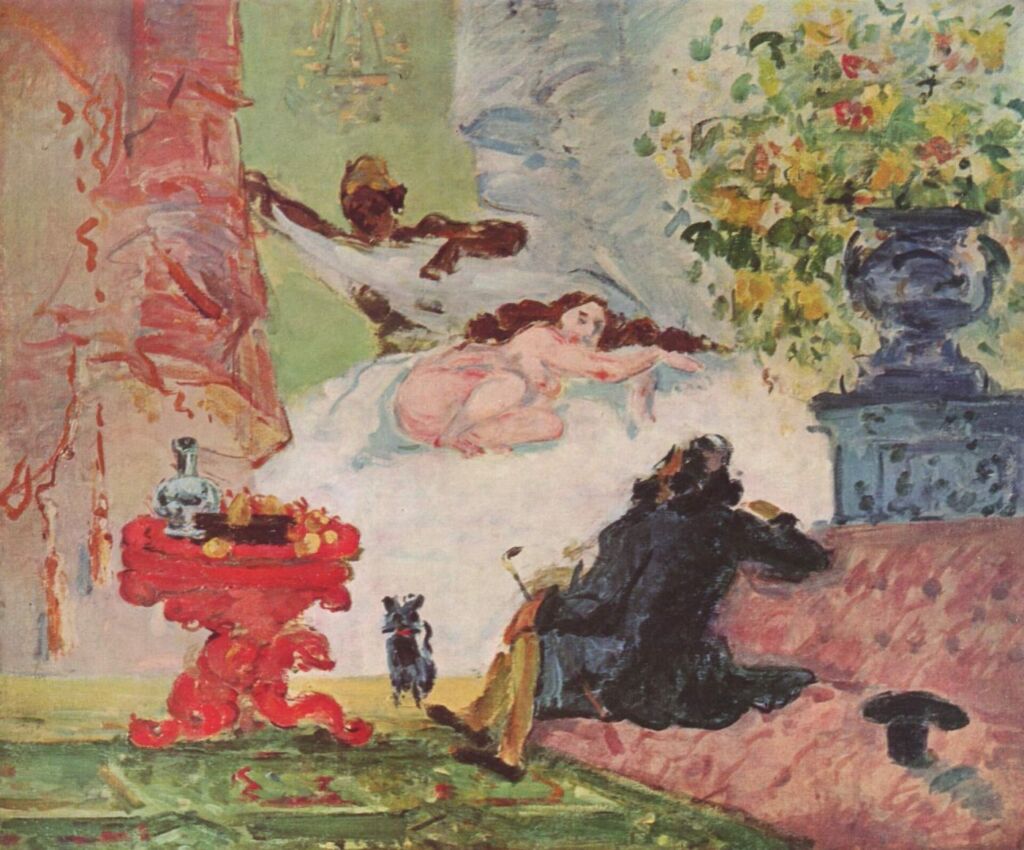
It was shown at the first Impressionist exhibition in 1874. Marc de Montifaud, the pen name of the writer Marie-Amélie Chartroule, reviewed it in L’Artiste: Cézanne “merely gives the impression of being a sort of madman, painting in a state of delirium tremens,” as quoted on the museum’s page for the painting.
The Orsay also owns one of the five versions of Cézanne’s The Card Players, a series now divided among museums and private collections.
Level 5: Monet, Degas, Renoir
Then go up to the Impressionist gallery on Level 5, above the old concourse along the river. Room 29 has early Monet: The Magpie, Poppies and Women in the Garden.
Room 31 has Degas’s In a Café, better known as L’Absinthe. Our article on Degas’s L’Absinthe explains who really sat at that table.
Room 35 has one of the museum’s several Monet Rouen Cathedral paintings, the portal seen from the front: the museum dates it to 1892, though Monet signed it “94.” The state bought it from the artist himself in 1907.
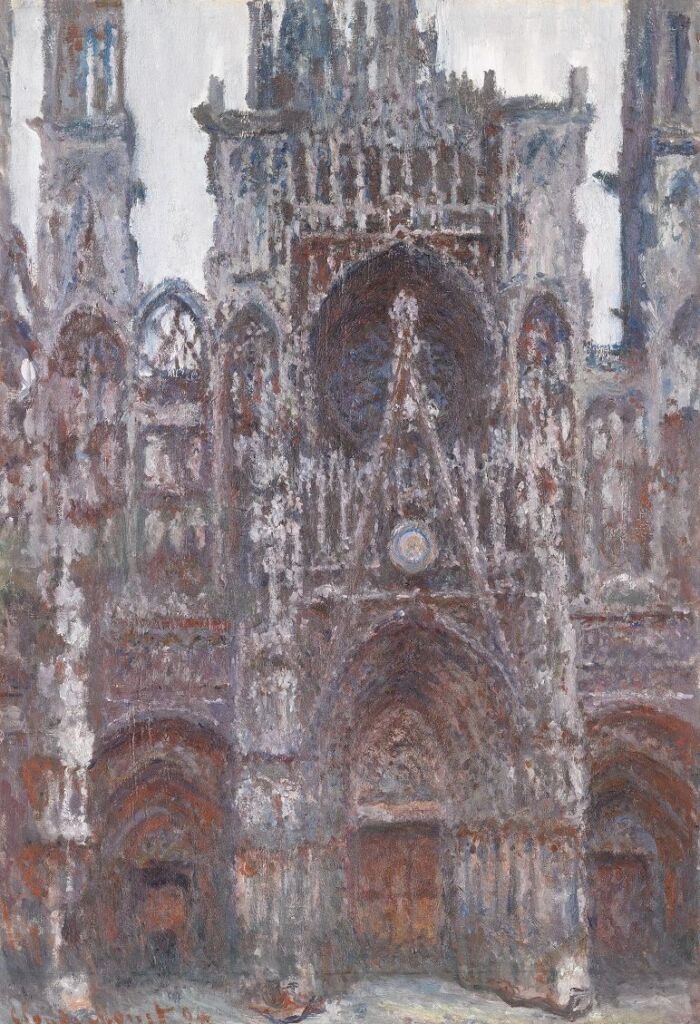
The Orsay’s other three, the harmonies in blue and gold, in white and in gray, were bought from Monet in 1894 by Count Isaac de Camondo, who left them to the Louvre. They are not always on view, so check online if you are coming for the series.
Renoir’s Bal du moulin de la Galette usually hangs among the Impressionists too. He showed the big 1876 canvas at the Impressionist exhibition of 1877. It came to the museum in the bequest of Gustave Caillebotte, a painter who collected his friends’ work.
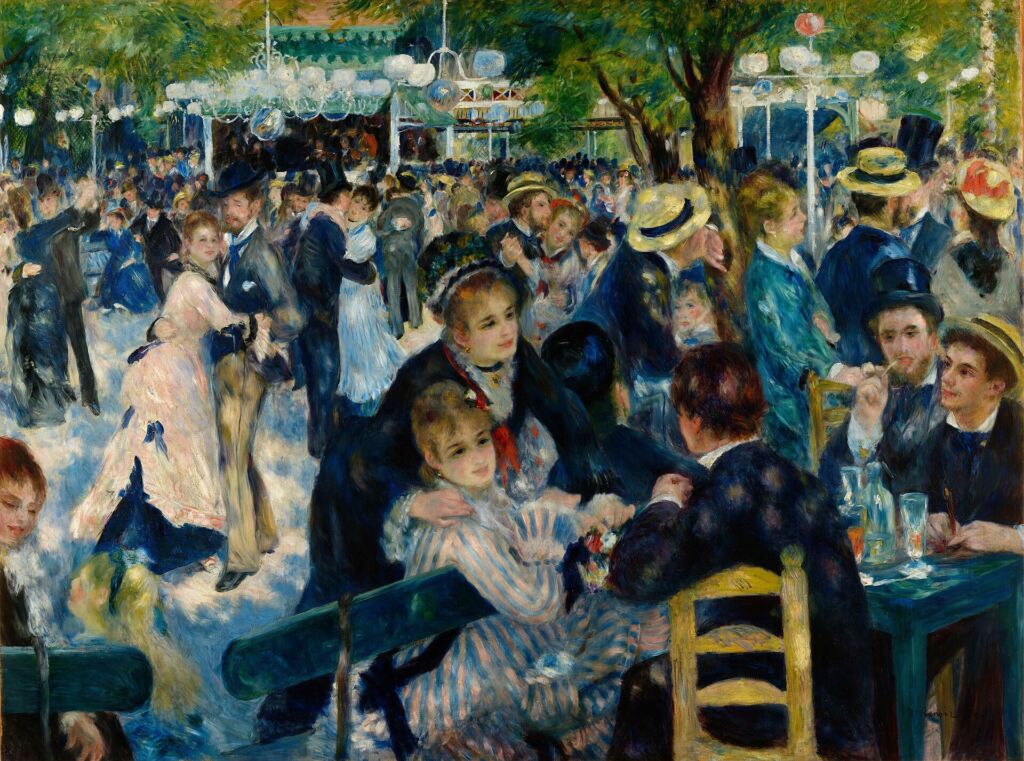
Critics faulted its blurriness, but Renoir was after something else. Some of his friends appear among the dancers, yet his main aim, the museum explains, was “to convey the vivacious and joyful atmosphere of this popular dance garden on the Butte Montmartre”: a crowd in motion.
The Orsay also owns Arrangement in Grey and Black No. 1, known to English speakers simply as Whistler’s Mother. The French state bought it from the artist in 1891, and the museum calls it “one of the most famous works by an American artist outside the United States.”
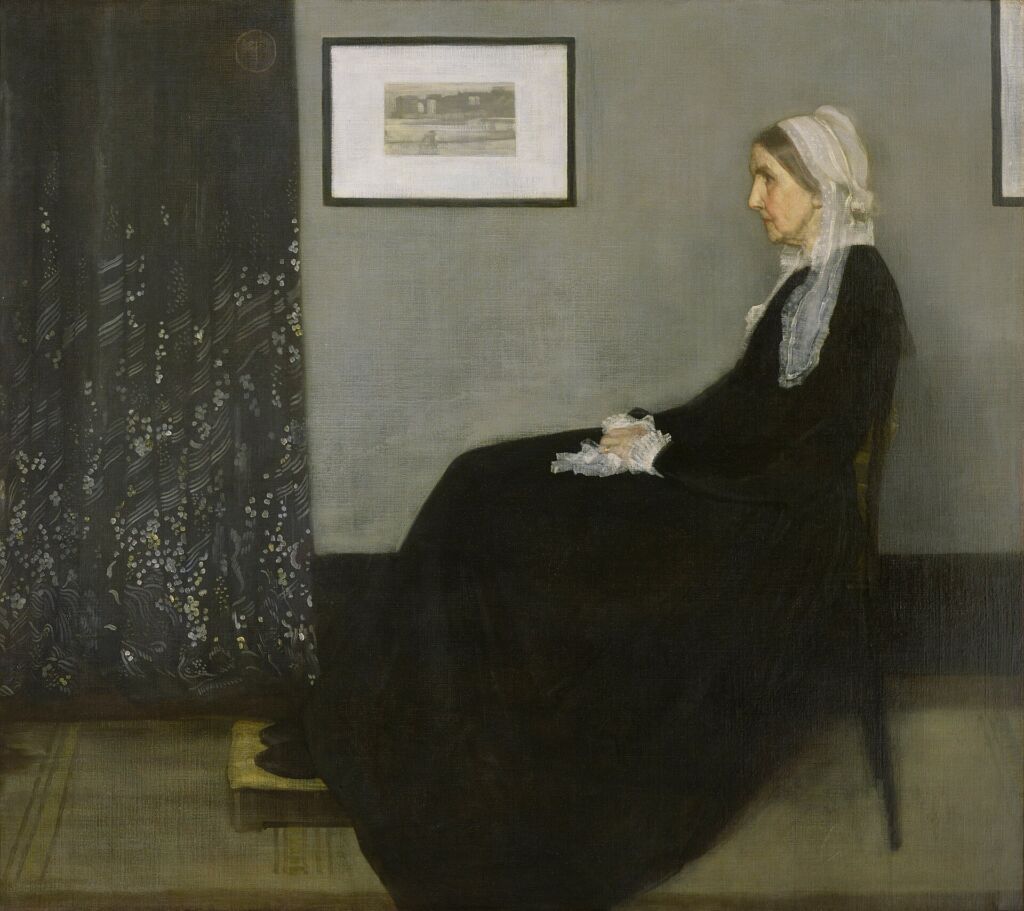
A great museum runs on a timetable, like a station: paintings depart, come back and get held up along the way.
Room 36: Van Gogh looks back
Room 36 has Van Gogh’s Bedroom in Arles, The Church in Auvers-sur-Oise, the portrait of Dr. Paul Gachet and a self-portrait from 1889, the next-to-last year of his life.
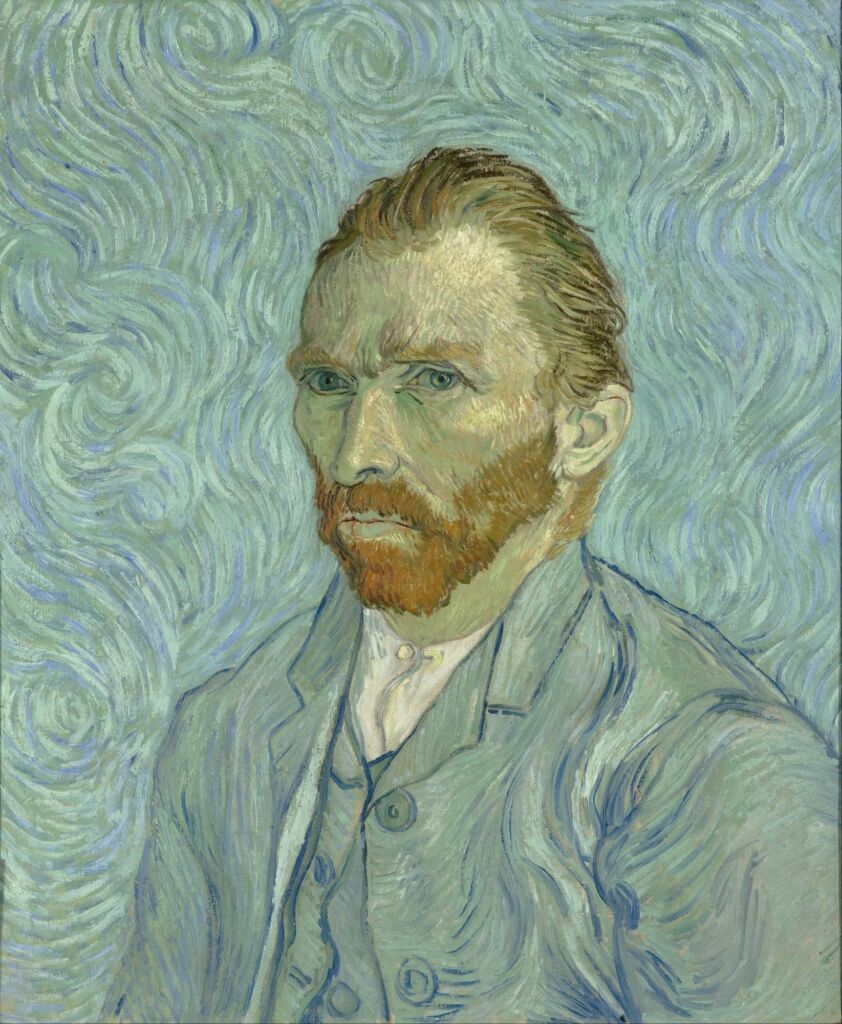
Van Gogh painted and drew himself more than forty times in ten years. Here, the museum notes, he wears a suit rather than his usual work jacket. The pale blue-green background swirls around his head in the same waves as his red hair.
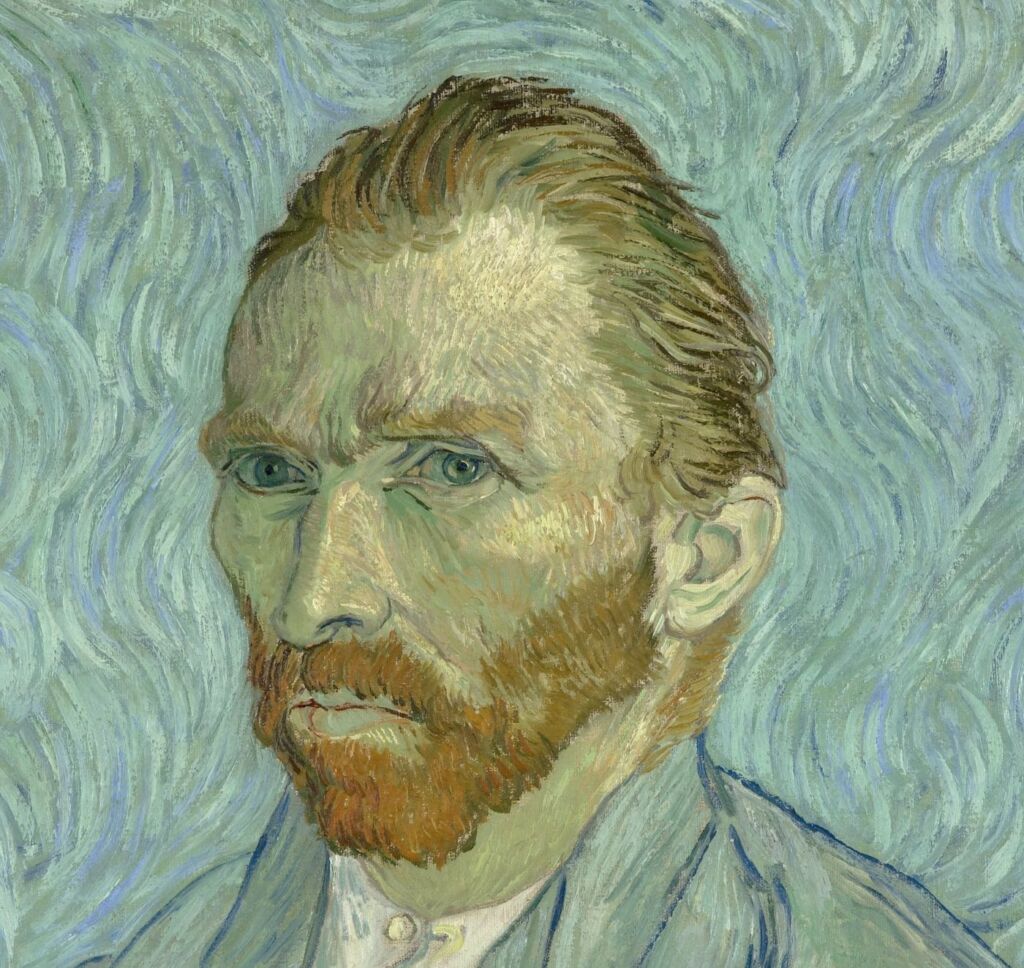
It belonged to Dr. Gachet, who treated Van Gogh in Auvers; his children gave it to the state in 1949. How a doctor’s sketch settled the argument over the artist’s severed ear is told in our story on Van Gogh’s ear.
The Orsay’s Bedroom is the third and smallest version. The first, from October 1888, is in Amsterdam; almost a year later Van Gogh painted two more: one the same size, now at the Art Institute of Chicago, and this smaller one for his family in Holland. It entered the museum only in 1959, under the terms of the peace treaty with Japan.
Next door, in Room 38, is Georges Seurat’s The Circus, painted in 1891, the year he died. Readers of our story about the monkey in La Grande Jatte will recognize the dots: here they make not a Sunday park but a circus ring.
A green horse and the station clocks
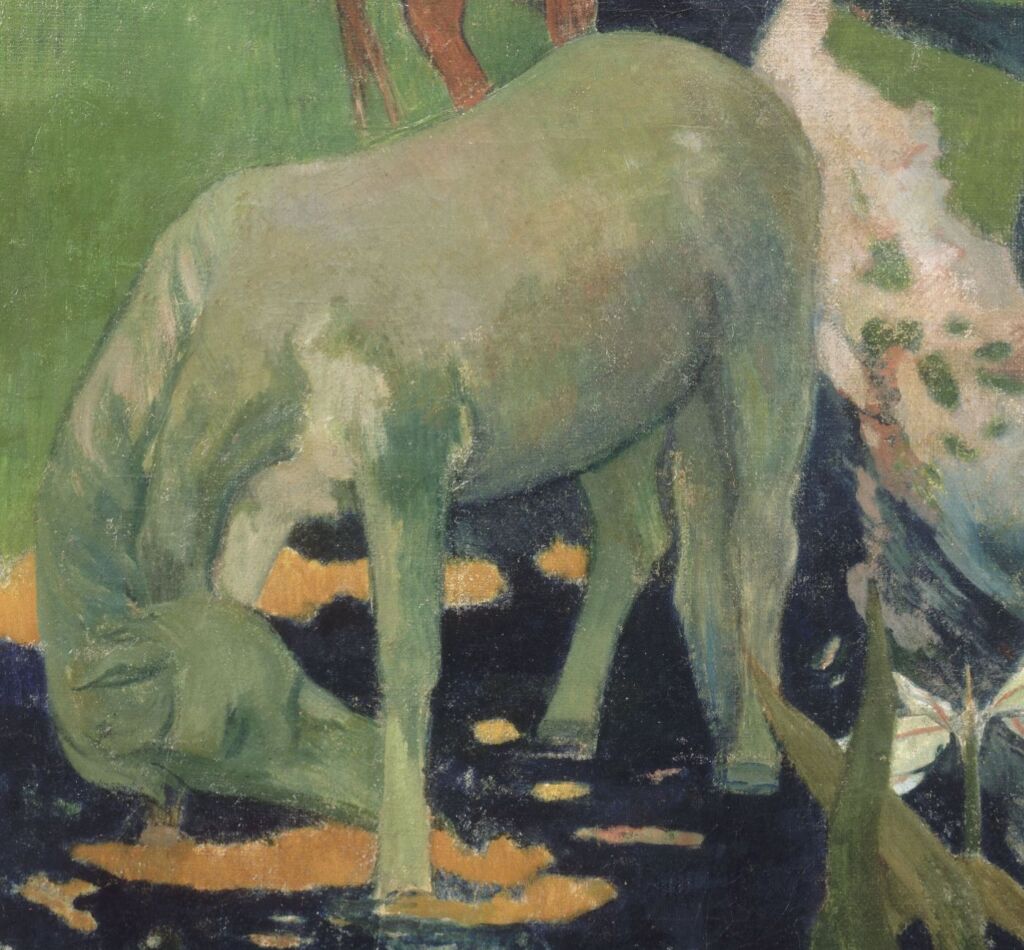
In the Françoise Cachin gallery, on the same upper level, hangs Gauguin’s The White Horse of 1898, next to the carved panels from his House of Pleasure (Maison du Jouir, 1901–02).
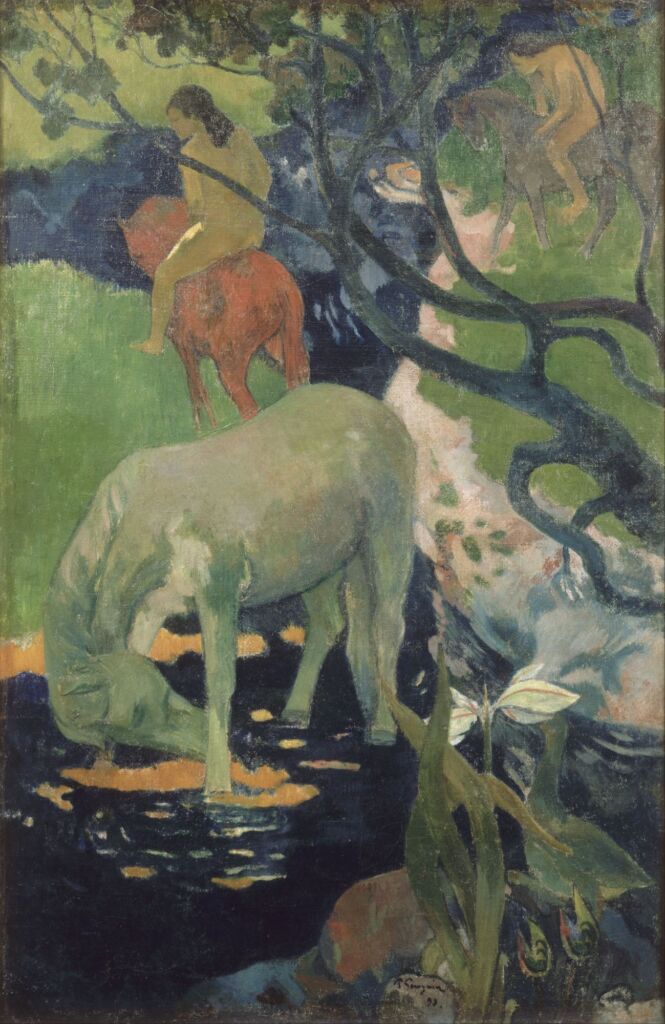
The picture got off to an absurd start. A pharmacist in Tahiti commissioned it, then turned it down, the museum says, “on the grounds that the horse was too green.” The white coat does shimmer with grass and water, and white, the museum notes, is associated in Polynesia with death and the worship of the gods.
Save the last minutes for the clocks. At the exit of the Impressionist gallery on Level 5 is the Café Campana, which, the museum says, looks straight out at one of the station’s huge exterior clock faces.
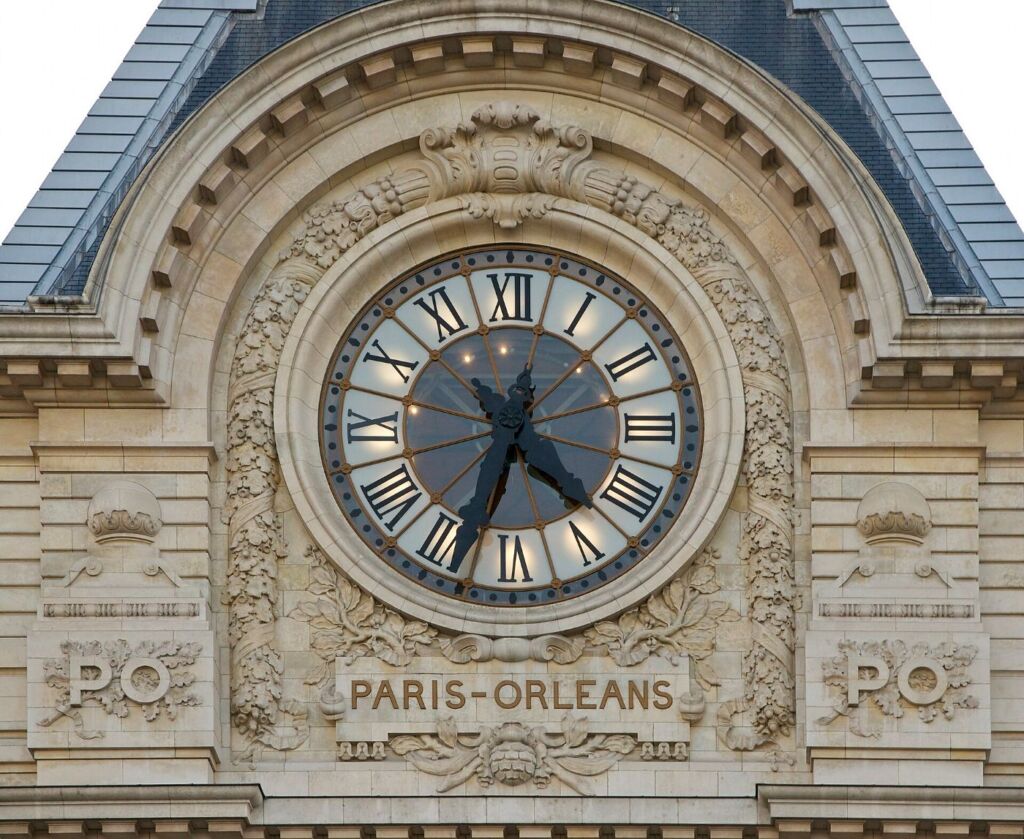
Like the nave, the clocks survive from the station. RER C commuter trains still run beneath the museum, and the dial now counts down the time until the galleries close.
Comments
For Hroniki readers
Comments are open to readers with an account. Signing up is free and takes a few seconds.
No comments yet. Start the conversation.