The merchant who pledged Bruegel’s Hunters in the Snow for a tax collector’s debts
Hunters in the Snow was never meant to hang alone. Bruegel painted it for an Antwerp merchant's dining room as one of six panels of the year, and within months it was pledged as security for another man's tax contract.
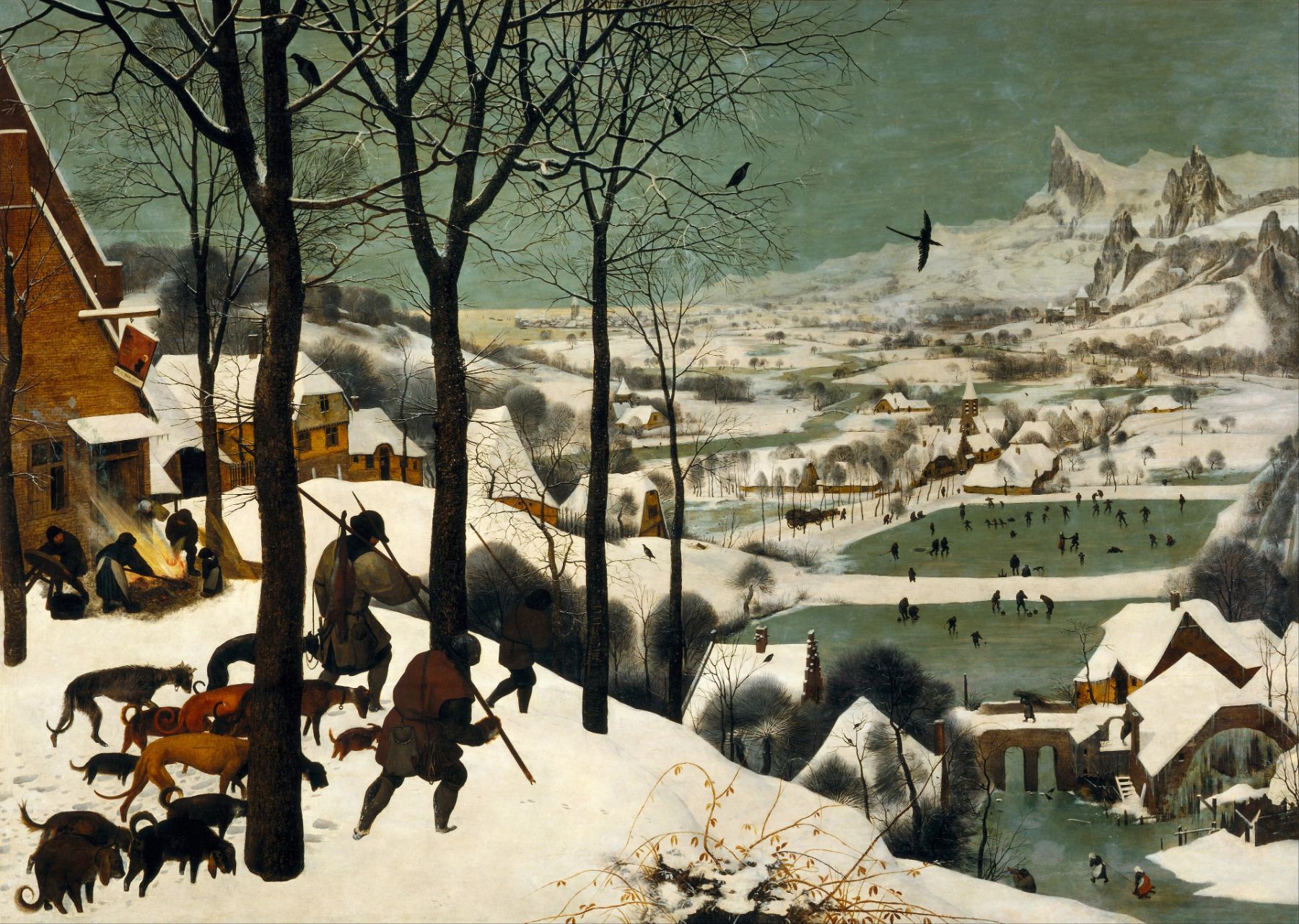
Three hunters trudge downhill toward a village, their exhausted dogs trailing behind. Bruegel signed the panel at the bottom center: “BRVEGEL. M.D.LXV.” Today Hunters in the Snow hangs in the Kunsthistorisches Museum in Vienna and seems complete in itself: the definitive winter, familiar even to people who could not name the artist.
Yet it was never meant to stand alone. It belongs to a cycle painted for an Antwerp merchant’s dining room, and within a year he had pledged it as collateral for another man’s debts to the city. Then came a gift to a governor, the imperial collection, Napoleon’s Vienna. And one disappearance.
A year in six panels
The patron was Niclaes Jongelinck, a wealthy merchant and one of Bruegel’s chief collectors. According to the Metropolitan Museum of Art, he owned sixteen works by the artist. The cycle was meant for his country house outside Antwerp, where the large panels probably ran like a frieze around the dining room.
Bruegel divided the year into six parts instead of four: early spring, spring, early summer, late summer, autumn, and winter, two months to a panel. All are nearly the same size, about 117 by 160 centimeters, so together they could read as one continuous landscape.
Bruegel drew on the long tradition of calendar pages in books of hours, where each month had its labor: plowing, shearing, slaughtering the pig. But, as the Met observes, what comes first for him is weather: light, air, the way the land changes. Peasants are always there, yet the hero of the cycle is the year.
The number of panels was long debated. Documents call the series “The Twelve Months,” hence the idea of twelve paintings, one a month. But the 1595 inventory of Archduke Ernst’s estate is explicit: “six panels, the twelve months of the year.” Most scholars now agree on six.
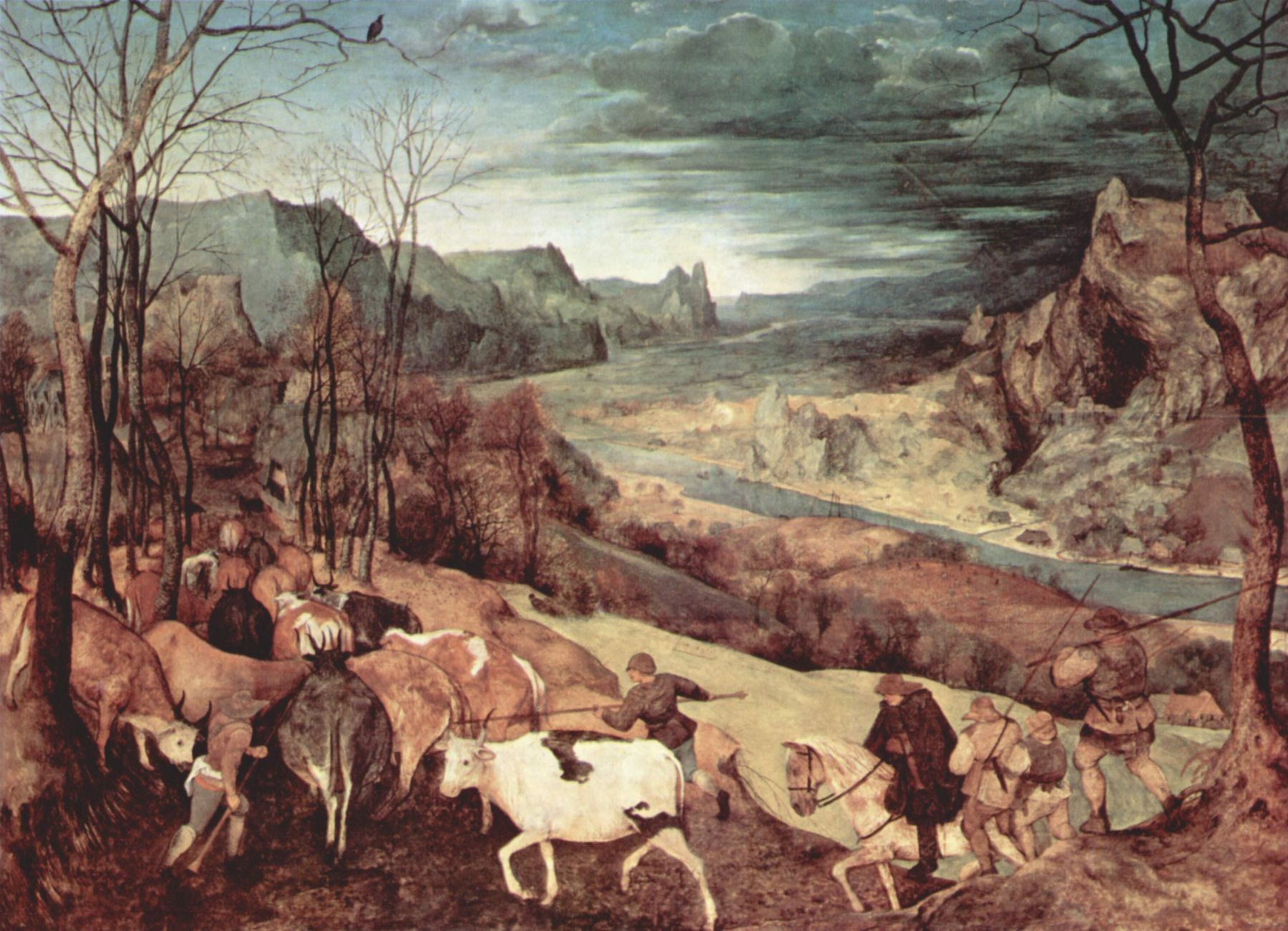
Five panels survive. Three of them, The Gloomy Day, The Return of the Herd, and Hunters in the Snow, are in Vienna. The Hay Harvest belongs to the Lobkowicz princes and hangs in their palace at Prague Castle. The Harvesters has been at the Metropolitan Museum in New York since 1919.
The sixth is missing. It is thought to have shown late spring, April and May, and was apparently lost as early as the seventeenth century: Archduke Leopold Wilhelm’s 1659 Vienna inventory lists only five.
Collateral, gift, sale
The paintings were put up as security almost at once. In 1563 Jongelinck stood surety before the Antwerp city magistrates for Daniel de Bruyne, who had leased the right to collect the city’s wine excise. If this tax farmer failed to pay the city, his guarantor would.
In February 1566 Jongelinck specified what he was pledging: the collection of paintings in his house, where all his Bruegels hung. So Hunters in the Snow, its paint barely dry, was already backing another man’s tax contract. In the end, nothing was seized. The Belgian researcher Jean Bastiaensen reconstructed the episode from archival records.
After Jongelinck’s death the cycle passed to others. In 1594 the city of Antwerp bought the six panels from a local owner for 1,400 florins and presented them to the new governor of the Netherlands, Archduke Ernst of Austria. The gift was part of his ceremonial welcome.
Ernst was governor for little more than a year. When his estate was divided, the cycle is thought to have gone to his elder brother, Emperor Rudolf II, one of Europe’s most avid Bruegel collectors. That is how Hunters in the Snow entered the Habsburg collection from which the Vienna museum grew.
Bruegel’s large Tower of Babel ended up there too; we have written about the king who vanished from his second Tower of Babel.
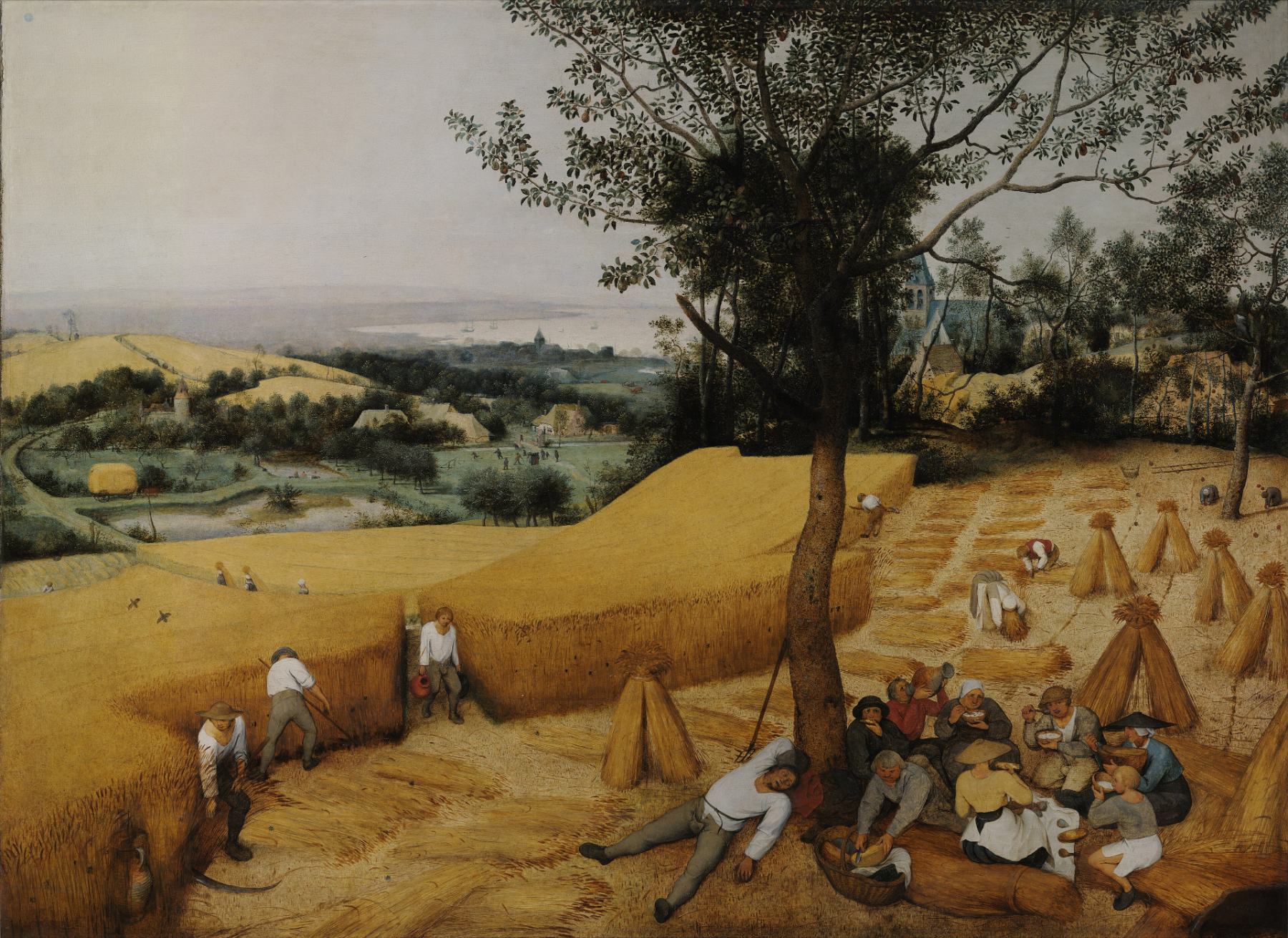
The Harvesters met a different fate. In 1809, when Napoleon’s troops occupied Vienna, it left with Count Andréossy, the city’s French governor, and was sold in Paris. The Metropolitan Museum bought it in 1919.
How The Hay Harvest reached the Lobkowicz family is unknown; records first place it in their collection only in the nineteenth century.
A fox, an inn sign, and a library in orbit
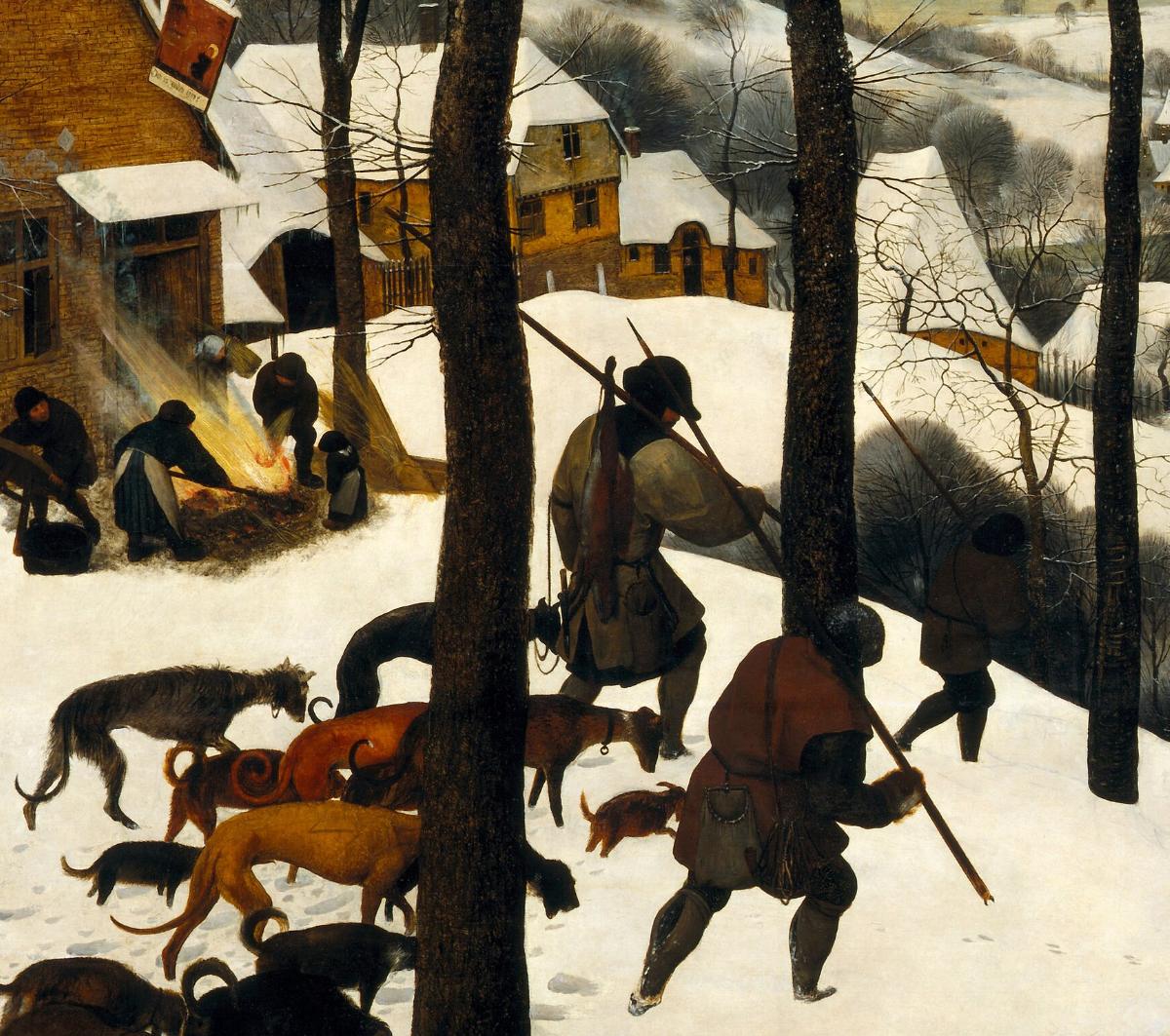
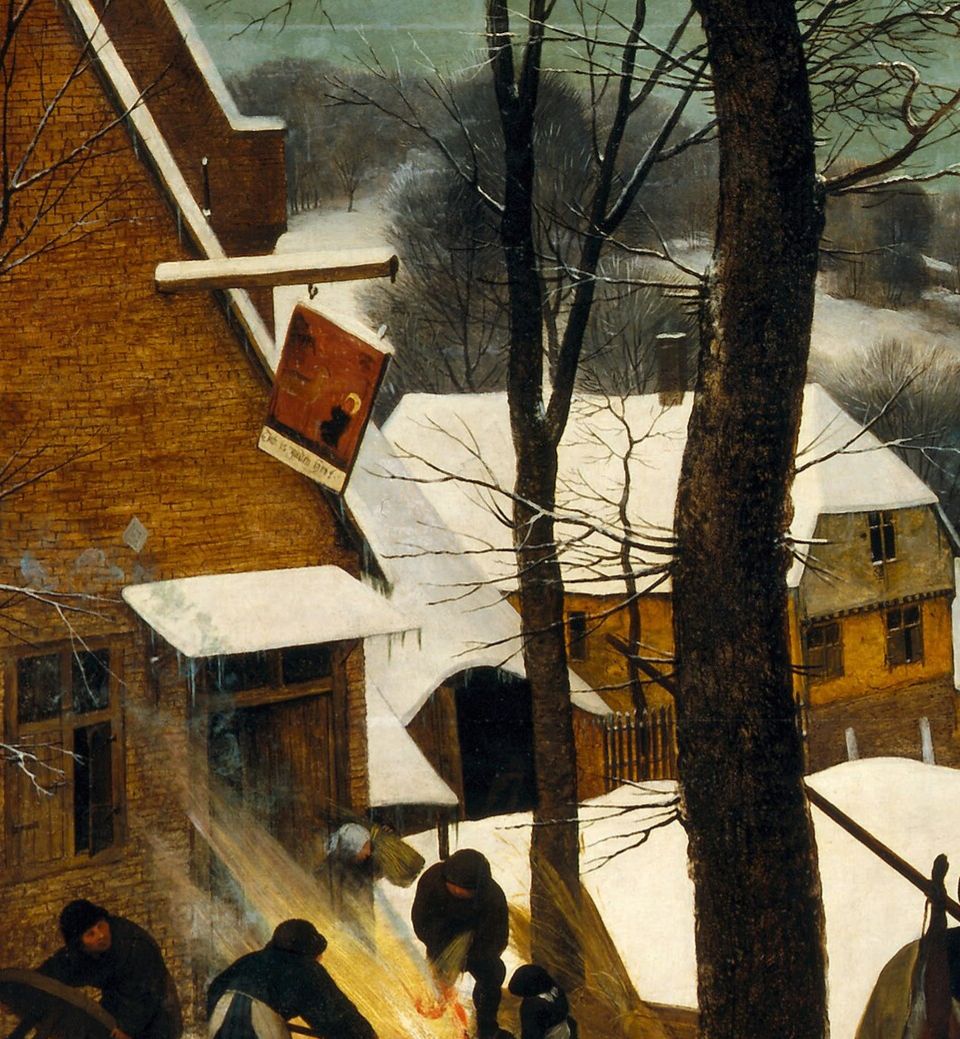
The hunters return nearly empty-handed: a lone fox hangs from one man’s spear. Beside them is an inn with a sign reading the Golden Stag, which shows the vision of Saint Hubert or Saint Eustace, patrons of the hunt. The sign barely clings to its bracket. The patron saint is in place; the luck is not.
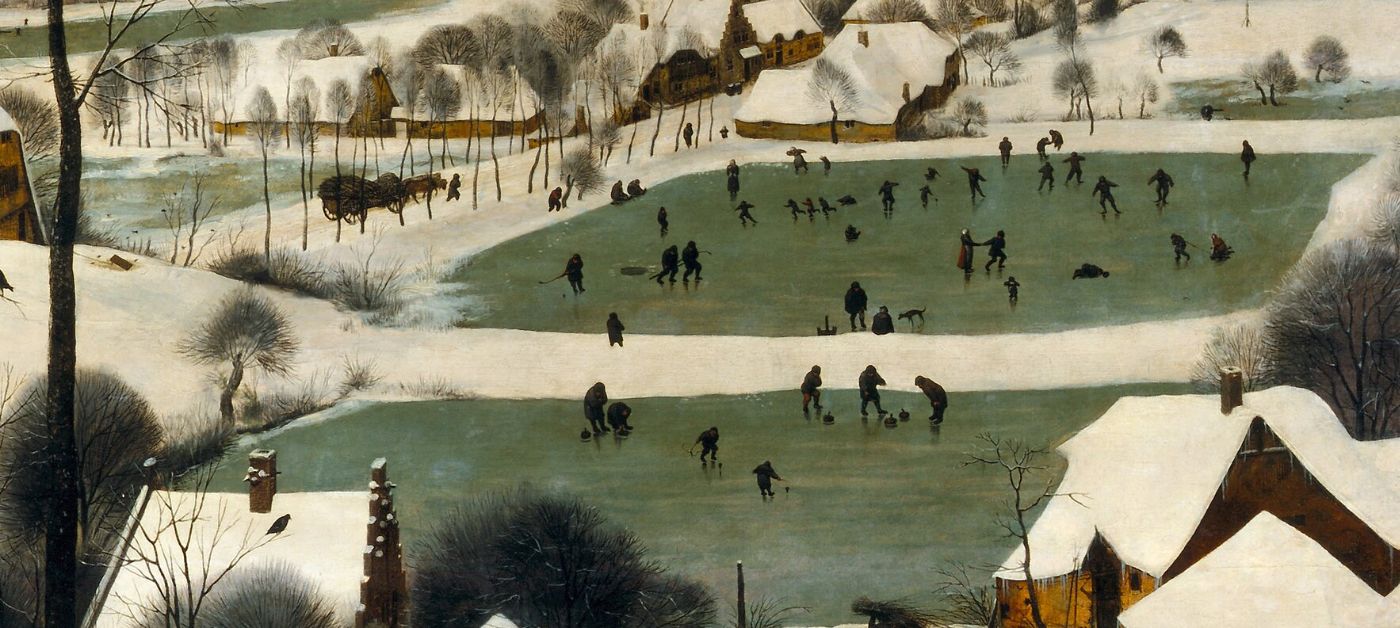
Below, on the frozen ponds, life goes on: dozens of tiny figures are skating. The village pays the hunters no attention. In Bruegel, winter is shared, but failure is private.
Andrei Tarkovsky loved this winter. In Solaris (1972), Hari studies the painting alone in the space station’s library as the camera slowly travels over its details: the skaters, the dogs, the distant mountains. Other panels of the cycle, re-created for the set, hang nearby.
Soon after, in a brief scene of weightlessness, the characters float to a Bach chorale prelude, and Bruegel’s village becomes a memory of Earth: snow, dogs, chimney smoke. In Mirror (1975), Tarkovsky returned to the painting: a winter episode on a hill echoes Bruegel’s expanse.
Five panels from one merchant’s dining room are now scattered across three cities; the sixth has vanished. And the coldest of them traveled farthest: into space, to a station above an imaginary ocean.
Comments
For Hroniki readers
Comments are open to readers with an account. Signing up is free and takes a few seconds.
No comments yet. Start the conversation.