Johannes Vermeer: from his father’s tavern to paintings pawned to pay the baker
Six weeks after Johannes Vermeer's funeral, his widow handed two of his paintings to a baker to cover a bread debt. How the Delft master lived, worked slowly and was forgotten for two centuries.
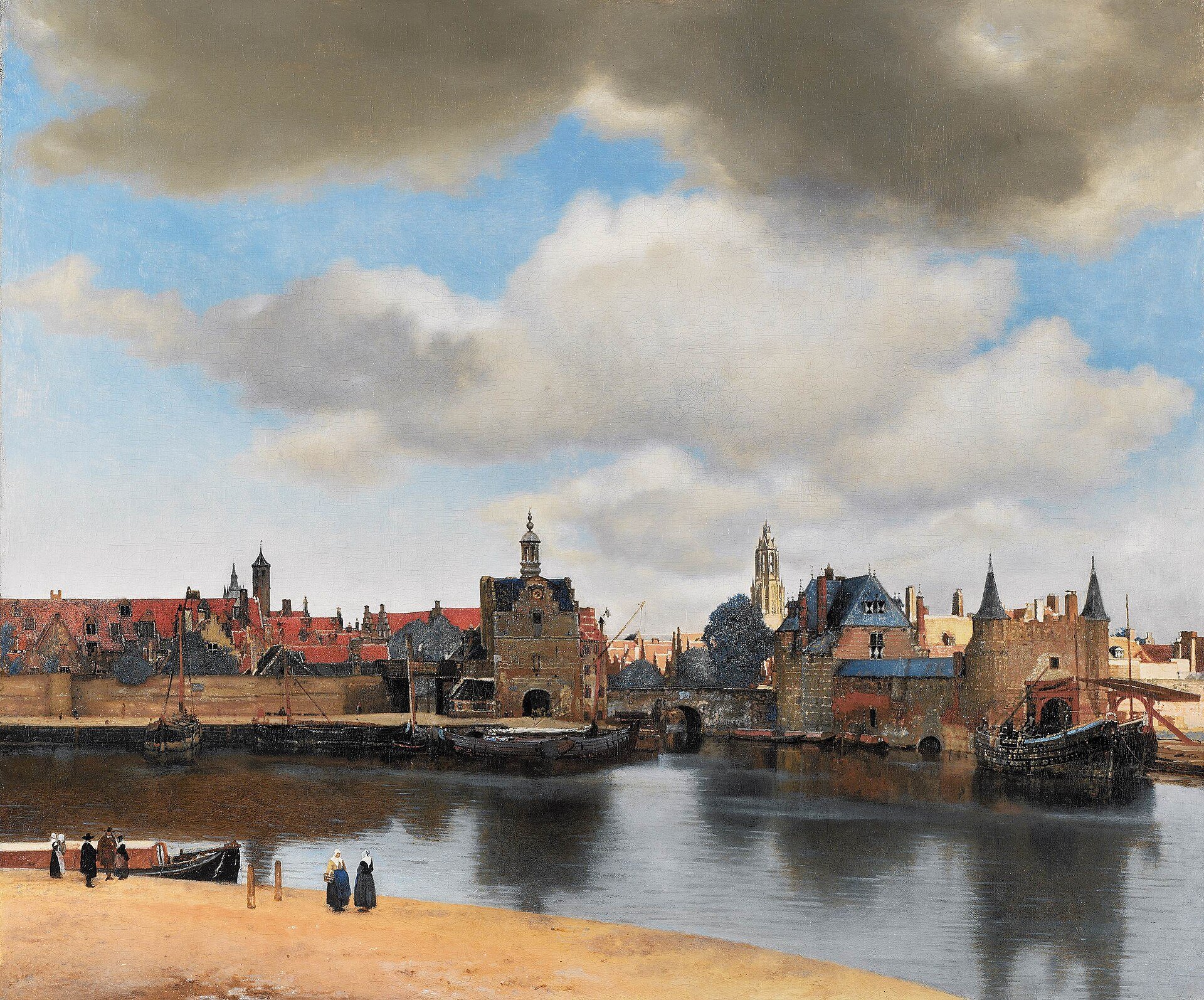
Six weeks after burying her husband, Catharina Bolnes handed two paintings to a Delft baker. The family owed him over six hundred guilders for bread, and he agreed to return the canvases if the widow ever paid. Their author, Johannes Vermeer, died at forty-three, leaving eleven children, a stock of other men’s paintings nobody would buy, and debts.
Today 34 to 37 works are attributed to him. In life he was a respected local master, a picture dealer, and son-in-law to a well-off Catholic widow. After his death his name all but vanished for two centuries. What follows is his whole life, from a tavern on the market square to 19th-century catalogs and 20th-century forgeries.
A tavern on the market square
The boy was baptized on October 31, 1632, in Delft’s New Church, registered as “Joannis.” That same month, Delft saw the birth of Antonie van Leeuwenhoek, the man who some forty years later would sort out the Vermeer family’s debts.
Johannes’s father, Reynier Jansz Vos, wove caffa, an expensive satin. A year before his son was born, he joined the Guild of Saint Luke as a “master art dealer.” The family later took the surname Vermeer.
In 1641 Reynier bought Mechelen, a large house on the Market Square, for 2,700 guilders, nearly all on credit. The ground floor was a tavern, and the back wall dropped straight into the water of the Voldersgracht canal. The future painter grew up among beer mugs, customers, and pictures for sale, with the New Church across the square. Mechelen was demolished in 1885.
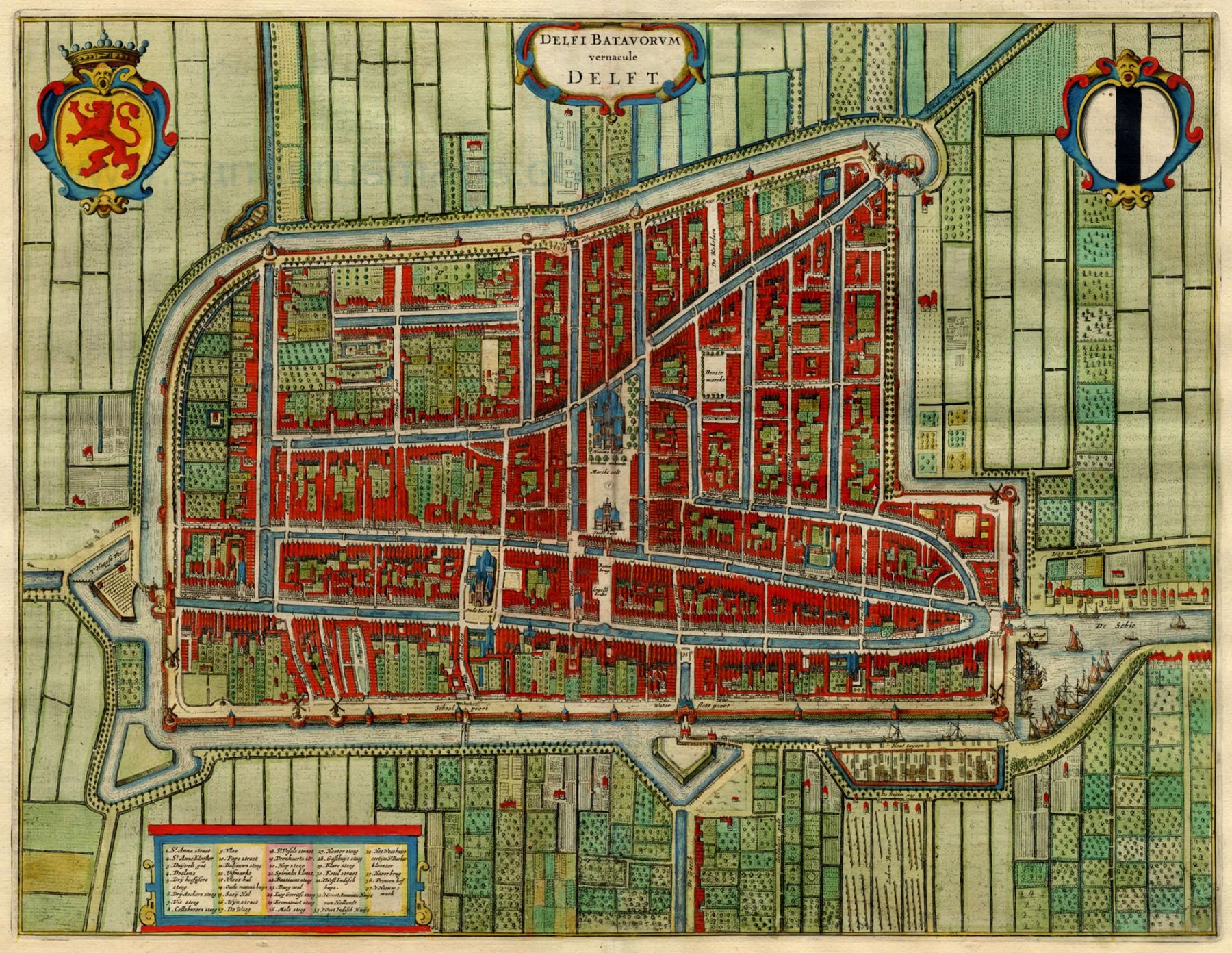
When his father died in October 1652, the tavern and the picture trade passed to the son. Who trained Vermeer is unknown; no apprenticeship contract has turned up, and historians still sift through the painters of Delft and Utrecht.
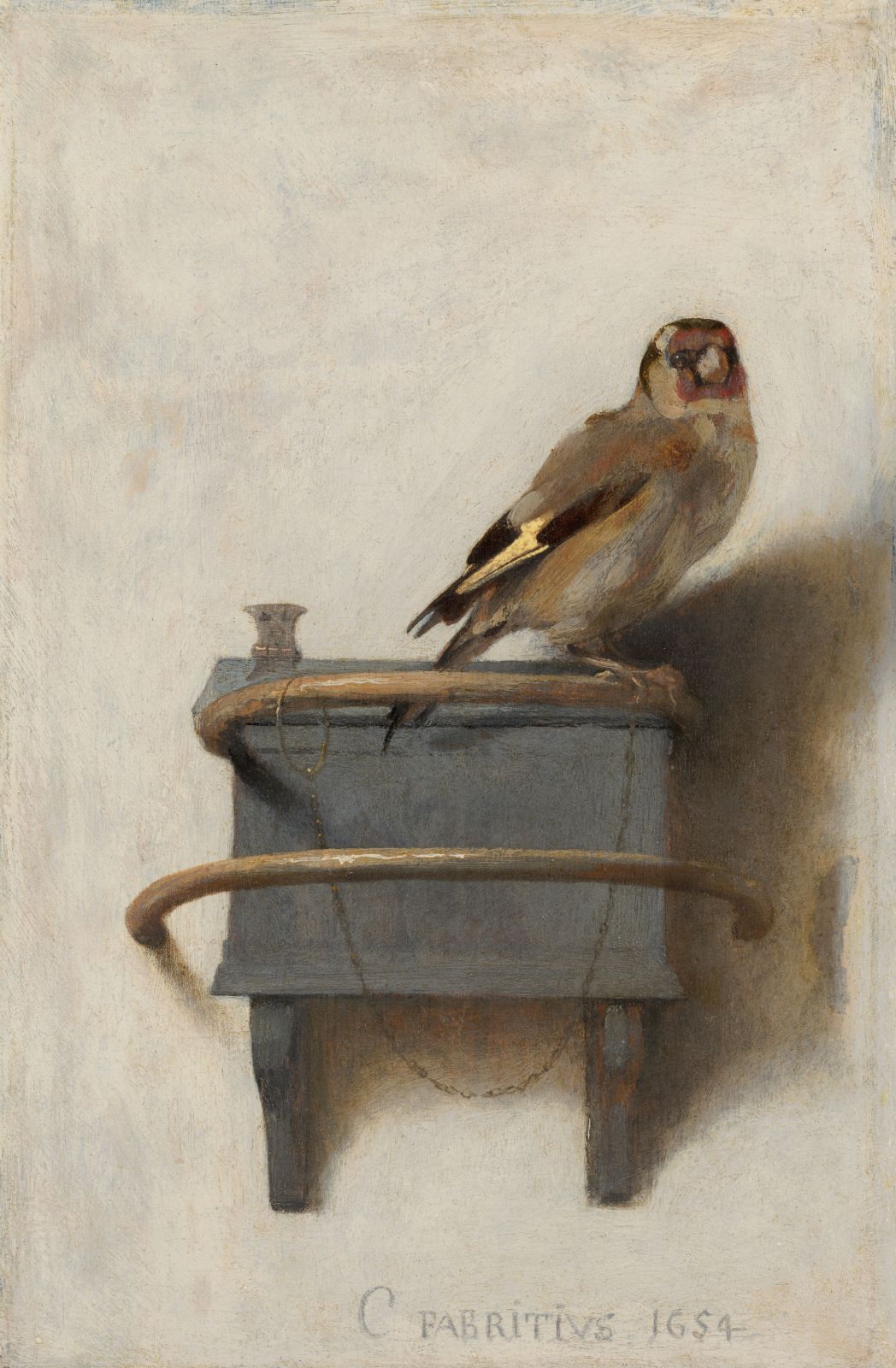
One connection was recorded, though in verse. In 1654 a gunpowder magazine exploded in Delft, and Carel Fabritius, a pupil of Rembrandt and perhaps the finest painter in town, died under the rubble.
In 1667 the bookseller Arnold Bon printed an elegy for him. Its last lines read: “But happily there arose out of the fire / Vermeer, who masterfully trod in his path.” The Mauritshuis, home to Fabritius’s The Goldfinch, cautiously calls their relationship more a dialogue than an apprenticeship.
A bride her mother agreed to “tolerate”
On April 5, 1653, Vermeer registered his intention to marry Catharina Bolnes. Her mother, Maria Thins, refused to sign her consent but declared that she “would suffer the banns be published and would tolerate it.” She had reasons: the groom was a tavern keeper’s son and a Protestant; the bride came from a prosperous Catholic family related to the Utrecht painter Abraham Bloemaert.
The couple married on April 20 in the Catholic church of Schipluiden, a village outside Delft. Vermeer is generally assumed to have converted to Catholicism beforehand, though no document says so. By year’s end he was a master in the Guild of Saint Luke; he paid only part of the entrance fee and settled the rest two and a half years later.
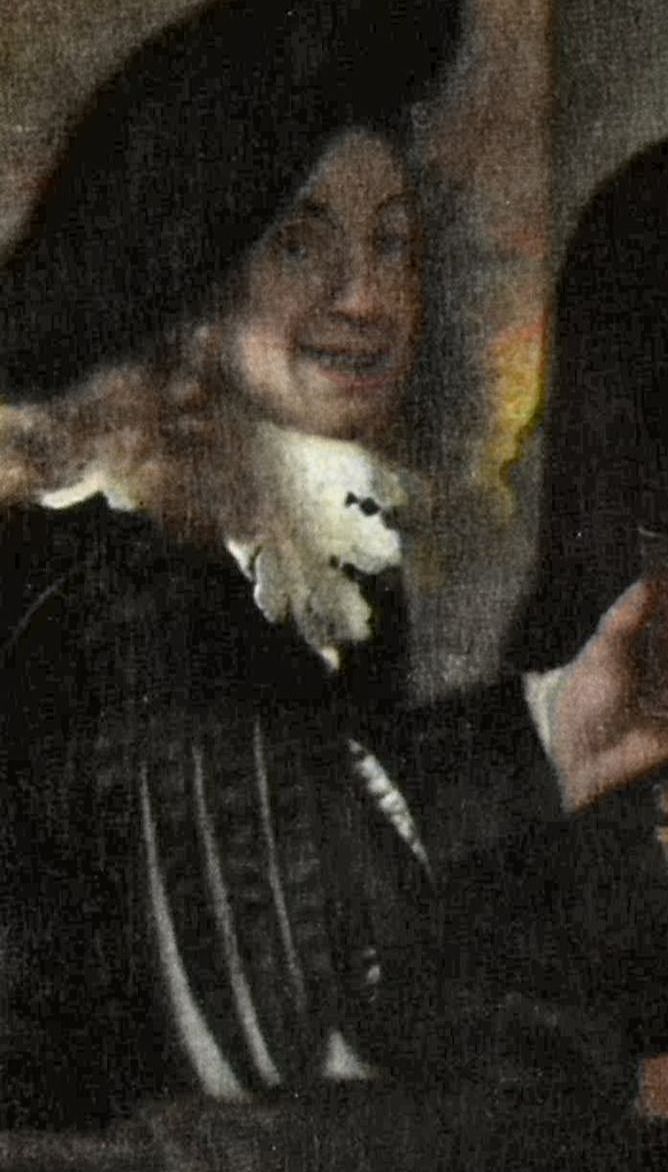
His early works are large mythological and biblical scenes. The Procuress of 1656, now in Dresden, is already a genre scene and one of the few paintings he dated. The young man in a beret on the left is often taken for a self-portrait, but that is a guess: no reliable likeness of Vermeer survives.
By 1660 the young family was living in Maria Thins’s house on the Oude Langendijk, in the Catholic quarter next door to the Jesuits. The first evidence is sad: a burial record for a child “living on the Oude Langendijk.” Vermeer and Catharina had fourteen or fifteen children, eleven of whom survived infancy. More children’s burials follow in the church books.
The mother-in-law who had frowned on the marriage became the family’s mainstay. As early as 1657 Maria Thins named her daughter and son-in-law in her will, and in his last years Vermeer managed her money and traveled to Amsterdam on her business. Her possessions turn up in his paintings, so the house on the Oude Langendijk is, in large part, the interior of his pictures.
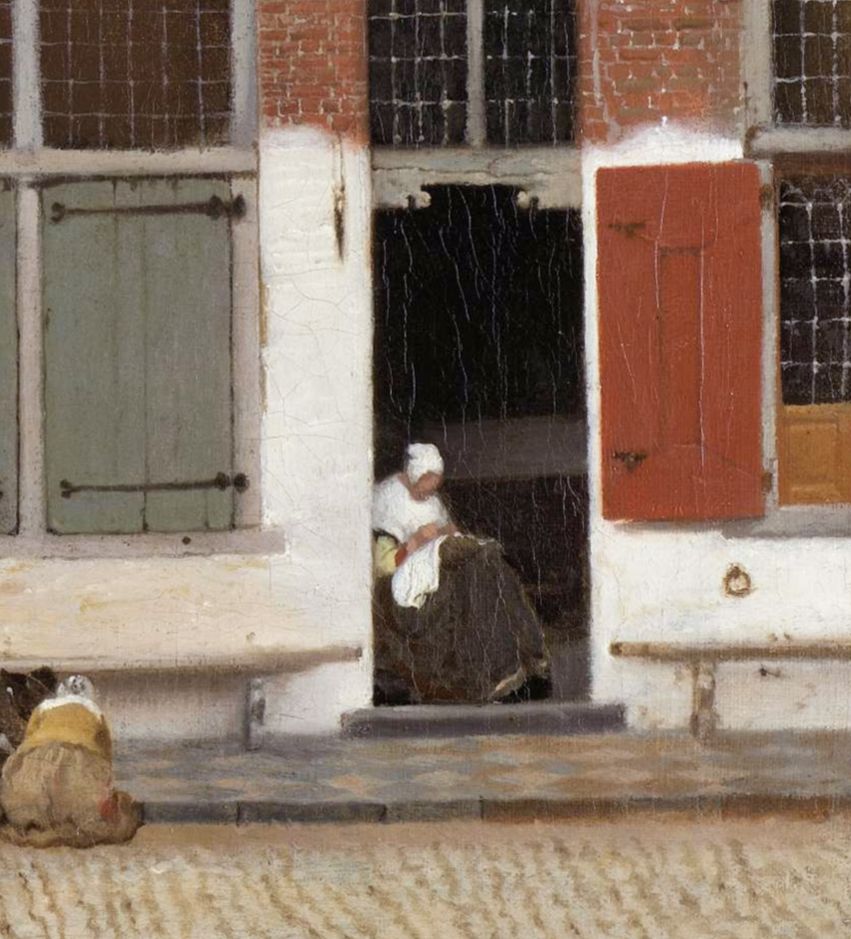
In these years the grand subjects give way to courtyards, brick facades, women at work. The Little Street at the Rijksmuseum offers not a city panorama but a stretch of wall, with a woman sewing on its doorstep.
The slow master
The great oddity of this life is its pace. John Michael Montias, a researcher of the Delft archives, estimated Vermeer’s entire output at 44 to 54 paintings, an average of two or three a year over two decades.
Many peers produced several times as much. Vermeer could afford slowness because painting was not his only income: there was the trade, the tavern, and his mother-in-law’s support.
His method was unhurried too. He painted in layers, reworked compositions, and was lavish with natural ultramarine, a pigment ground from lapis lazuli whose price made blue the most expensive color on the palette.
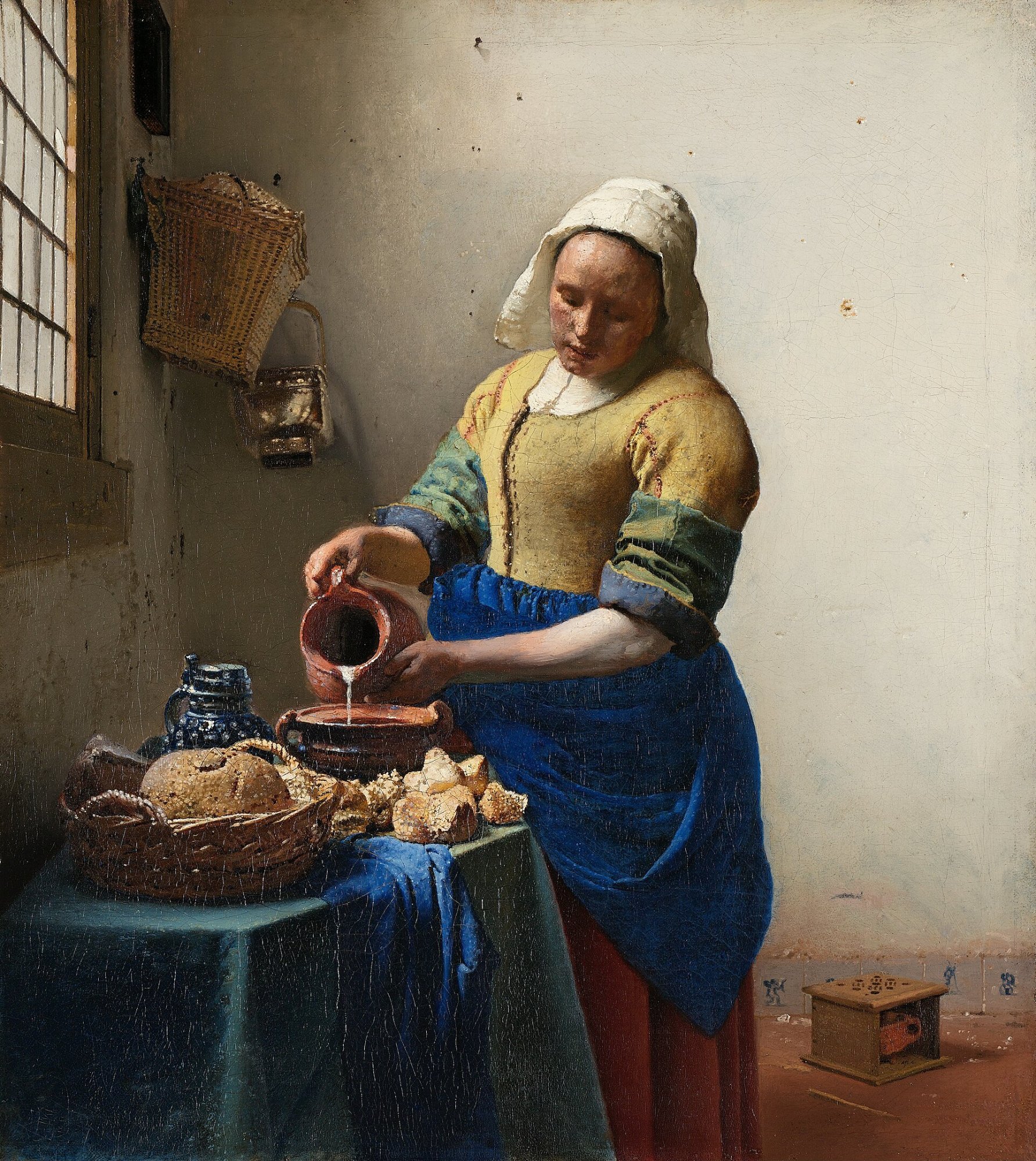
The Milkmaid, from about 1658, shows best how he pared things away. X-rays had long revealed a basket, thought to hold laundry, at the lower right. On the wall behind the maid the Rijksmuseum used to describe a rectangular object, “possibly a map.”
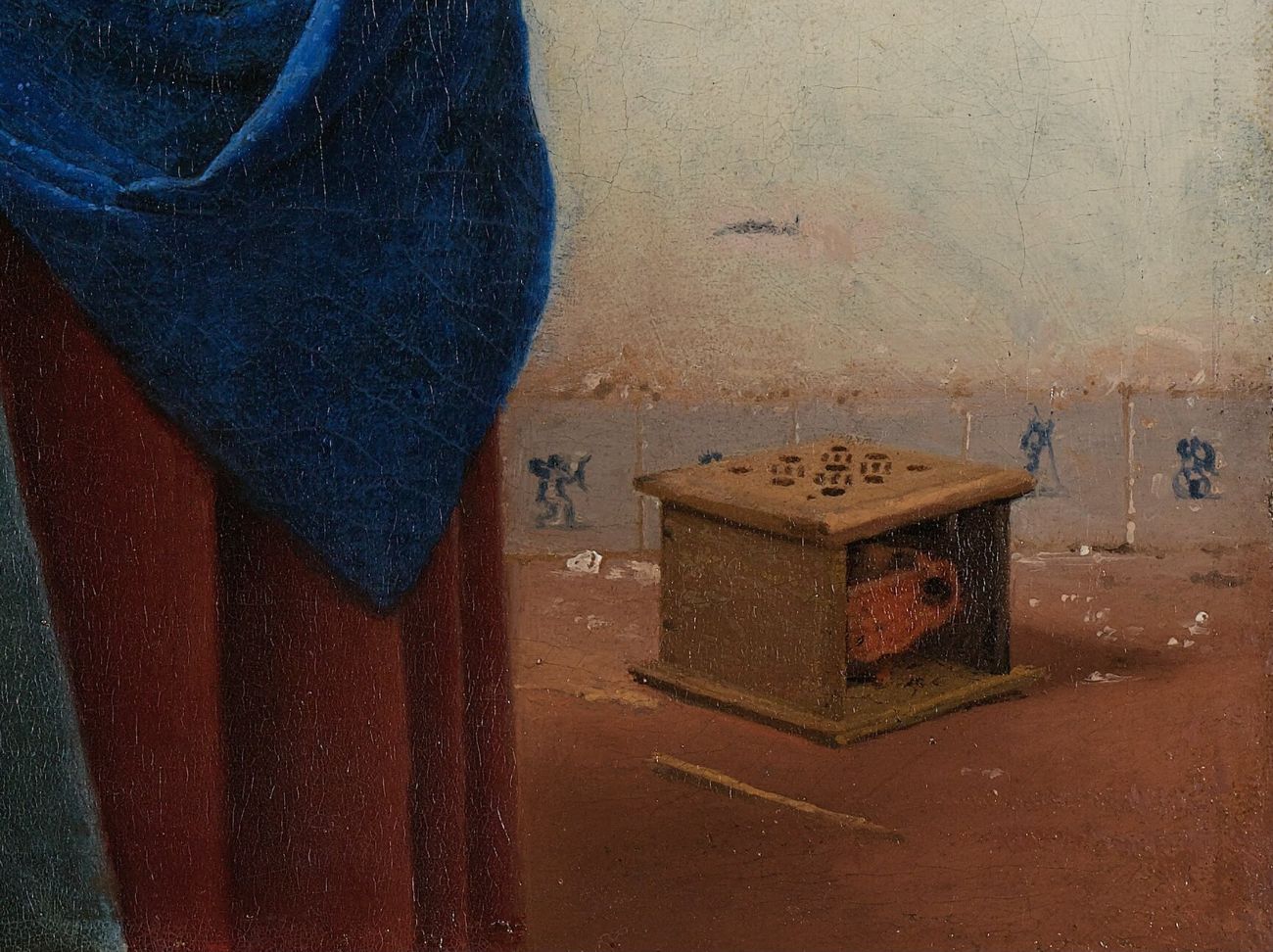
The museum’s 2022 study, using macro-XRF scanning and spectral imaging, refined this. Behind the maid’s head Vermeer had sketched a jug rack in black paint and left it unfinished. The basket turned out to be a wicker frame for drying diapers over a brazier. He painted it out in favor of a small foot warmer and tiles, and left the wall bare.
A long-running debate concerns the camera obscura, a box with a lens that projects an image onto a wall. In 2001 the architect Philip Steadman argued that Vermeer literally traced projections in his room. Many historians reply that optics may have suggested effects of light but never replaced the hand. Rijksmuseum curators allow something more modest: a camera renders highlights as scattered dots of light, and Vermeer has such dots.
He had few buyers, but loyal ones. Vermeer once borrowed from Pieter van Ruijven, a wealthy Delft rentier, who, Montias argued, eventually acquired about half of everything Vermeer painted. The evidence is circumstantial but strong: in 1696, an Amsterdam auction sold 21 Vermeers from the collection of van Ruijven’s son-in-law, Jacob Dissius.
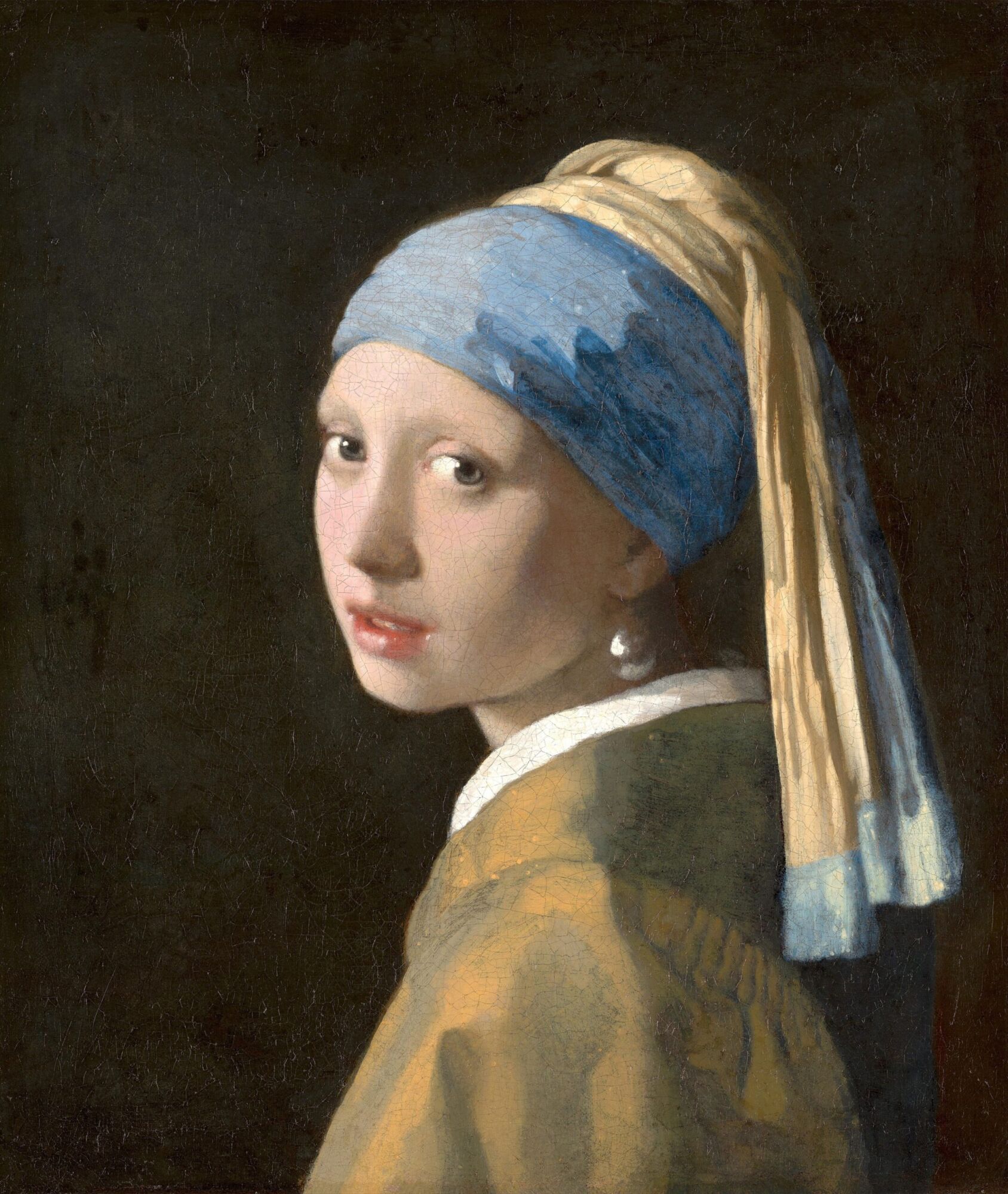
Among them were tronies, studies of heads in unusual costume, not regarded as portraits. The best known today is Girl with a Pearl Earring, though such pieces sold cheaply in the 17th century.
The city held him in esteem: twice, in the 1660s and the 1670s, Vermeer served as headman of the Guild of Saint Luke. Yet when the French traveler Balthasar de Monconys visited in the summer of 1663, the studio held no finished painting. He was shown one at a baker’s, who had paid 600 livres for a single figure. Monconys thought the price outrageous.
In 1669 the young patrician Pieter Teding van Berckhout called on Vermeer and wrote in his diary that the most extraordinary thing about the work was its perspective. A contemporary had spotted what historians would dissect three centuries later: how the space is built.
1672: the year of disaster
In 1672 the Dutch Republic was attacked by France and England at once. The Dutch still call it the rampjaar, the “disaster year.” To stop the French, sluices were opened and land flooded, including Maria Thins’s holdings near Schoonhoven. The art market collapsed almost overnight; people had more pressing worries than paintings.
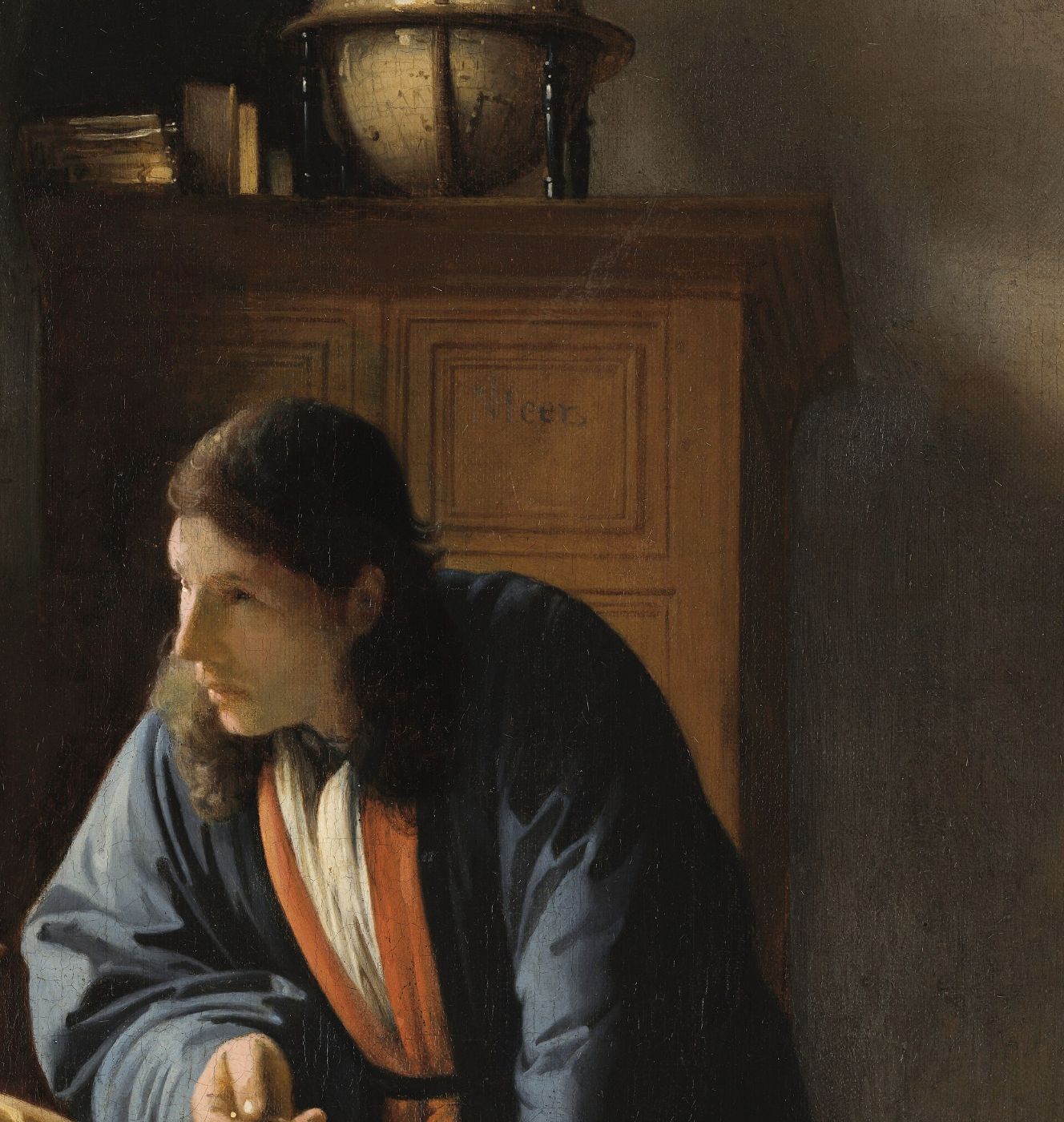
By then Vermeer’s late work had shifted. Beside women at windows came learned men with maps and globes: The Geographer and The Astronomer. Leeuwenhoek is sometimes named as the model, though nothing supports the idea.
That year Vermeer leased Mechelen to an apothecary and went to The Hague as an expert. With two fellow guild members he examined a consignment of “Italian” paintings and declared them “not only not outstanding Italian, but to the contrary great pieces of rubbish and bad paintings.” It is one of the few recorded statements bearing his signature.
From then on the record is financial: bonds sold, new loans, and in summer 1675 a thousand guilders borrowed in Amsterdam. In mid-December Vermeer died. He was buried in the Old Church, in a grave his mother-in-law had bought. The church clerk noted that he left eight minor children; other documents count ten, and it is still unclear who got it wrong.
Catharina later told creditors that during the war her husband sold none of his own paintings and was stuck with other artists’ unsold work. This drove him to such despair that, in her words, “as if he had fallen into a frenzy, in a day and a half he had gone from being healthy to being dead.”
A man who traded in other people’s paintings was left, in 1672, holding them, along with his debts.
Paintings as collateral
The baker who showed Monconys a painting was most likely Hendrick van Buyten. In January 1676 Catharina acknowledged that he had “paid” 617 guilders for two paintings against the bread debt: Lady Writing a Letter with Her Maid and a picture of a woman playing a cittern. Van Buyten promised to return them if the widow paid off the debt at fifty guilders a year.

Catharina tried another way to keep the family’s most treasured picture from creditors. That February she transferred The Art of Painting, which had stayed in the family until the painter’s death, to her mother.
The trustee appointed for the creditors was none other than Leeuwenhoek, by then a noted researcher with homemade microscopes. He contested the transfer as unlawful, and the painting was slated for the estate sale of March 15, 1677. The documents do not say how the dispute ended.
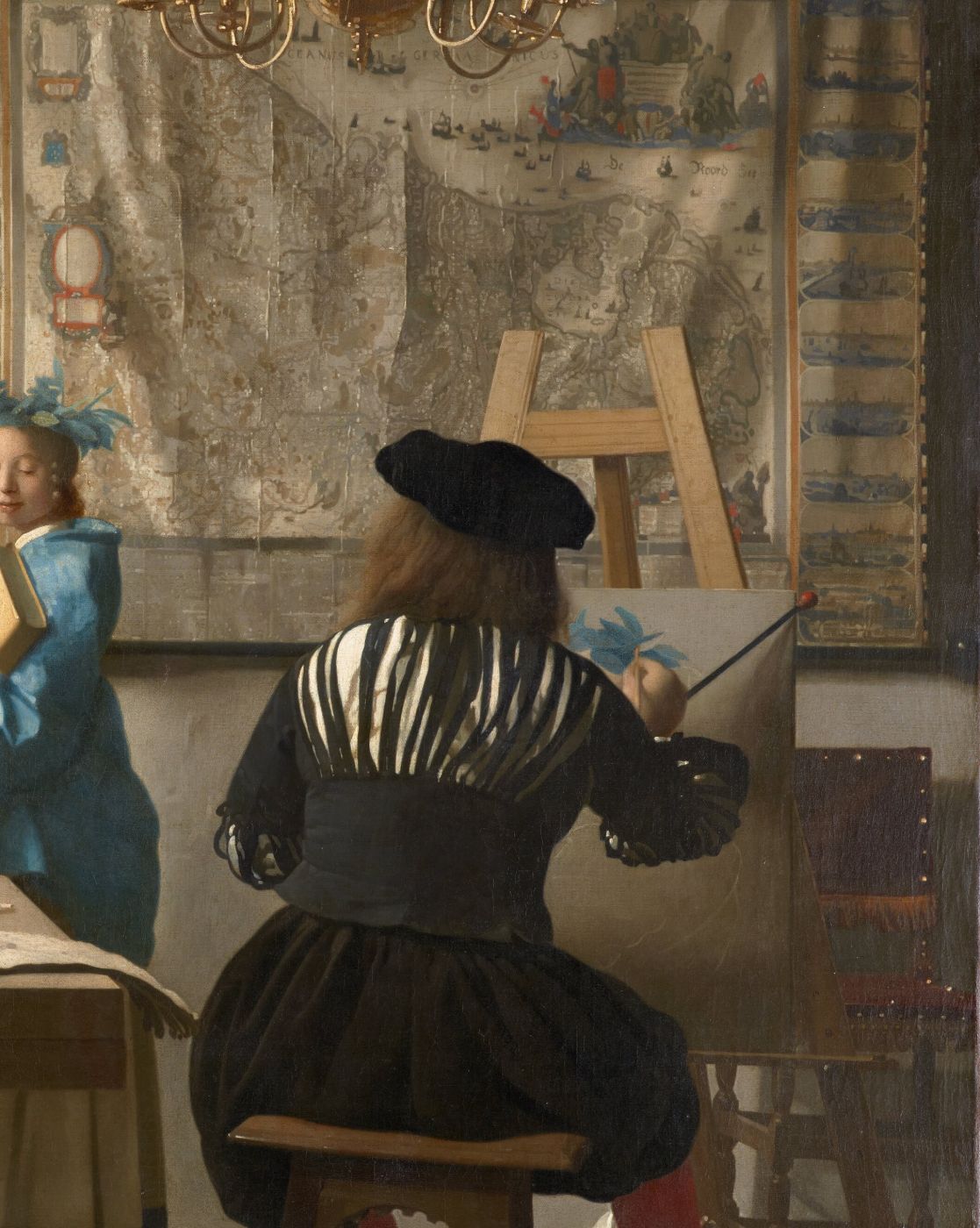
In 1940 The Art of Painting was bought by Hitler. It now hangs in the Kunsthistorisches Museum in Vienna; the purchase and the heirs’ claims are a story for another day.
In April 1676 Catharina petitioned the High Court of Holland to be declared bankrupt, citing the war, and the court agreed. She outlived her husband by twelve years.
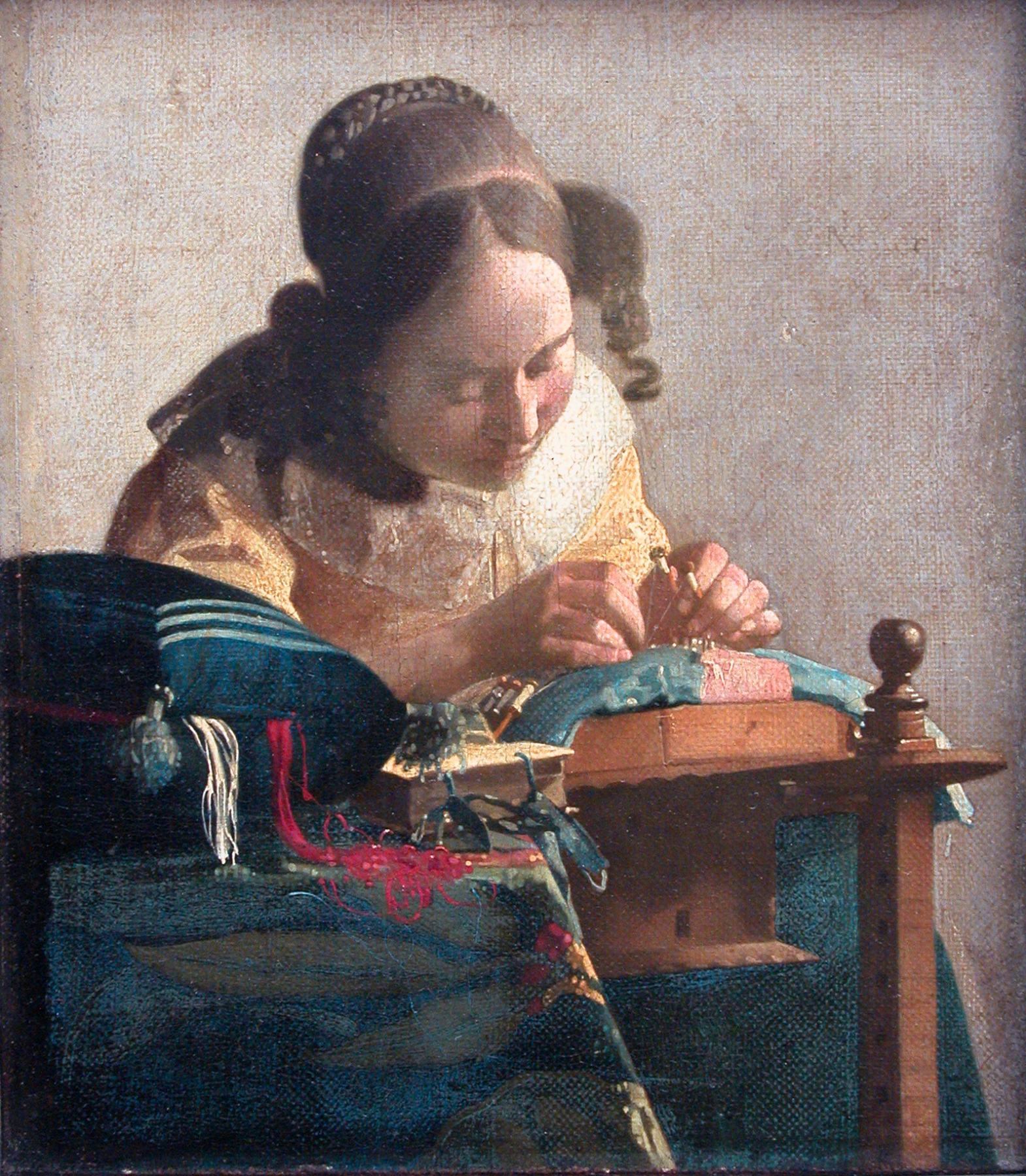
The Dissius auction shows what Vermeer was worth twenty years after his death. View of Delft went for 200 guilders, The Milkmaid for 175, and the small Lacemaker, in all likelihood, for 28.
Two hundred years of oblivion
Even in his lifetime Vermeer was barely known outside Delft, and after the Amsterdam sale his name faded fast. The works passed between collections and were admired, but their maker stayed in the footnotes. Reviving him took an exile with a sharp eye.
The French critic Théophile Thoré first saw View of Delft at the Mauritshuis in 1842. In 1849, facing prosecution for opposition politics, he fled France. Living in Belgium and the Netherlands under the pen name Willem Bürger, he hunted systematically for Vermeer’s paintings.
In 1866 he published a long study, “Van der Meer de Delft,” in the Gazette des Beaux-Arts, and the painter’s fame began to rise. How Proust put View of Delft into his novel half a century later is told in Vermeer’s View of Delft and the yellow wall nobody can find.
Thoré also bought Vermeer’s paintings. In 1866 he acquired Woman with a Pearl Necklace, now in Berlin. After his death, in 1892, the American collector Isabella Stewart Gardner bought The Concert from his collection in Paris.
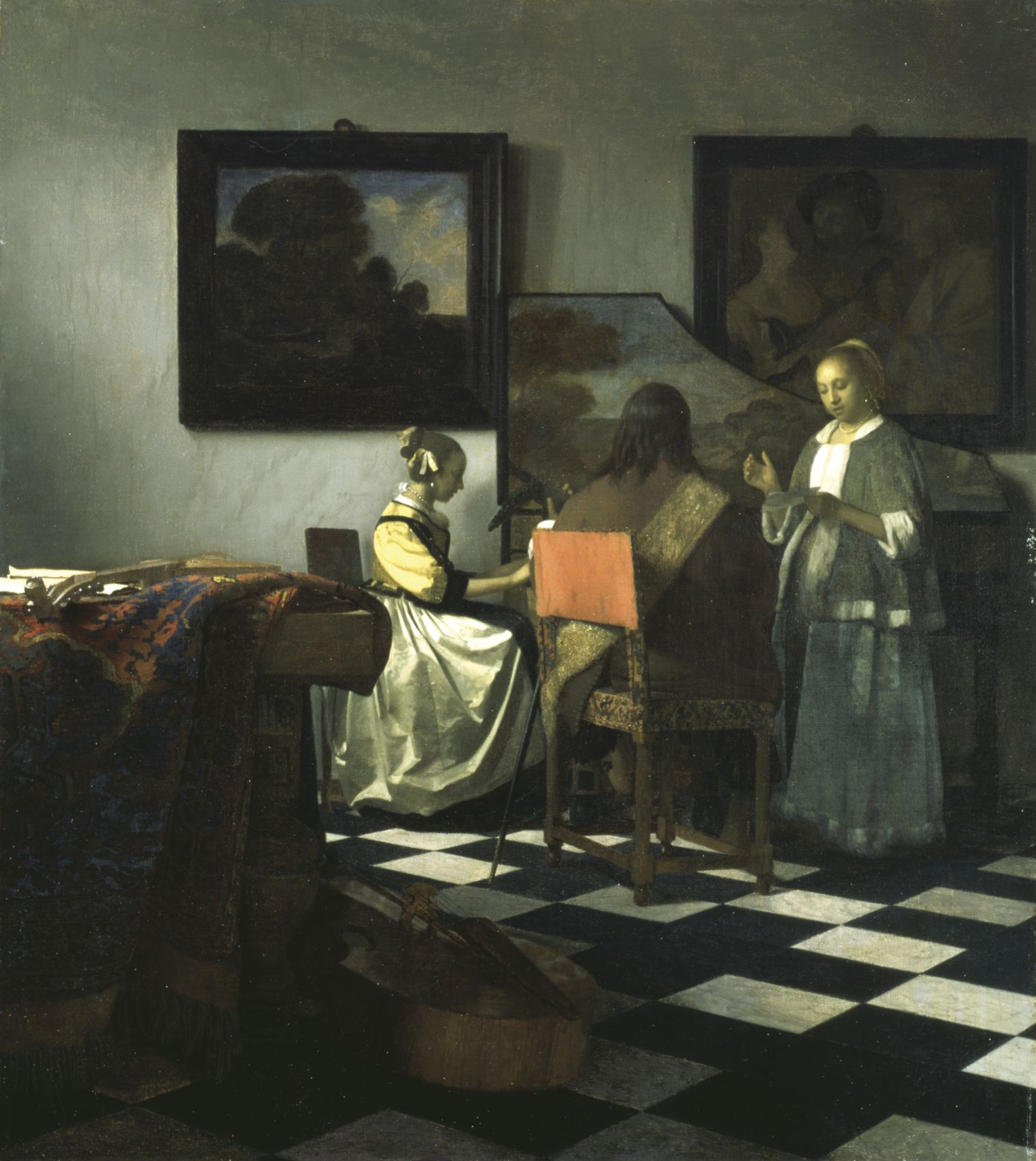
On the night of March 18, 1990, two men in police uniforms rang the bell at the Isabella Stewart Gardner Museum in Boston and left with thirteen works. The Concert was taken out of its frame. It is still missing.
Fame made Vermeer a target for forgers. In 1945 the Dutch painter Han van Meegeren was arrested for collaborating with the occupiers: through him, an unknown “Vermeer” had ended up in Hermann Göring’s collection.
To clear himself, van Meegeren confessed that he had painted it, and under supervision produced another “Vermeer.” Sentenced in 1947 to a year in prison, he died six weeks later.
Today Vermeer’s paintings are spread across nearly twenty collections, from the Rijksmuseum and the Mauritshuis to the Metropolitan Museum of Art, the Louvre, and the National Gallery of Art in Washington. Reuniting them is nearly impossible: the 2023 Amsterdam exhibition gathered 27, more than two-thirds of the surviving work.
So the painter who died owing money for bread became an artist worth forging and stealing. And van Buyten the baker, who took two paintings instead of cash, seems to have grasped their value better than the next two centuries of connoisseurs.
Comments
For Hroniki readers
Comments are open to readers with an account. Signing up is free and takes a few seconds.
No comments yet. Start the conversation.