Madame X: why Sargent repainted the strap that scandalized Paris
At the Salon of 1884 the strap of Madame Gautreau's gown hung off her shoulder. Sargent painted it back up, left for London and sold the picture to the Met on one condition.
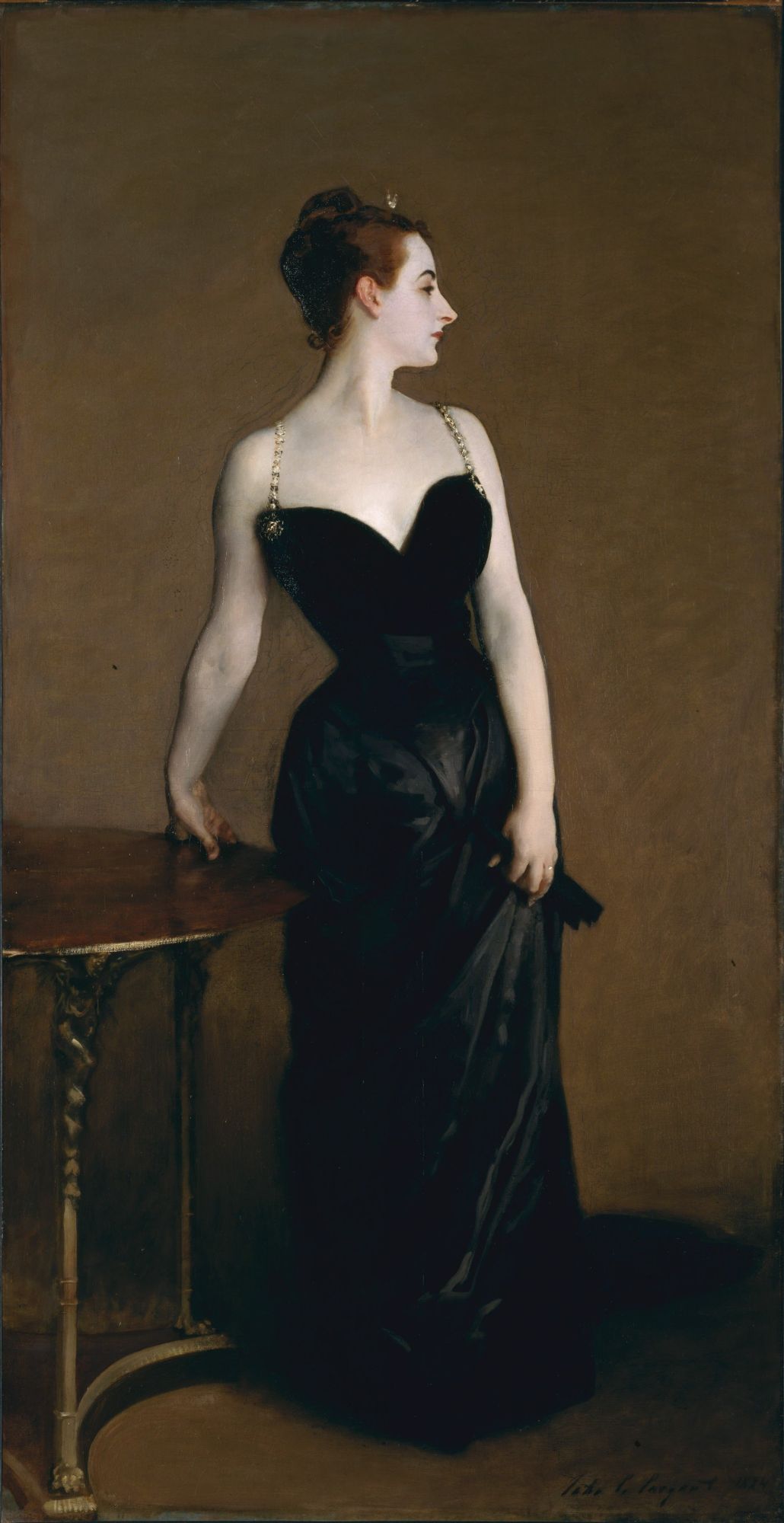
When John Singer Sargent’s portrait of Madame Gautreau went up at the Paris Salon of 1884, the jeweled strap of her black gown hung loose off her right shoulder. Within months it was back in place. The canvas that nearly sank his career in Paris ended up in New York, under a name chosen to hide hers.
A strap off the shoulder at the Salon
The sitter was born Virginie Amélie Avegno in Louisiana in 1859, married the French banker Pierre Gautreau in the late 1870s and became one of the most watched women in Paris.
The Metropolitan Museum of Art describes her as “known in Paris for her artful appearance.” Sargent would make the most of the powdered skin, the sharp profile and the daring cut of her dresses.
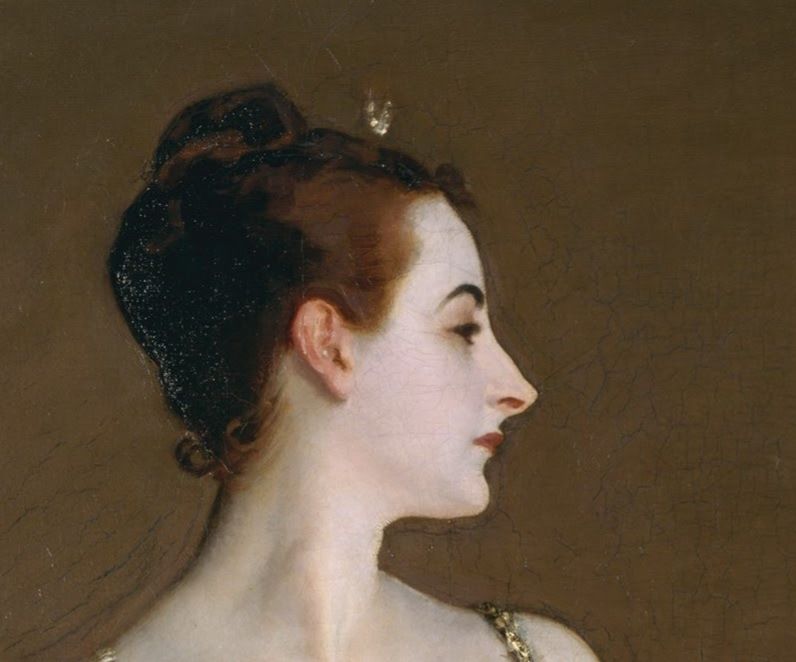
Sargent, an American born in Florence and trained in Paris, was 27 and ambitious. Nobody commissioned the portrait. He wanted a picture that would make his name at the Salon, the great annual exhibition where Géricault had shown The Raft of the Medusa in 1819. Gautreau agreed to sit and was in on the plan.
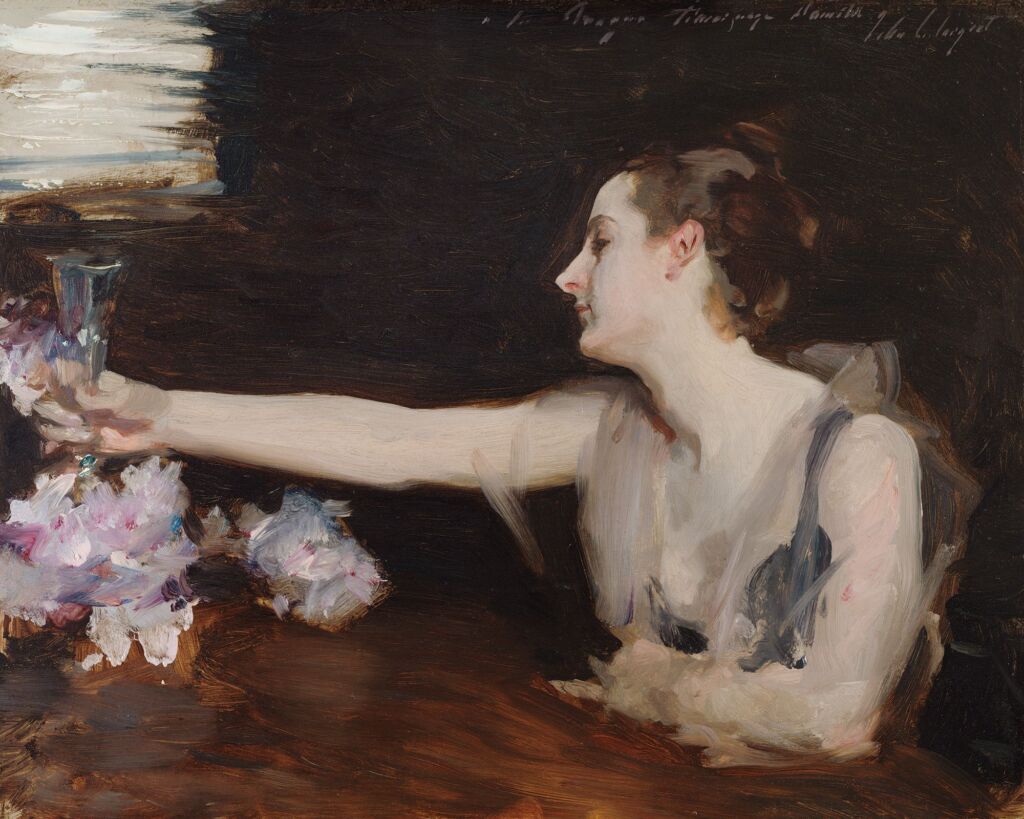
He tried her out first in a small oil sketch on panel, Madame Gautreau Drinking a Toast, painted about a year before the big canvas. He gave it to her mother. It later belonged to the surgeon Samuel Pozzi, and Isabella Stewart Gardner bought it at the Pozzi sale in 1919.
The finished canvas is 208.6 centimeters (82 inches) tall. Gautreau stands at a table in a low-cut black gown. In the version the Salon saw, the right strap had slipped down her arm.
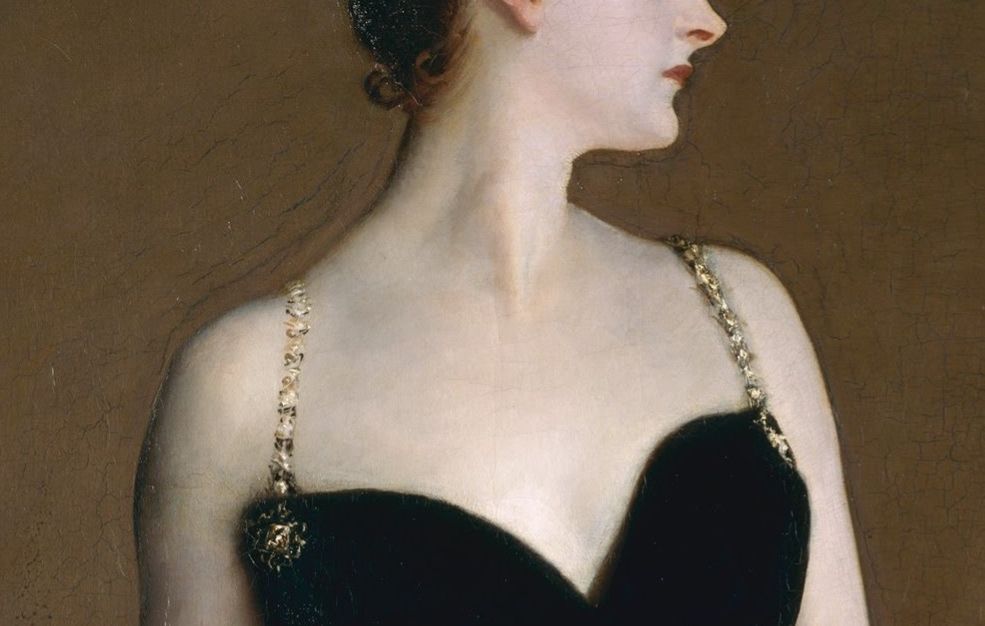
“At the Salon of 1884, the portrait received more ridicule than praise,” the Met writes. Critics went after her cosmetics and her “undress,” and used her appearance to question her morals. The fallen strap made it easy: a married society woman, her dress coming loose, on a public wall.
Sargent changed the one detail the critics had seized on. When the Salon closed, he took the canvas back to his studio and repainted the strap, lifting it back onto her shoulder.
A photograph of him in his studio on the Boulevard Berthier, taken in the mid-1880s and now at the Met, already shows it upright.
Gautreau did not hide. According to the Met, within days of the uproar she was seen in Paris in a low-cut dress with a sparkling shoulder strap.

Sargent crossed the Channel
The painting stayed with Sargent. In June 1884 he left for England to work on commissions. Encouraged by the writer Henry James, he settled in London in 1886 and stayed there for the rest of his life.
The Met’s curators say only that the uproar may have influenced the move. London was slow to warm to him too. English critics came around in 1887, when the Royal Academy showed his Carnation, Lily, Lily, Rose, two little girls lighting Japanese lanterns.
He also began a second canvas of the same pose, almost the same size, and never finished it. That version, Study of Mme Gautreau, is now in the Tate collection in London.
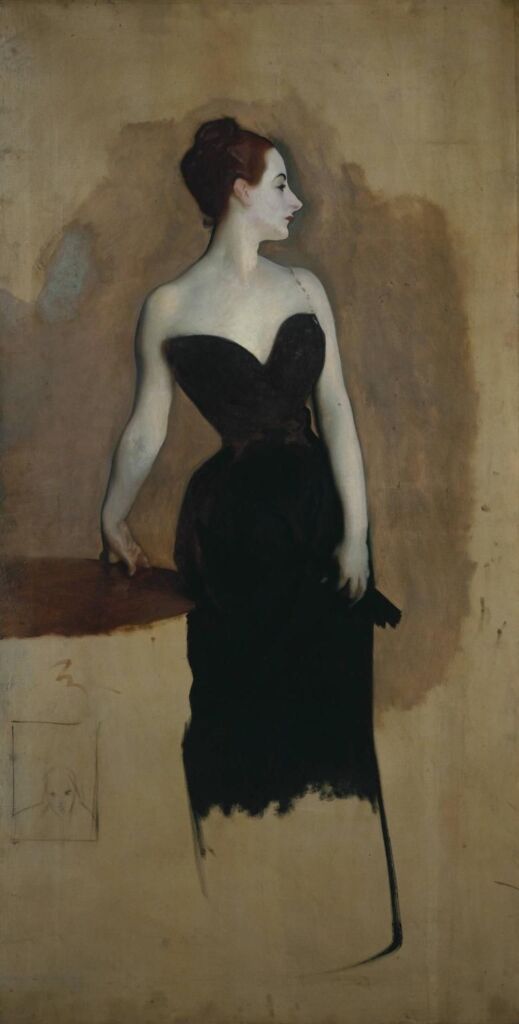
The finished portrait stayed in his studio for more than twenty years. Sargent started lending it to exhibitions again in 1905, including one in London in 1908.
Gautreau, meanwhile, found other portraitists: Gustave Courtois painted her in 1891, Antonio de La Gándara in 1897–98.
Sold to the Met, without her name
Sargent had lent the canvas to the Panama-Pacific International Exposition in San Francisco. It was still there when he wrote from London on January 8, 1916, to Edward Robinson, the Met’s director.
“I would let the Metropolitan Museum have it for £1,000,” Sargent wrote, about $4,770 at the time. Then came the line the museum still quotes: “I suppose it is the best thing I have done.”
He added one condition. “I should prefer, on account of the row I had with the lady years ago, that this picture should not be called by her name,” he wrote, as the Met’s curator Stephanie Herdrich recounts.
Robinson received the letter on January 22. Six days later the museum’s purchasing committee approved the sale, and Robinson cabled: “Museum takes Gautreau portrait at price named with thanks for opportunity.”
Gautreau had died the year before, in 1915. In the museum’s paperwork the picture became Madame X, and the letter of the alphabet stuck. Today the Met gives her back her own name in the full title, Madame X (Virginie Amélie Avegno Gautreau).
The portrait hangs in Gallery 771 of the American Wing. In 2025 the Met’s exhibition Sargent and Paris was built around it and the Salon that made it notorious.
On the label she is still Madame X first and Virginie Gautreau second.
Comments
For Hroniki readers
Comments are open to readers with an account. Signing up is free and takes a few seconds.
No comments yet. Start the conversation.