Malevich’s Red Square and the peasant woman hidden in its title
Malevich called his red square Painterly Realism of a Peasant Woman in Two Dimensions. Where is the peasant woman, why are the corners uneven, and how did the painting reach the Russian Museum?
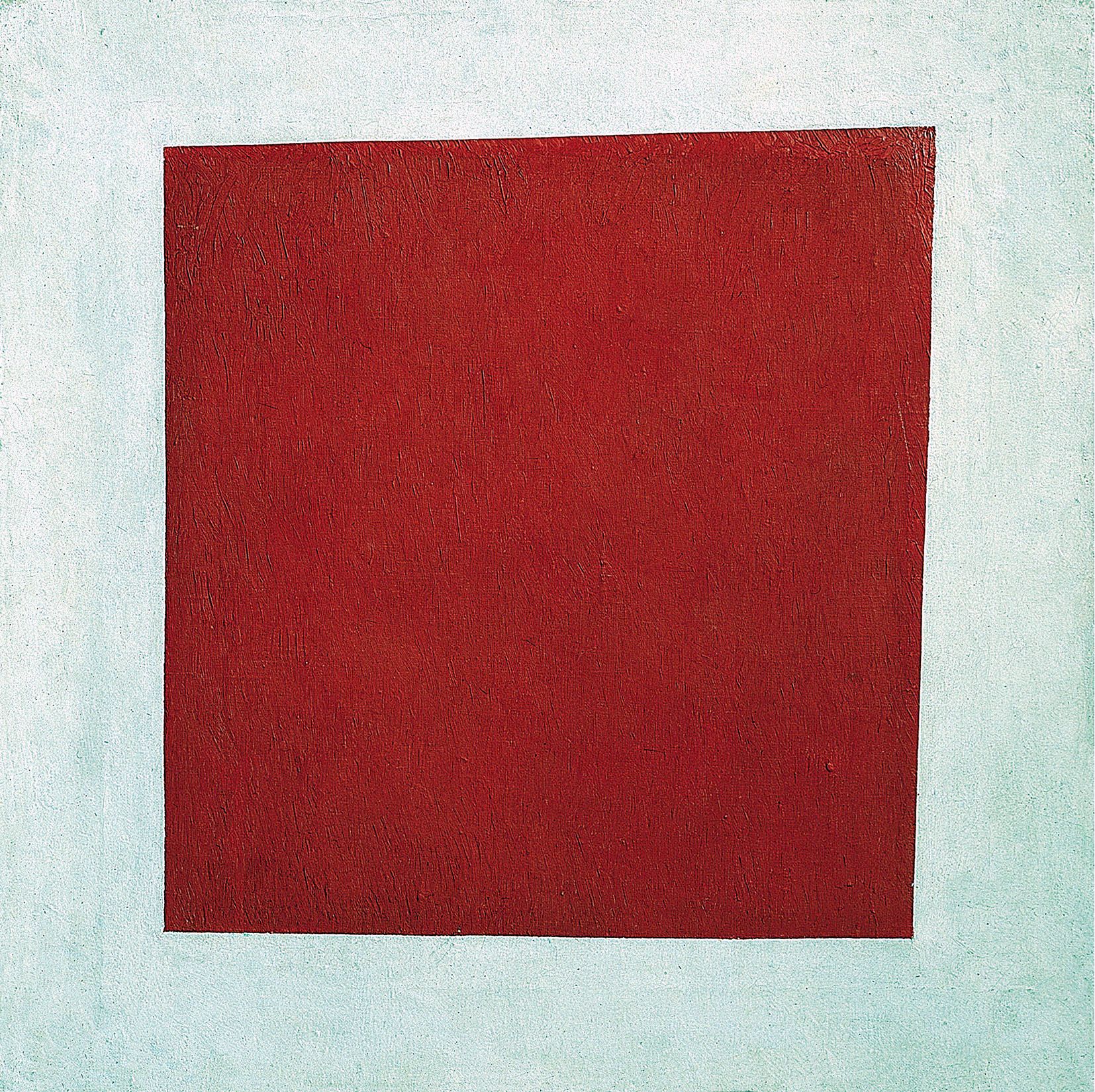
In the Benois Wing of the State Russian Museum in St Petersburg hangs a canvas 53 by 53 centimeters: a white field and a red quadrilateral. Everyone knows it as Red Square. But Kazimir Malevich called it Painterly Realism of a Peasant Woman in Two Dimensions.
The title sounds like a prank. Behind it is a serious question Malevich asked in 1915: what remains of a person without volume, body or story? And there is an oddity people miss at first: this square is not square.
The other painterly realisms at 0,10
In December 1915, at the 0,10 exhibition in Petrograd, Malevich first showed nonobjective painting in public, thirty-nine works. The centerpiece was Black Square, whose hanging and hidden layers are a story of their own. Red Square was shown alongside.
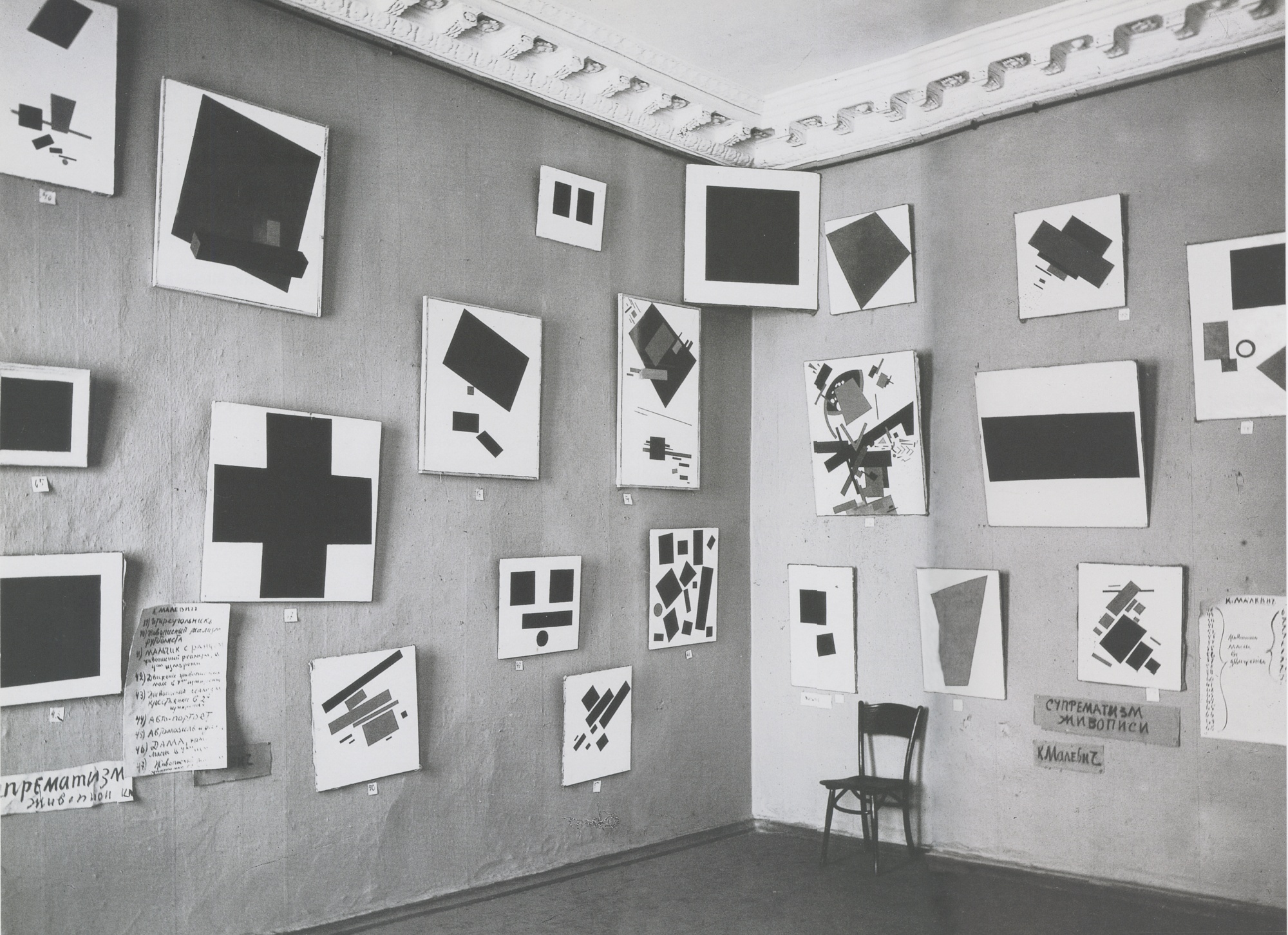
Its title was not the only strange one. Tate’s curators write that such titles play on the tension between abstraction and figuration.
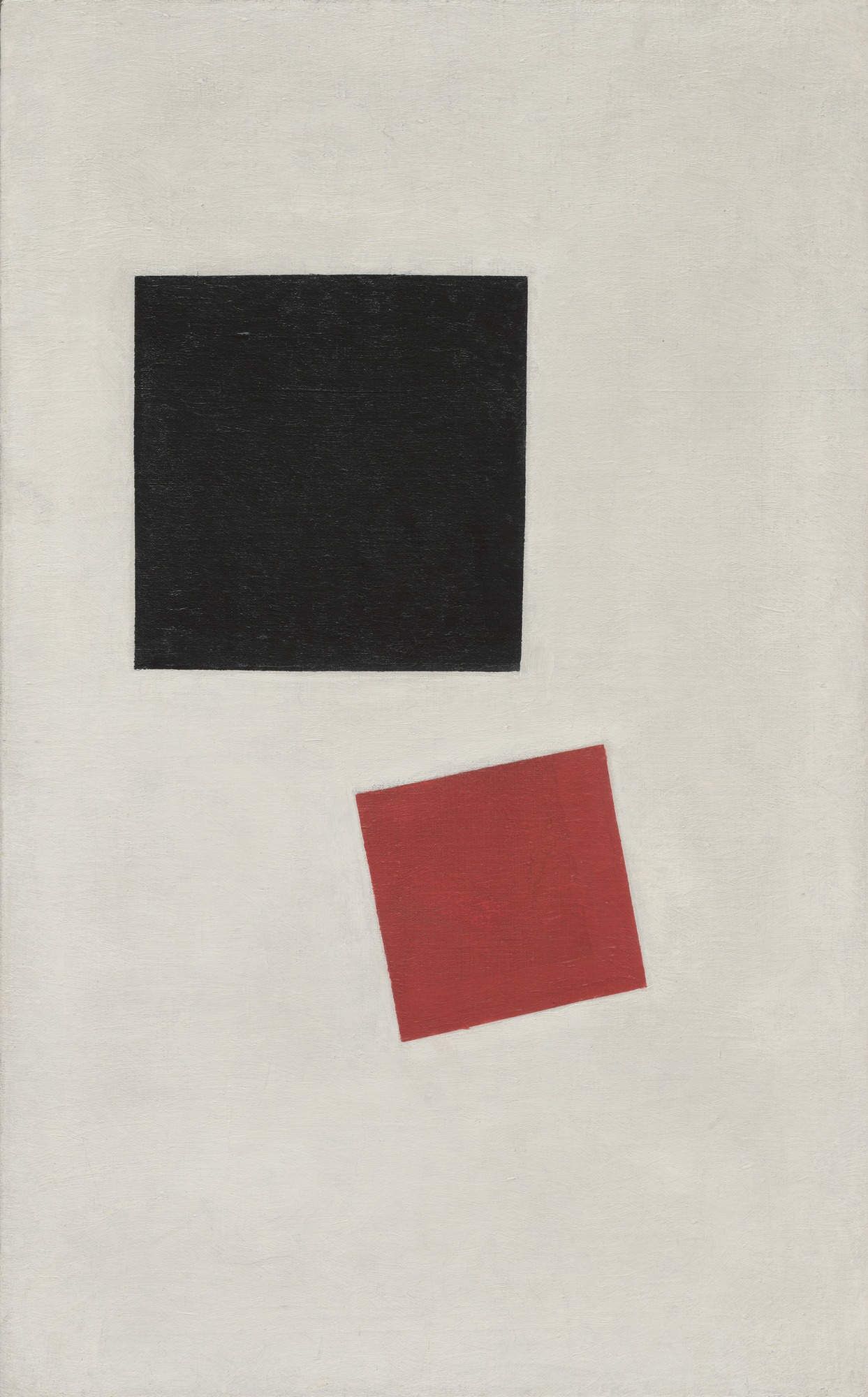
A composition of colored rectangles now in Chicago was called Painterly Realism of a Football Player – Color Masses in the 4th Dimension. A big black square with a small red one at MoMA is Painterly Realism of a Boy with a Knapsack. The Stedelijk in Amsterdam has a Self-Portrait in Two Dimensions, where only geometric planes remain of the artist.
The titles grew out of alogism, the deliberate nonsense Malevich pursued before the war. The scholar Aleksandra Shatskikh notes that in February 1914 he publicly declared he had renounced reason. Around then he made a drawing in which the huts are replaced by the word “Village.” The title names a thing the picture refuses to show; the game continued at 0,10.
Yet “realism” here is no mockery. In a brochure for the exhibition Malevich wrote: “I transformed myself in the zero of form.” He called Suprematism a new painterly realism, a realism of paint itself, in which color and the flat surface become the subject.
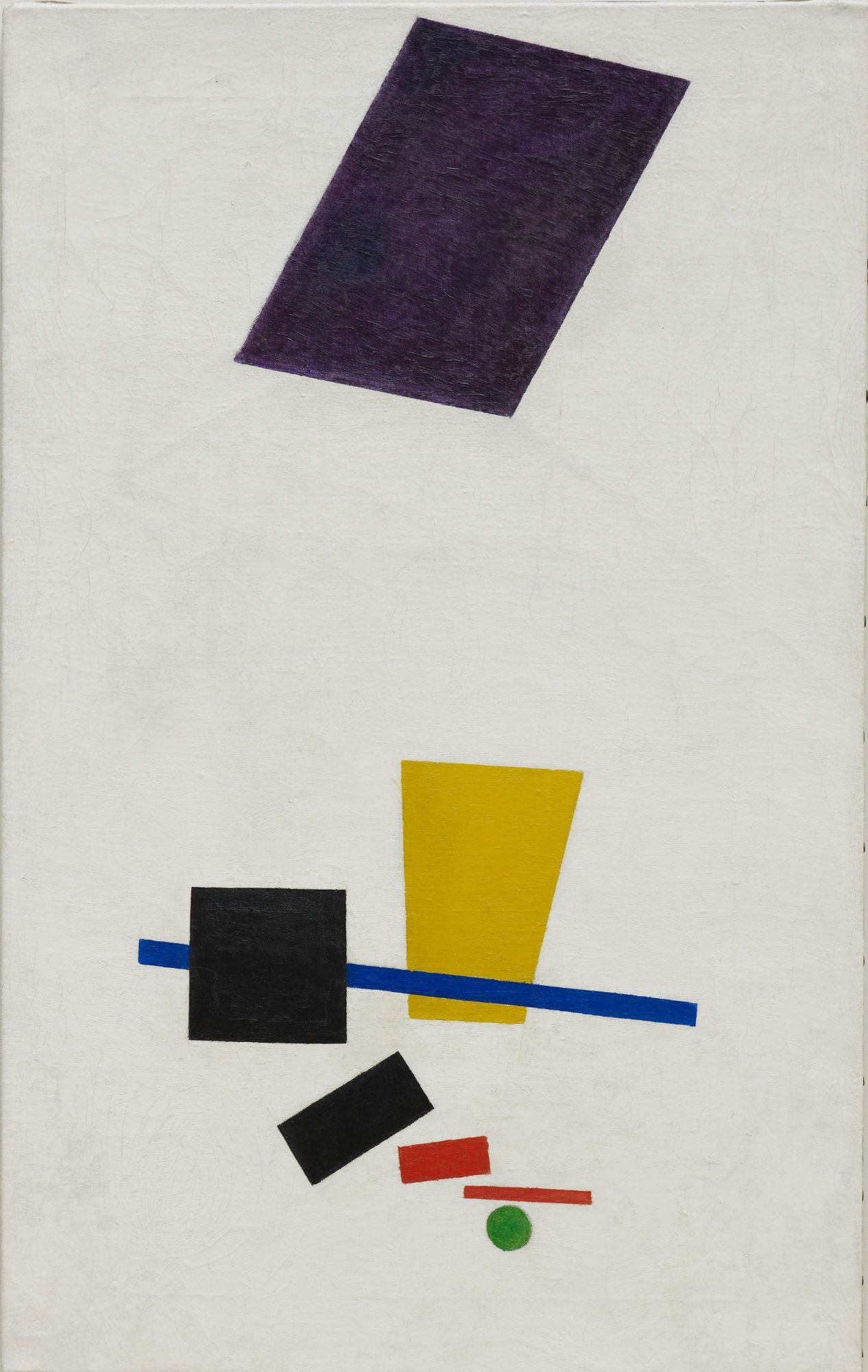
One detail shows how seriously he took his football player. The Art Institute of Chicago notes that in photographs of the 1920 and 1927 exhibitions the painting hangs the other way up, and that Malevich refused to fix its orientation. A football player doesn’t care which way is up.
A red dress without the peasant woman
The Russian Museum proposes an almost literal reading: a peasant woman in a red sarafan, the long sleeveless village dress, reduced to color and simple form. A three-dimensional person becomes a sign that exists only on a flat surface, hence “two dimensions.” Neighboring pictures speak of a “fourth dimension”: Malevich used the then-fashionable term as a metaphor for a new, nonliteral realism.
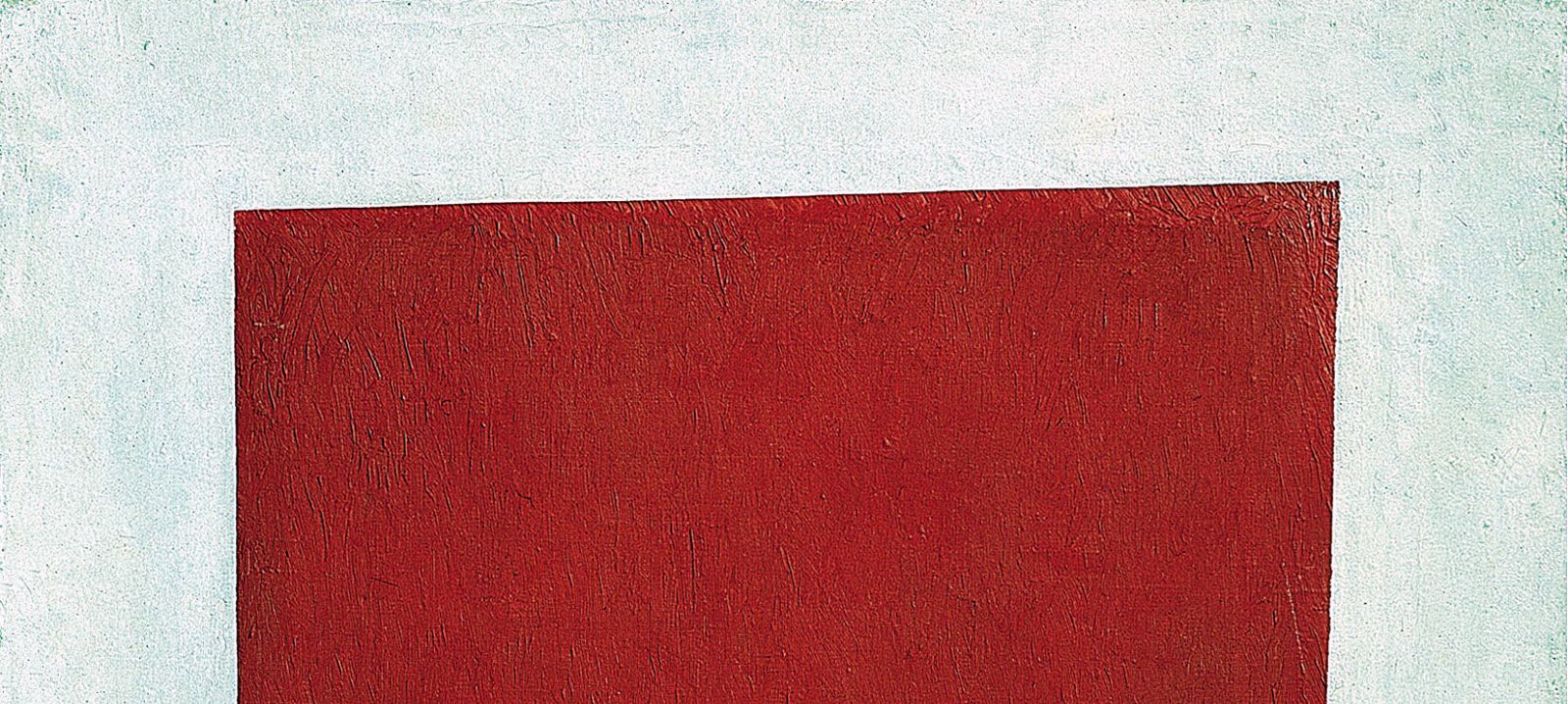
The peasant woman is no accident. Two or three years before Suprematism, Malevich painted the village again and again, reapers, mowers and women with buckets, already built from cylinders and cones. In Red Square only the color is left: the red of festive clothes. In the village, krasny, “red,” meant anything beautiful.
The museum ties this reading to Peter Ouspensky’s Tertium Organum (1911), a book the avant-garde read closely. Ouspensky argued that beings of a lower dimension see only cross-sections of higher-dimensional bodies. Seen this way, the red square is a peasant woman’s trace on the plane of the canvas. Malevich himself never confirmed it; it is one interpretation.
There are others. The museum allows that red, like black, may have answered the First World War. The literary scholar Ksana Blank compared the painting with Tolstoy’s Memoirs of a Madman, whose narrator sees a square white room with a red curtain.
And in 1920 Malevich himself urged people to paint the red square as a sign of world revolution in the arts, a meaning that came only after the Revolution.
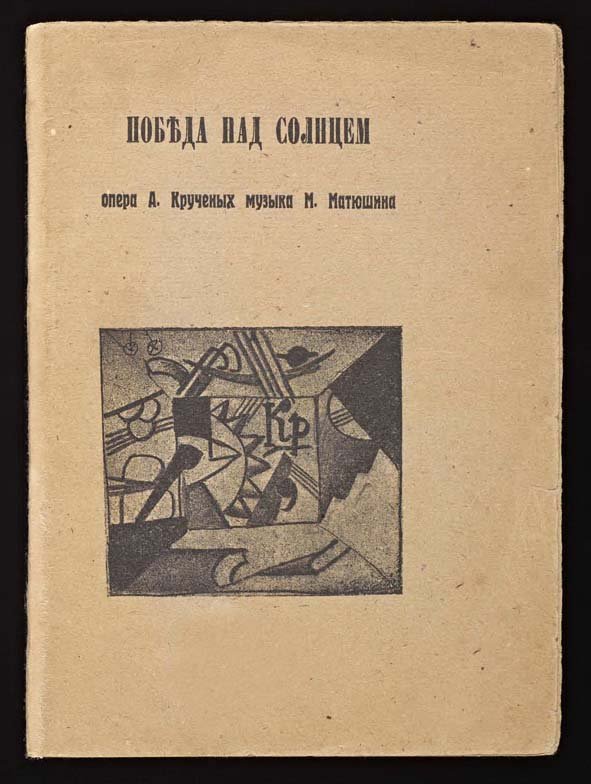
The form predates Suprematism: the square appeared in his 1913 set designs for the opera Victory over the Sun.
Uneven geometry and the road to the Russian Museum
Look closely: the red figure is askew. Its sides are unequal and its corners are not right angles; the Russian Museum speaks of a “virtually indiscernible asymmetry.” That keeps the form from freezing: the square seems to drift across the white field. In the museum’s words, this asymmetry binds the red figure to the white ground.
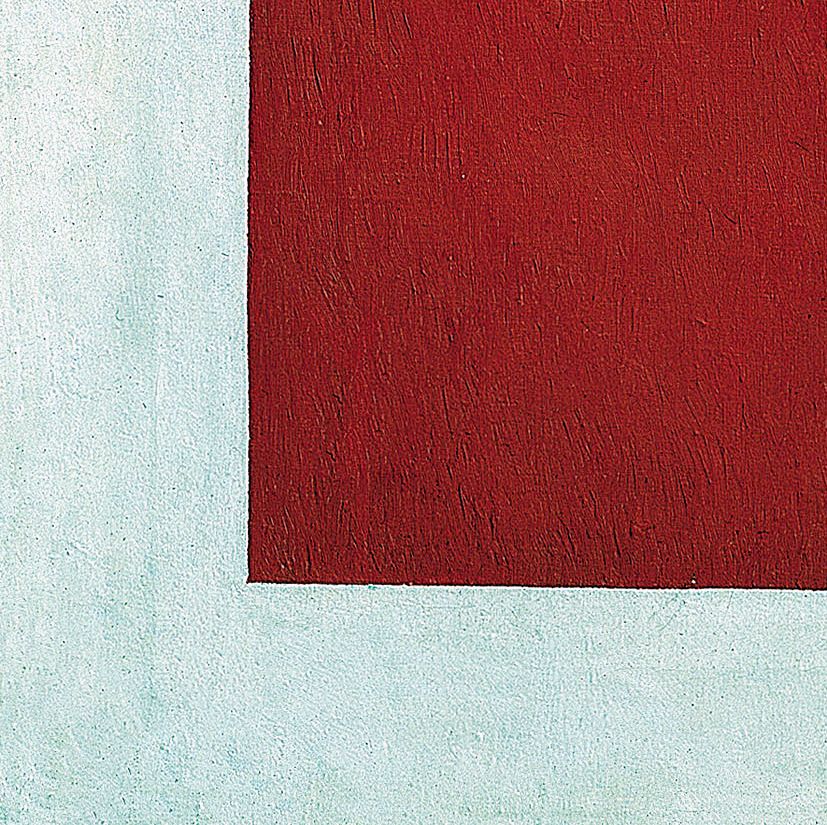
The British art historian John Milner, who studied Malevich’s geometry, reconstructed how the shape was built. A top line is drawn in the proportion 2:8:2, then one corner is lowered. The result is symmetrical along only one diagonal. That is one scholar’s reconstruction, but the uneven corners need no diagram.
In 1921 the Museum of Artistic Culture opened in Petrograd. An institute grew out of it, from 1924 the state-run GINKhUK, and Malevich headed both. In 1926 the institute closed, and the collection went to the Russian Museum. The catalog entry reads: acquired in 1926 via GINKhUK, from the Museum of Artistic Culture.
For over a century the peasant woman’s dress has been nowhere in sight, yet the title still promises a person where the viewer sees only red.

Comments
For Hroniki readers
Comments are open to readers with an account. Signing up is free and takes a few seconds.
No comments yet. Start the conversation.