Stubbs’s Whistlejacket has no rider. Horace Walpole heard it was meant to be George III
For 250 years people have tried to explain what is missing from George Stubbs's life-size Whistlejacket. The best evidence is painted near the bottom edge of the canvas.
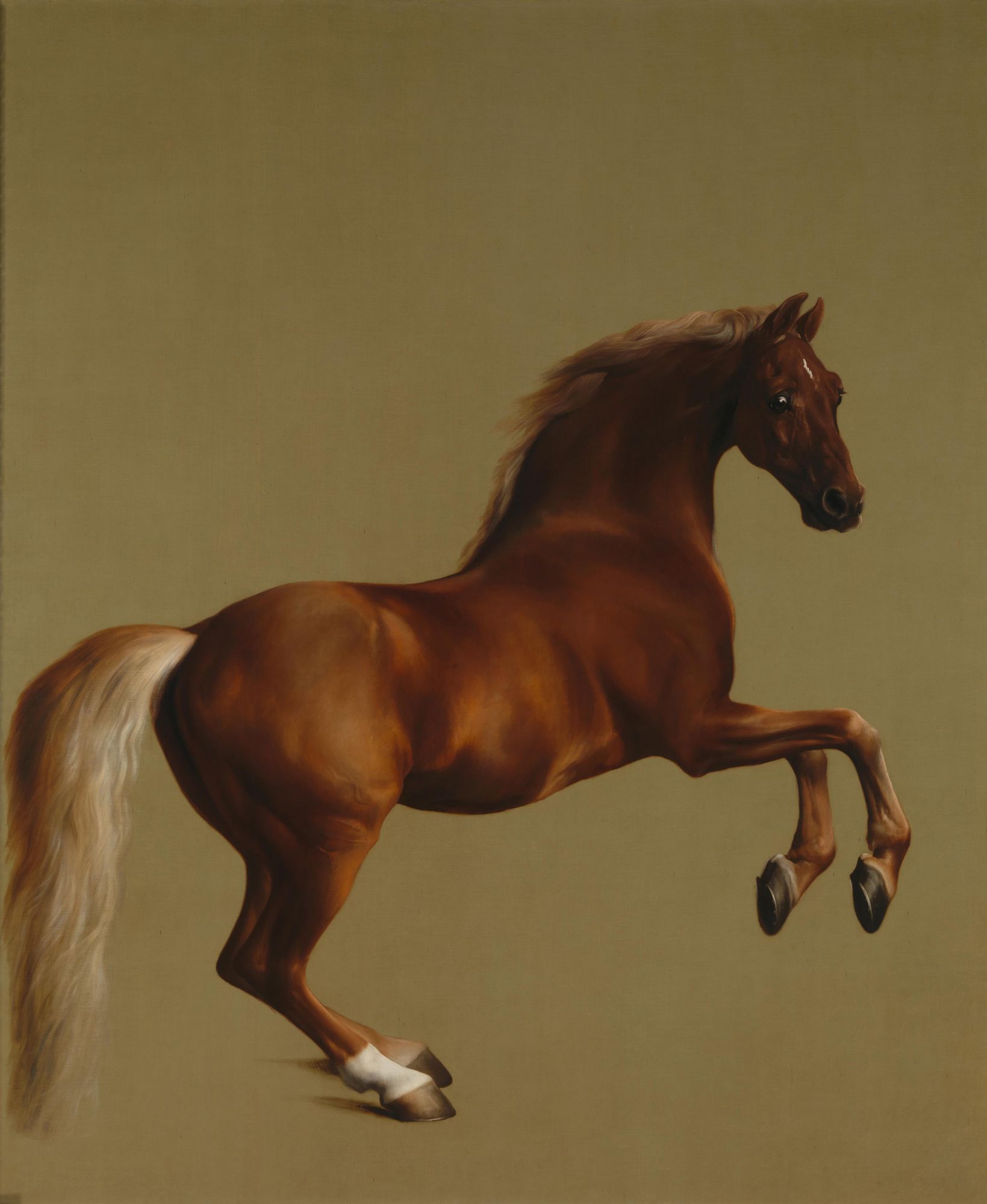
The canvas is nearly ten feet tall, and there is nothing on it but the horse. No rider, no saddle, no landscape, no sky: just a rearing chestnut stallion against a flat field of pale gold.
George Stubbs painted Whistlejacket around 1762. The National Gallery calls it probably the best-known portrait of a horse, and for 250 years people have tried to explain what is missing from it.
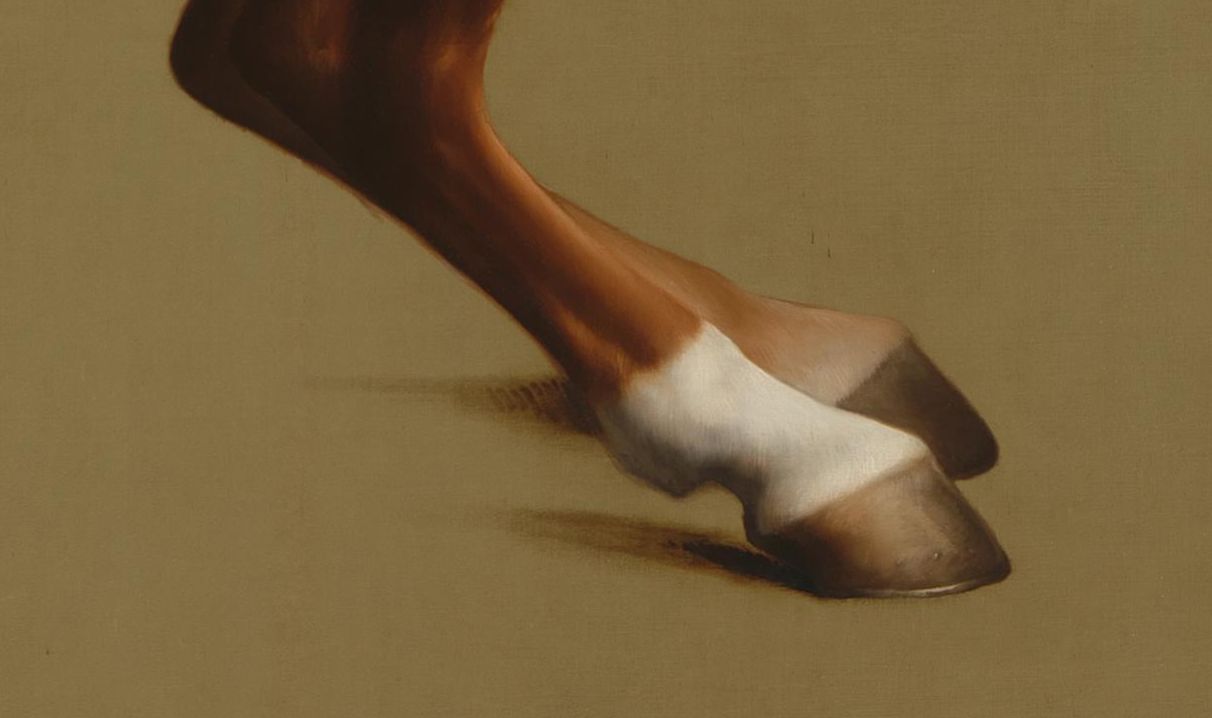
The answers they came up with are better stories than the documents allow. The painting itself, though, keeps one piece of evidence in plain sight, near the bottom edge.
A king who never sat
The commission came from Charles Watson-Wentworth, 2nd Marquess of Rockingham, one of the richest men in England and briefly prime minister.
Rockingham bred racehorses at Wentworth in Yorkshire, and Whistlejacket was his star. A grandson of the Godolphin Arabian, the stallion won a 2,000-guinea match at York in August 1759 and then retired to stud, according to Judy Egerton’s National Gallery catalog entry.
The oldest legend comes from Horace Walpole, who saw the picture at Wentworth in 1772. In his journal he set down what he heard there: “it was to have had a figure of George 3d until Lord Rockingham went into opposition.” Stubbs’s friend Ozias Humphry repeated the rider story in his memoir of the painter, written in the 1790s.
Later retellings added that a second artist was meant to supply the background. Egerton found no record of the commission in the Rockingham papers and nothing beyond Walpole and Humphry to support the rider. She suggests the rider story arose in the minds of people for whom a horse as the sole hero of a huge canvas was simply unprecedented.
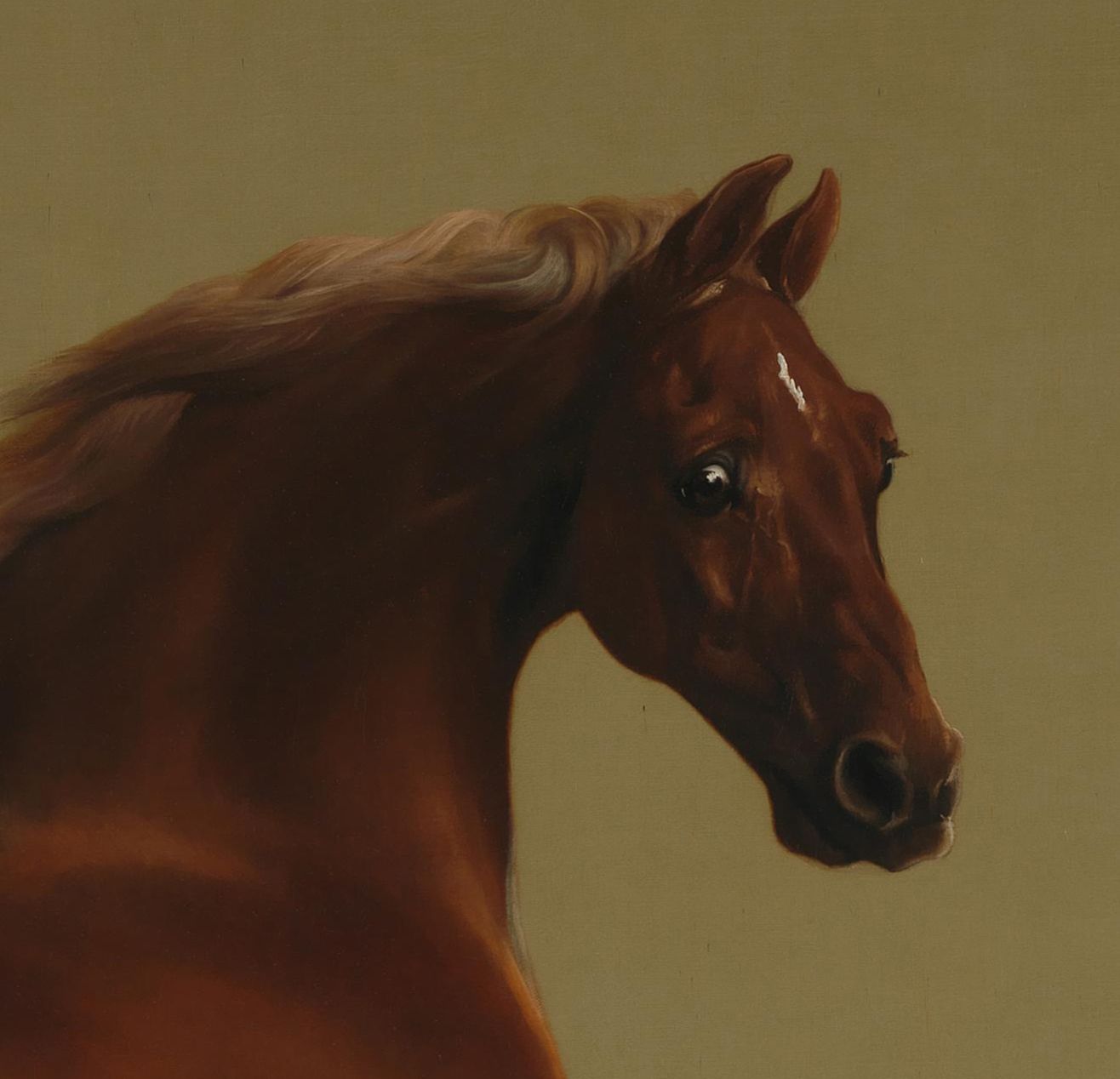
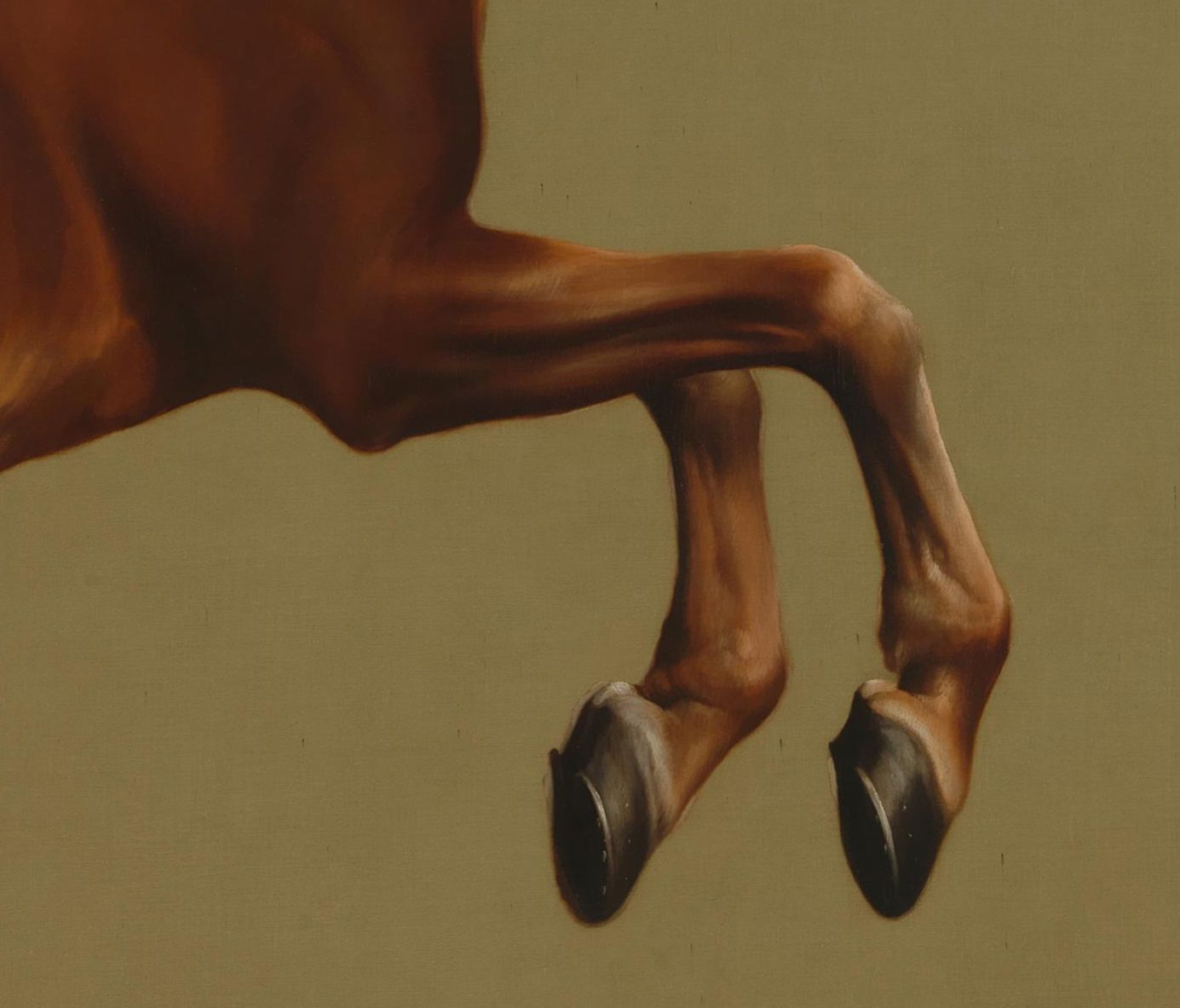
The National Gallery adds physical arguments. There is no drawing of a rider on the canvas, and the horse’s back is too short to carry a saddle. And Stubbs painted shadows under the hind hooves. Nobody bothers with cast shadows on a picture that is waiting for a landscape to be painted in around them.
The second legend is wilder, and it also comes from Humphry. When the stallion was led past the nearly finished canvas, he supposedly began to “stare and look wildly at the picture, endeavouring to get at it, to fight and to kick it,” until Stubbs beat him back with his palette and mahlstick.
The critic Andrew Graham-Dixon points out that Humphry had a habit of embroidering the truth. Egerton does not even mention the attack; the memoir’s other tales of a nervous, intractable horse she calls “a townee’s imaginings of the horse painter’s difficulties.”
The anecdote also has a long pedigree. Pliny told the same kind of story: birds flew at Zeuxis’s painted grapes, and real horses neighed only at the horse painted by Apelles. A painting that tricks an animal is the oldest compliment in art writing.
Eighteen months in a Lincolnshire barn
The horse convinces for a less romantic reason: a strange, smelly piece of research. Between 1756 and 1758 Stubbs worked at Horkstow, a village in north Lincolnshire, dissecting horses and drawing what he found. As the Metropolitan Museum describes it, he hung a succession of carcasses from the ceiling of a barn and drew each one as he cut deeper.
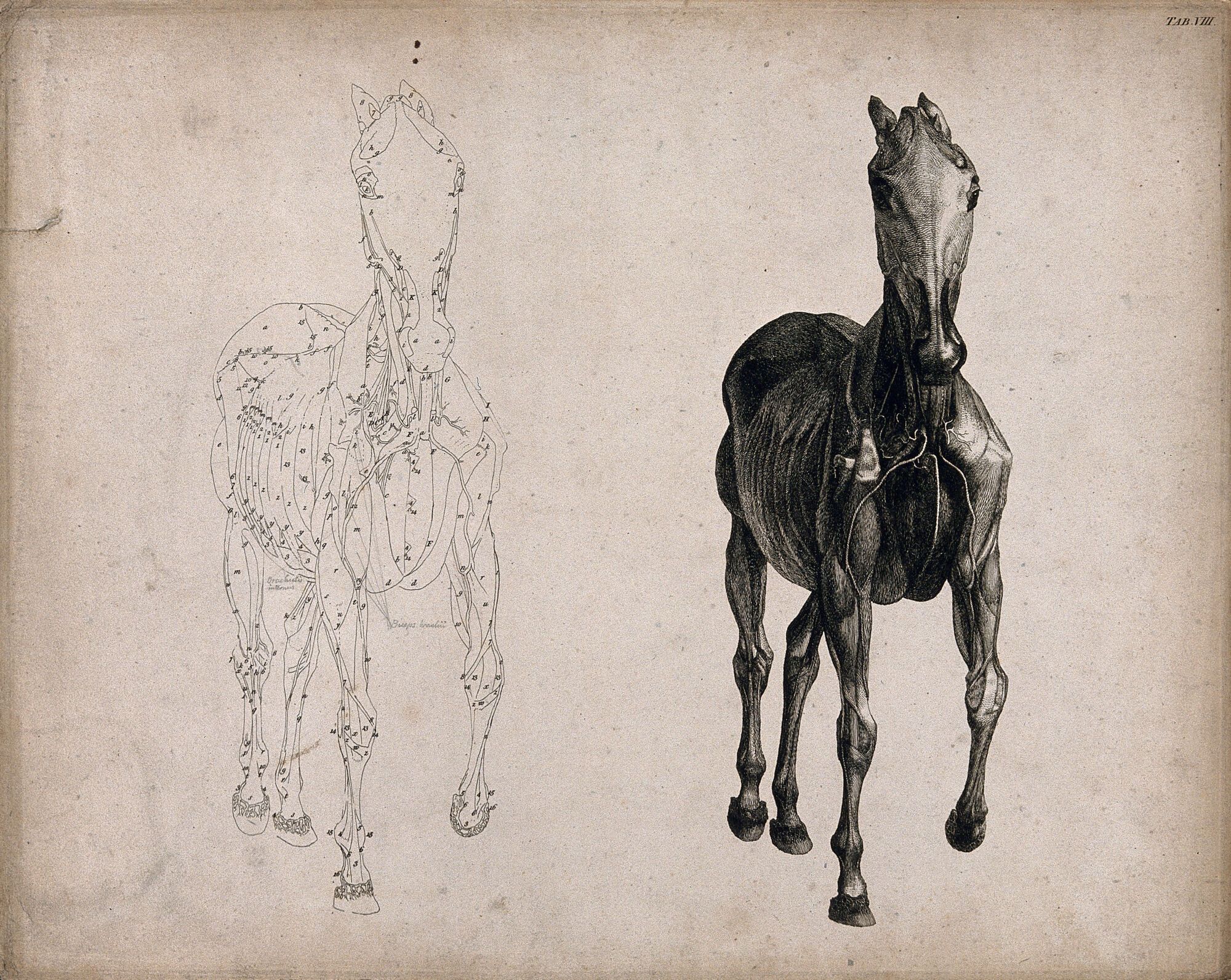
In London, where he settled around 1759, Stubbs etched the plates himself. The Anatomy of the Horse appeared in 1766, with three tables of the skeleton followed by fifteen of muscles, peeled away layer by layer. It became a standard reference for artists and naturalists alike. The Royal Academy still holds dozens of his preparatory drawings for it.
Whistlejacket is the payoff. A horse balanced on its hind legs is a problem of bone and tendon before it is a problem of paint, and Stubbs solved it from the inside out. He knew what was under the coat because he had taken the coat off.
Even the empty background makes sense in this light. The same year, at Wentworth, Stubbs painted Rockingham’s horses in friezes without settings, including Mares and Foals without a Background. For an anatomist, a landscape is noise. The plain gold lets nothing compete with the silhouette.
From Wentworth to Trafalgar Square
The painting stayed with Rockingham’s heirs, the Earls Fitzwilliam, for more than two centuries, with a room at Wentworth named after it. In 1997 the National Gallery bought it from the Fitzwilliam family trustees. The Irish Times reported a price of £11 million, more than £8 million of it from the Heritage Lottery Fund.
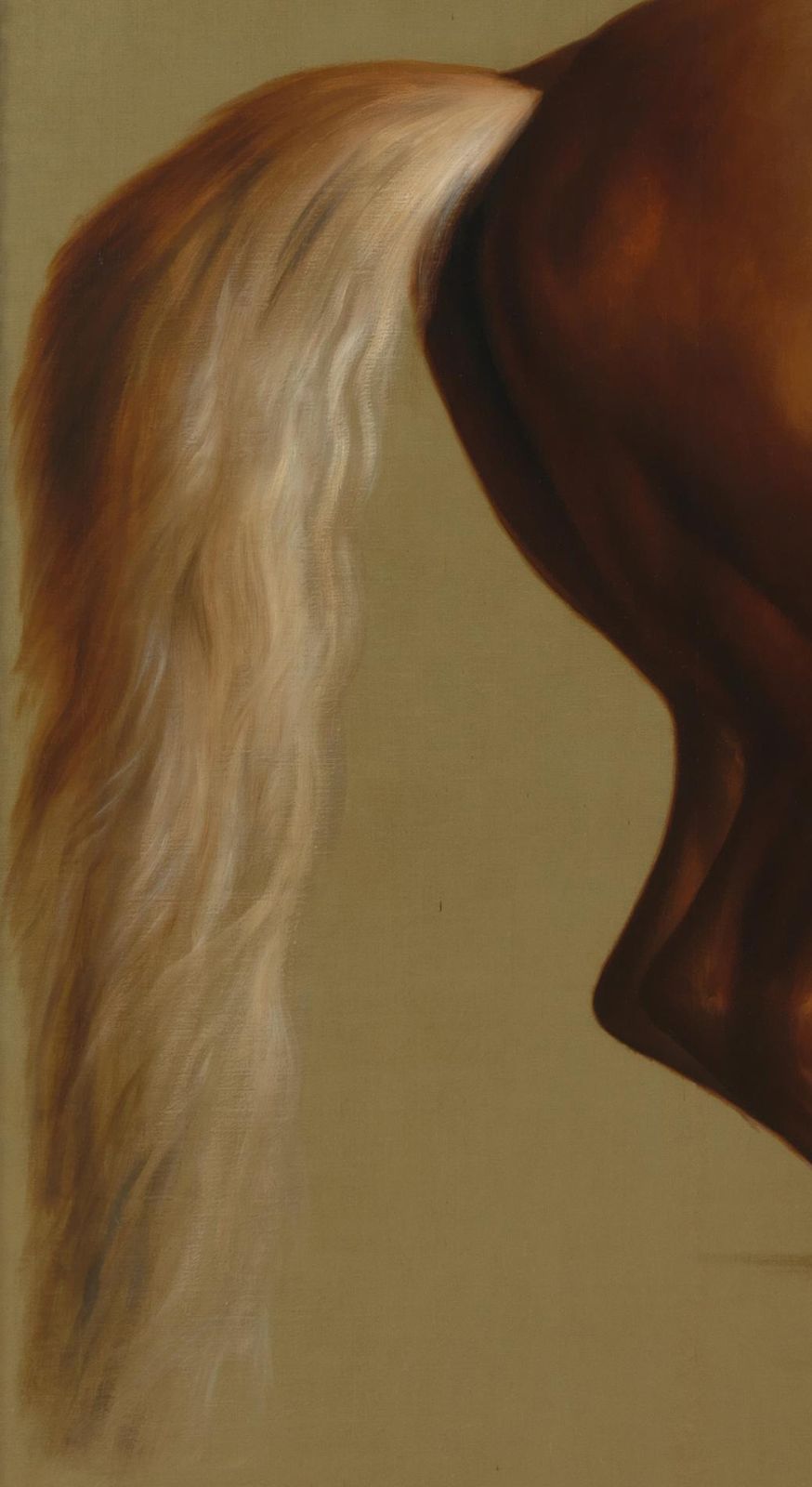
The canvas measures about 9 feet 9 inches by 8 feet 2 inches, so the horse is shown life-size, and it reads that way from across the room. Up close the tail turns into loose, feathery strokes, painted almost carelessly next to the precise anatomy of the legs.
Walpole thought something was missing. The National Gallery now calls the riderless horse the embodiment of unrestrained natural energy. Both are looking at the same blank gold. The difference is that we no longer expect a king to walk into it.
Comments
For Hroniki readers
Comments are open to readers with an account. Signing up is free and takes a few seconds.
No comments yet. Start the conversation.