Watson and the Shark: the Black sailor holding the rope whose name nobody recorded
In 1749 a shark took a 14-year-old's leg in Havana harbor. Brook Watson later had Copley paint the rescue, and at the top of the canvas, holding the rope, Copley put a Black sailor whose name nobody wrote down.
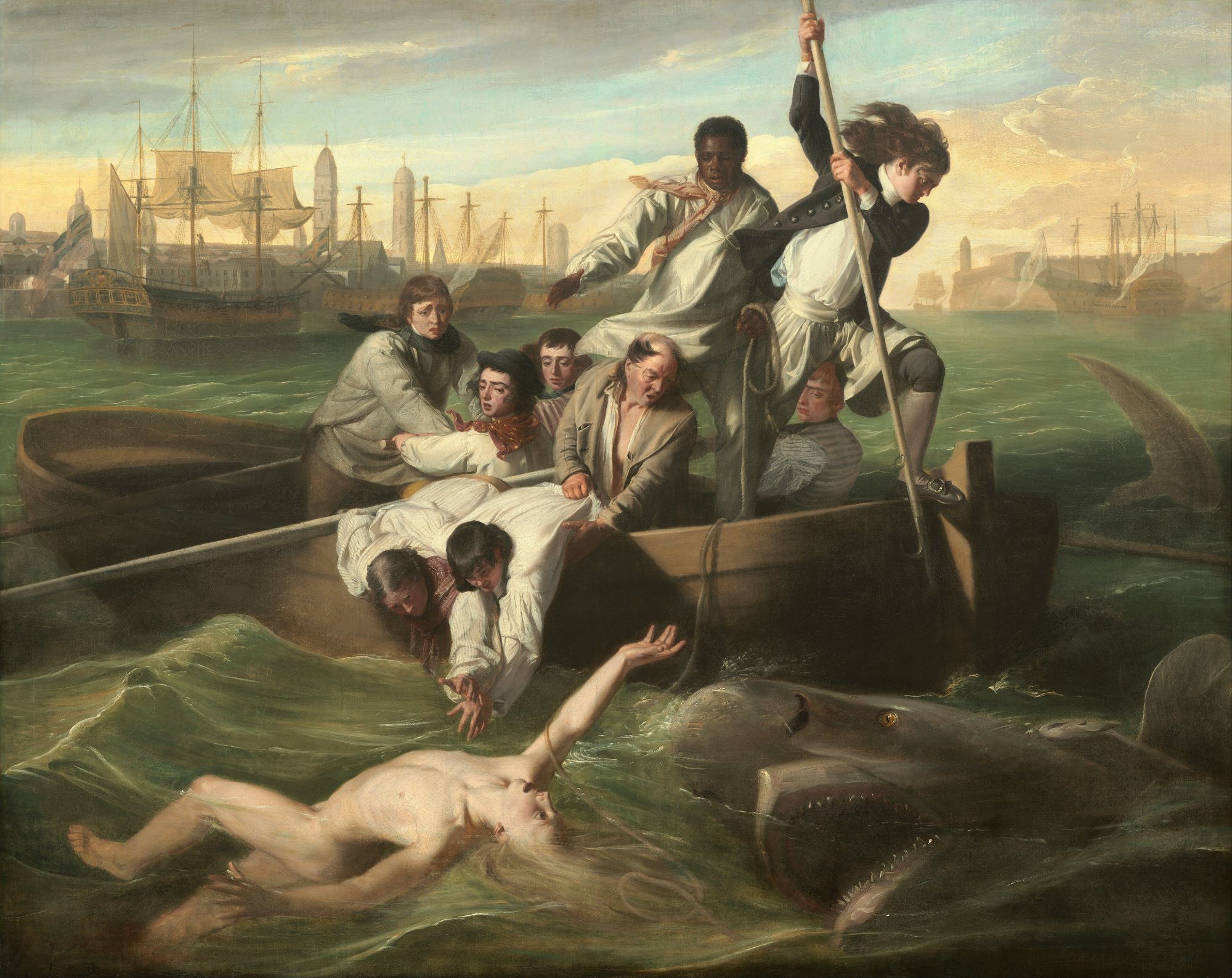
In the spring of 1778, visitors to the Royal Academy in London met a picture with an oddly anonymous title: A boy attacked by a shark, and rescued by some seamen in a boat. A naked boy flails in the water, a shark turns toward him, and nine sailors crowd a rowboat barely big enough for them.
The newspapers soon supplied the name the catalog left out. The boy was Brook Watson, by then a well-connected London merchant with a wooden leg.
John Singleton Copley’s canvas, now known as Watson and the Shark, hangs in the National Gallery of Art in Washington. It tells the story Watson wanted told. Yet at the top of the composition, holding the rope thrown to the boy, stands a Black sailor whose name nobody wrote down.
A 14-year-old swimmer in Havana harbor
Watson was born in Plymouth, England, in the mid-1730s and orphaned at six. According to the Dictionary of Canadian Biography, he was sent to a distant relative in Boston and went to sea as a boy.
In 1749, aged 14, he went swimming in the harbor of Havana. A shark bit off his right foot, and after his shipmates pulled him out, the leg was amputated below the knee. He wore a wooden leg for the rest of his life.
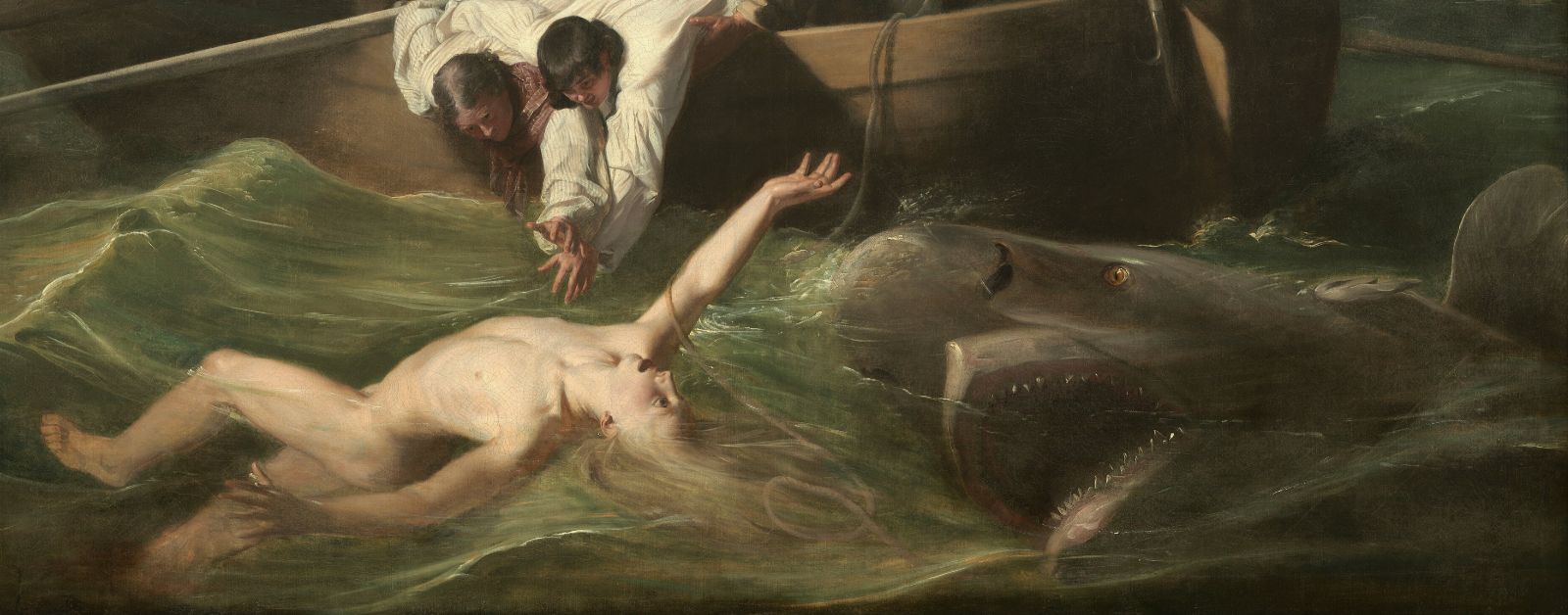
Watson built a career anyway: he supplied British troops in Nova Scotia, traded in London, chaired Lloyd’s and sat in Parliament for the City of London.
In 1796 he became, in the biography’s words, “the first one-legged lord mayor of London,” and in 1803 a baronet. He even put the lost leg on his coat of arms, alongside Neptune with his trident.
Watson is generally believed to have commissioned the painting, almost thirty years after the attack. Copley, a Boston-born portraitist newly settled in London, had never been to Cuba.
He worked from maps and prints of Havana, and the fortress usually identified as the Morro Castle stands in the distance. He also slipped a British warship into the harbor, though Havana was Spanish in 1749.
Reviews at the 1778 Royal Academy show
For the exhibition, Copley built the rescue like a history painting, the genre usually reserved for saints, gods and generals. According to Smarthistory, the two men reaching for the boy borrow from Raphael.
The sailor lunging with the harpoon, the same essay notes, recalls images of Saint Michael casting Satan out of heaven. The difference is that this archangel is an ordinary sailor, and the devil is a fish.
The press was impressed, if not unanimous. As the Royal Academy’s own chronicle of its exhibitions records, the Morning Post ranked the canvas “among the first performances of this exhibition,” and the Public Advertiser called it “a perfect Picture of its kind.”
The Morning Chronicle found it striking but complained of “great abilities joined to little judgment,” mocking the calm sea, the miraculously buoyant boat and the unconvincing shark.
Watson made sure his name traveled with the image, placing a detailed account of the attack in the papers. Copley gained even more. The success helped secure his election as a full member of the Academy the next year, and an engraving published in 1779 carried the image to a wide public.
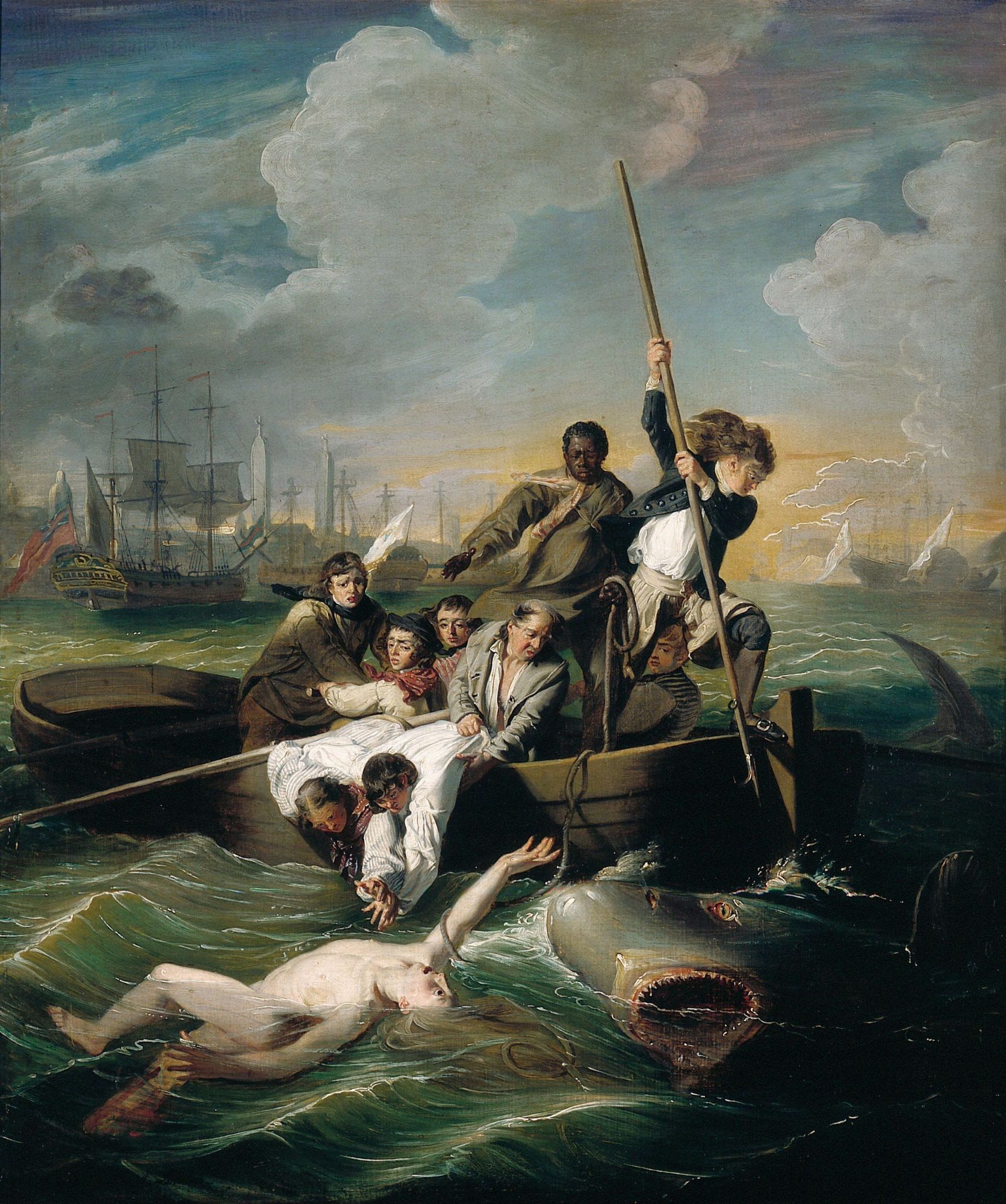
Copley painted three versions. The 1778 original went to Watson. A second full-size version, which Copley kept in his studio, is now at the Museum of Fine Arts, Boston. In 1782 he painted a smaller, upright version, now in the Detroit Institute of Arts.
The man at the top of the rope
At the apex of the pyramid of bodies stands the Black sailor, holding the rope that has just been thrown to Watson. In a National Gallery essay, Alysha Page notes that in a preparatory sketch, Copley had drawn this figure as a white man.
In the finished painting he alone seems calm — the only rescuer actually connected to the boy.
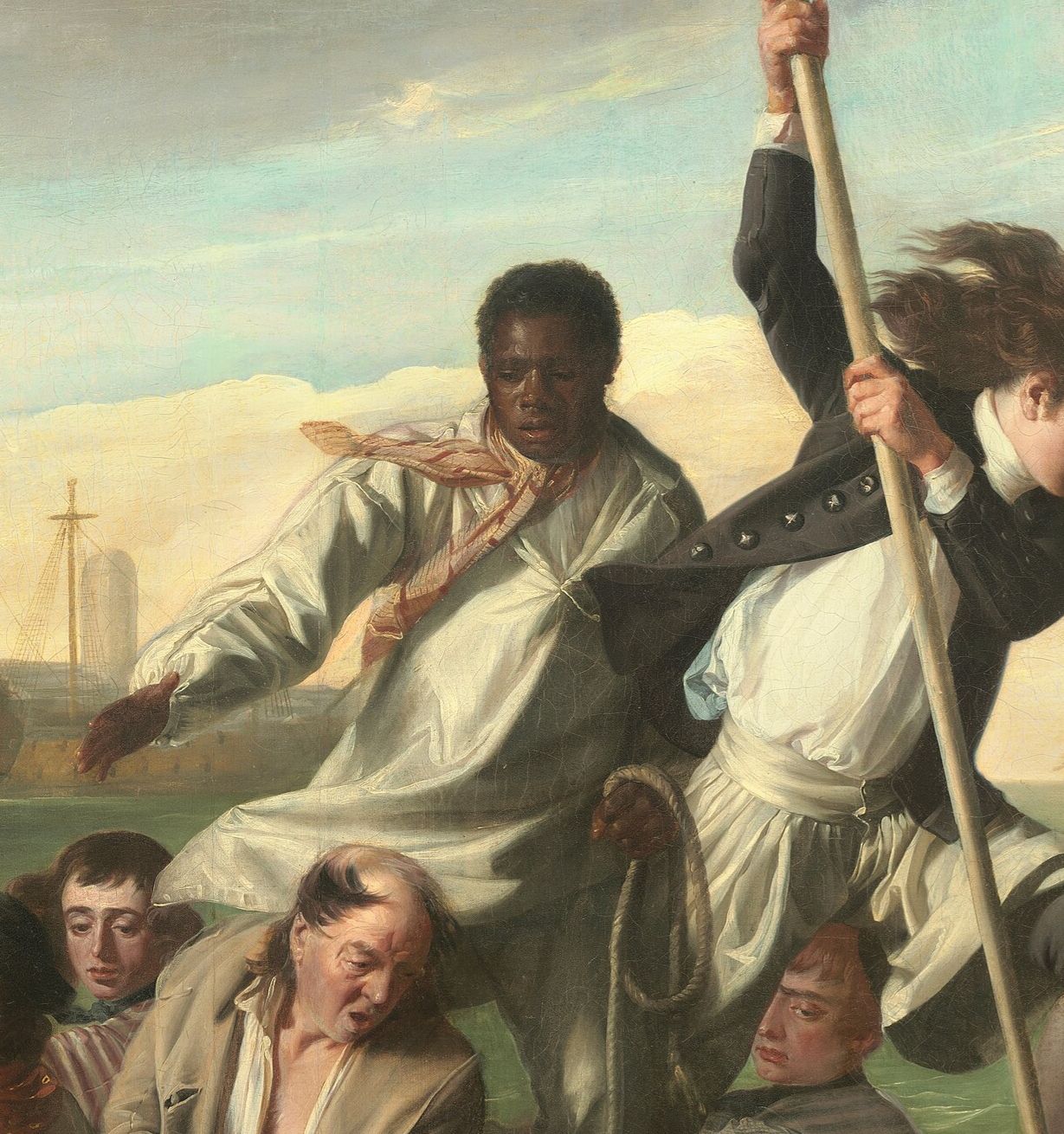
Copley also painted the same man alone, in a head study now in Detroit. When the collection of Copley’s son, Lord Lyndhurst, was sold after his death, the 1864 sale catalog described that head as the one introduced into “A boy saved from a Shark.” The man’s name was never recorded.
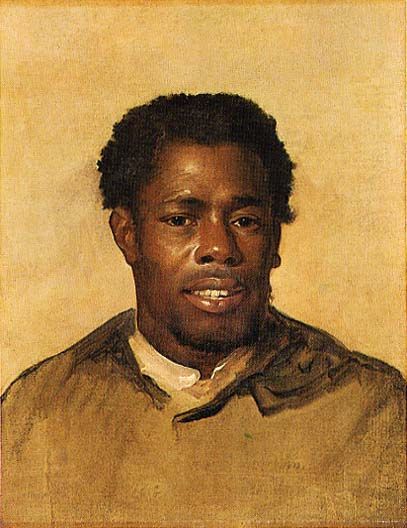
Critics in 1778 barely noticed him, though the Morning Chronicle praised his face as “a fine index of concern and horror.”
Modern scholars have argued over what he means. Some read him as a heroic presence rare in eighteenth-century art. Others, including Albert Boime, connect the scene to accounts of slave ships whose dead were thrown to sharks. Havana, as the National Gallery points out, was a major port of the Atlantic slave trade.
Watson himself is no simple hero here. In 1788 he spoke in Parliament against abolishing the slave trade. Page writes that he feared for the trade in cheap fish fed to enslaved people in the West Indies.
In his will, Watson left the painting to Christ’s Hospital, a London charity school, hoping it would offer “a most usefull Lesson to Youth.” The school’s governors voted in 1819 to hang it in the great hall, and sold it to the National Gallery in 1963.
Generations of boys saw a story about surviving. The man holding the rope was there the whole time, without a name.
Comments
For Hroniki readers
Comments are open to readers with an account. Signing up is free and takes a few seconds.
No comments yet. Start the conversation.