Waterhouse’s Lady of Shalott: the candles Tennyson never wrote
Tennyson gave the Lady of Shalott a boat, a chain and nothing else. In 1888 Waterhouse filled it with candles, a crucifix and her own weaving, and let the wind do the rest.
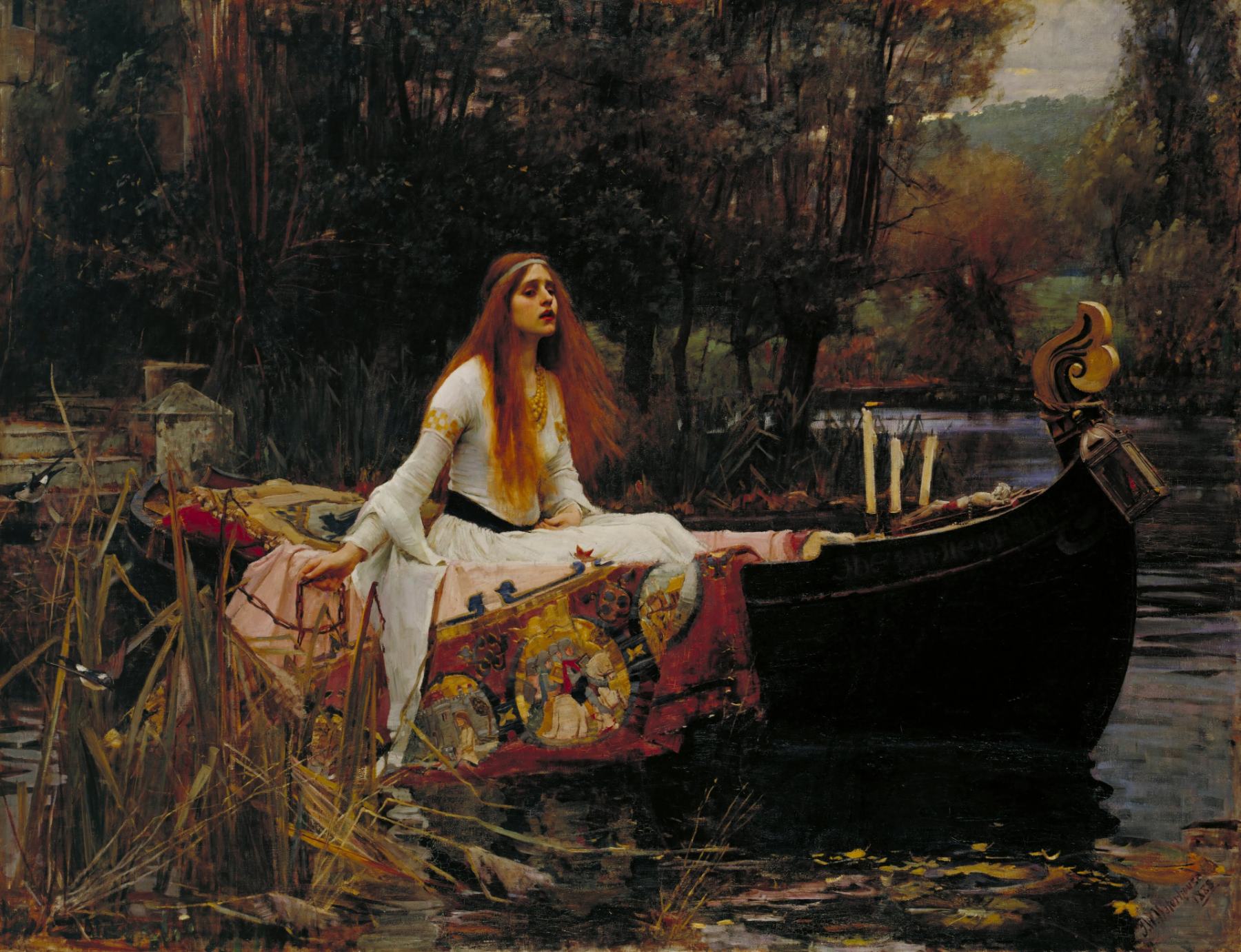
Tennyson gave the Lady of Shalott very little for her last journey. In both versions of his poem she finds a boat under a willow, writes her name on it, loosens a chain and lies down. That is nearly all she takes.
When John William Waterhouse put her on the water in 1888, he filled the boat with things the poem never mentions: three candles, a lantern at the prow, a crucifix and a heavy embroidered cloth.
The canvas, now at Tate Britain in London, is large for so quiet a scene: 153 by 200 centimeters, about 60 by 79 inches. The museum’s catalog entry ties it to a single stanza from Part IV, the one in which “She loosed the chain, and down she lay.”
A clock made of candles
Tennyson first published the poem in 1832–33 and rewrote it heavily for his Poems of 1842.
The Lady lives in a tower on an island upstream from Camelot, under a curse she does not understand. She may see the world only in a mirror, and she weaves what she sees into a web. When Sir Lancelot rides by, she looks at him directly. The mirror cracks, and she goes down to the river to die.
The poet sets that last journey in a “stormy east-wind” under a low, raining sky. Waterhouse turns the wind into a clock: it is putting out her candles one by one. Of the three near the prow, only one still holds a flame, and the flame is bent flat.
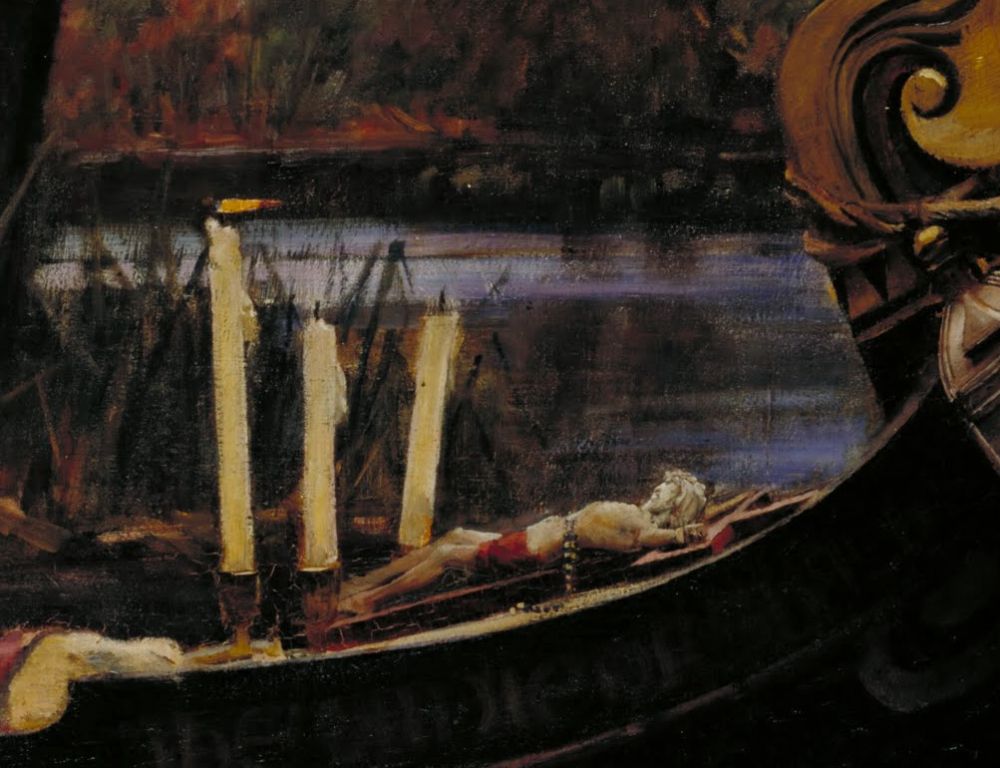
In front of the candles lies a crucifix, and according to the museum it is what the Lady is staring at as she lets the boat go.
There is no cross in the boat in either version of the ballad. Tennyson saves that gesture for the very end, when the knights of Camelot cross themselves over her body. Waterhouse moves it forward, to the minutes before she dies.
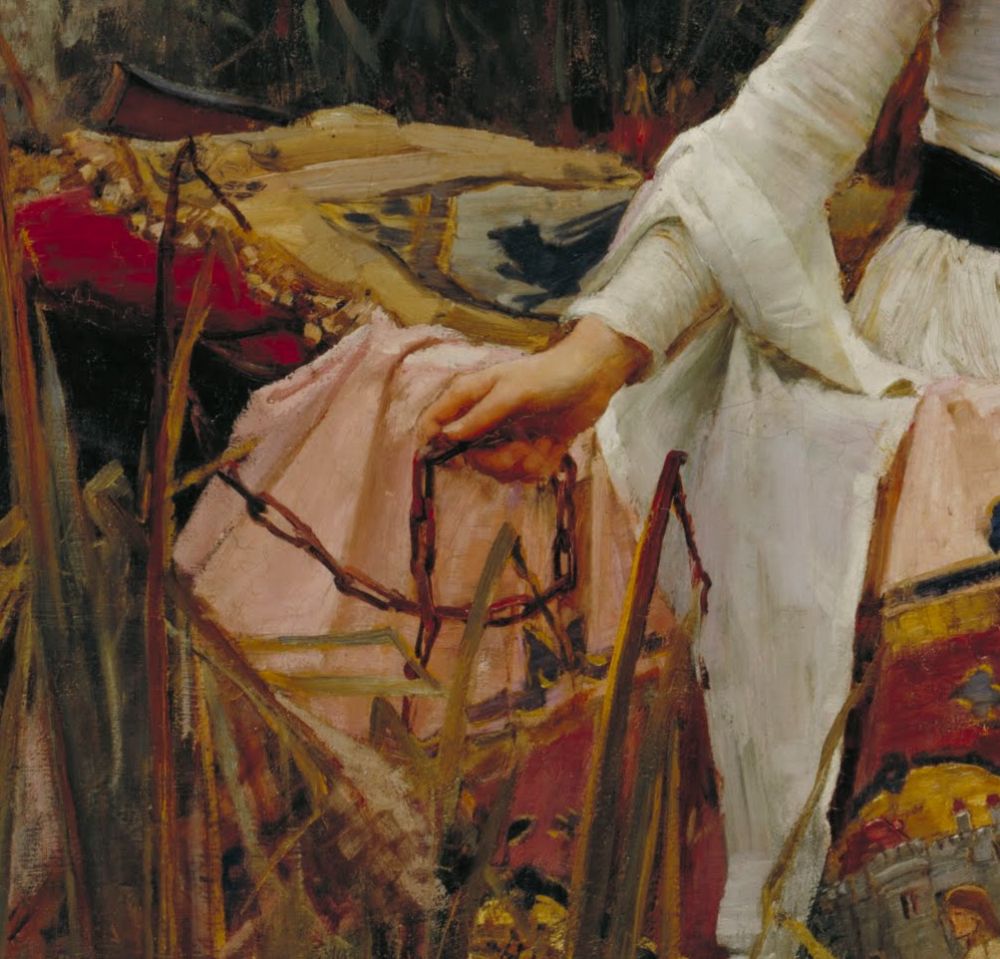
Tate’s caption finds “Pre-Raphaelite clues” to her fate: the guttering candles, swallows flying low, hair lifted by the wind. The chain is the one clue Tennyson supplied himself. Waterhouse paints it rust-colored and slack in her hand, the last thing holding her to the bank.
The web that should have flown away
In the poem the web leaves her at the moment of the curse. “Out flew the web and floated wide,” Tennyson writes, as the mirror cracks. Waterhouse seems to bring it back. In the description Tate gives on Google Arts & Culture, the cloth draped over the boat is the fabric she wove in her tower.
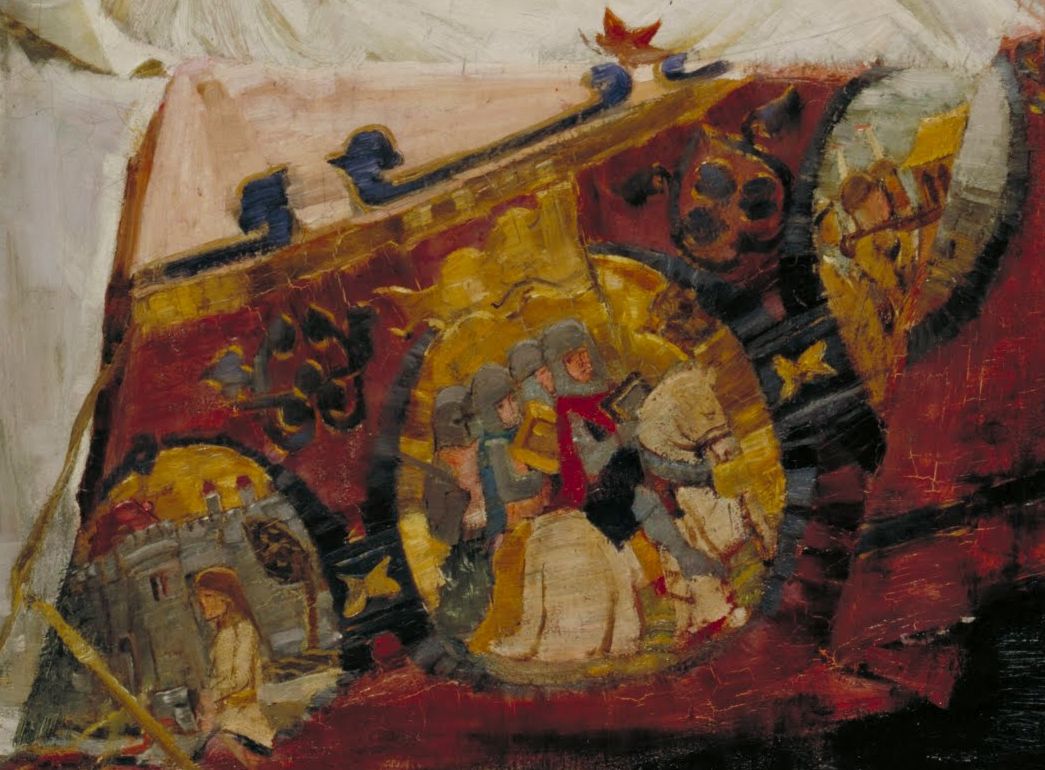
Its roundels hold the kind of world the ballad says she watched: riders in armor, a towered castle with a figure by its wall. She carries the reflected world with her into the real one, and it slides toward the water.
The river around her is painted with the same care. The picture belongs to Waterhouse’s brief period of painting outdoors, and the reeds, water plants and turning trees have the look of a real English bank. The Waterhouses often visited Somerset and Devon, but the site itself has never been identified.
Who posed for the Lady is less settled than it often sounds. The museum says only that the model is “traditionally said to be the artist’s wife,” the flower painter Esther Kenworthy, whom Waterhouse married in 1883. Tate cites no firmer evidence.
Twenty-seven years with one poem
Waterhouse kept going back to Tennyson. His biographer Anthony Hobson, as the museum relates, describes the painter’s copy of the collected works with every blank page covered in pencil sketches for pictures.
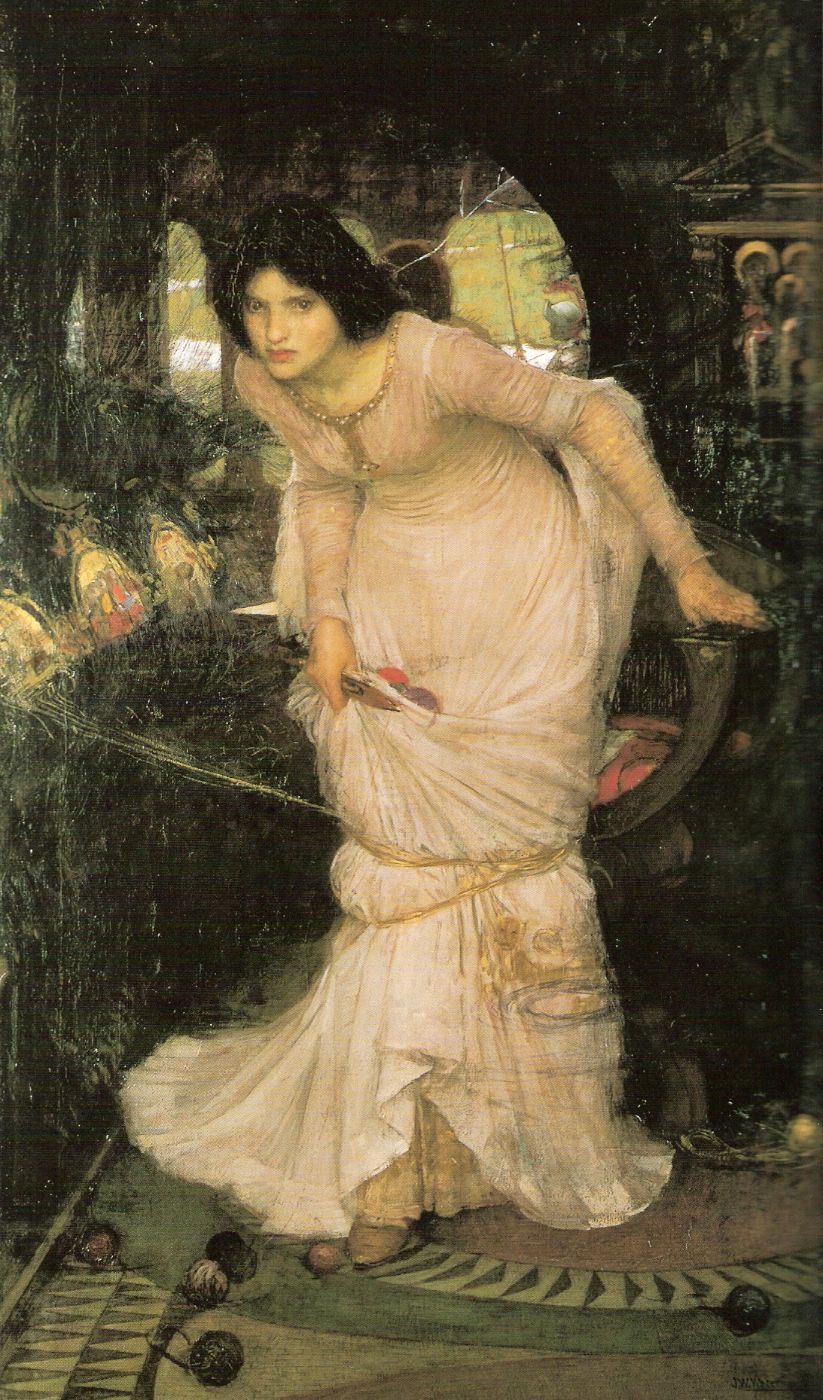
In 1894 he painted the moment of the curse itself. The Lady, tangled in yarn, lunges toward the window while the round mirror behind her splits. Leeds Art Gallery acquired the canvas the following year.
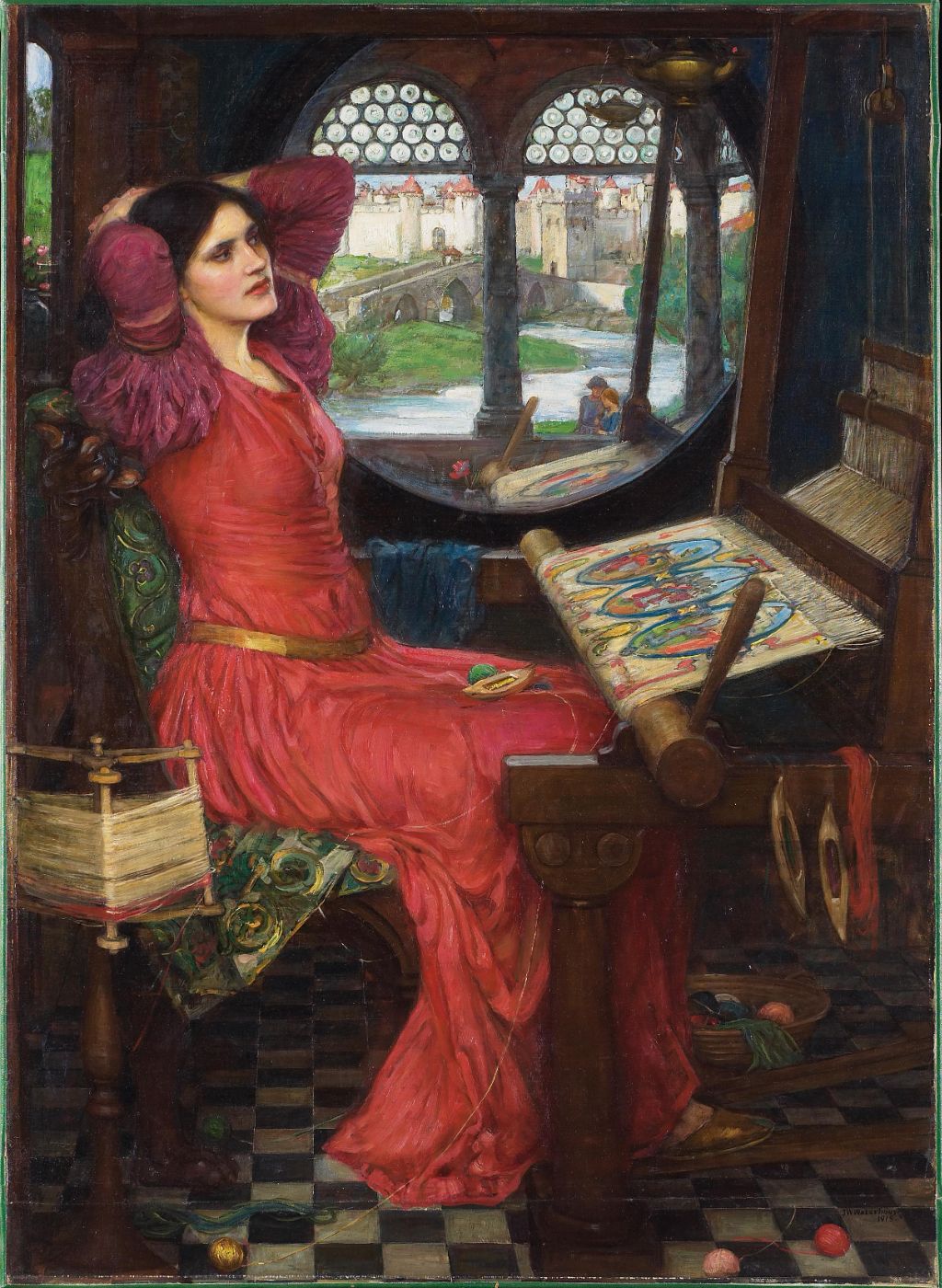
The third version, signed and dated 1915, goes back to the time before Lancelot. She sits at the loom with her hands clasped behind her head, and the title borrows her line from Part II: “I am half sick of shadows.”
Waterhouse finished it two years before his death in February 1917; it has been at the Art Gallery of Ontario in Toronto since 1971.
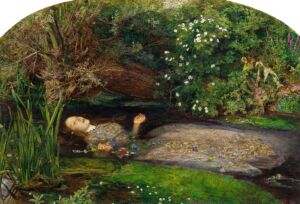
The 1888 picture reached the public thanks to sugar. The refiner Henry Tate offered his collection of modern British art to the nation on condition that a gallery be built to house it. His deed of gift of 1894 covered 65 paintings, among them Millais’s Ophelia and The Lady of Shalott.
The gallery on Millbank opened in 1897 as the National Gallery of British Art.
Waterhouse was born in 1849, a year after Millais, Hunt and Rossetti formed the Pre-Raphaelite Brotherhood, and Tate counts him among the movement’s painters. The bond runs through Tennyson: in 1857 Hunt and Rossetti both drew the Lady of Shalott for an illustrated edition of his poems from the publisher Edward Moxon.
Tennyson’s 1842 text ends in Camelot, with Lancelot remarking that she had a lovely face. Waterhouse stops earlier, while one candle is still lit.
Comments
For Hroniki readers
Comments are open to readers with an account. Signing up is free and takes a few seconds.
No comments yet. Start the conversation.